
Prologue – The Pre-Trip Rollercoaster
The whole story started in November 2025 when we planned to go to Austin for Thanksgiving.
However, my brother Sean, with whom my mother Alice was staying at the time, said they would be busy and that it would not work well if we visited then. Instead, he suggested we come in January 2026 for her 85th birthday. Unfortunately, January was not a good time for us.
Eventually, Charlie, my youngest brother who lives in Aberdeen, told us he would be travelling to Miami on business in April and that he and his wife Angelica planned to go on to Austin afterwards. Since we thought Mom would be happy to have all four sons together in one place — a celestial alignment roughly as common as a total solar eclipse — we decided we should go as well.
We would share accommodation in Austin with Charlie and Angelica. A friend of theirs owned a house that was mostly empty and up for sale, and she generously offered to let us stay there for free.
Planning Take 1 – Disneyland
I wanted to combine the trip to Austin with a visit to see my daughter Chelsea, and Brian. I suggested meeting them in Disneyland near Los Angeles, since they enjoy it so much that they have yearly passes. However, Chelsea discovered there would be a convention during that time, which meant hotel prices would skyrocket, and admission for the two of us would cost around 300 USD on top of that. So, we cancelled that plan and decided instead to visit them at home in Denver.
Planning Take 2 – Denver to Albuquerque
Since weekends are the best time to see the kids, we planned to be in Denver from April 10th to 12th. Austin was scheduled for April 17th to 21st, so we had several days in between to fill. I checked the map and decided Albuquerque might be worth visiting.
Flights and hotel were booked accordingly.
After an intense search for sights, activities, and reasons not to stare at the hotel walls by day three, we came to the conclusion that spending 3–4 days there would probably be too much. We feared we might run out of things to do on day 2 and start touring the restaurants within a five-mile radius.
We then decided to shorten the stay somewhat and arrive in Austin on the 16th.
Planning Take 3 – Denver Road Trip to Austin
Since we had enjoyed it last year so much, we thought: why not do a road trip again to avoid staying in Albuquerque for too long?
We started looking at places and things to do along the route. Colorado Springs, Great Sand Dunes National Park, Santa Fe, Taos, Lubbock, Abilene, and several other stops sounded promising. One thing led to another, flights and hotels Albuquerque were cancelled, we booked a car instead, and planned to arrive in Austin on the morning of the 17th.
Planning Take 4 – Los Angeles
About a week before the trip, Chelsea contacted me to say that Brian had finally received approval for a back treatment, and they understandably did not want to postpone it. It would, therefore, not be a good time for us to visit after all.
Well, without Denver, the road trip no longer made much sense either.
After going around in circles for a while — geographically and mentally — we somehow ended up almost back where we started and decided on Los Angeles again. Not Disneyland this time, but the city itself.
So once again we researched things to do, rebooked flights, searched for hotels, and reshuffled dates. Since we no longer needed time for family in Denver, we moved the start of the trip to the 13th.
At this point, our vacation planning had started to resemble one of those conspiracy investigation boards with strings connecting unrelated locations.
Planning Take 5 – Swapping Places and Dates
A few days before departure, Lufthansa went on strike.
Technically, the strike was scheduled to end shortly before our flight date, but we were worried that the resulting backlog would make flying standby a bit too adventurous for our taste. So, in an attempt to put some distance between ourselves and the aviation chaos, we swapped the trip around completely: Austin first from the 16th to 21st, Los Angeles afterwards from the 21st to 25th.
More flight changes. More hotel changes. By this point, I wouldn’t had been surprised if booking.com had flagged my account.
Planning Take 6 – Changing the Flight Route
But this still was not the end.
The strike was extended, and our original flight was cancelled entirely. Since there was no direct replacement flight to Austin that day, the alternative would have routed us through Houston. At that point we decided that, if we had to transfer anyway, we might as well do it properly and rebooked onto a Condor flight to JFK, followed by a Delta flight to Austin.
Never before had we changed and replanned a vacation so many times.
By the end of it, I felt I needed a vacation from planning the vacation.
Part 1: Visiting Family
The first part of our trip, as mentioned in the introduction, was a family get-together in Austin. We visited my mom at The Gardens of Buda, the care home where she had recently moved, and got acquainted with her new corner of the world. She was showing us around, and proudly introduced us to her friends and the staff. It was a very nice place. The environment gave me the impression of a holiday resort, most probably because the first thing you see when you walk in is a bar. I later learned that it is for show only. They have wine glasses, and other glasses, but no alcohol – at least not for the residents.
The other highlight was taking in a music performance of my brother’s band. The band consists of 3 people, most of the time, Sean on bass guitar, Richard on lead guitar, and Larry on vocals and rhythm guitar. They play at a family-owned restaurant call Rosie’s Tamale House. Let’s just say it was an experience I’ll never forget.
Part 2: The City of Angels
Los Angeles is enormous. Not merely “large city” enormous, but “civilization spread horizontally until everyone gave up” enormous. What most outsiders think of as L.A. is actually a sprawling collection of places stitched together by freeways, palm trees, and mutual traffic problems. Santa Monica, Hollywood, Beverly Hills, Venice Beach, Burbank — each is a subsidiary of the parent company called Los Angeles.
To make sense of it all, we divided our visit into three very different versions of Los Angeles: downtown L.A. (or DTLA, as locals insist on calling it), Hollywood, and the Santa Monica/Venice Beach area. Together they promised a reasonably complete introduction to the city — culture, glamour, ocean breezes.
One of our biggest surprises was discovering that Los Angeles actually has public transportation. This may not sound remarkable to anyone from Europe, but given L.A.’s reputation, I had assumed every resident was issued a car at birth and legally forbidden from walking more than twenty meters. To our relief, the metro system and busses connected nearly everywhere we wanted to go. Suddenly the prospect of navigating six-lane traffic nightmares no longer dominated our vacation planning.
The fare system was also refreshingly civilized: $1.75 per trip, with free connections to a bus, and after the third ride the rest of the day free. In total, we spent just $15 over three days while zigzagging all over Los Angeles, which may be one of the few bargains the city still offers.
The next challenge was finding a hotel that did not require selling a kidney.
The prices in Los Angeles were astonishing. Too make the choice even more challenging, every hotel listing seemed to follow the same pattern: glowing reviews immediately followed by terrible reviews that scared us away. After much searching, we settled on the Freehand Hotel in downtown L.A., mainly because the price was the least offensive for this town and it was close to the 7th Street/Metro Center station where all the metro lines converge. In a city this size, proximity to transportation is a must.
Day 1: DTLA
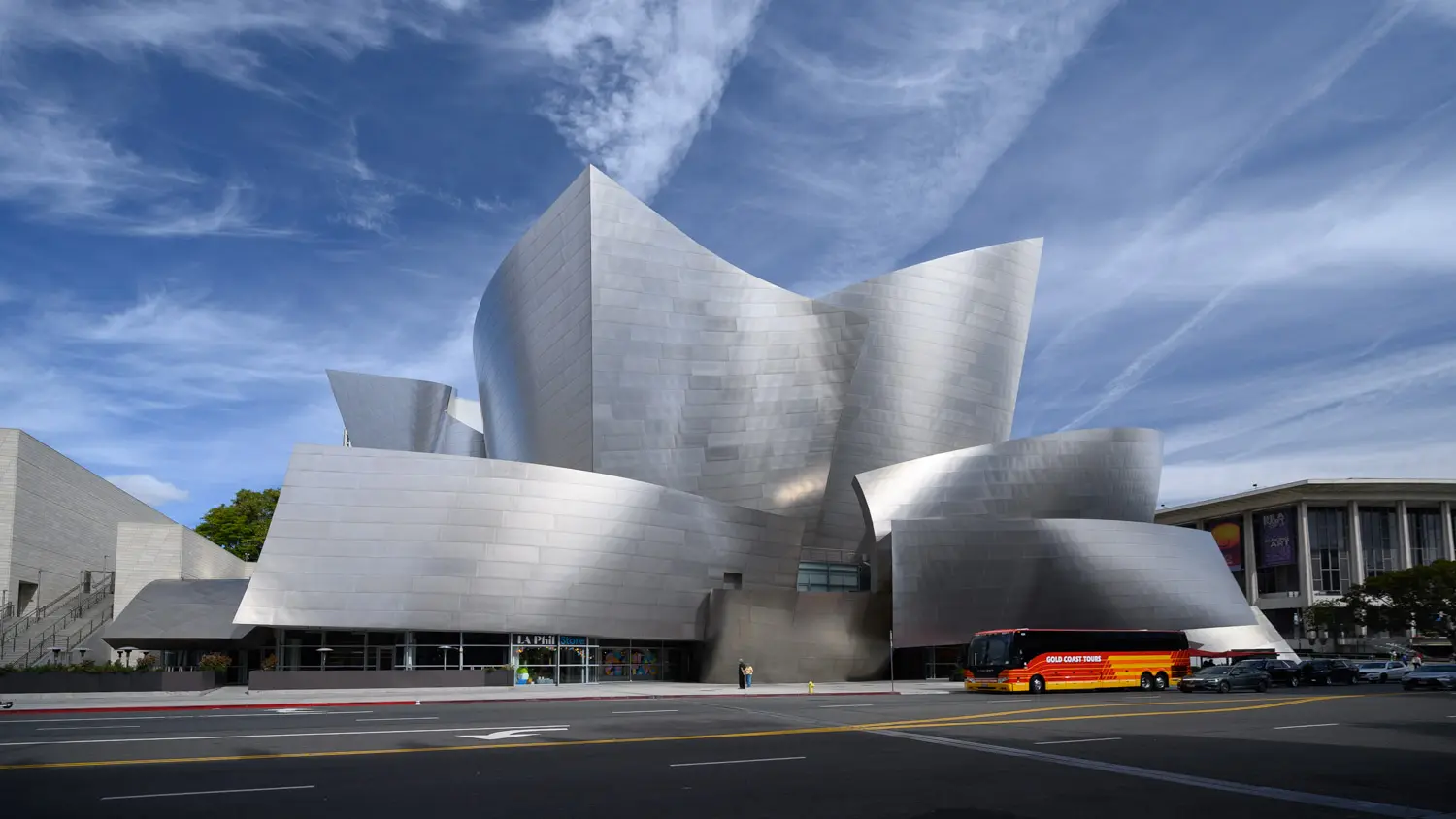 The Walt Disney Concert Hall
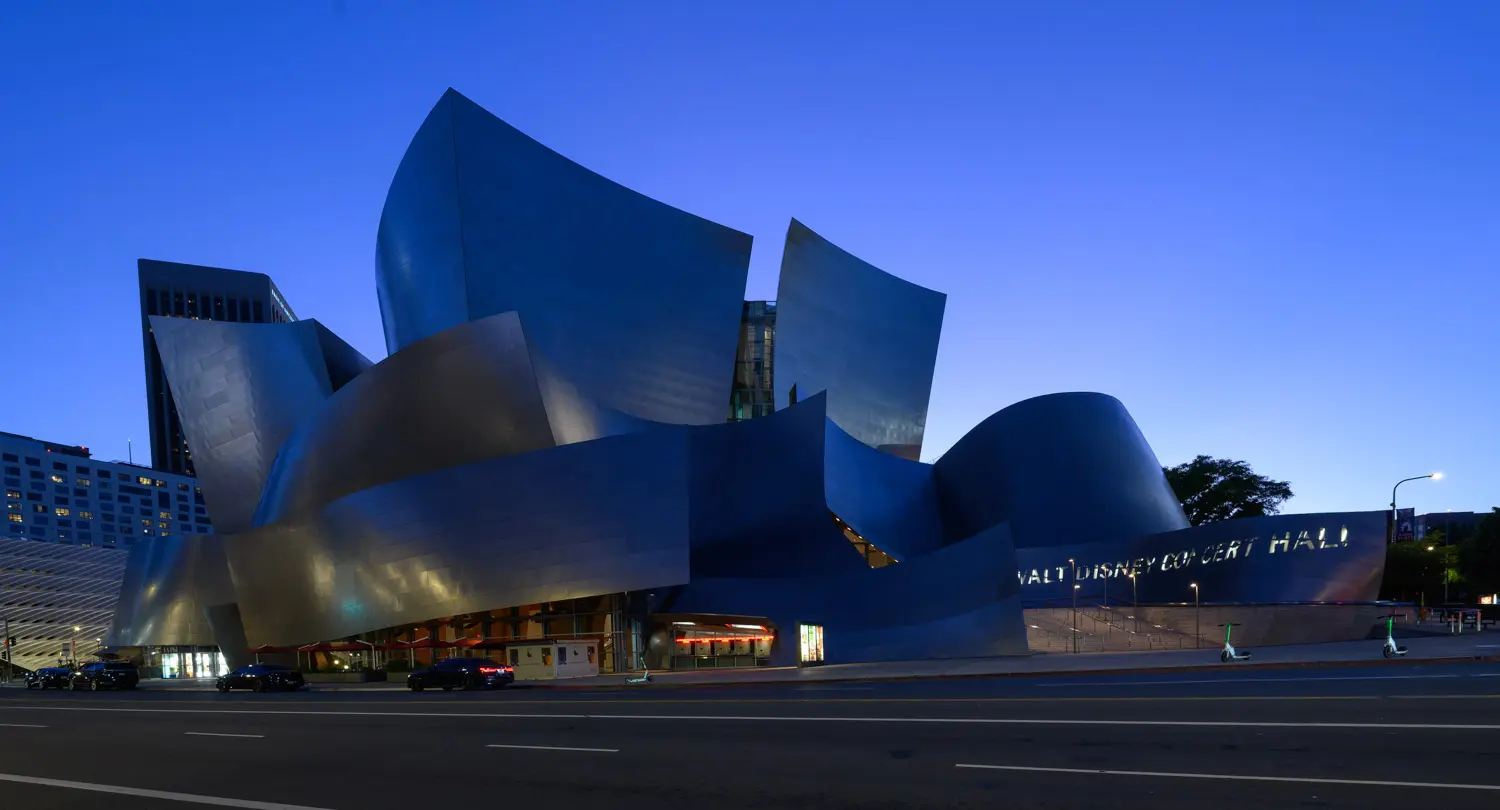
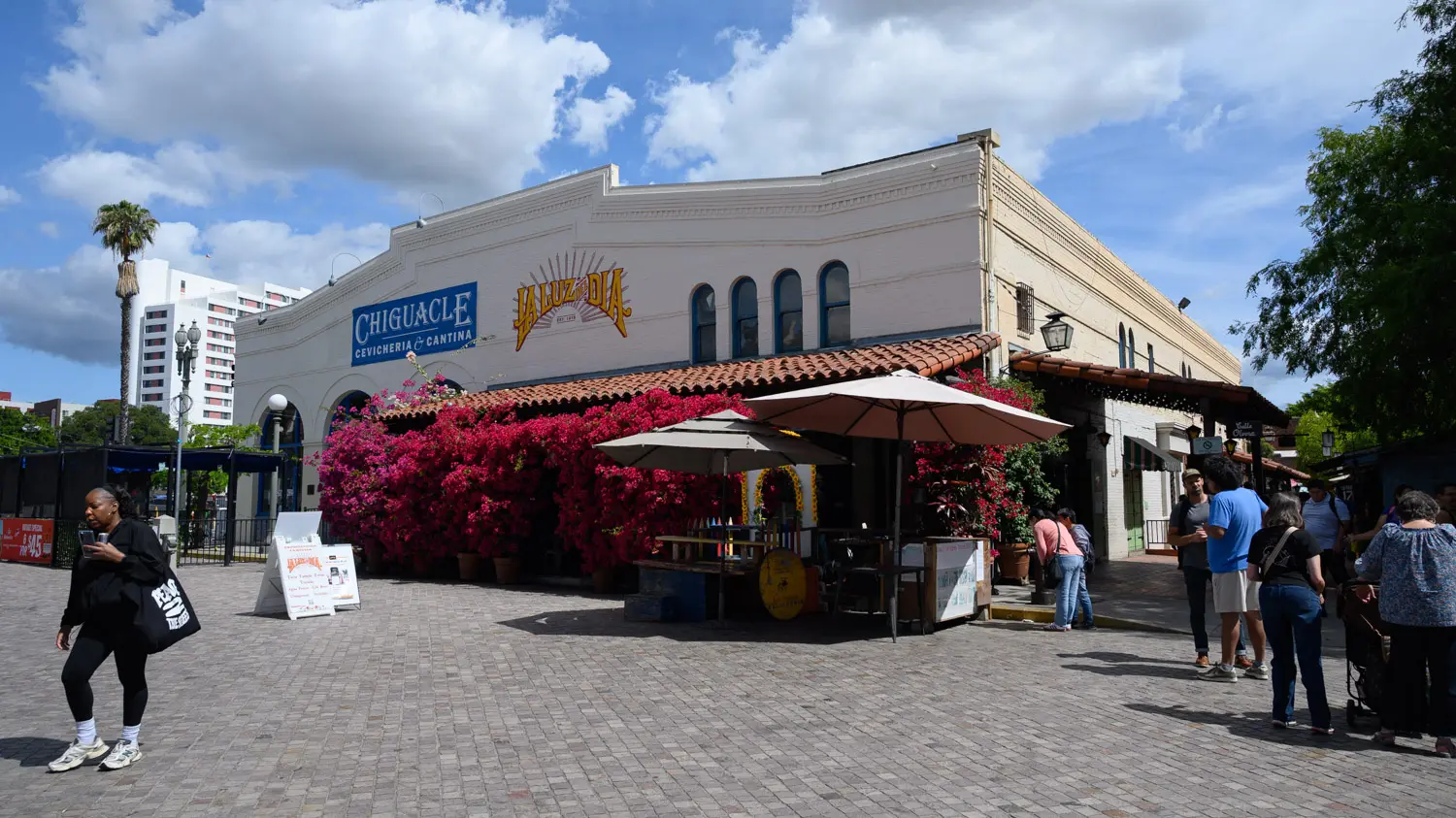
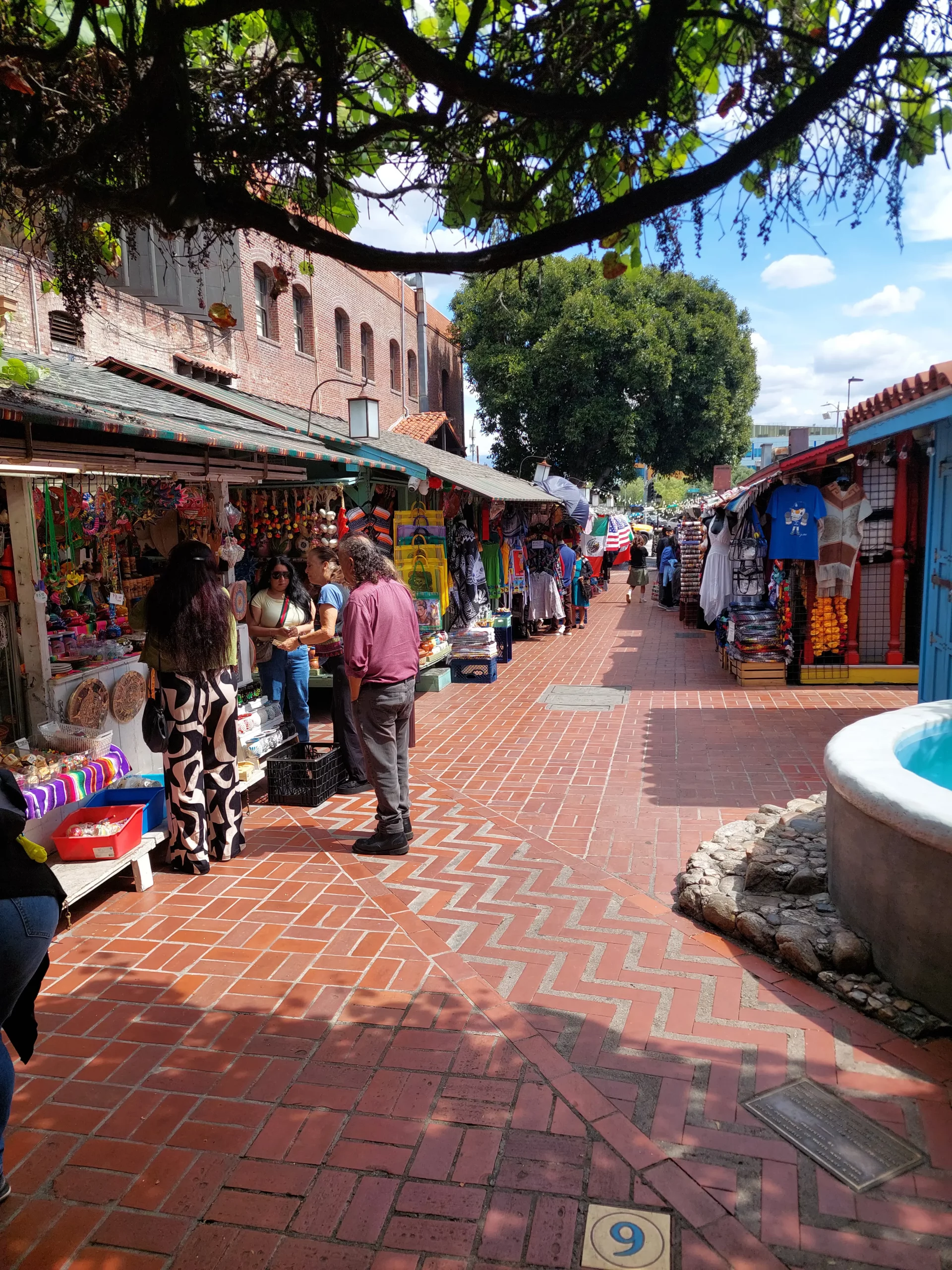
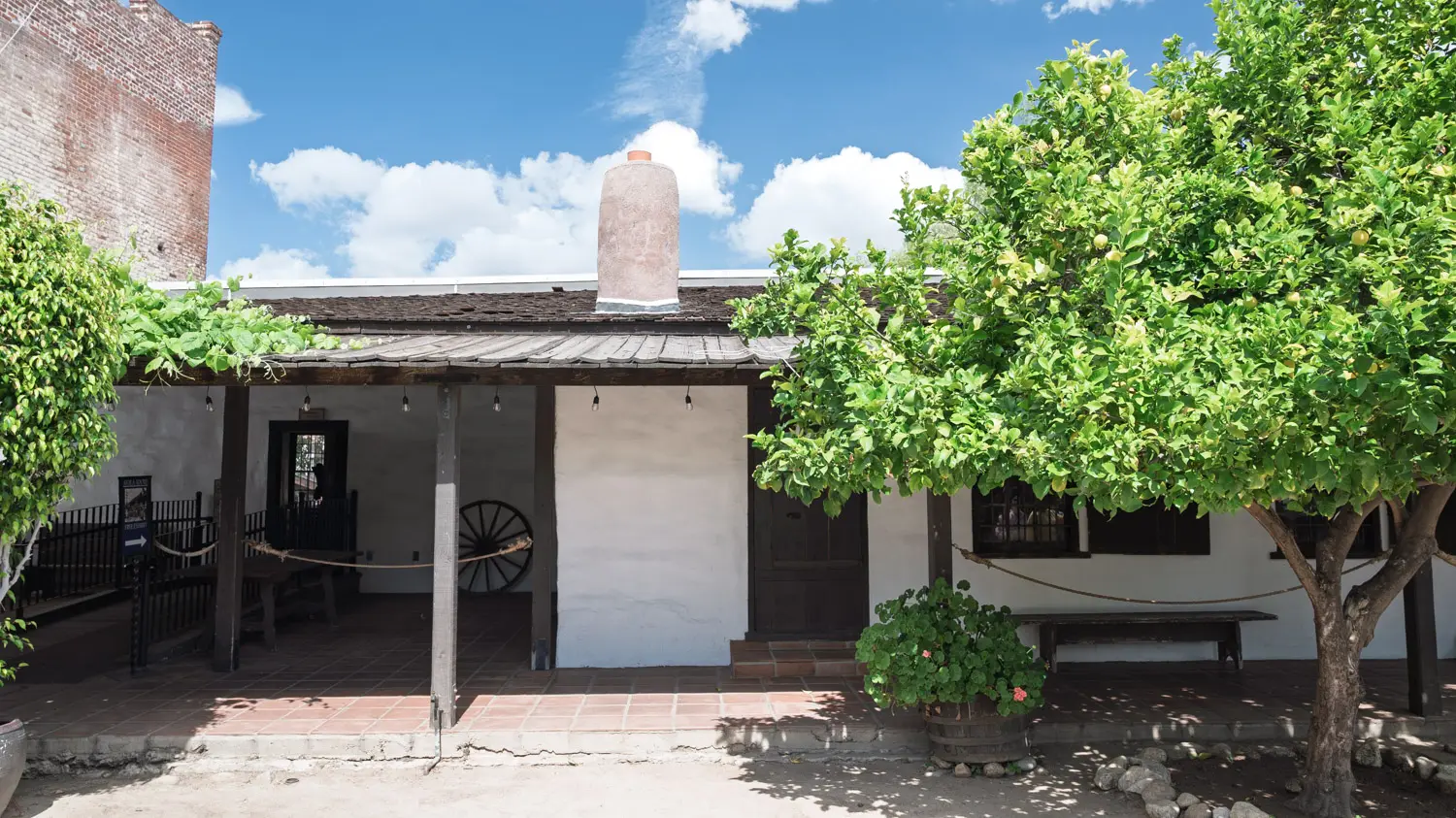
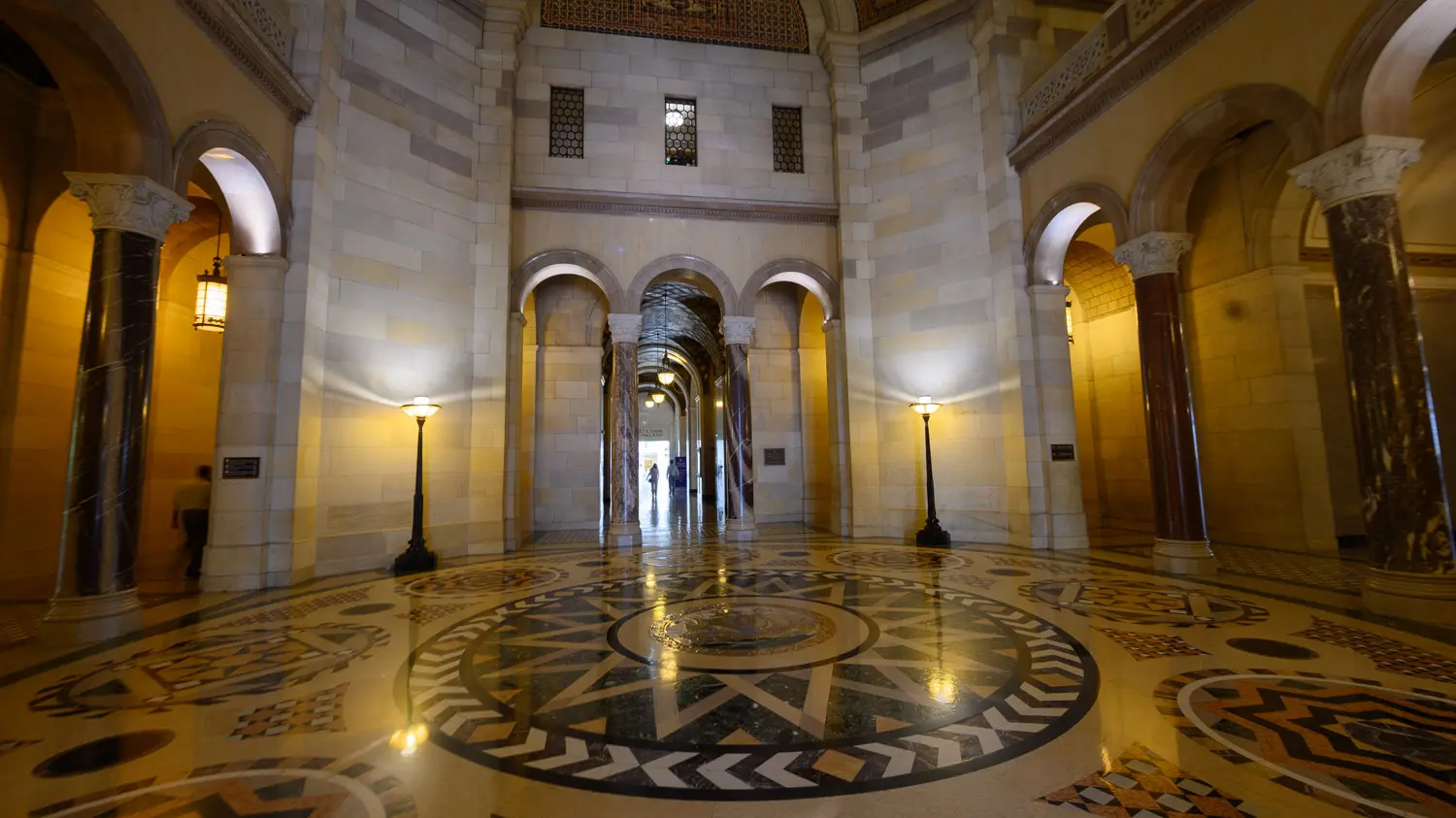
Downtown L.A. turned out to be a fascinating mixture of architecture, history, and culture. One moment we stood in front of the sweeping steel curves of the Walt Disney Concert Hall, designed by the American-Canadian architect Frank Gehry, whose work we somehow keep encountering in different countries as though we were on a Gehry world tour. The next moment we were wandering through the historic El Pueblo district and Olvera Street, where Los Angeles began as a small settlement and where the oldest surviving house, the Avila Adobe, still stands.
The area today feels part history lesson and part marketplace, filled with colorful stalls offering souvenirs and other trinkets, interspersed with Mexican food stalls. Had we arrived at lunchtime instead of several hours too early, we probably would have eaten here.
Chinatown, on the other hand, was less impressive. Perhaps this is unfair, but once you have seen New York City’s Chinatown, this one felt like a community theater production of the original. Still, we found a restaurant with a line outside — usually an excellent sign. Unfortunately, it turned out the line indicated popularity rather than efficiency.
Kathrin’s meal arrived quickly. Mine disappeared into what I can only assume was a separate, really slow, production line. Twenty minutes later, and only after asking about it, my food finally appeared. So, we spent lunch taking turns watching each other eat like actors in a comedy skit.
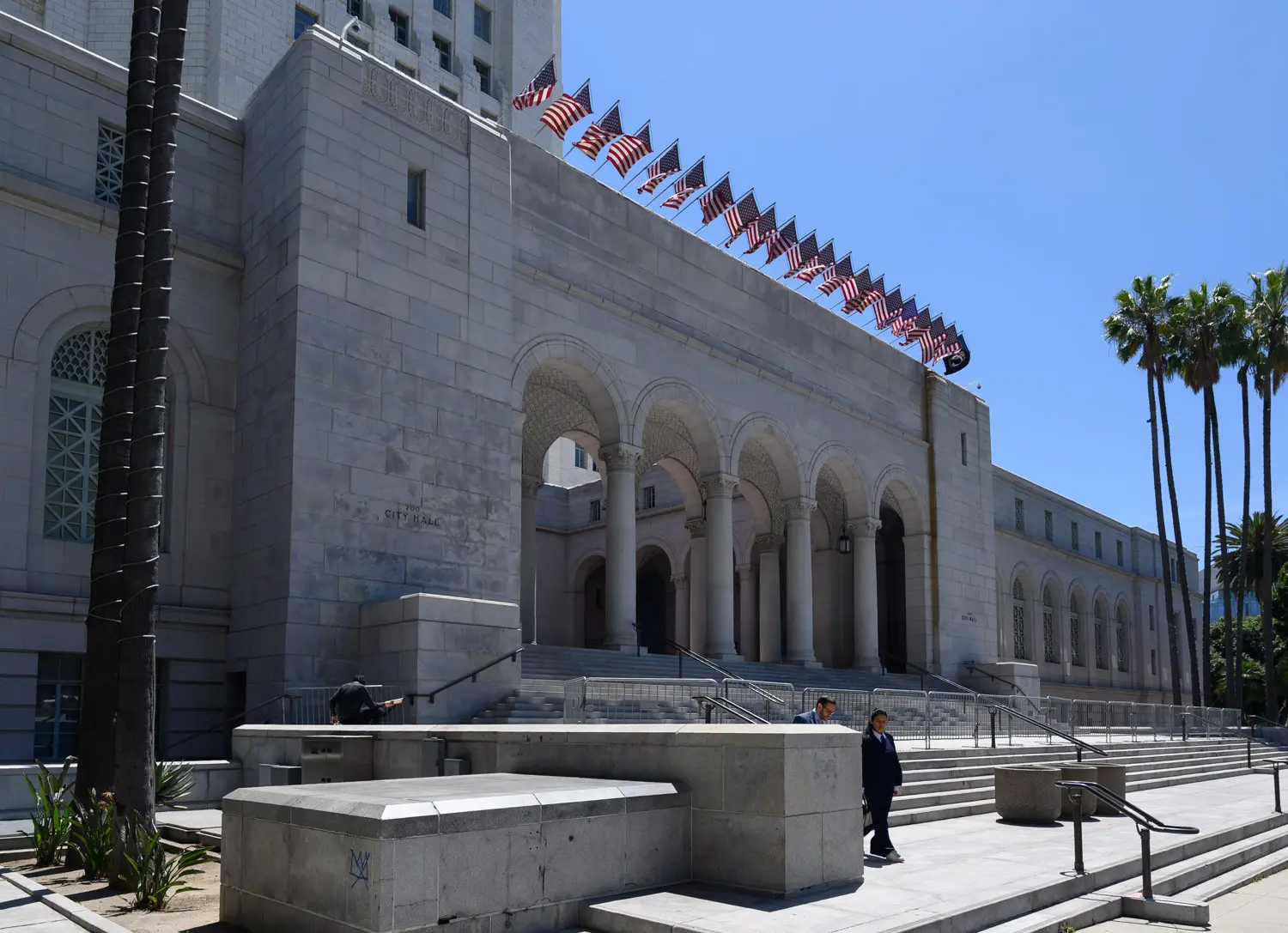
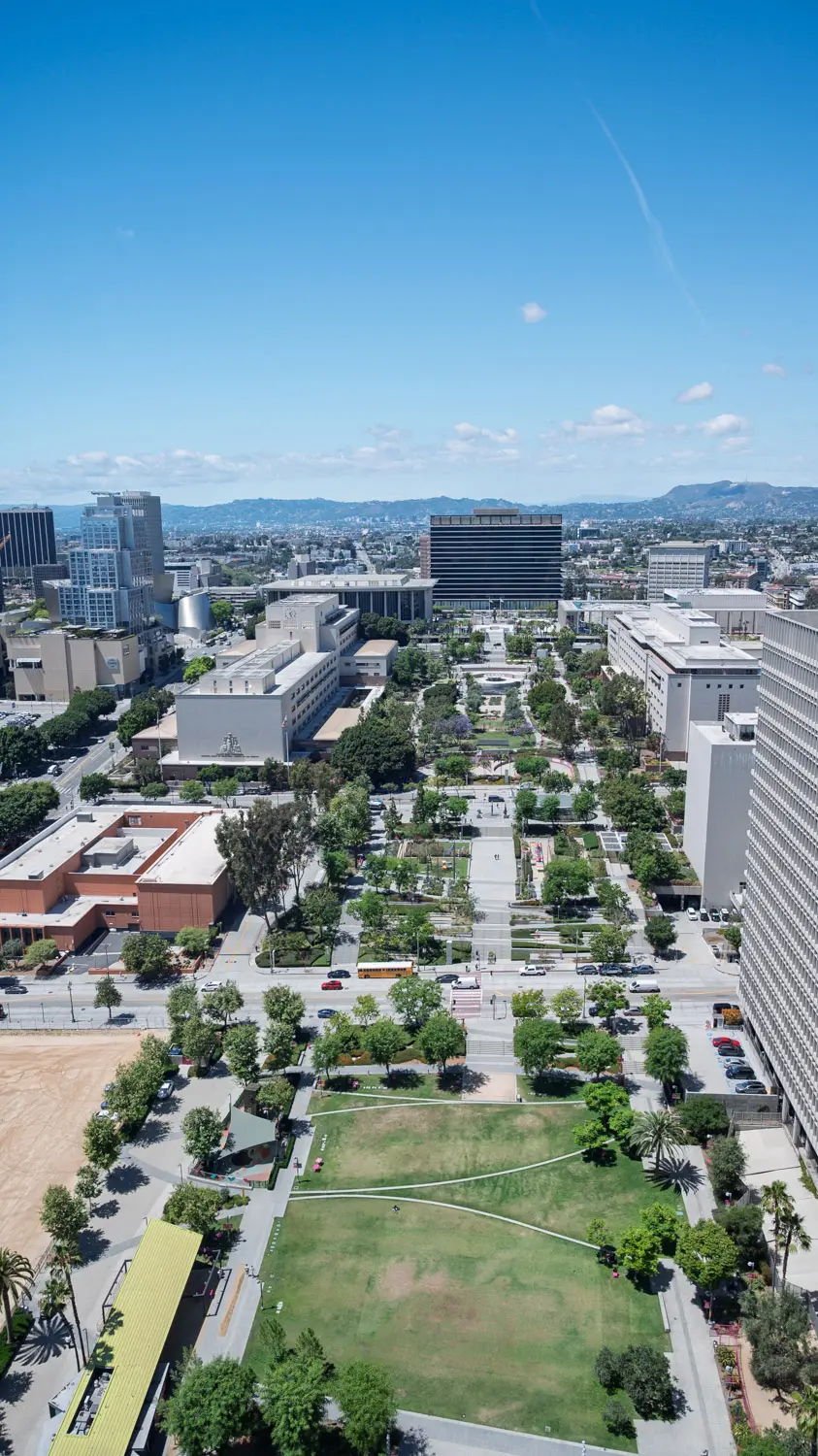
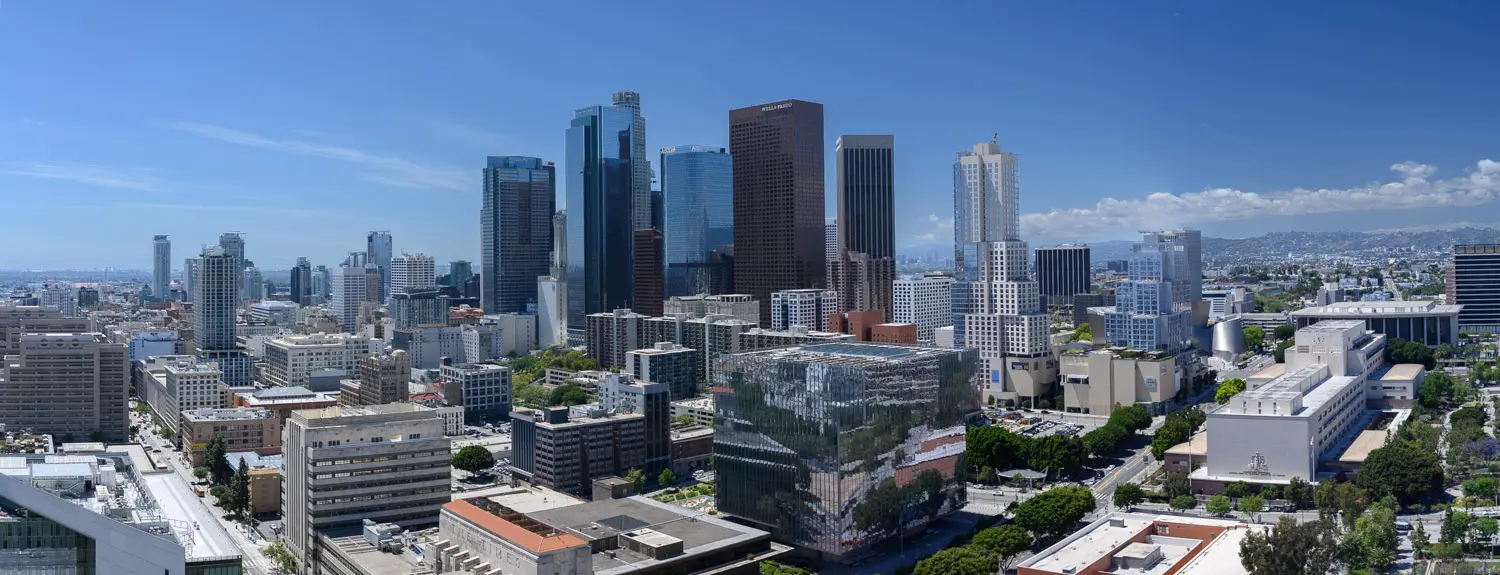
One of the highlights of downtown was the observation deck at City Hall. From the 27th floor, Los Angeles stretches endlessly toward the horizon in every direction, a sea of buildings fading into the hazy distance. The deck itself is surprisingly narrow, which adds a slight sense of danger to the experience — not real danger, of course, just enough to remind Kathrin that she was never meant to stand twenty-seven stories above the ground voluntarily.
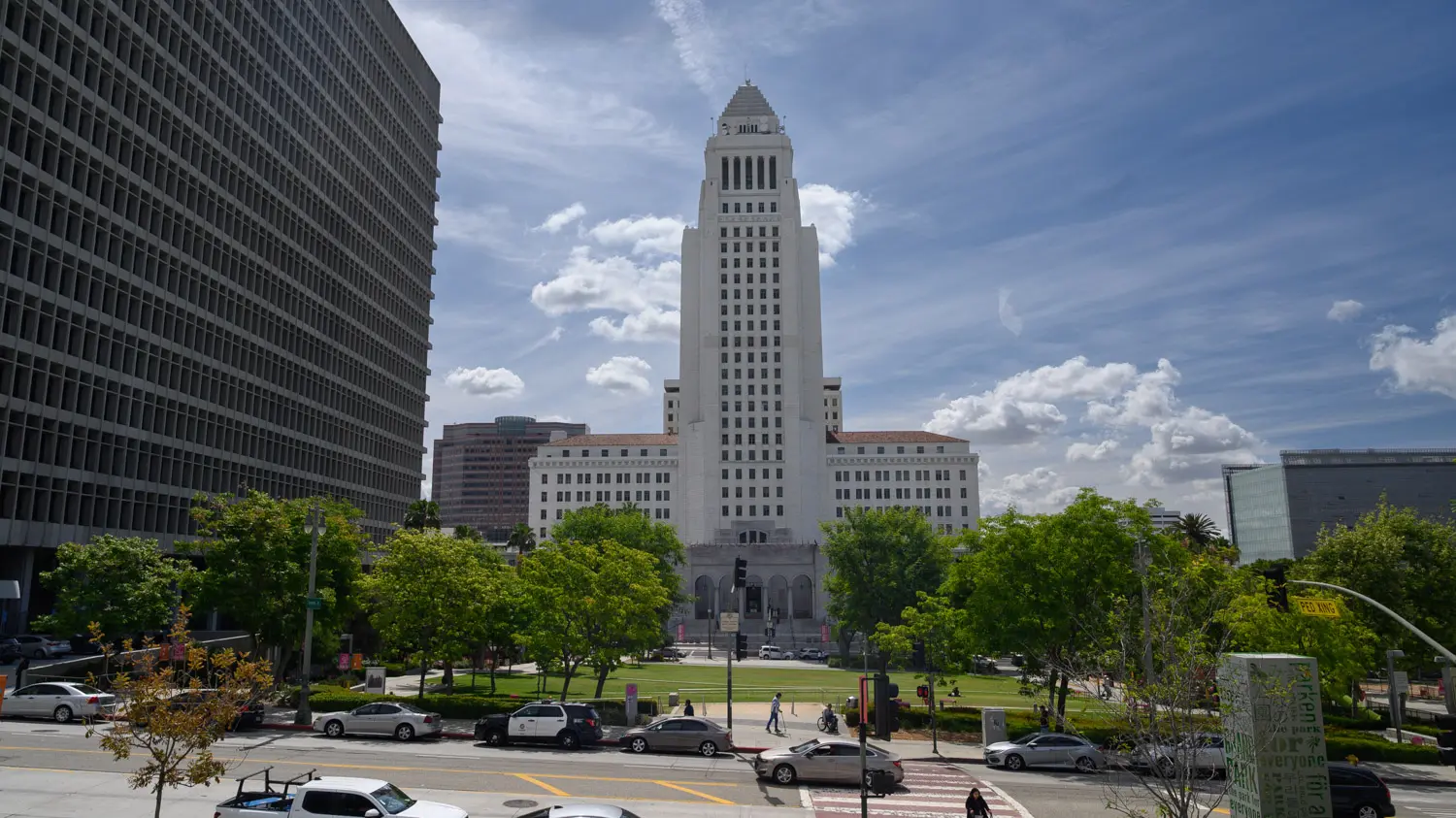 LA City Hall
 The Infinity Mirrored Room
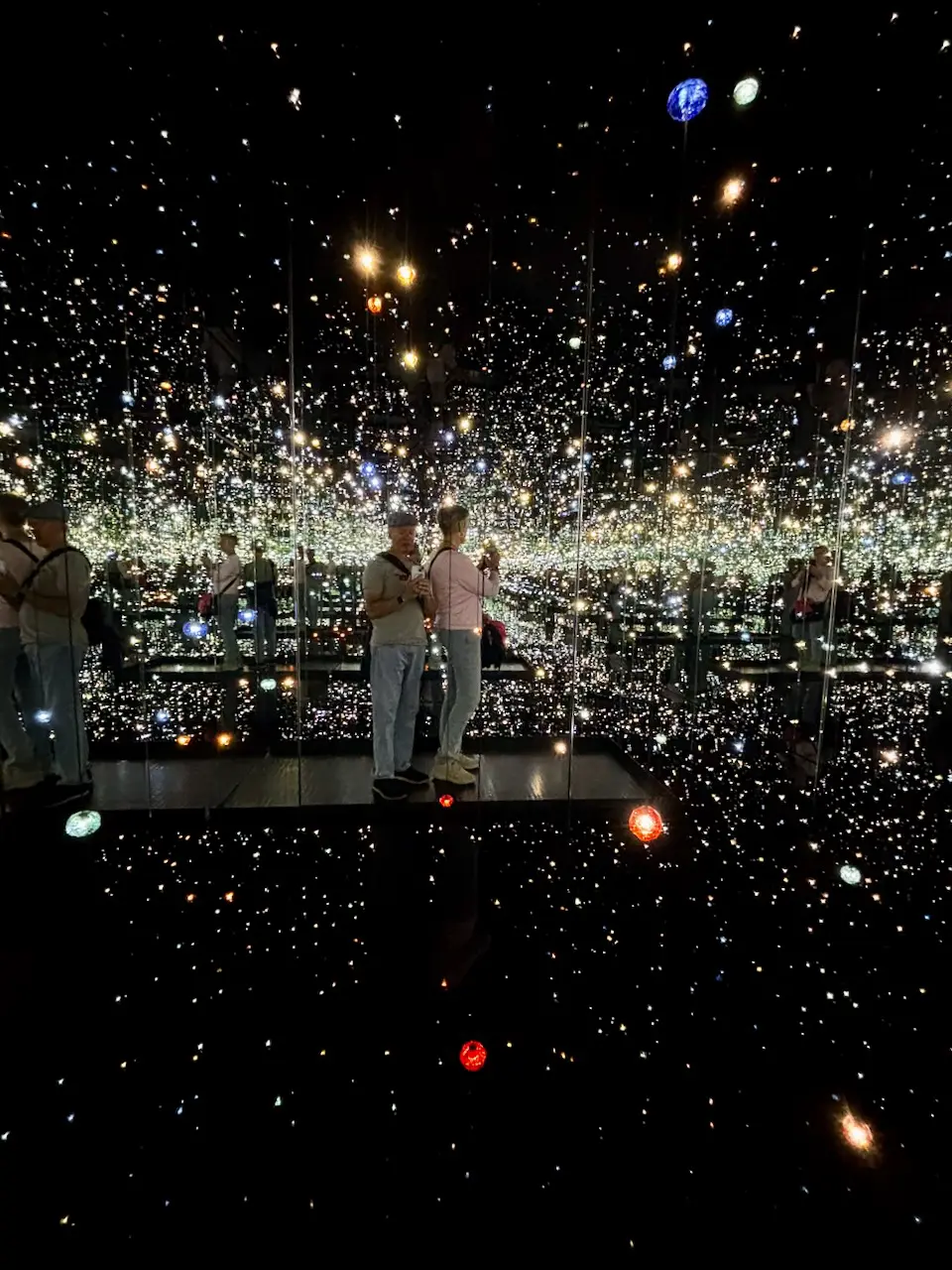
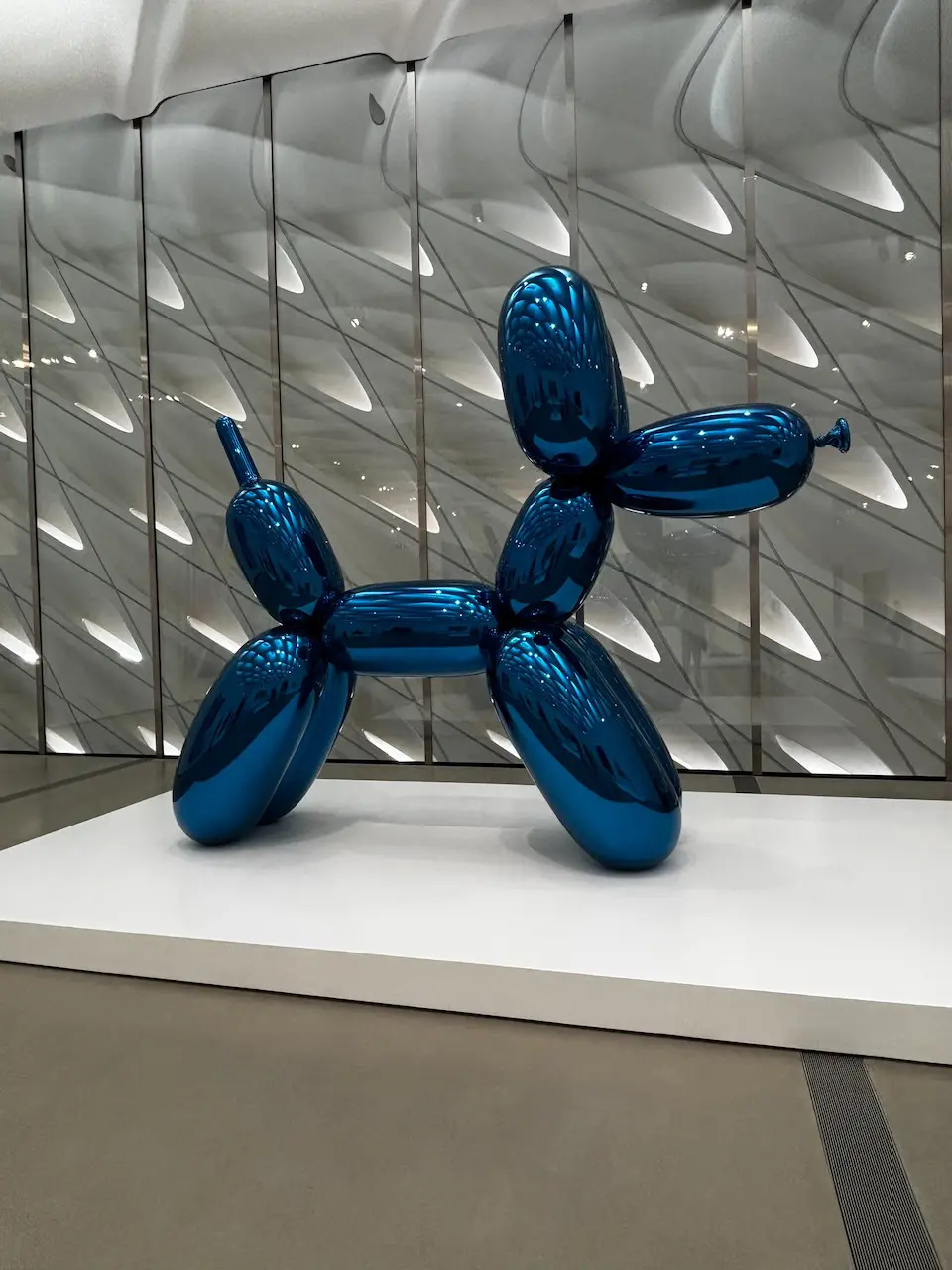
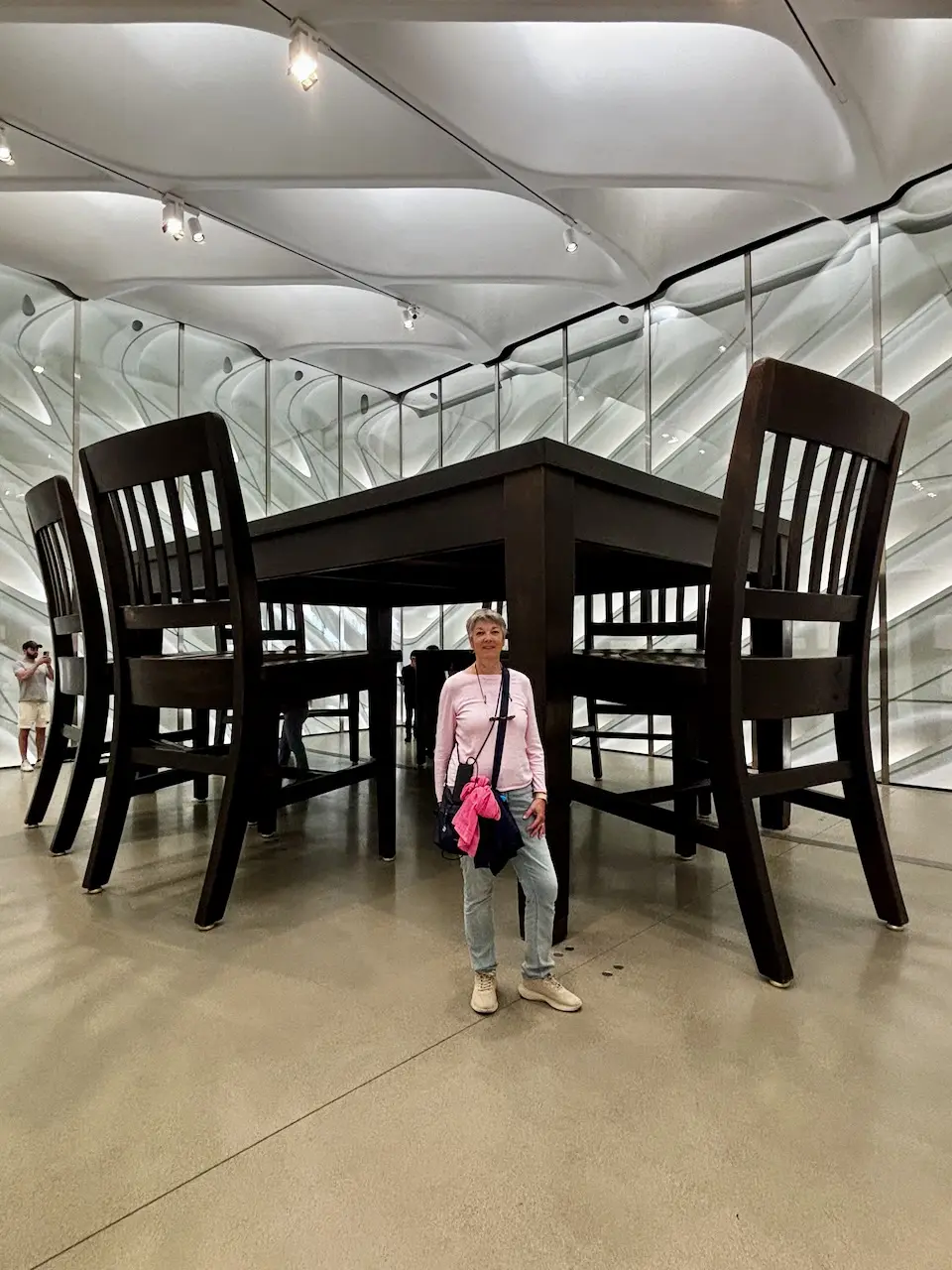
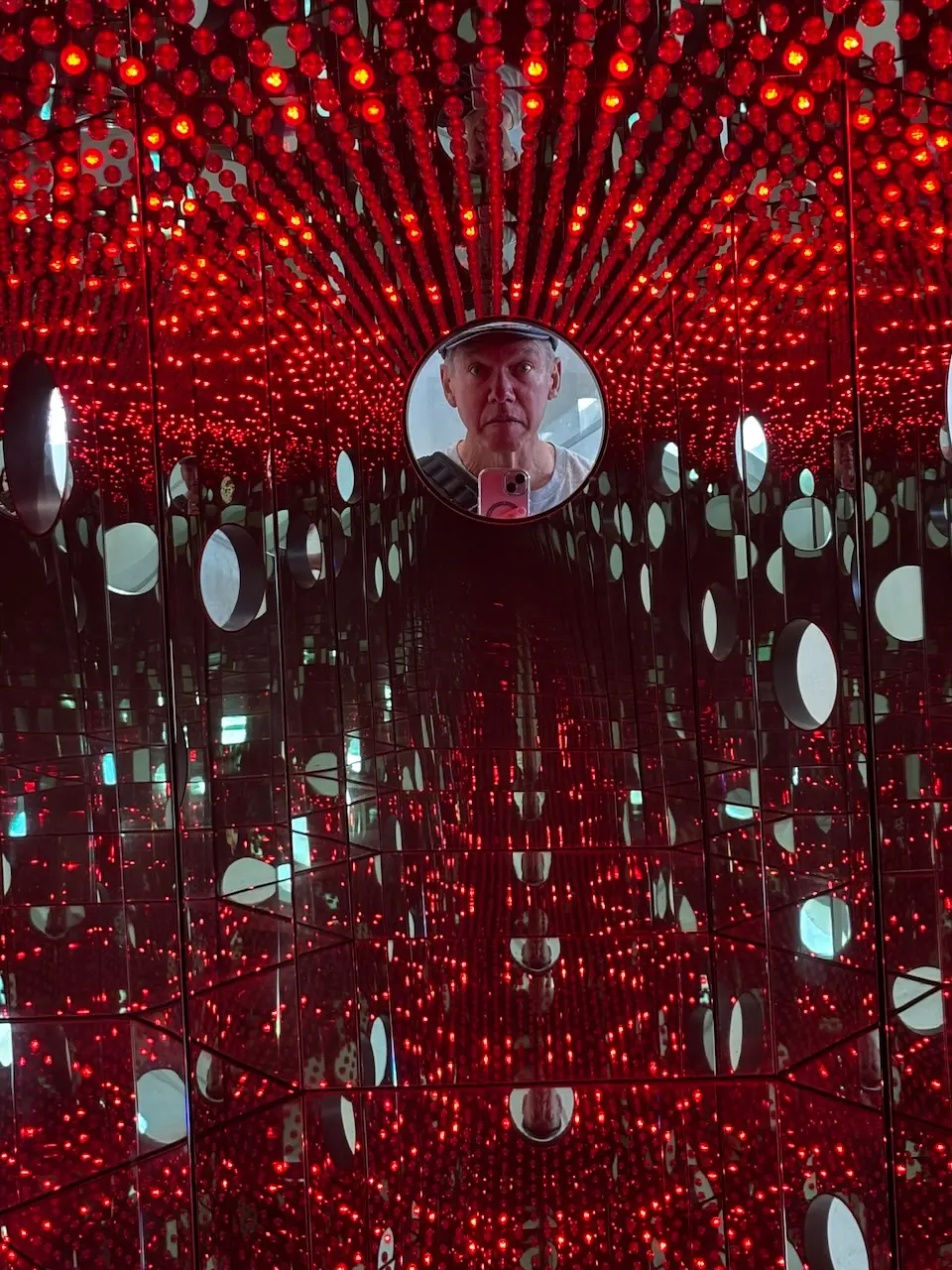
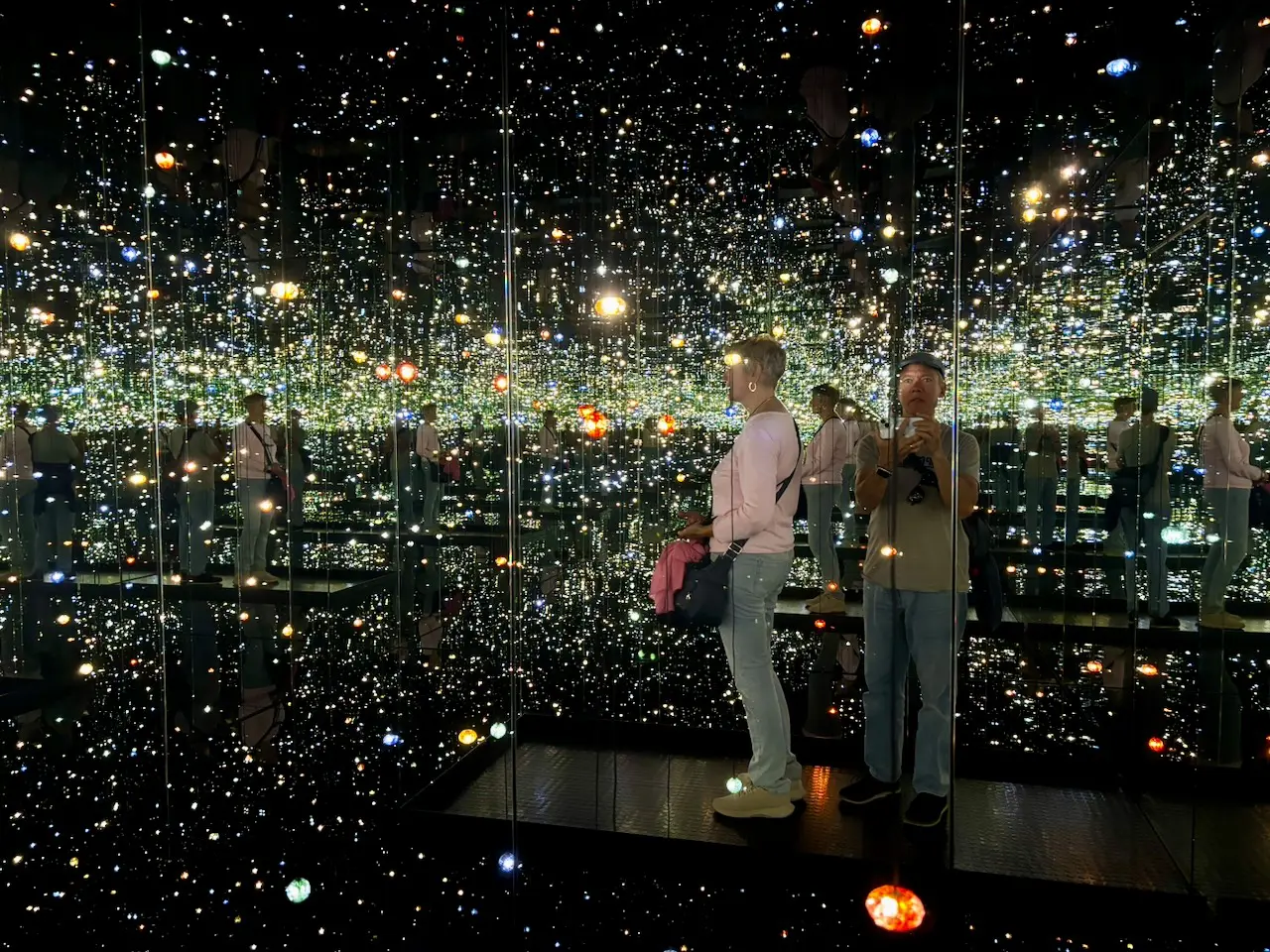
The Broad Museum was another standout. We had reserved a timeslot for Yayoi Kusama’s “Infinity Mirrored Rooms,” an installation I had never heard of beforehand. After waiting in line for 20 minutes, we were granted exactly two minutes inside.
Two minutes sounds absurdly short until you enter the room. Then time becomes strangely irrelevant. Mirrors, lights, reflections, and infinite repetition create the unsettling feeling that you have accidentally stepped inside a science fiction movie’s rendition of a black hole (Interstellar anyone?. It was genuinely impressive.
Afterwards we explored the rest of the museum, which featured contemporary art ranging from fascinating to head-scratchingly strange.
In Downtown L.A. you also find Angel’s Flight, a tiny 118-year-old funicular railway famous for appearing in films including La La Land. The ride lasts about thirty seconds, which somehow makes it feel even more charming. There is something oddly appealing about building an entire railway to avoid walking up one steep hill.
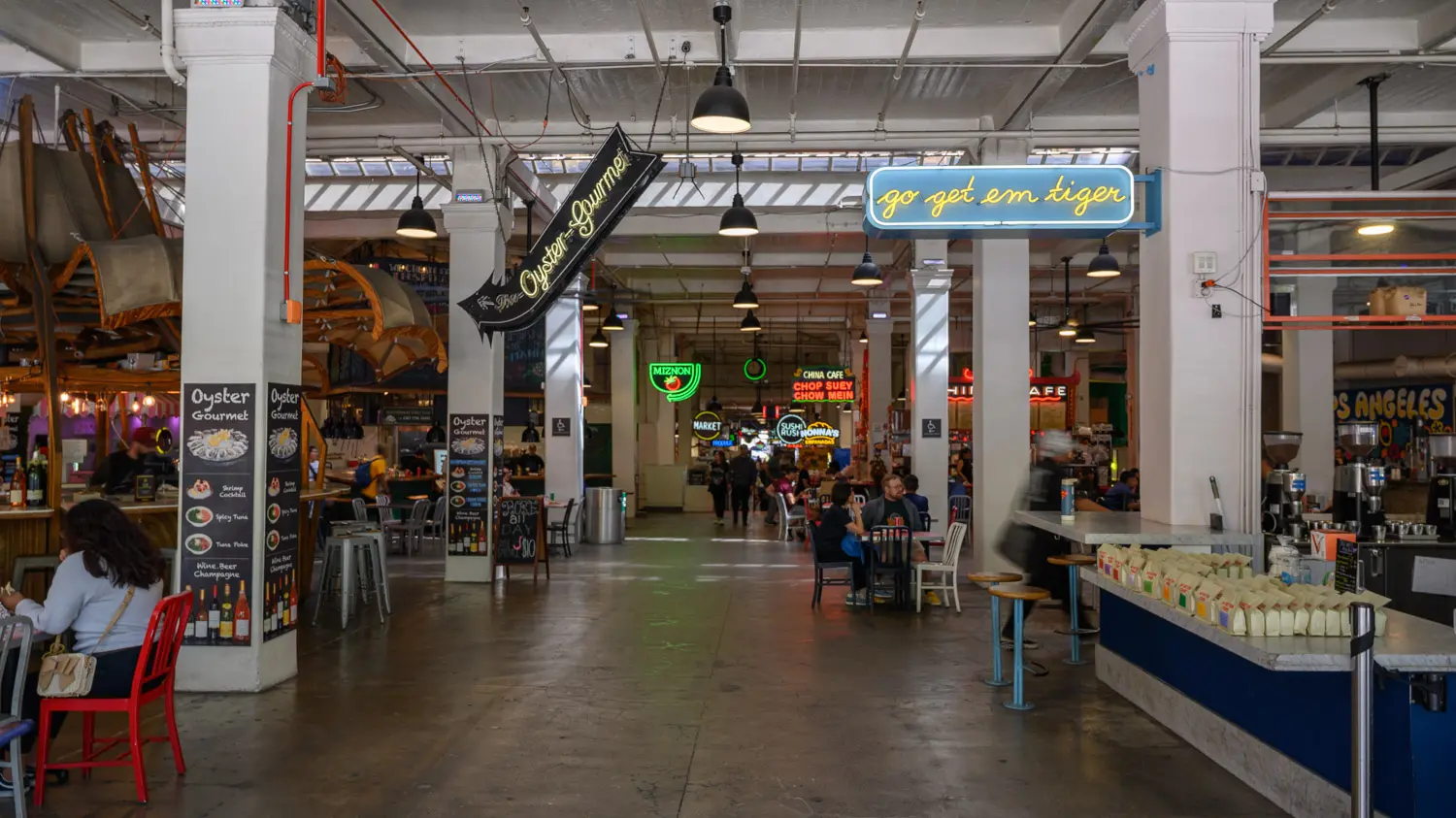
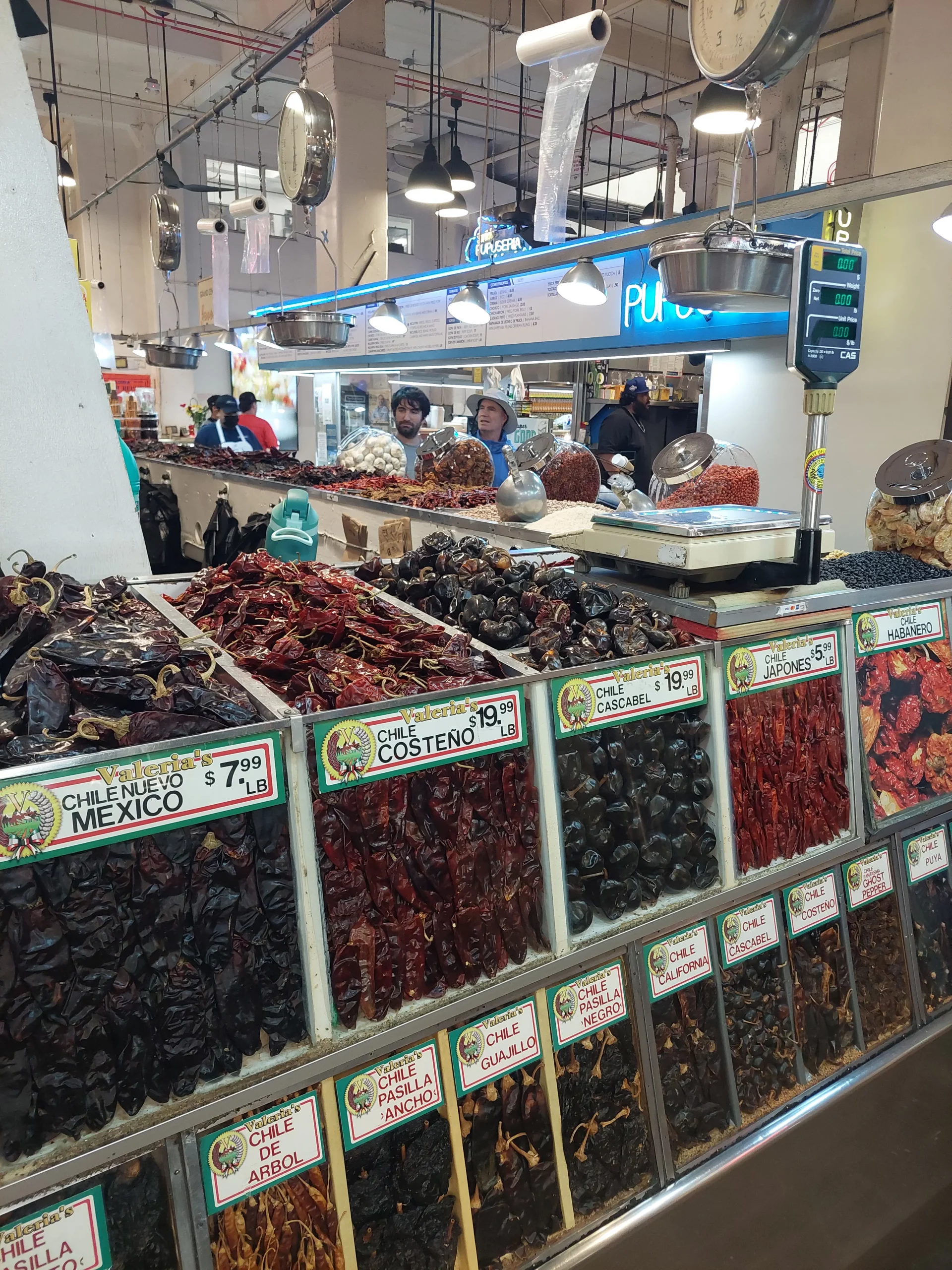
And then there was Grand Central Market. We have visited markets all over the world, and at first glance this one looked much the same — crowded food counters, trendy drinks, tourists, locals, noise, smells, and endless choices. But one feature made it uniquely memorable: the prices. A smoothie cost $12. A single scoop of ice cream was $7.50. At that point I no longer felt like a customer. I felt like the victim of an elaborate financial prank. I briefly considered reporting the smoothie stand to the authorities for attempted robbery.
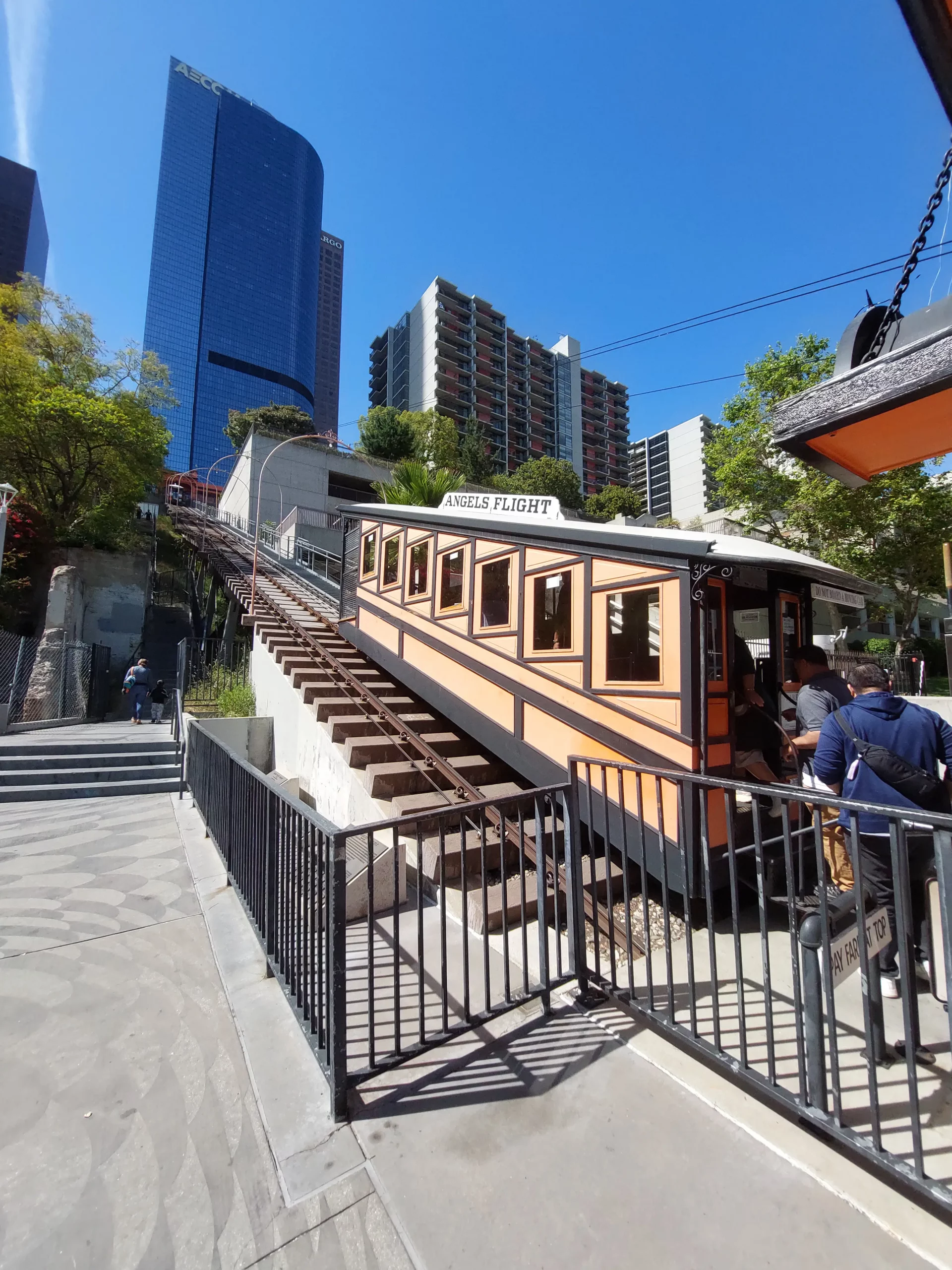 Angels Flight
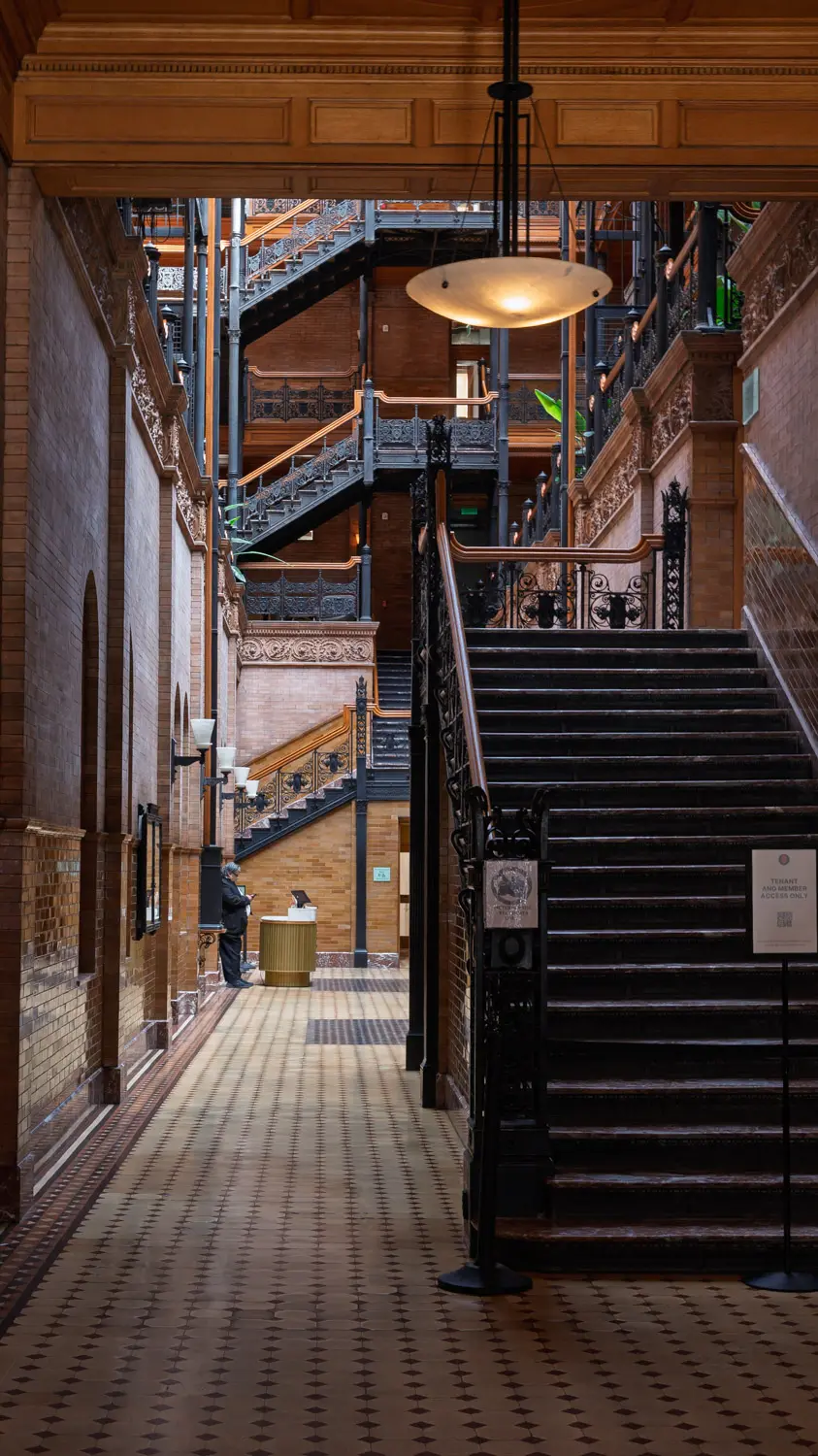 The inner courtyard of the Bradbury Building
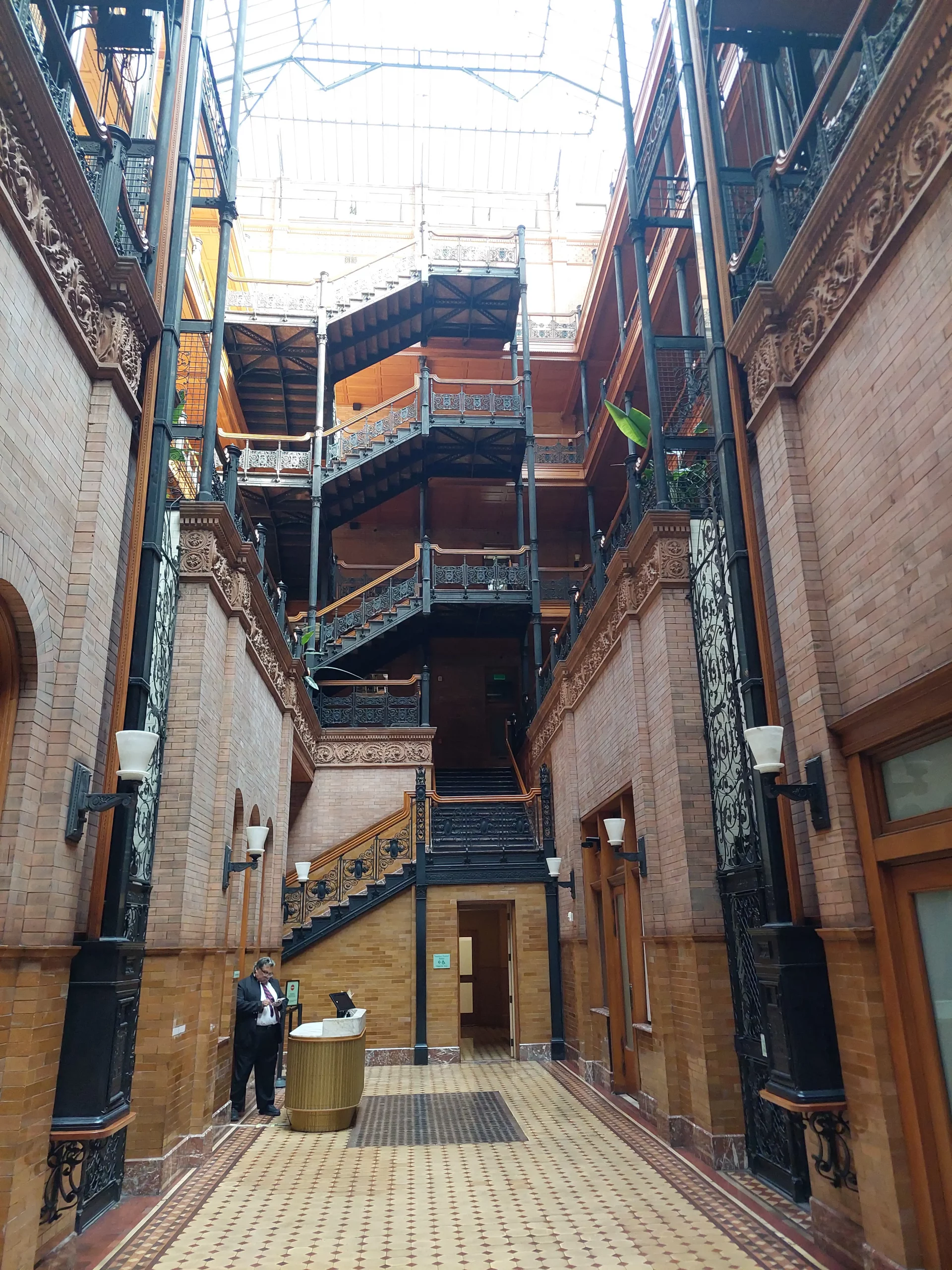
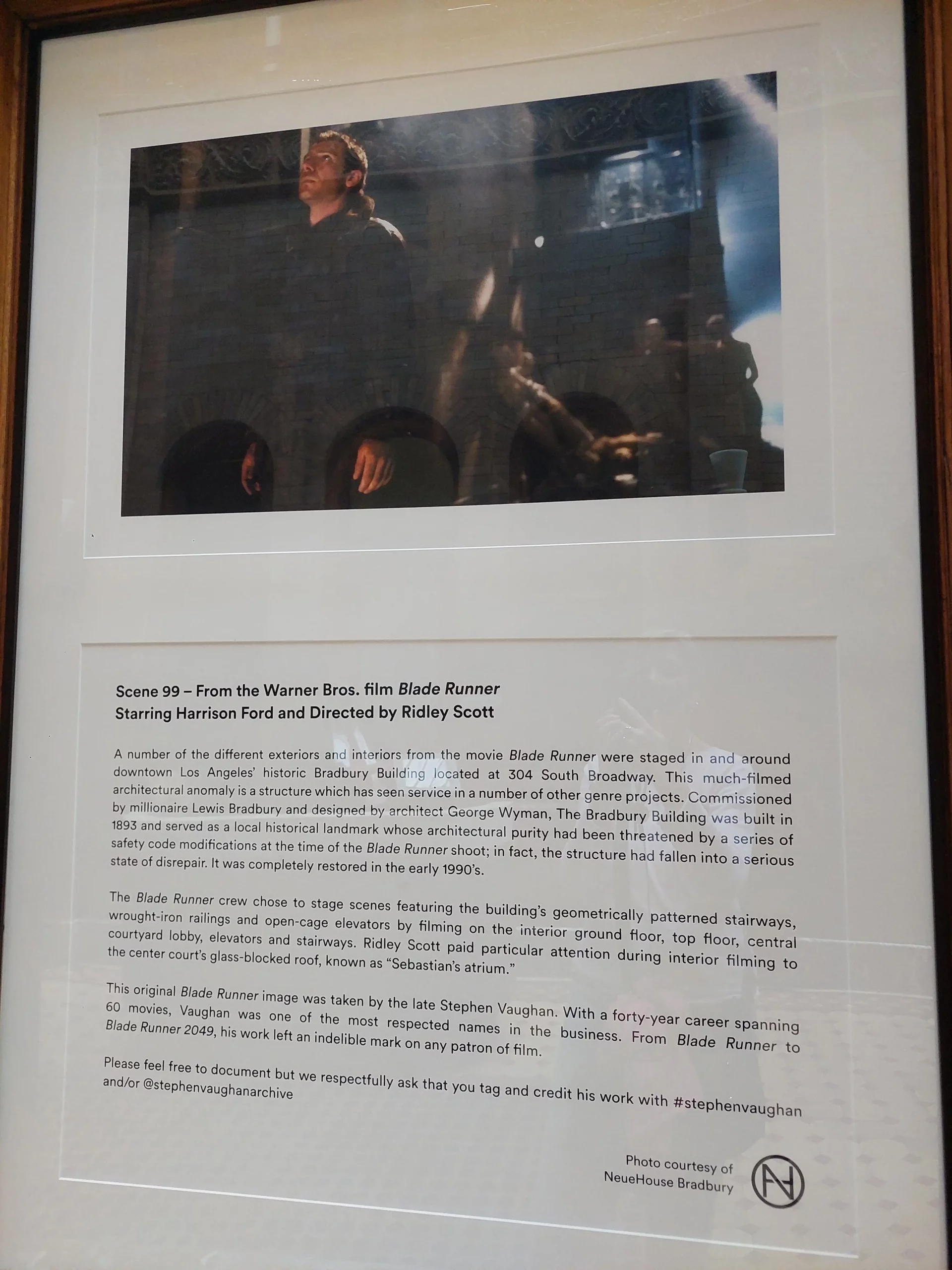
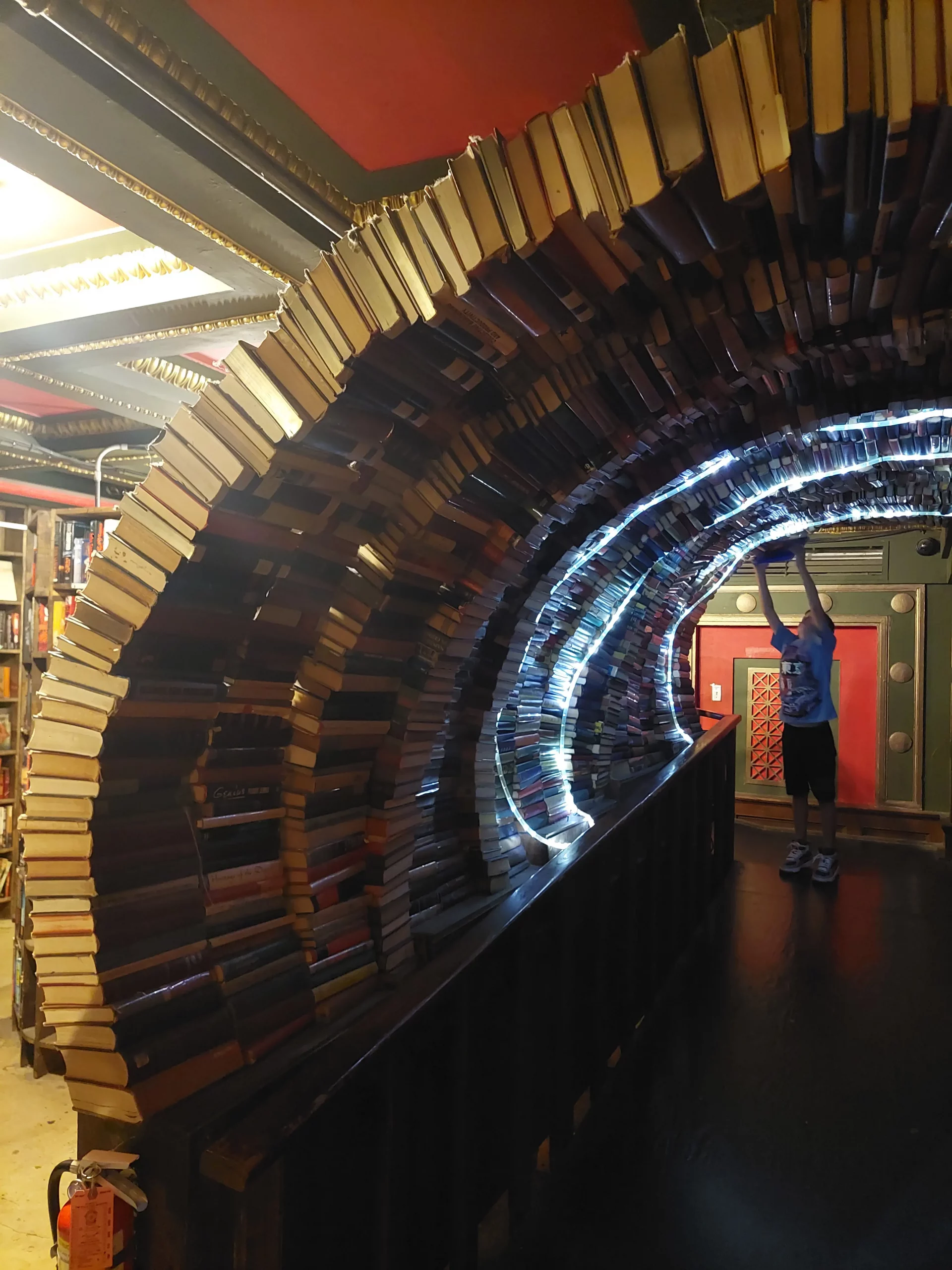
The Bradbury Building had appeared in many films and TV shows, but it was made famous in the original Blade Runner movie. You can visit the courtyard, but you can’t take pictures with a “professional camera”, phones only.
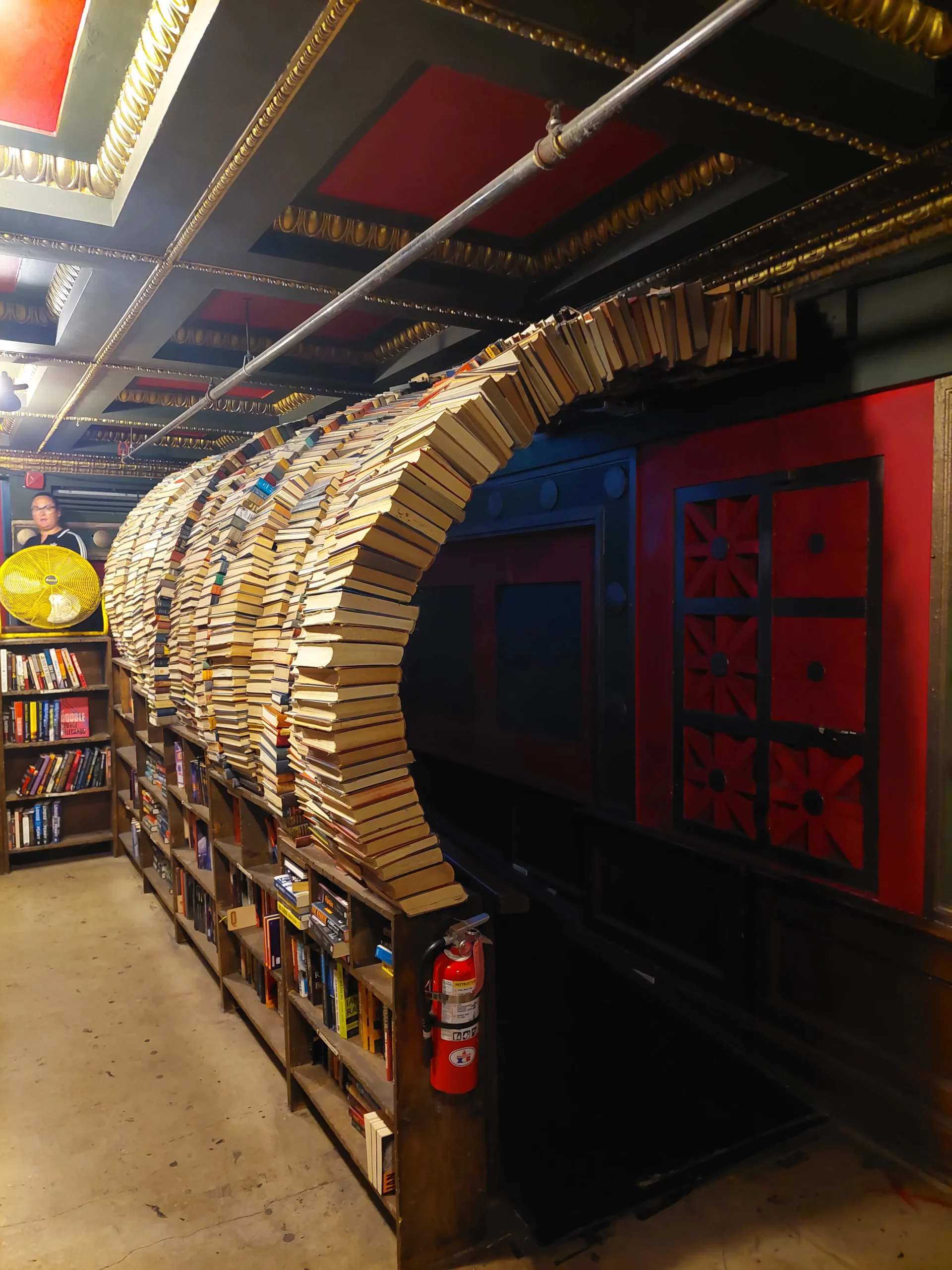
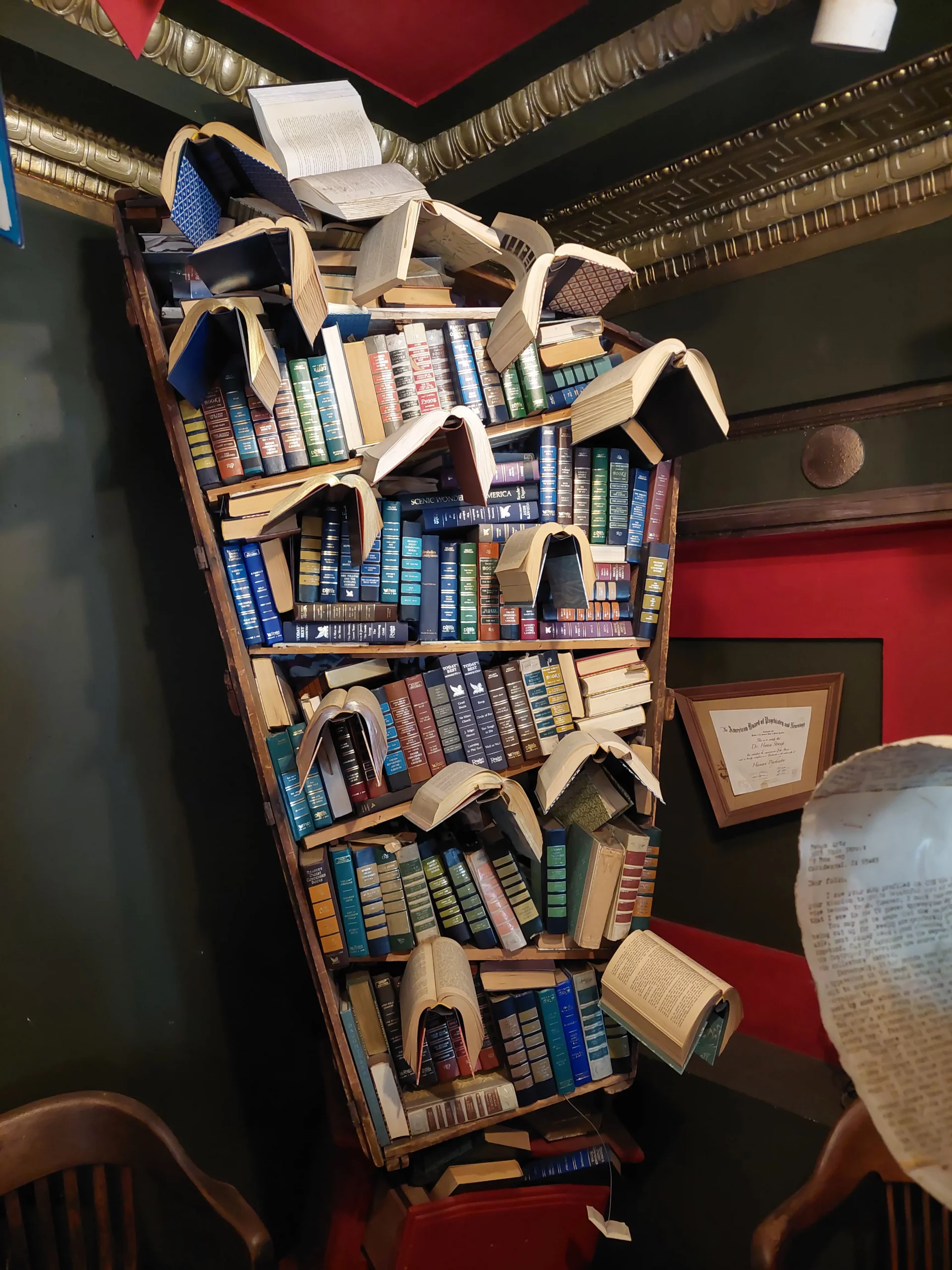
Our last stop of the day was, very matching, at the Last Bookstore, an Instagram darling. It is not your typical bookseller. This interior design reminded me of some quirky place from a Harry Potter movie. Books everywhere, but hardly a straight shelf to be found, instead walls of books, hidden niches, and an electric chair on the second floor. This is, after all, L.A.
Day 2: Hollywood
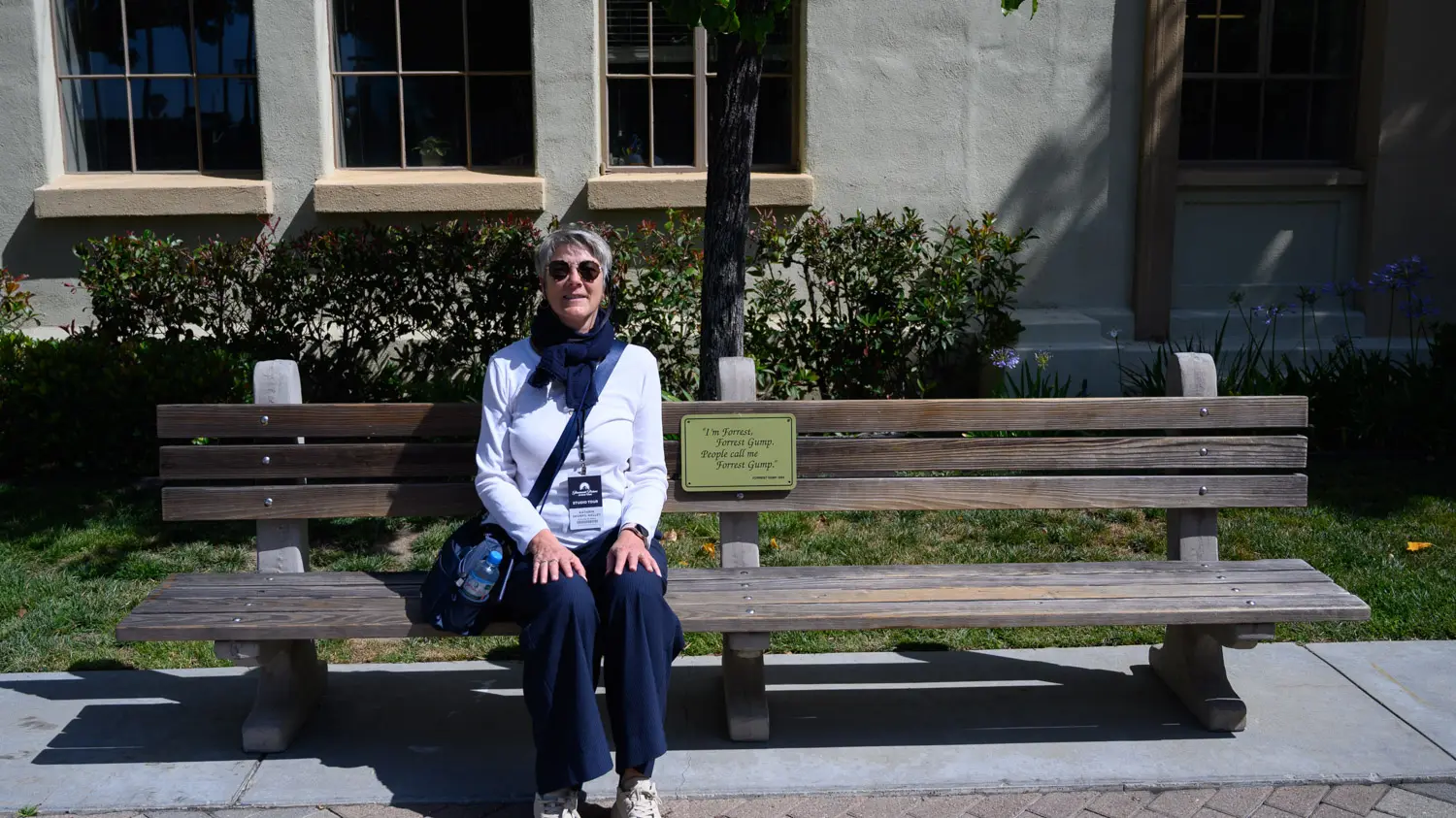
We started the day with one of the highlights of the trip: a tour of Paramount Studio.
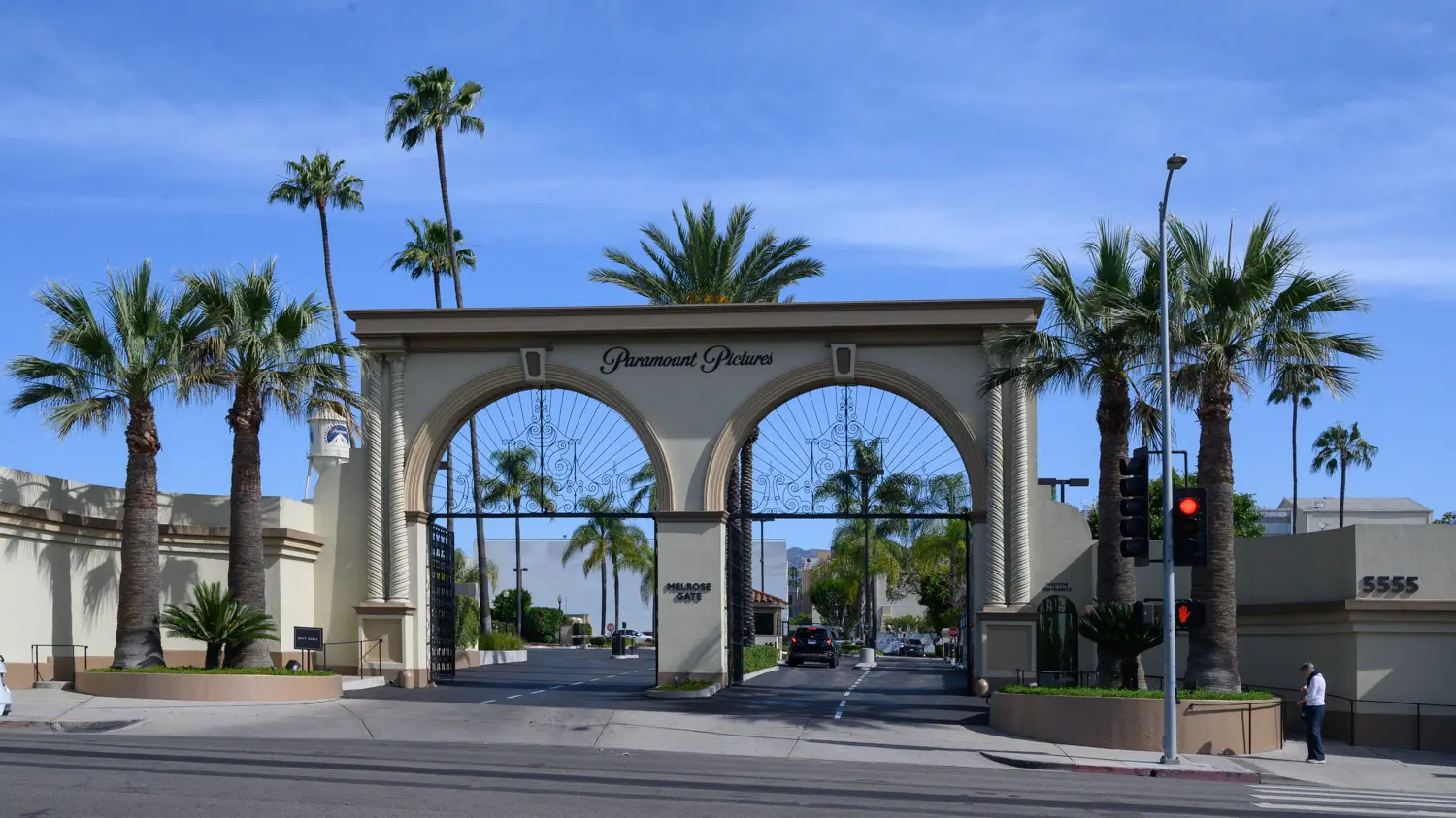 The main entrance, for employees.
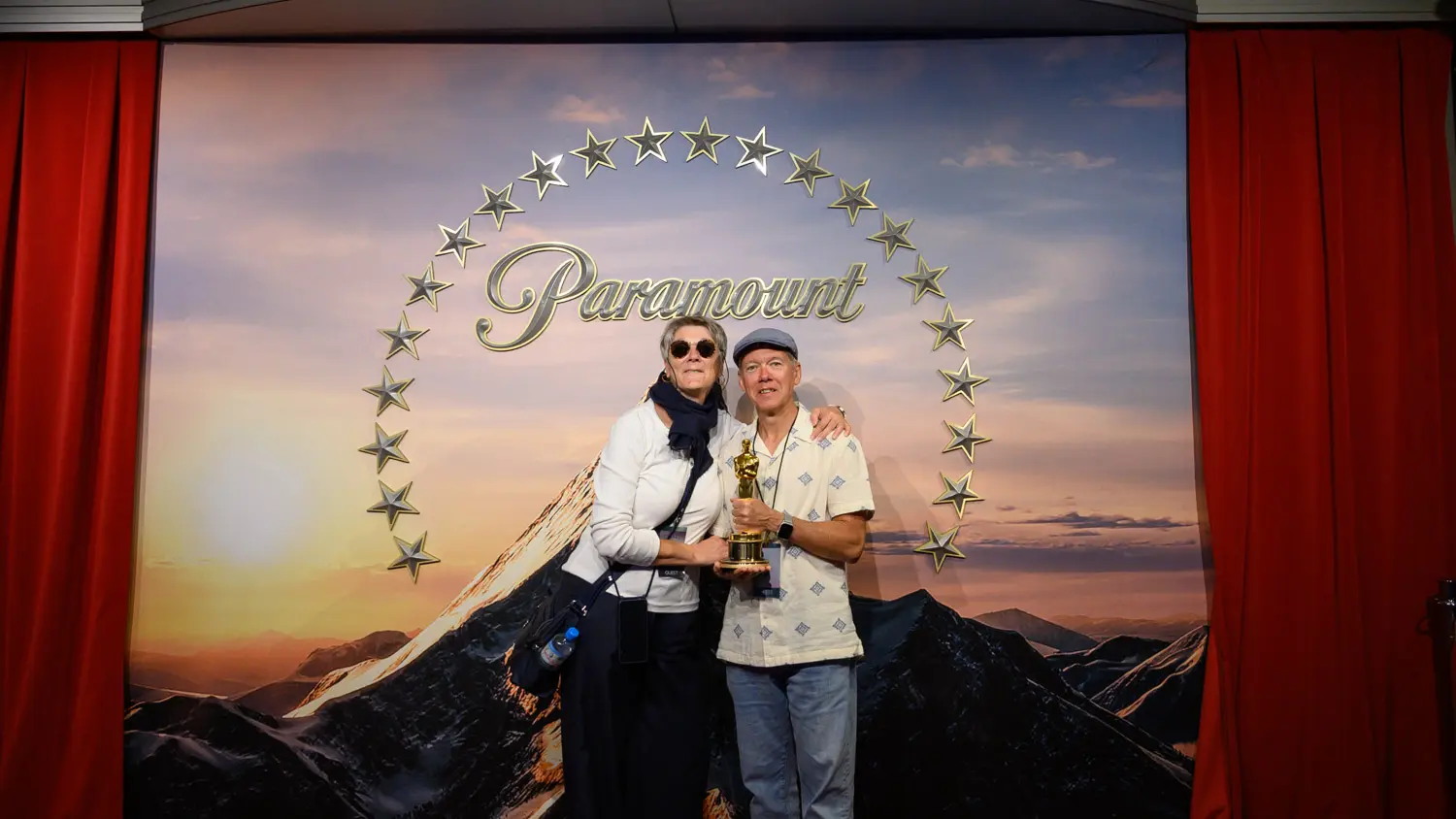
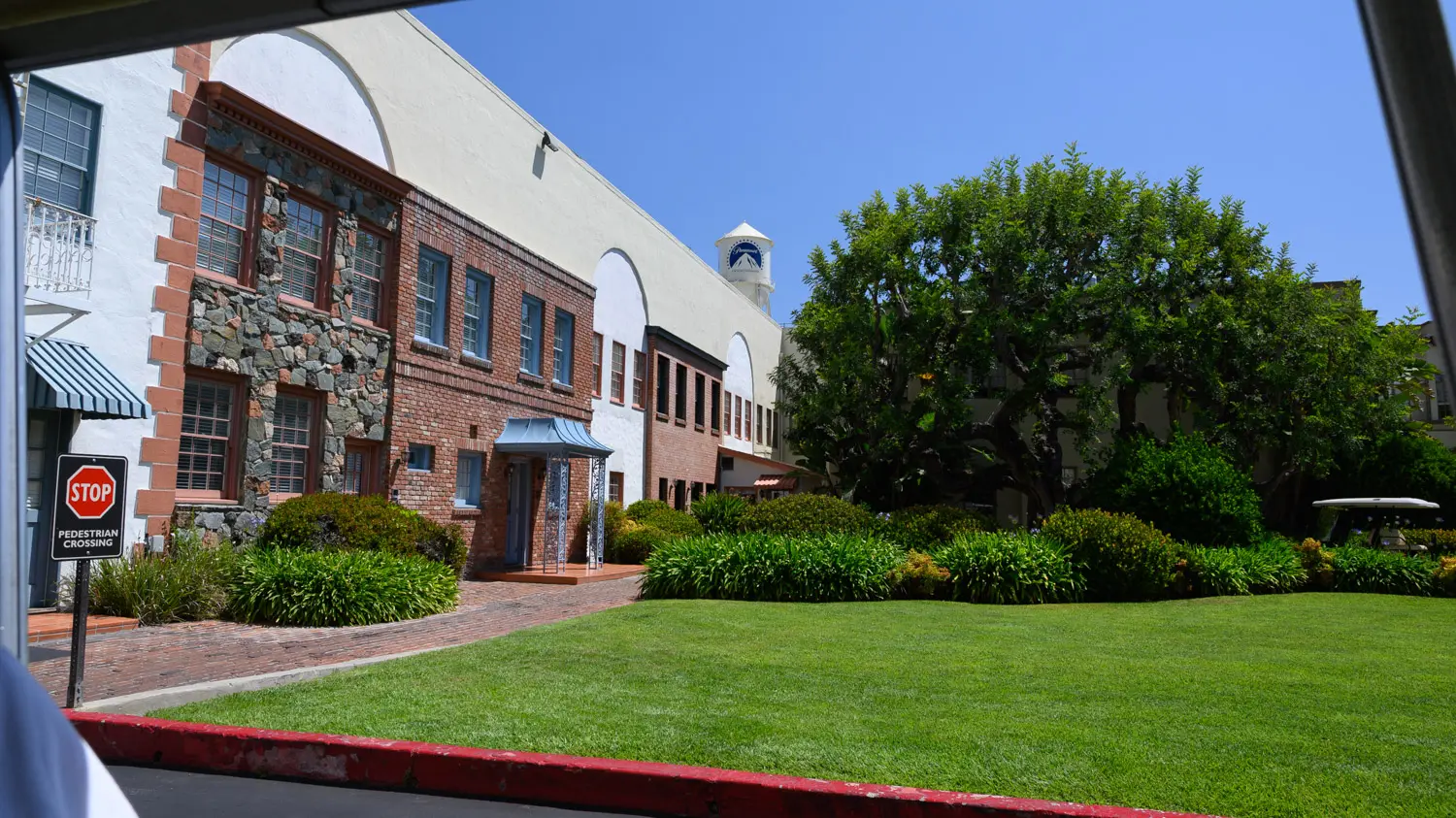
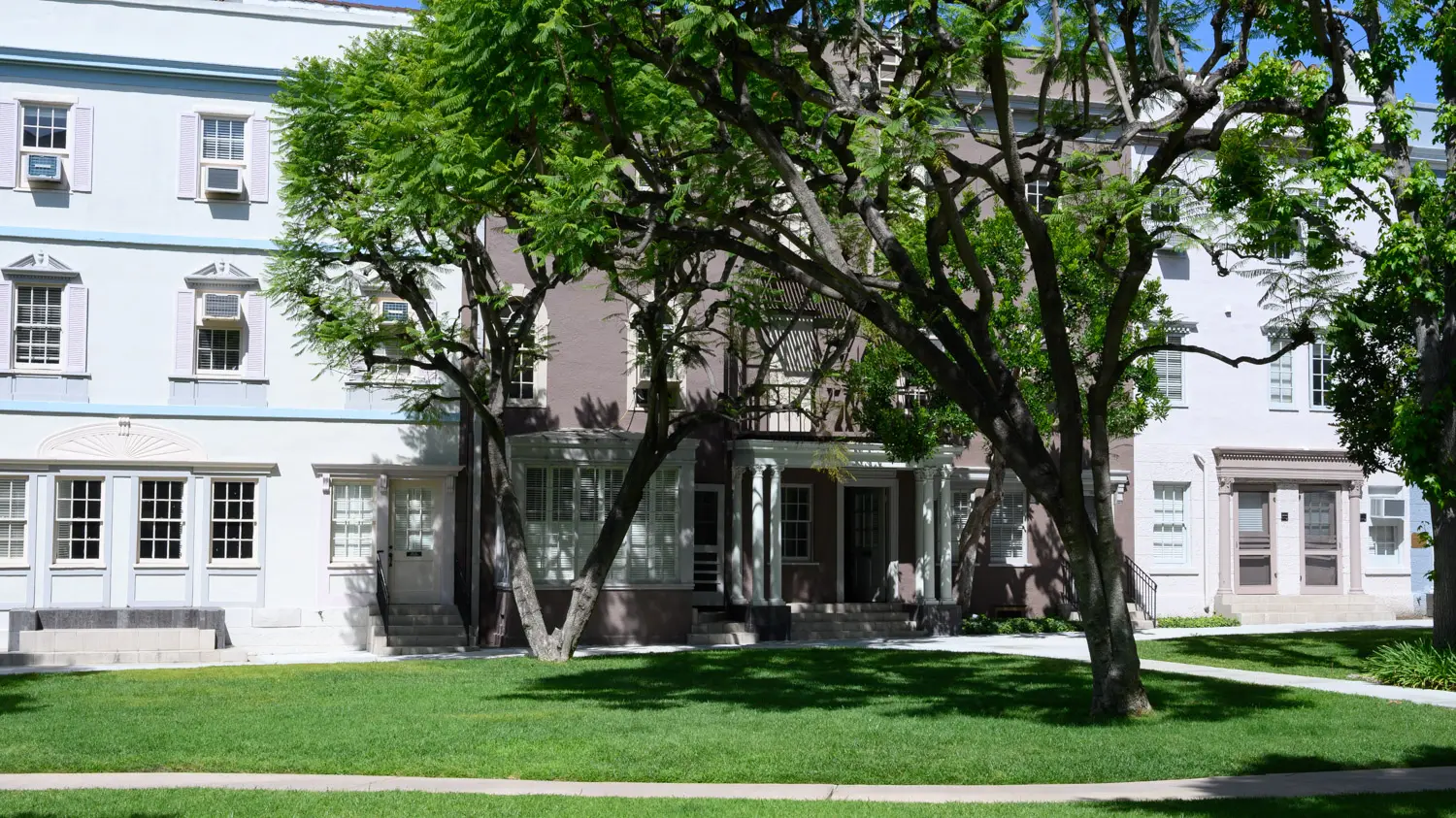
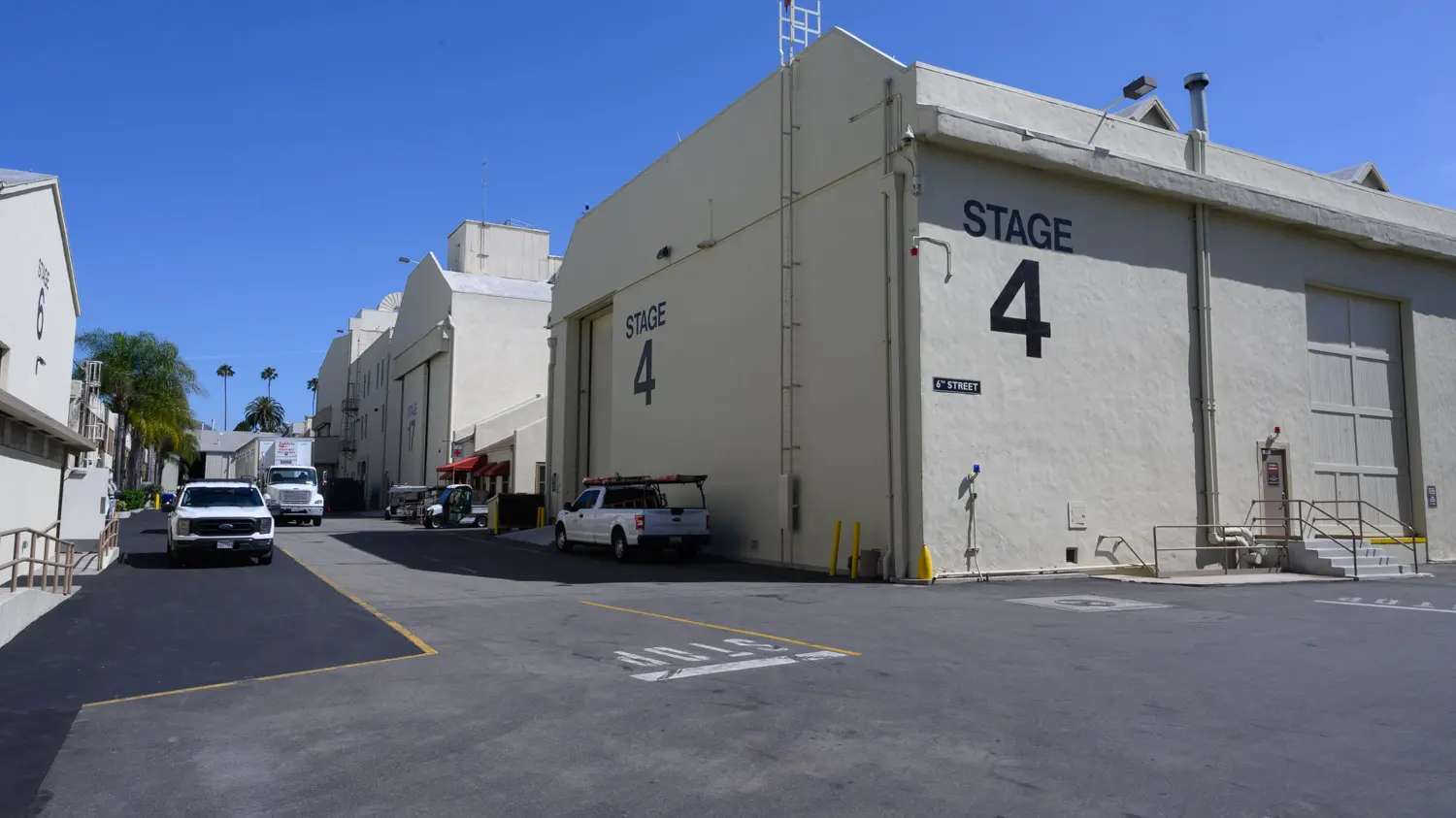
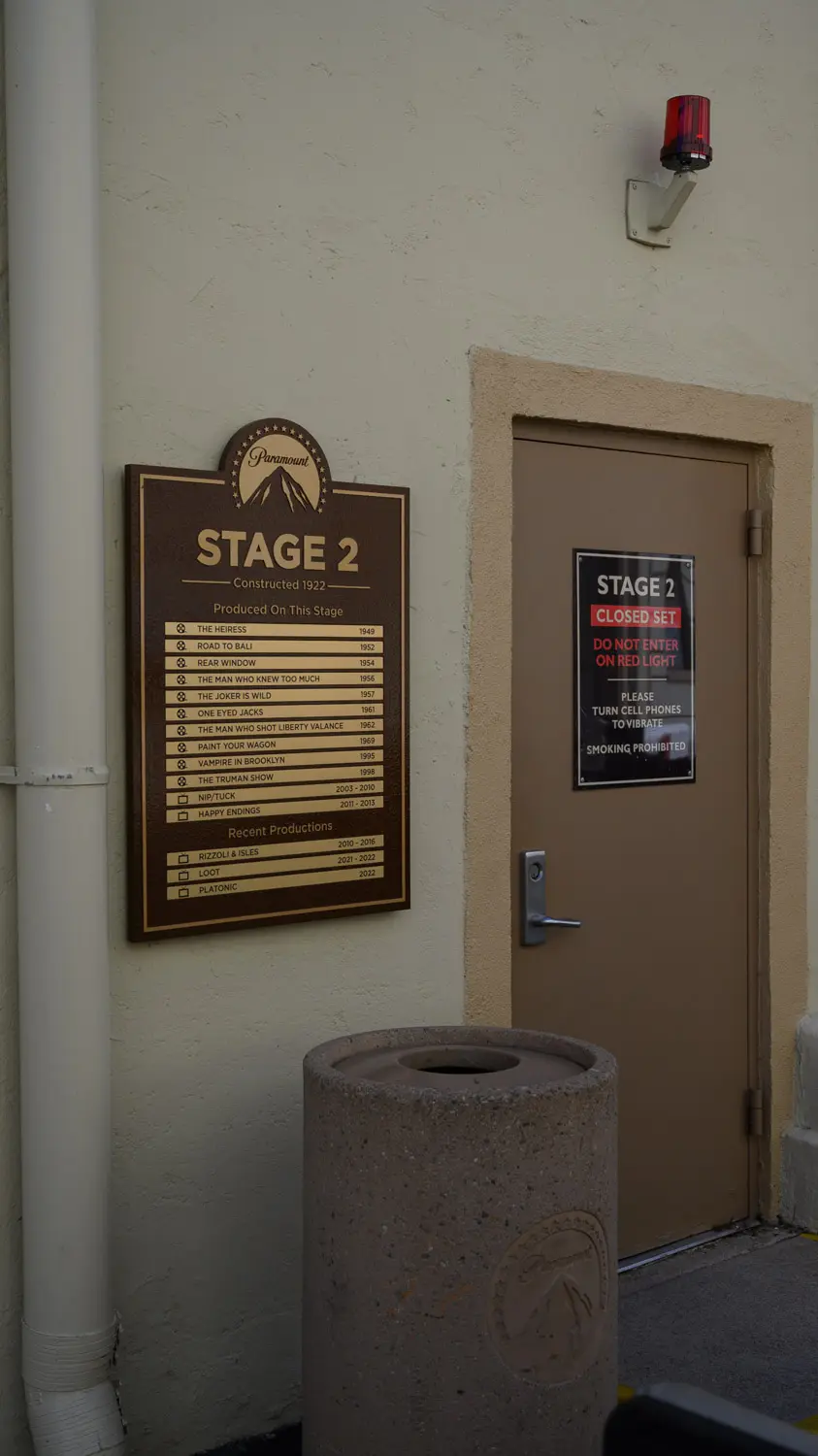
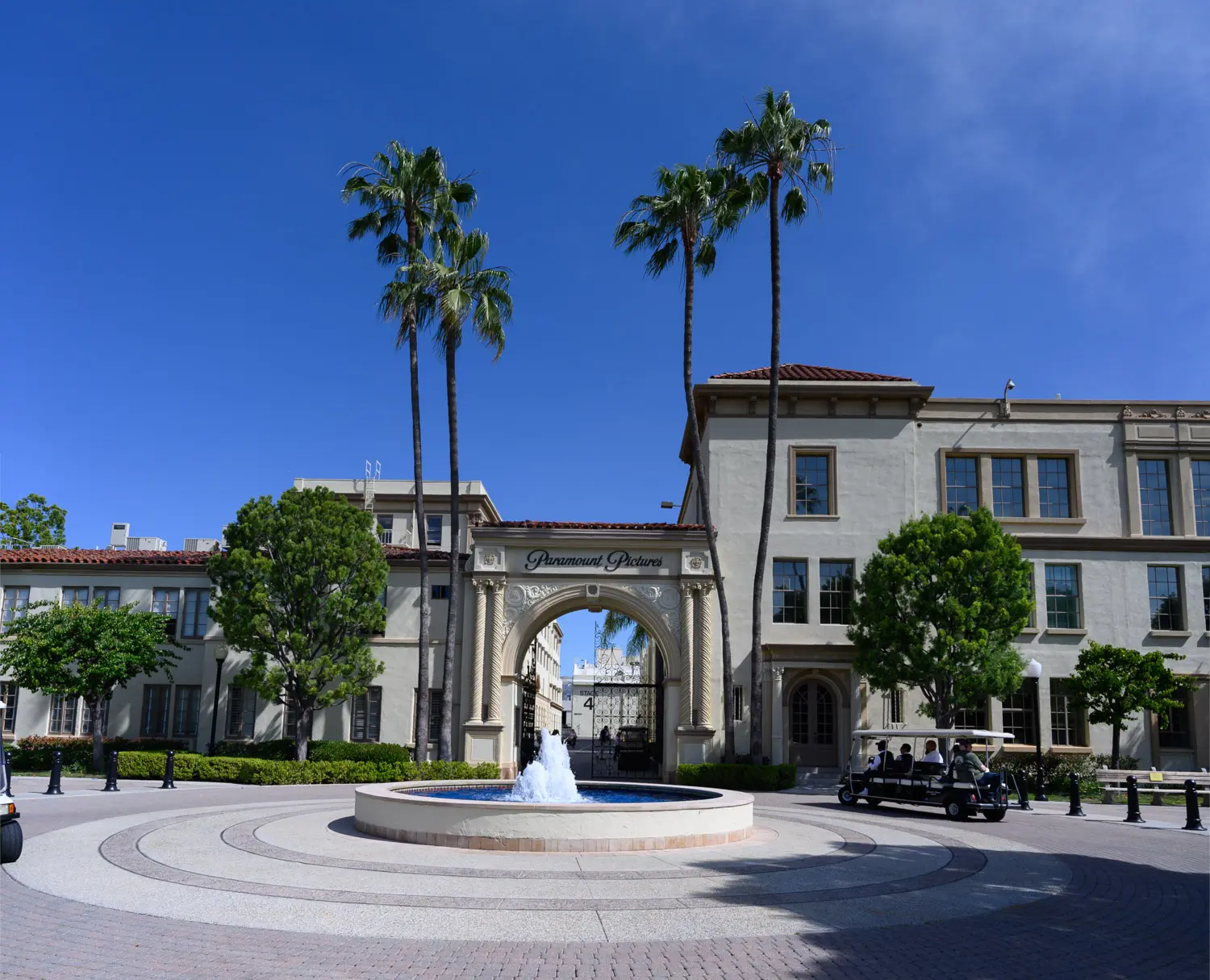
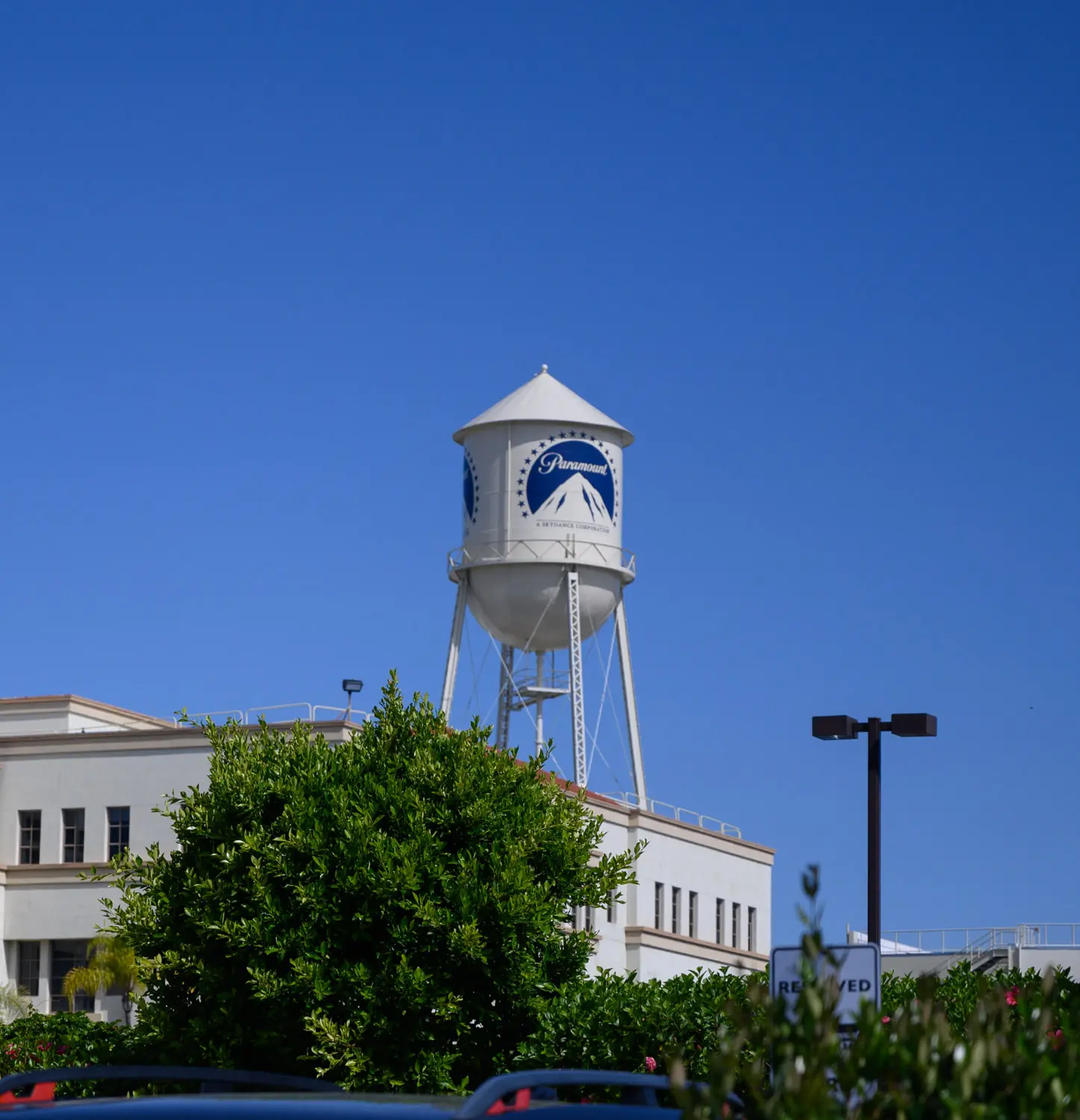
Our tour group consisted of six people, led by an enthusiastic young woman studying dance at a local college. Besides guiding tours, she was also registered as an extra for film and television productions, hoping to eventually land small speaking roles. She clearly loved both Hollywood and talking about Hollywood. Her favorite phrase was, “I would love to tell you about…” which she used with such frequency that by the end of the tour I suspected it might actually be part of the official Paramount training program.
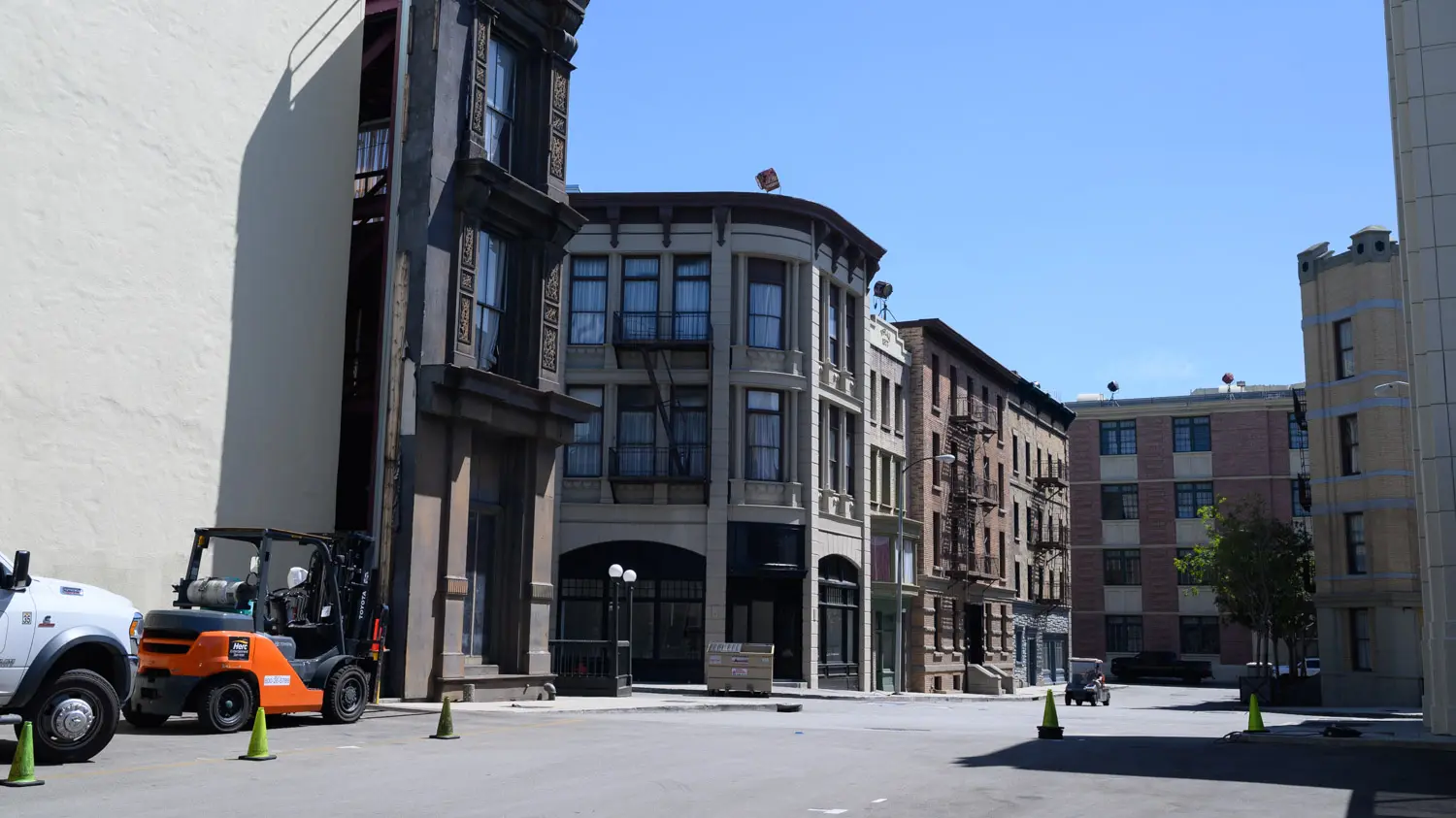
The tour itself was fascinating. There is something strangely surreal about walking through places designed to imitate reality so convincingly that millions of people accept them without question. One moment we were standing on a New York City street, and the next we were in a Chicago neighborhood. What was missing from both were street lights. They are stored on sight and, depending on the era of the film, the appropriate fixtures are plugged into the outlets on the sidewalk.
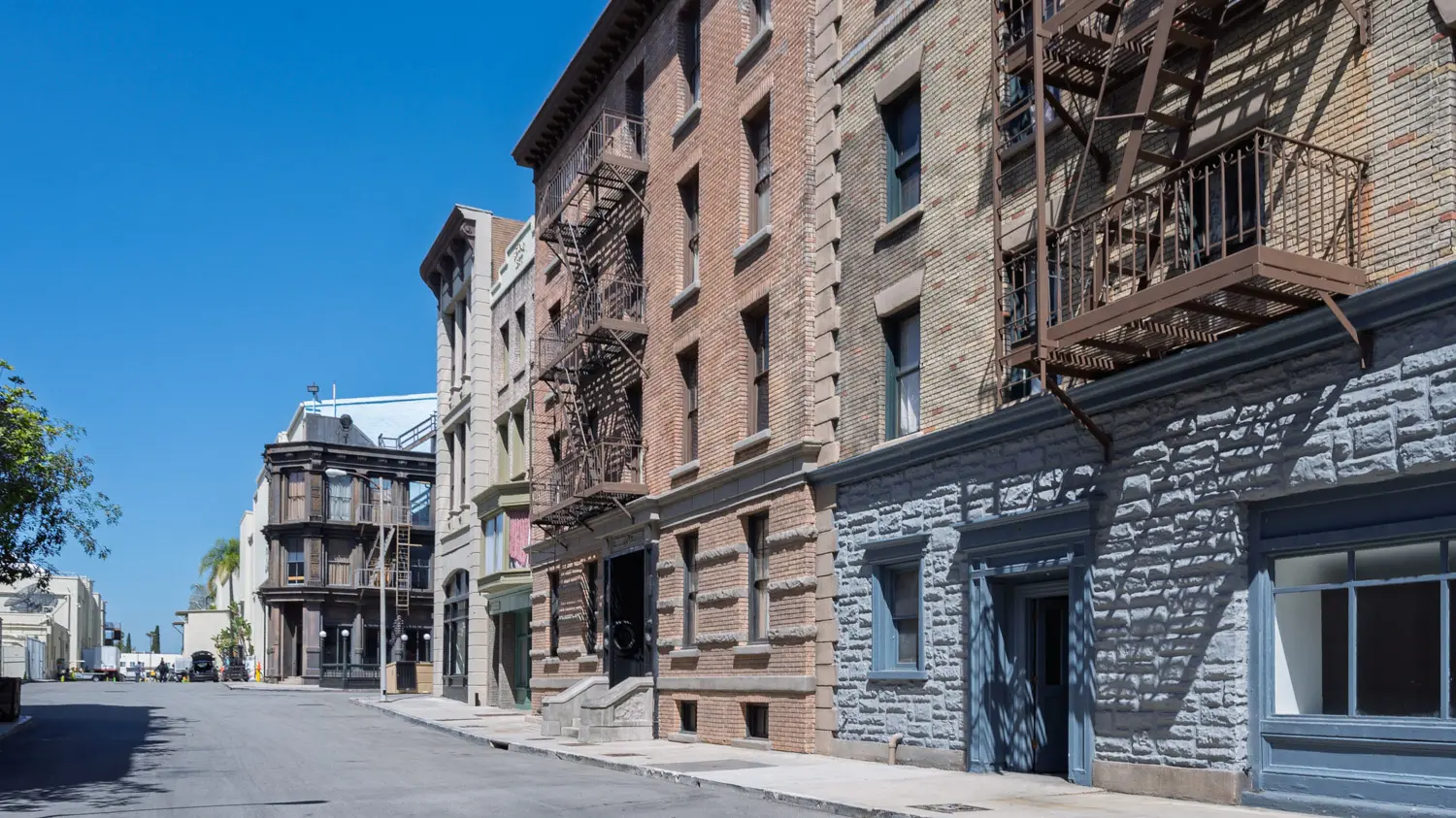 A typical New York City Street, minus the street lights.
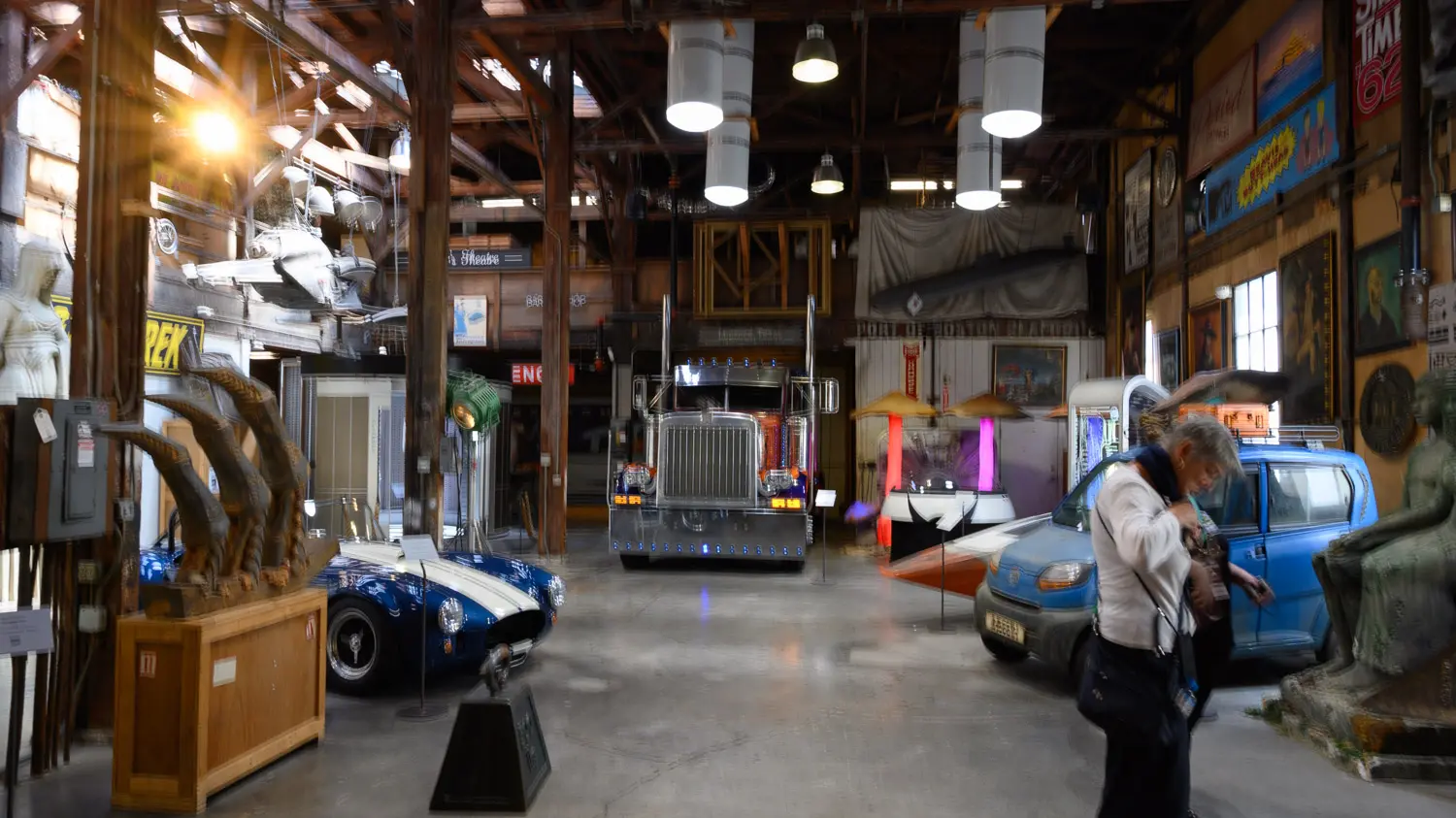
The most interesting part was walking through the sound stage of the police drama, The Rookie. We walked through the fictitious Mid-Wilshire Division HQS. The set looked exactly like a real precinct office — desks covered in case files, worn floors, scuff marks on the walls, holding cells, paperwork everywhere. It felt authentic enough that I half expected an exhausted detective to walk in carrying coffee and unresolved personal trauma.
For lunch we stopped at a Peruvian restaurant, largely because the prices elsewhere had begun drifting into ransom-note territory. To our surprise, the portions were enormous. American restaurants continue to operate under the assumption that every customer has recently returned from a month lost at sea. We ended up taking half the food with us.
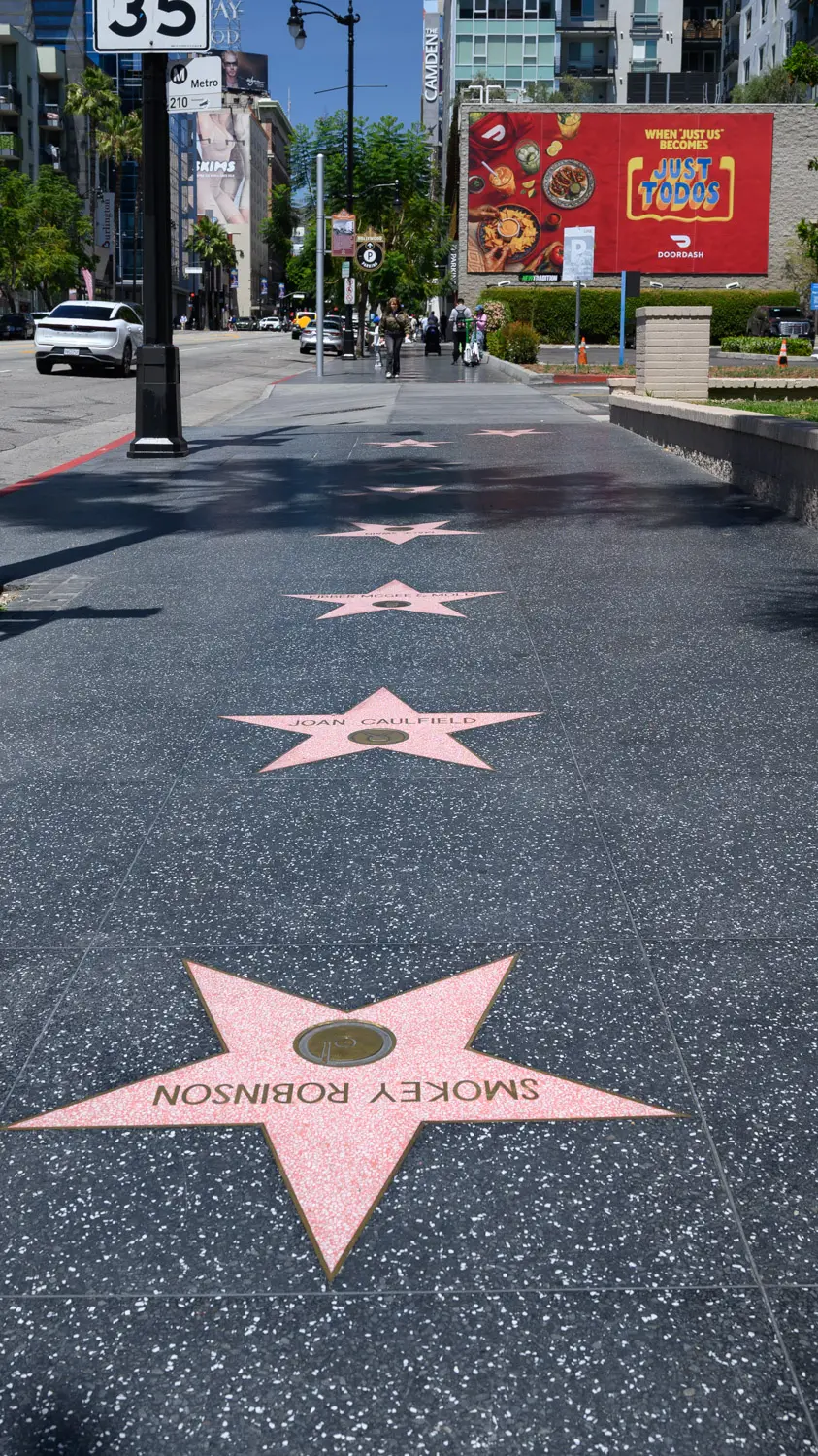
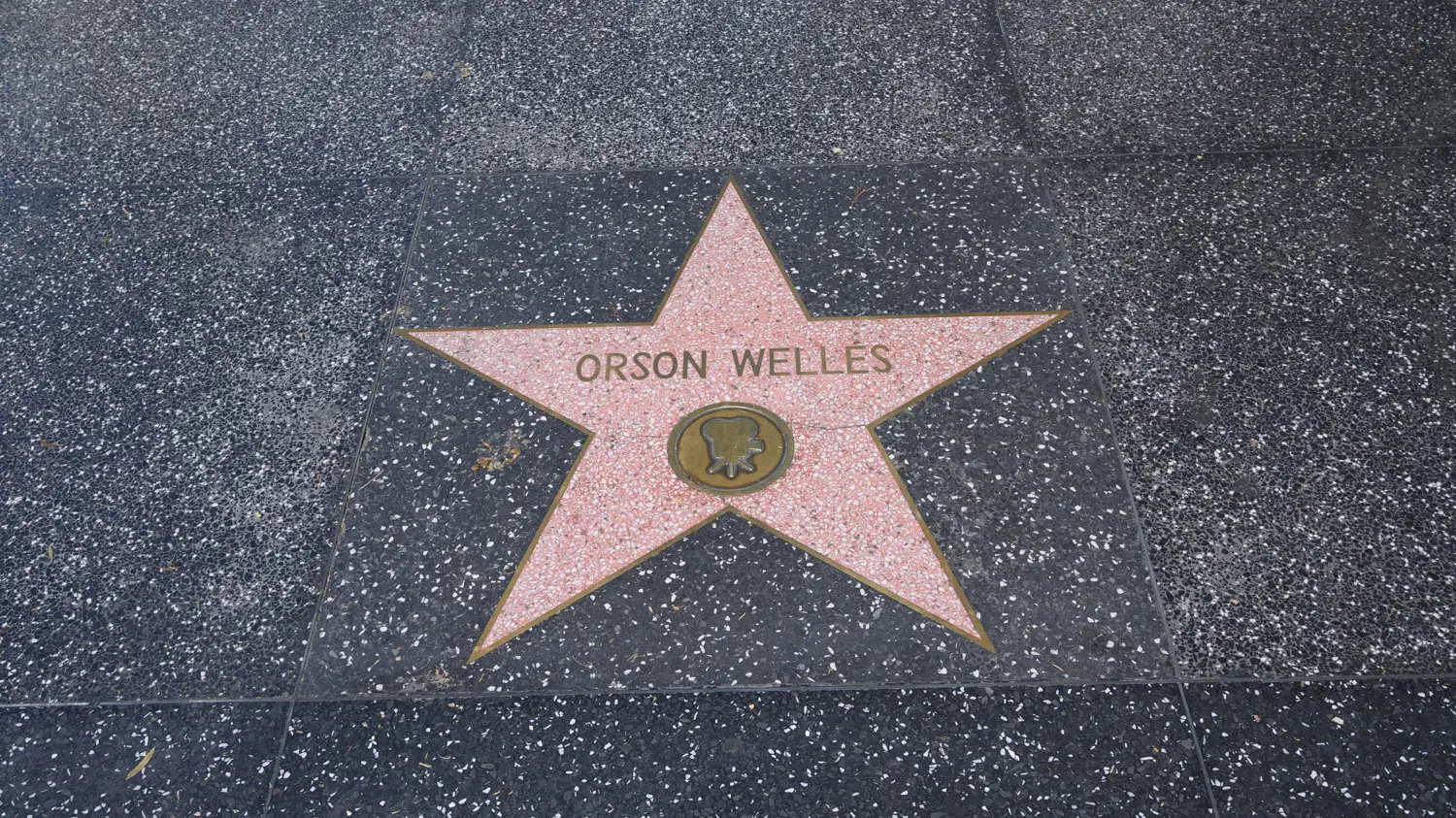
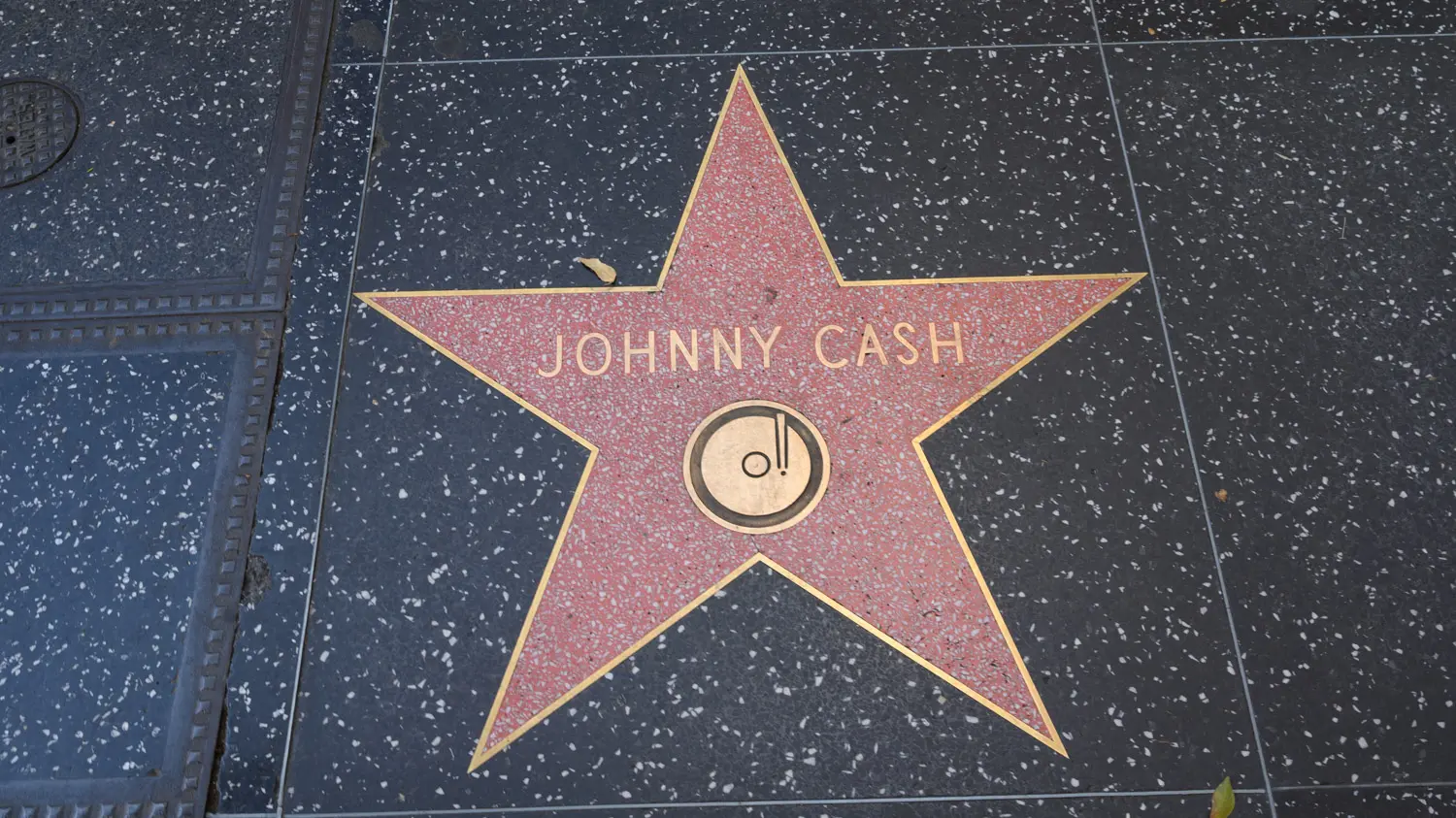
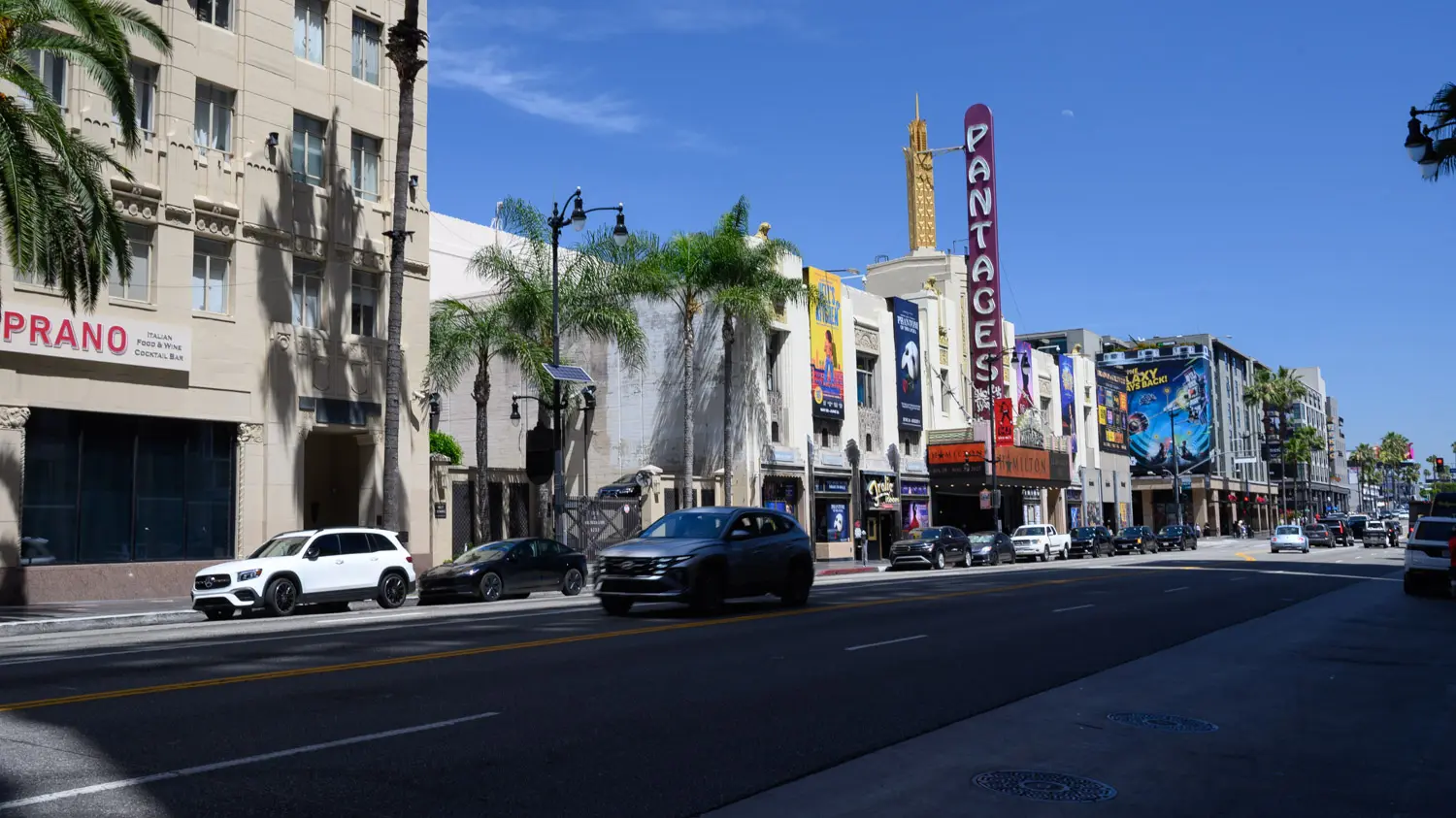
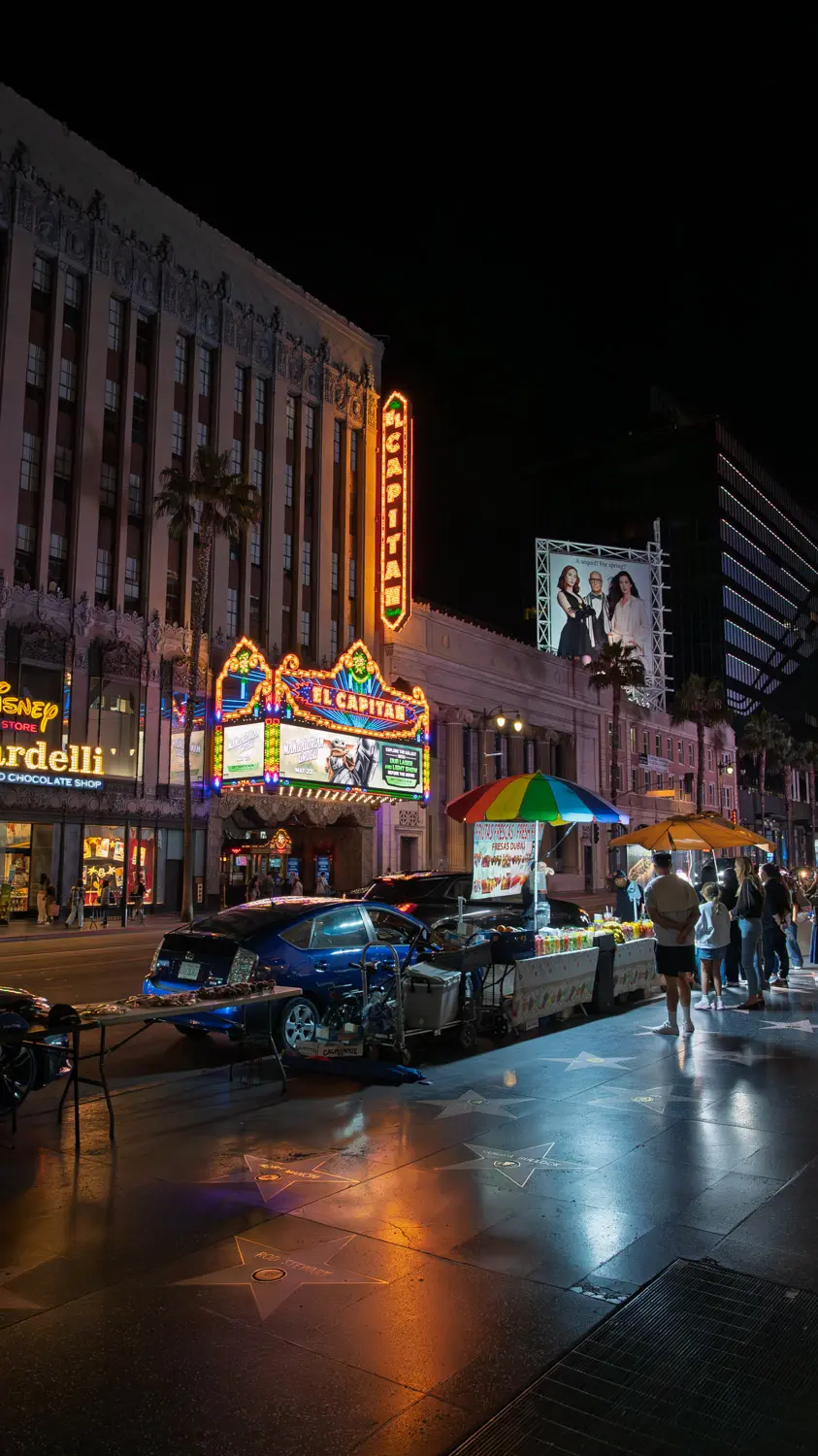
After a short bus ride, we arrived at the beginning of the Hollywood Walk of Fame. What surprised me most was how unglamorous the beginning felt. In films and television, Hollywood Boulevard always appears polished and magical. In reality, parts of it feels more like a working-class neighborhood that just happens to contain the names of celebrities embedded in the sidewalk. Still, there is something undeniably fun about following the stars down the boulevard while tourists crouch in awkward positions trying to photograph names without including strangers’ shoes in the frame.
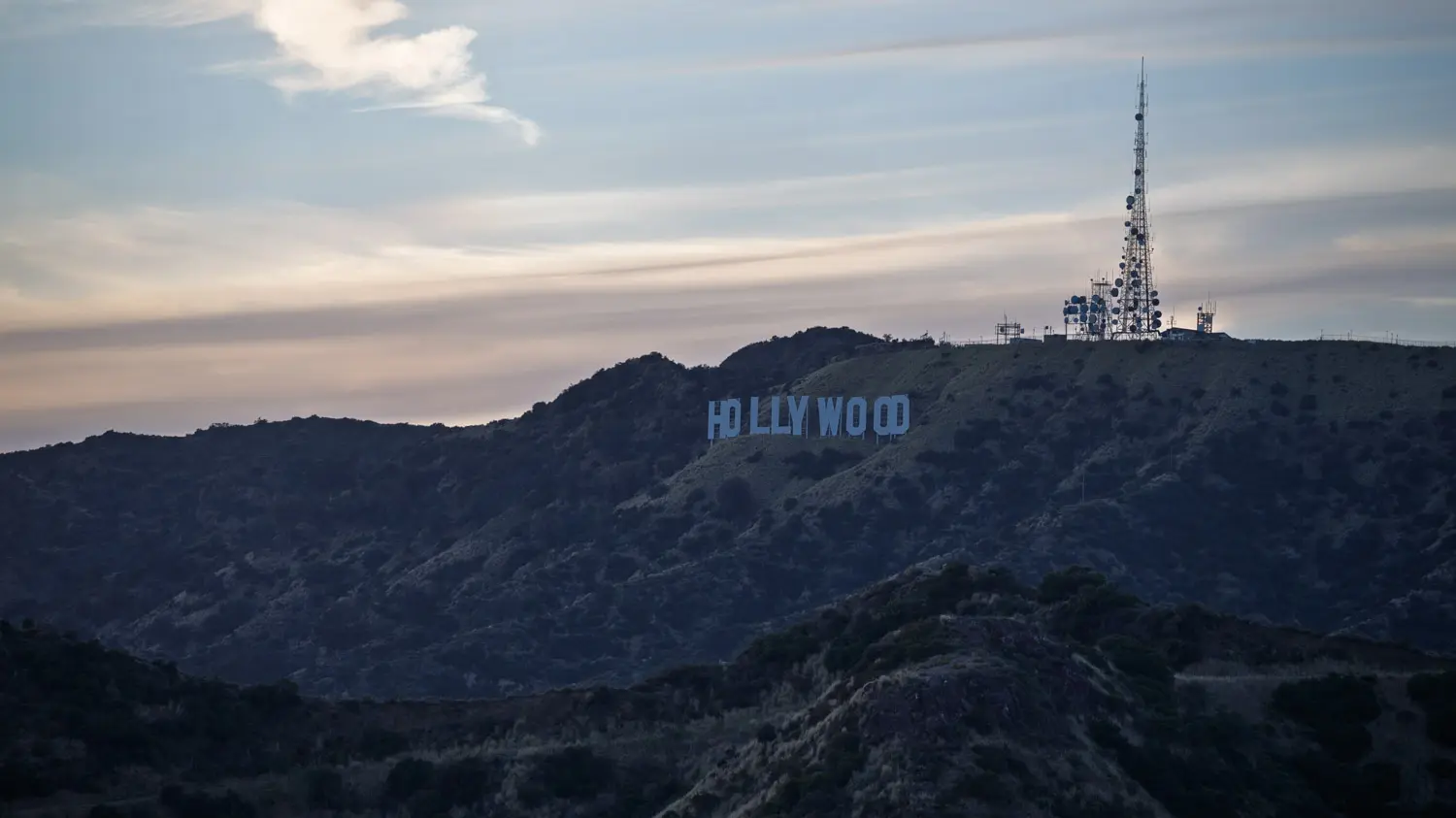
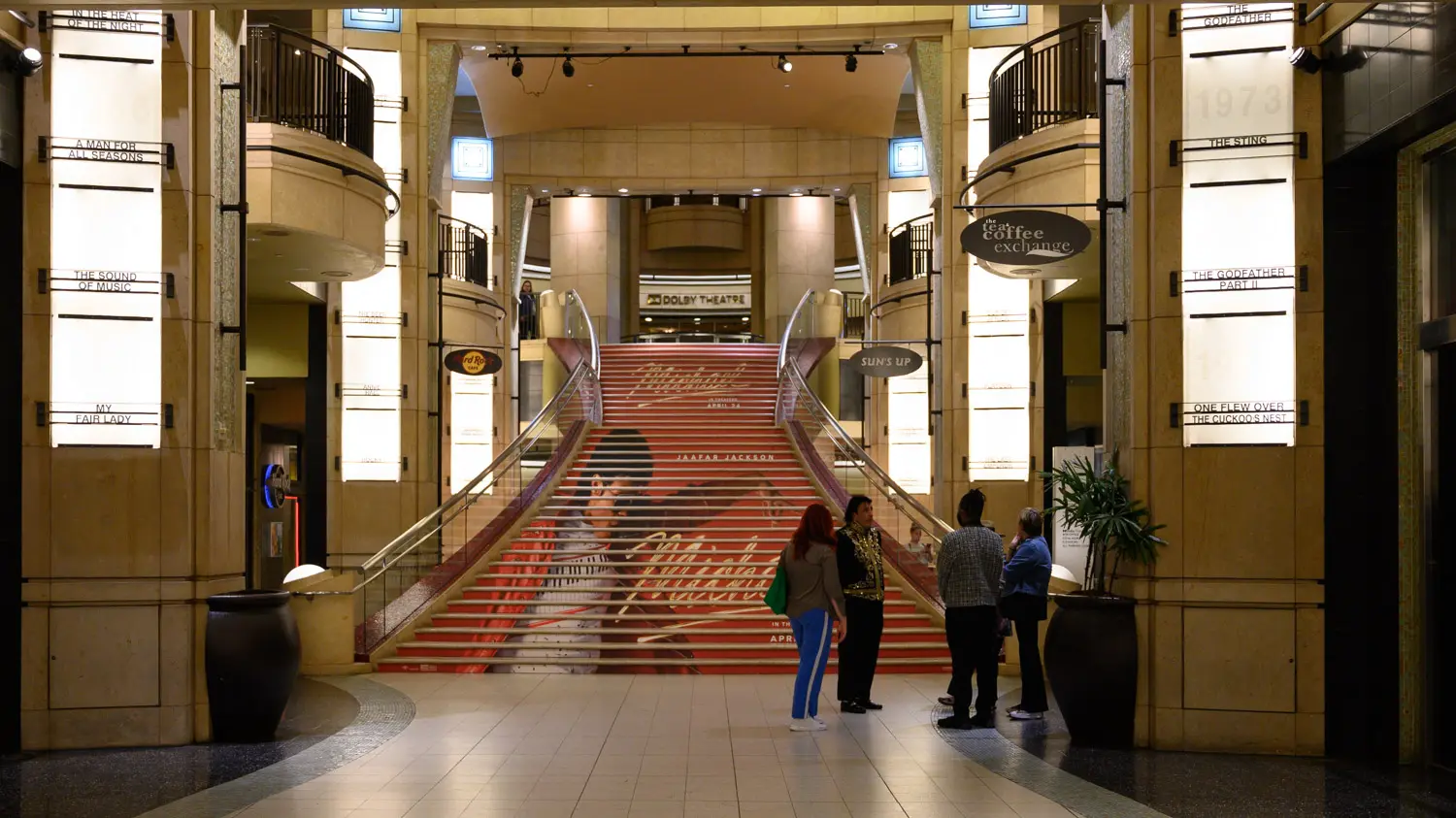
Eventually we reached Dolby Theatre, home of the Academy Awards. We walked up the famous red-carpet staircase and rode the escalator to the upper level, where a viewing corridor unexpectedly offered one of the better views of the Hollywood sign. It also provided a welcome opportunity to sit down for a few minutes and rest.
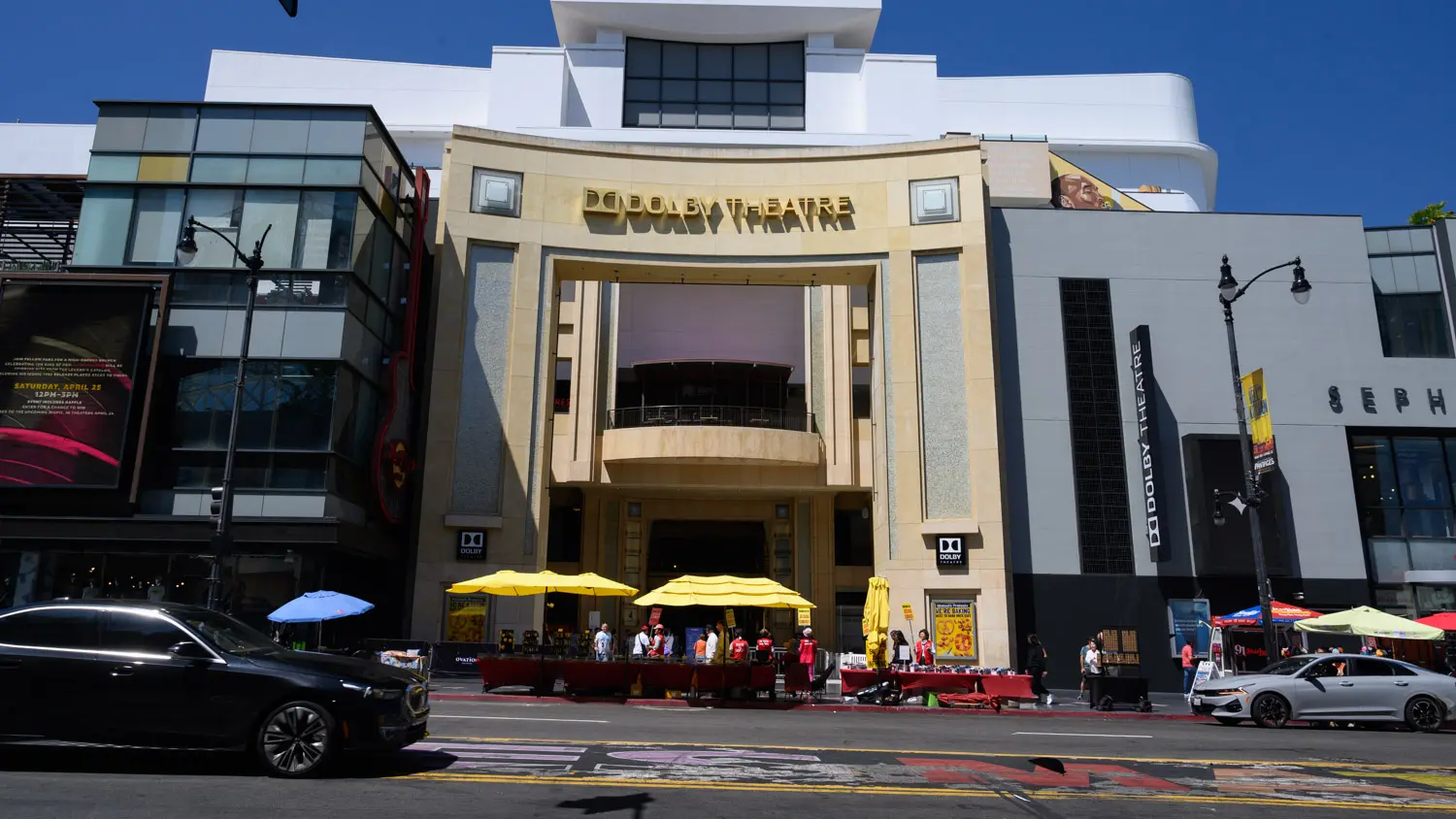 Home of the Academy Awards Ceremony
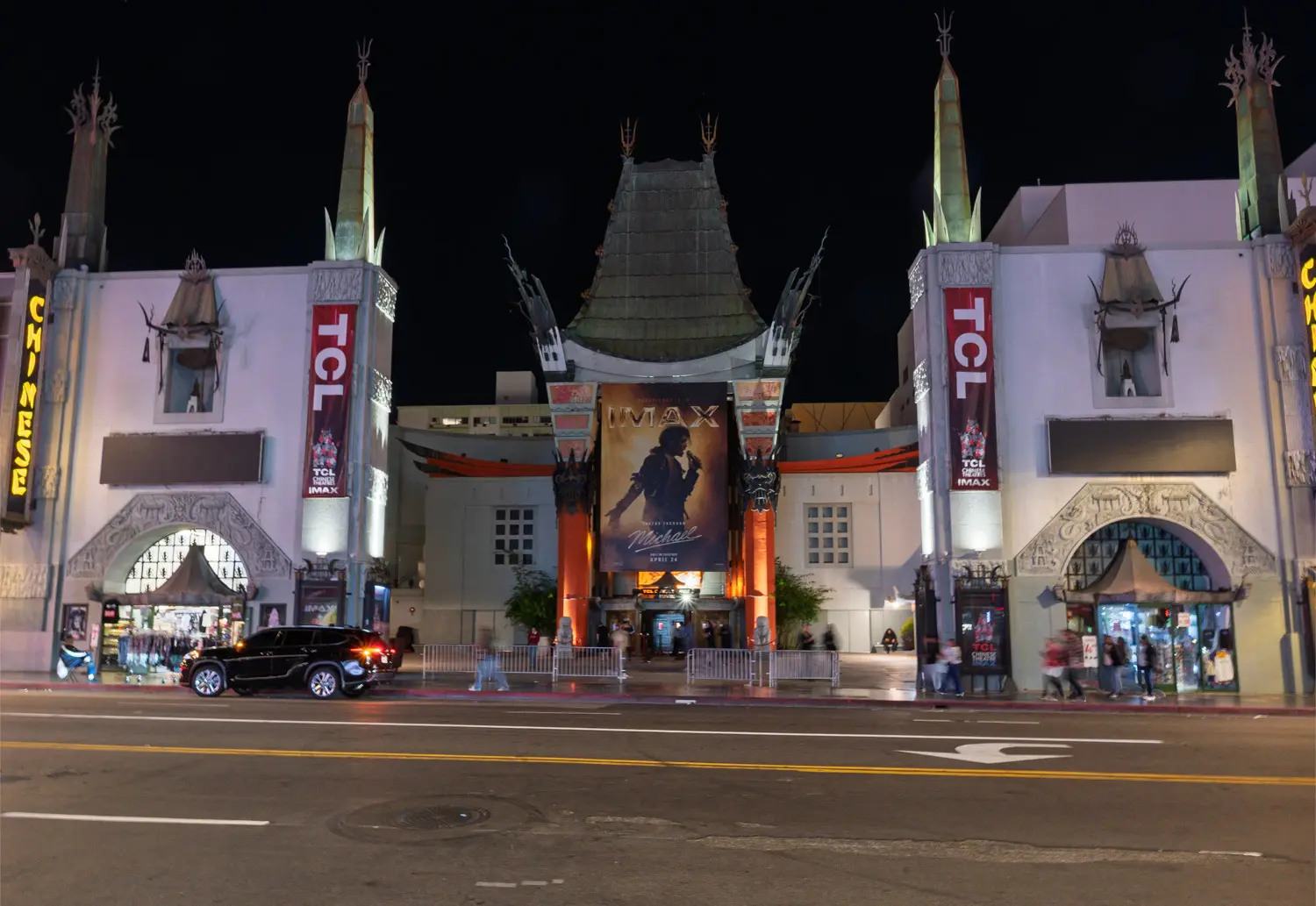 The theater at night
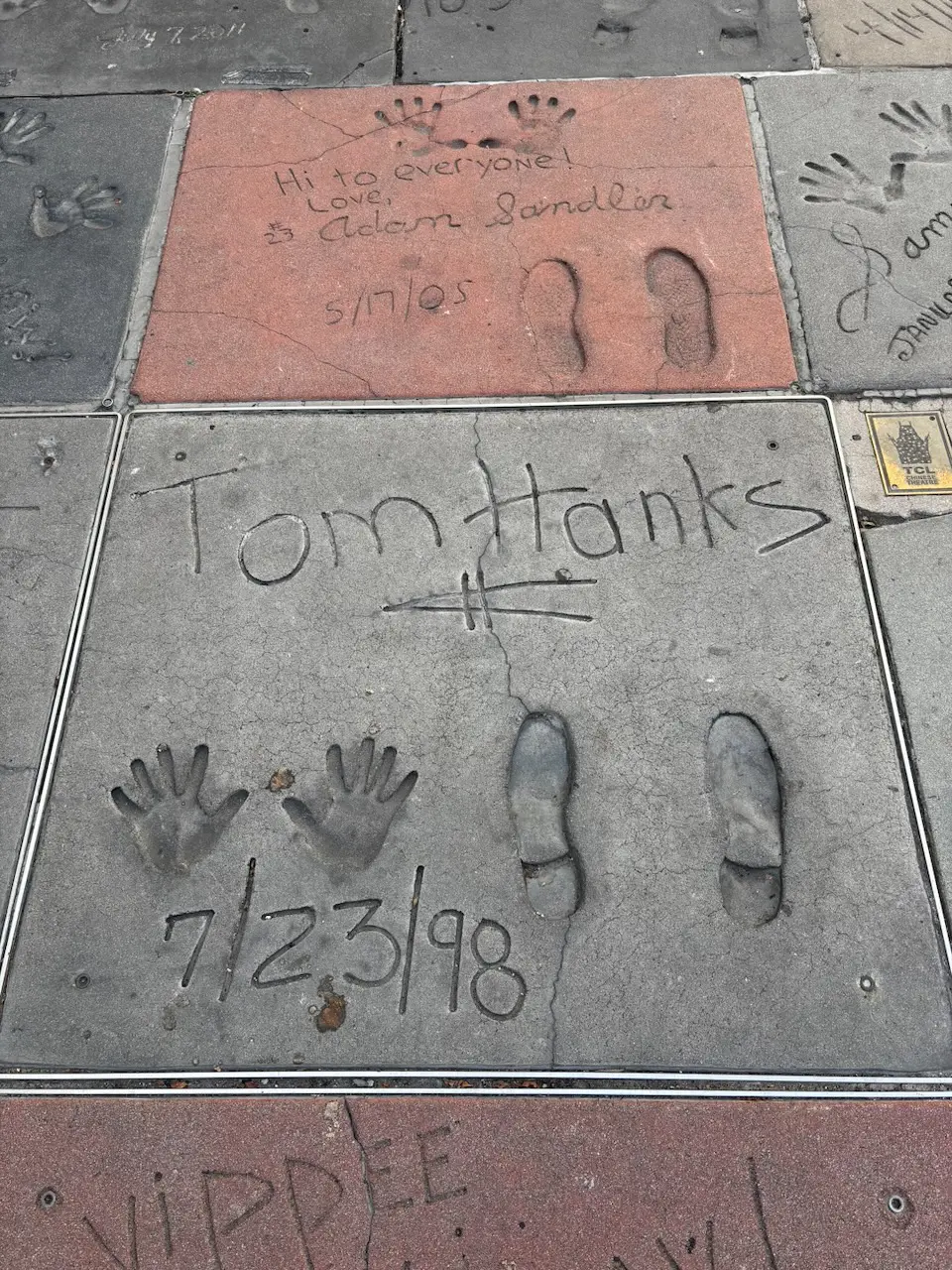
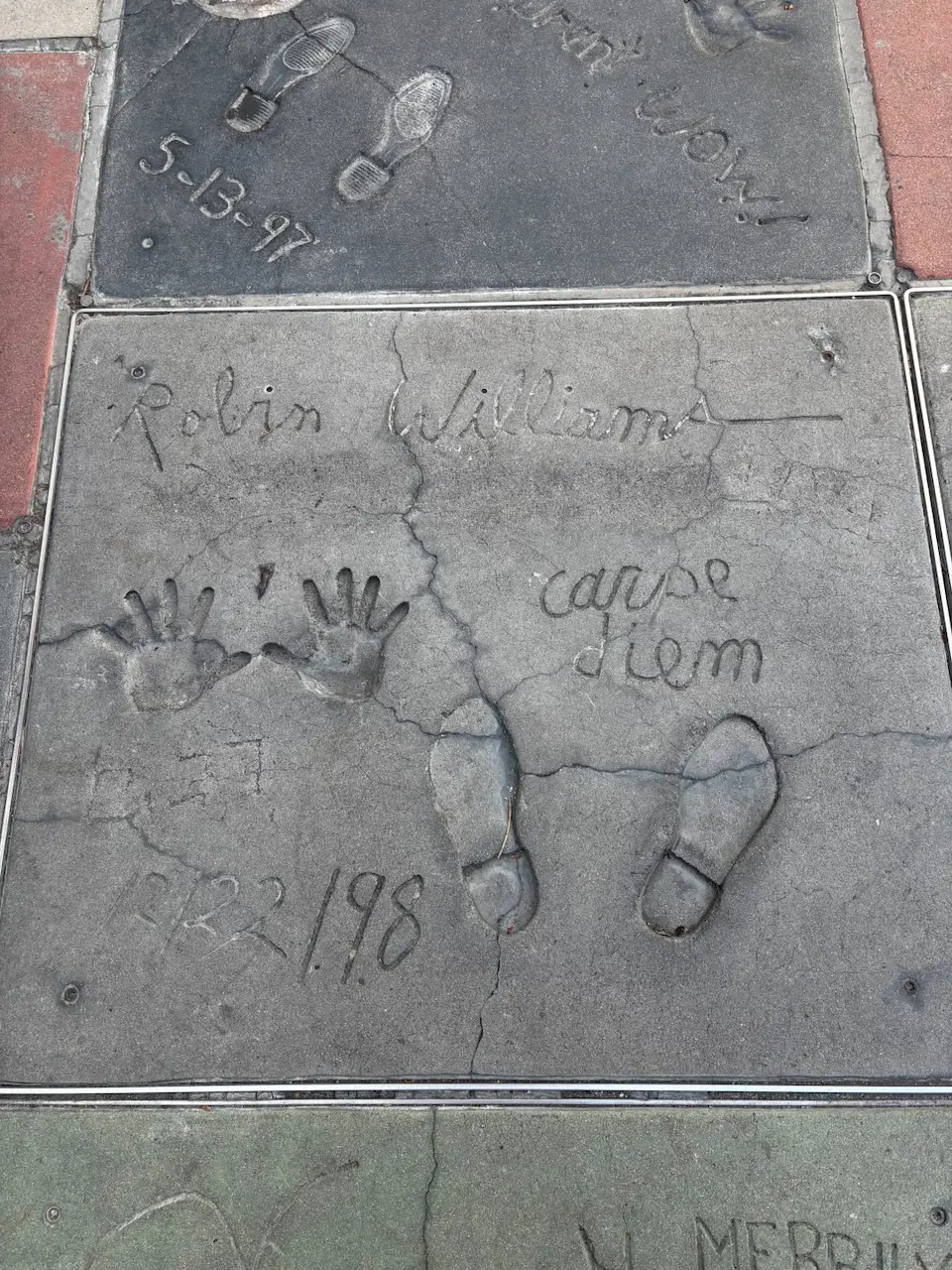
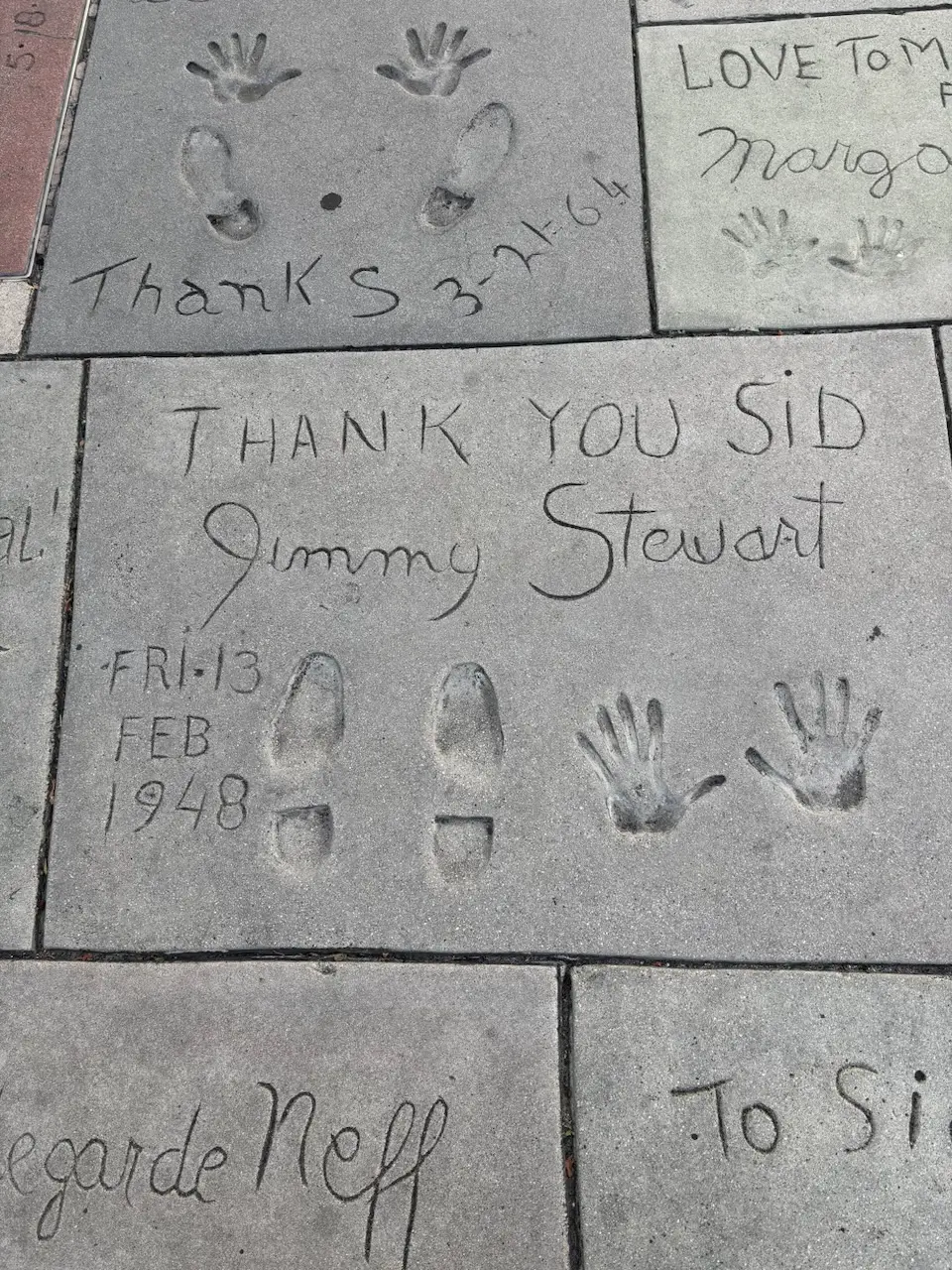
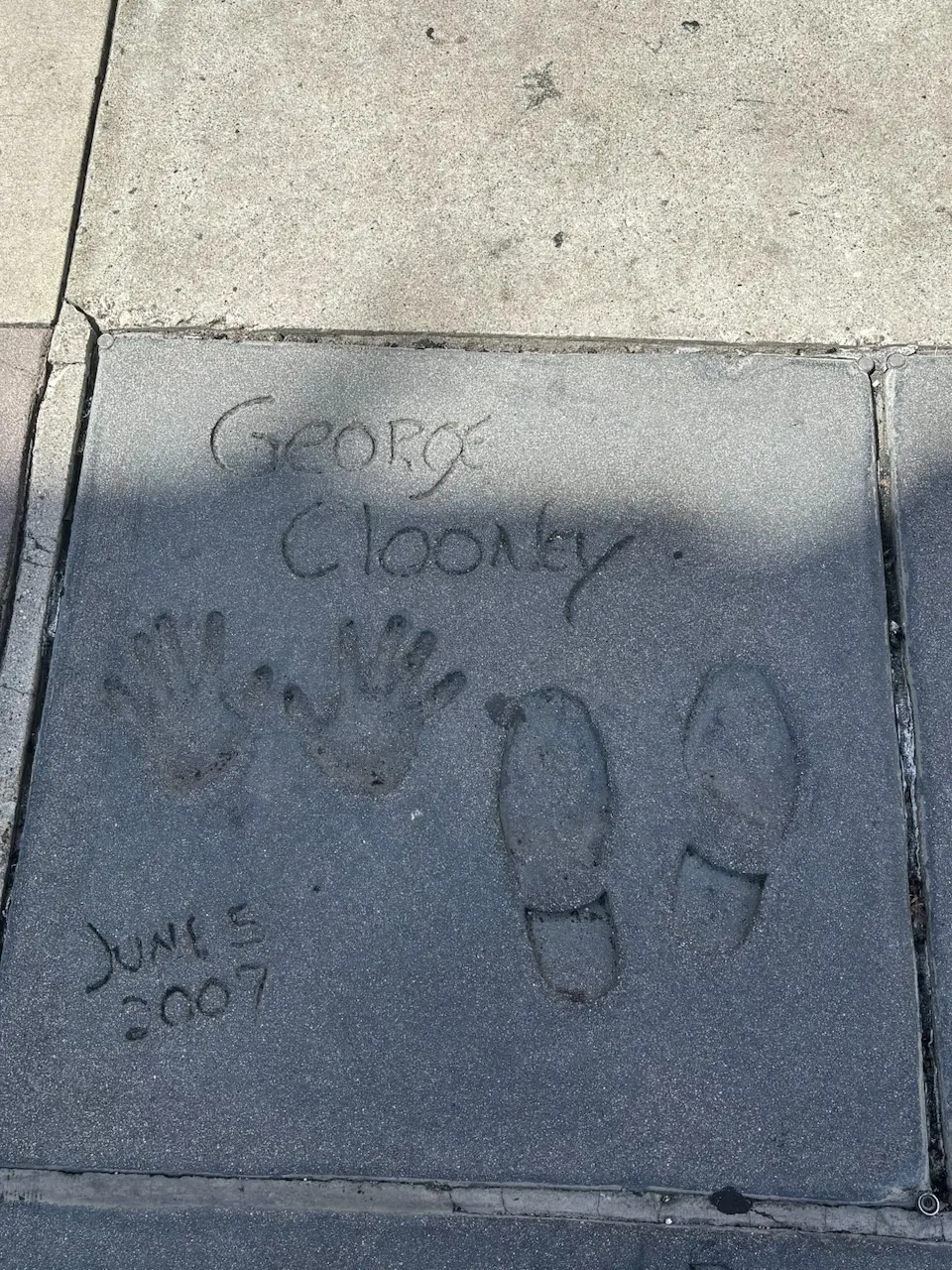
Right next door stands the the TCL Chinese Theatre, where attention shifts from stars in the pavement to the famous handprints and footprints in the forecourt. Seeing names like James Stewart and Henry Fonda gives the place a sense of cinematic history stretching back across generations of Hollywood mythology.
We briefly visited the Hollywood Museum, but after looking around the lobby decided to skip it. The whole place felt just a little too determined to be “Hollywood” in the souvenir-shop sense of the word. There is a delicate line between nostalgic and kitschy, and this seemed to sprint enthusiastically past it.
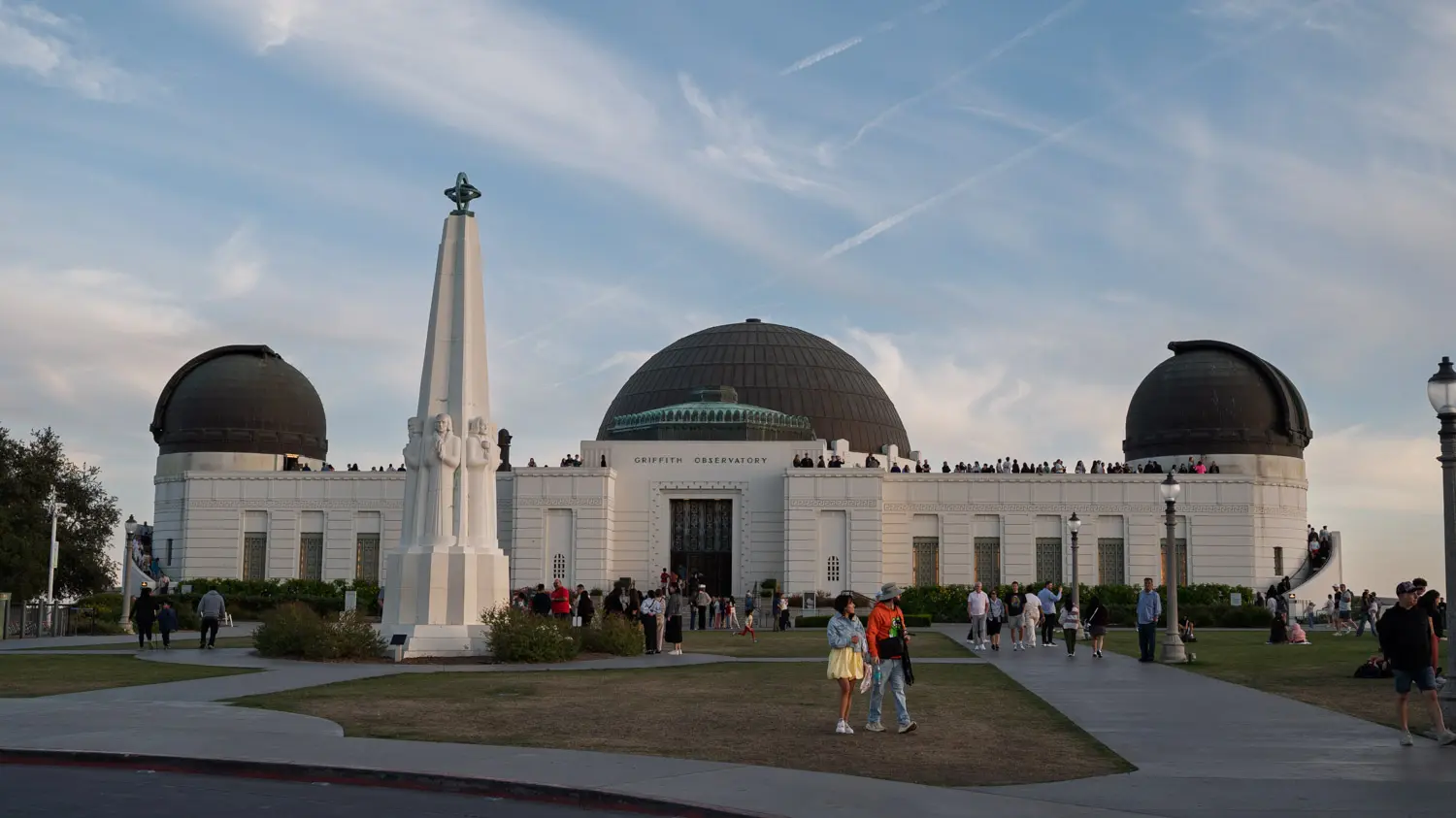 Griffith Observatory
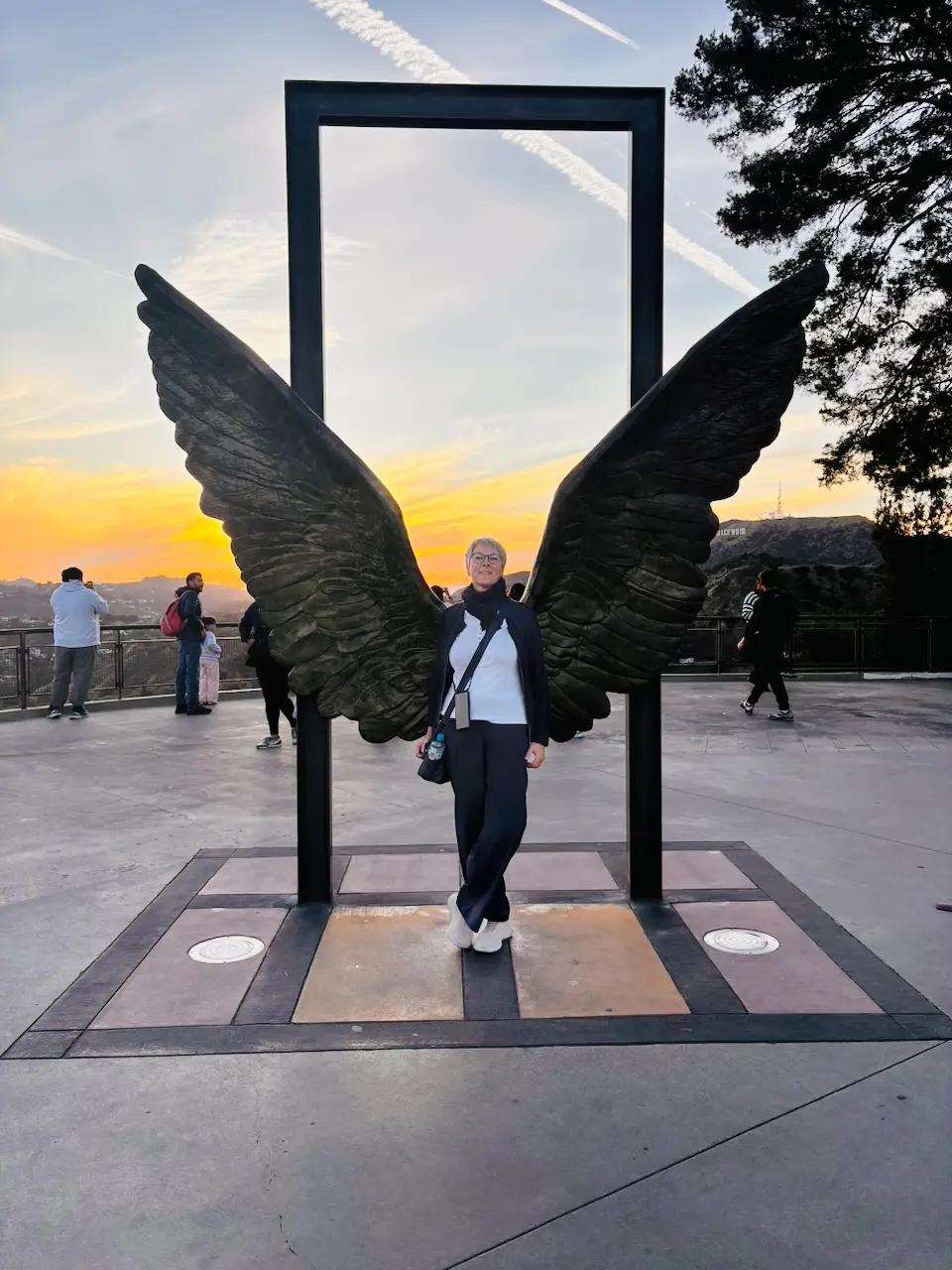
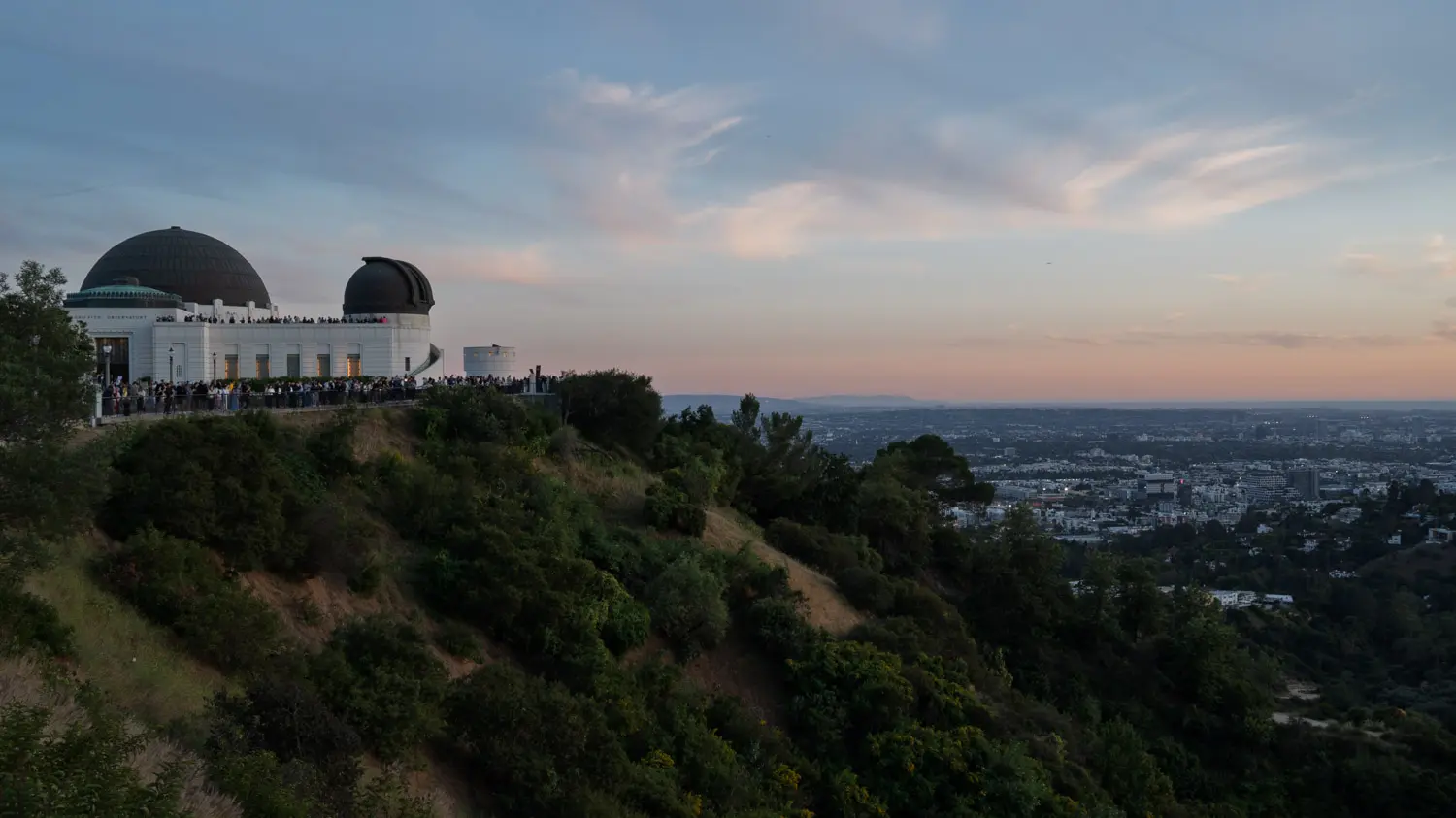
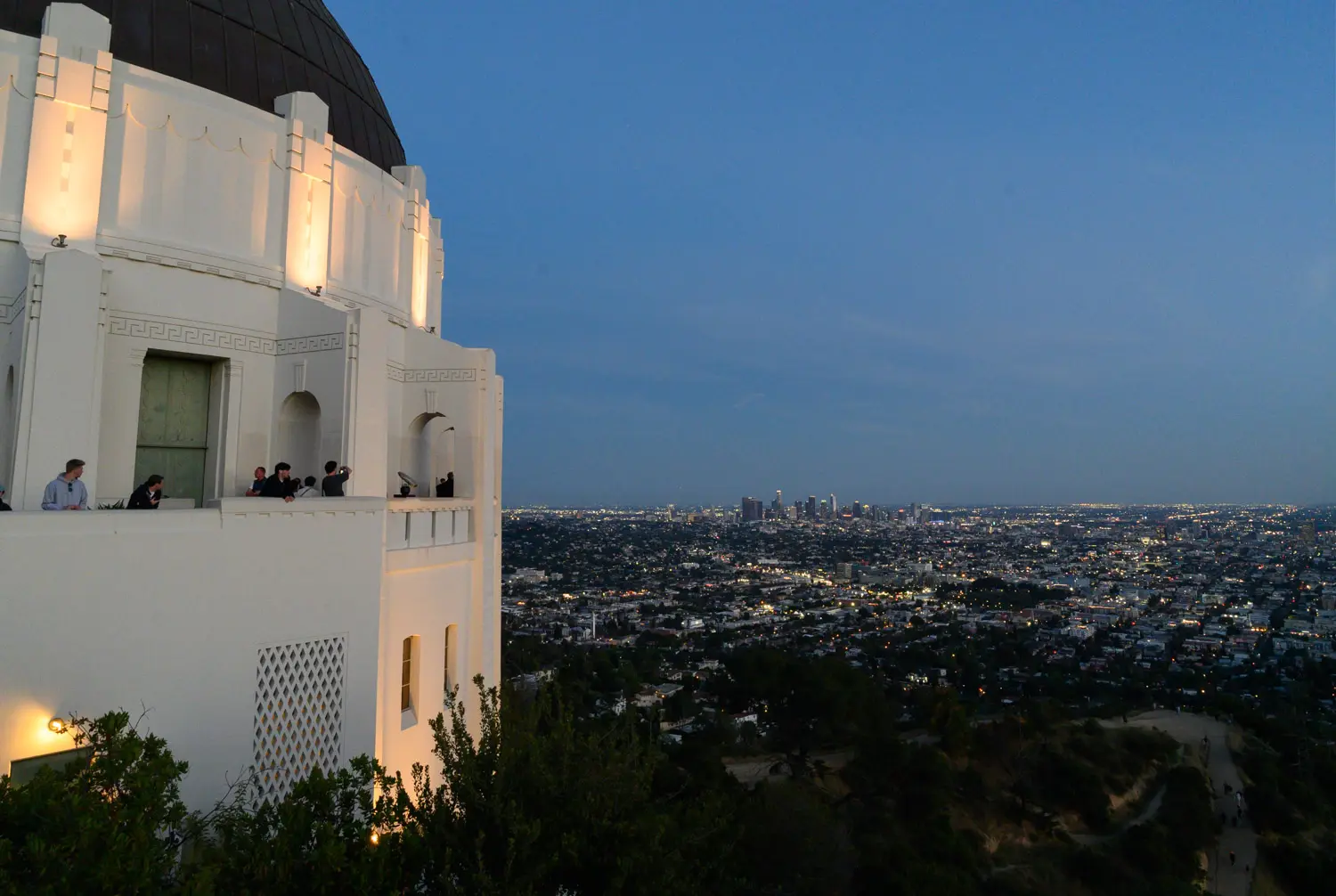
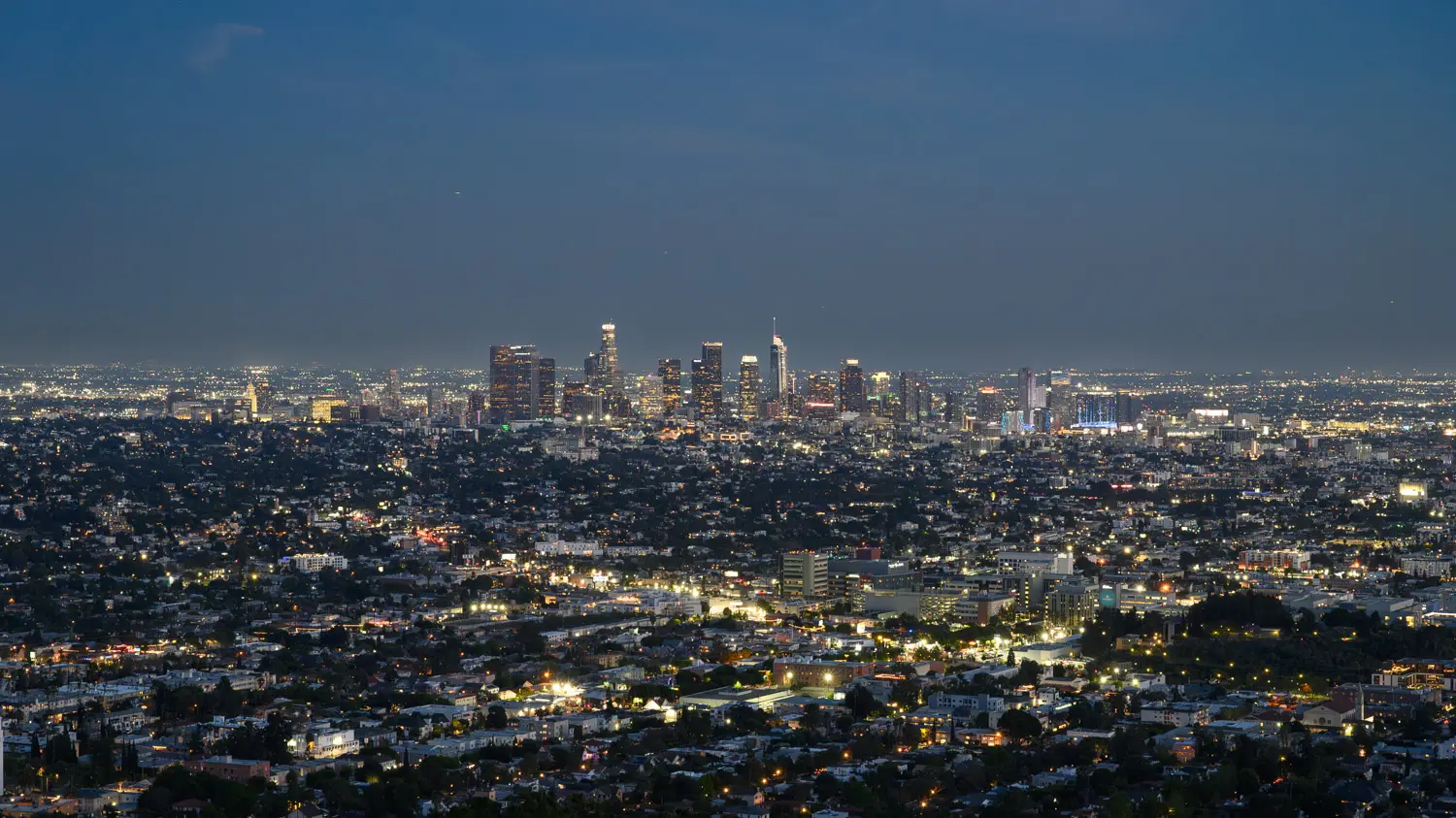
Our original plan had been to arrive at the Griffith Observatory around sunset, but Hollywood took less time than expected. So we returned to the hotel for a short break and an Whole Foods sandwich dinner before heading back out for the evening.
The Observatory turned out to be a surprisingly pleasant experience. Perched high above the city, it offers spectacular panoramic views stretching across the endless urban sprawl below. As darkness fell, the city slowly transformed into a carpet of lights extending to the horizon.
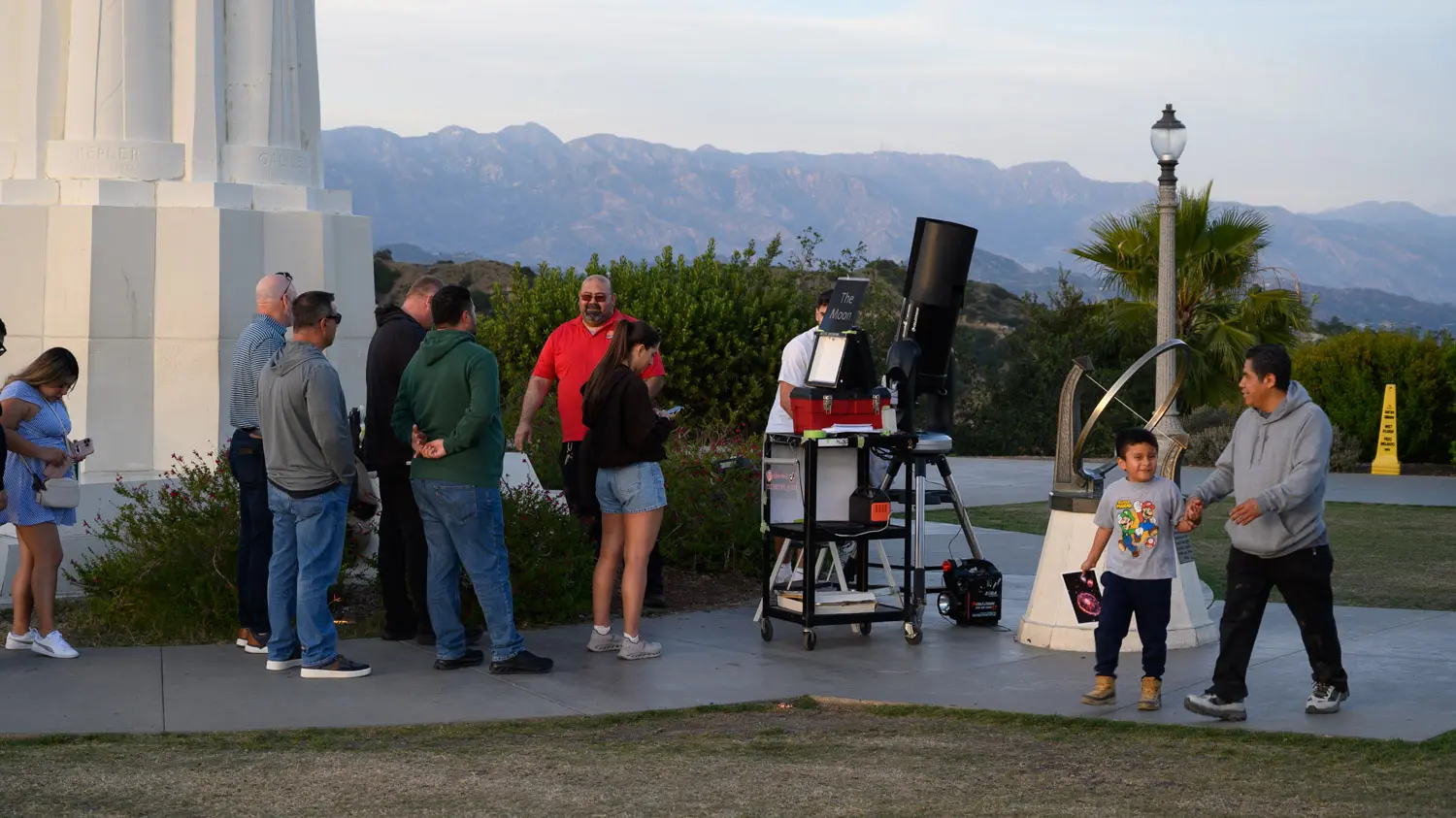
The observatory’s large public telescope was pointed at the moon, while several smaller telescopes outside offered views of both the moon and Jupiter. Standing in line to observe distant celestial objects alongside tourists eating snacks and taking selfies felt wonderfully relaxing compared to the hustle and bustle in the city below us.
Inside, the observatory featured a variety of astronomy and space exhibits that were genuinely worth exploring rather than merely existing to occupy schoolchildren for twenty minutes. And free of charge to boot!
By around 8:30 we had seen everything, taken far too many photos of the skyline, and finally returned to the hotel.
Day 3: Beverly Hills and Santa Monica
As we were having breakfast on Friday, I told Kathrin that I would regret leaving Los Angeles without seeing Beverly Hills. It’s like going to Rome and not visiting Vatican City.
The day’s agenda already included Santa Monica, Venice Beach, and a bus ride to Pacific Palisades to see the extent of the wildfire damage. Beverly Hills was more or less en route to Santa Monica, hence, we decided to go there first.
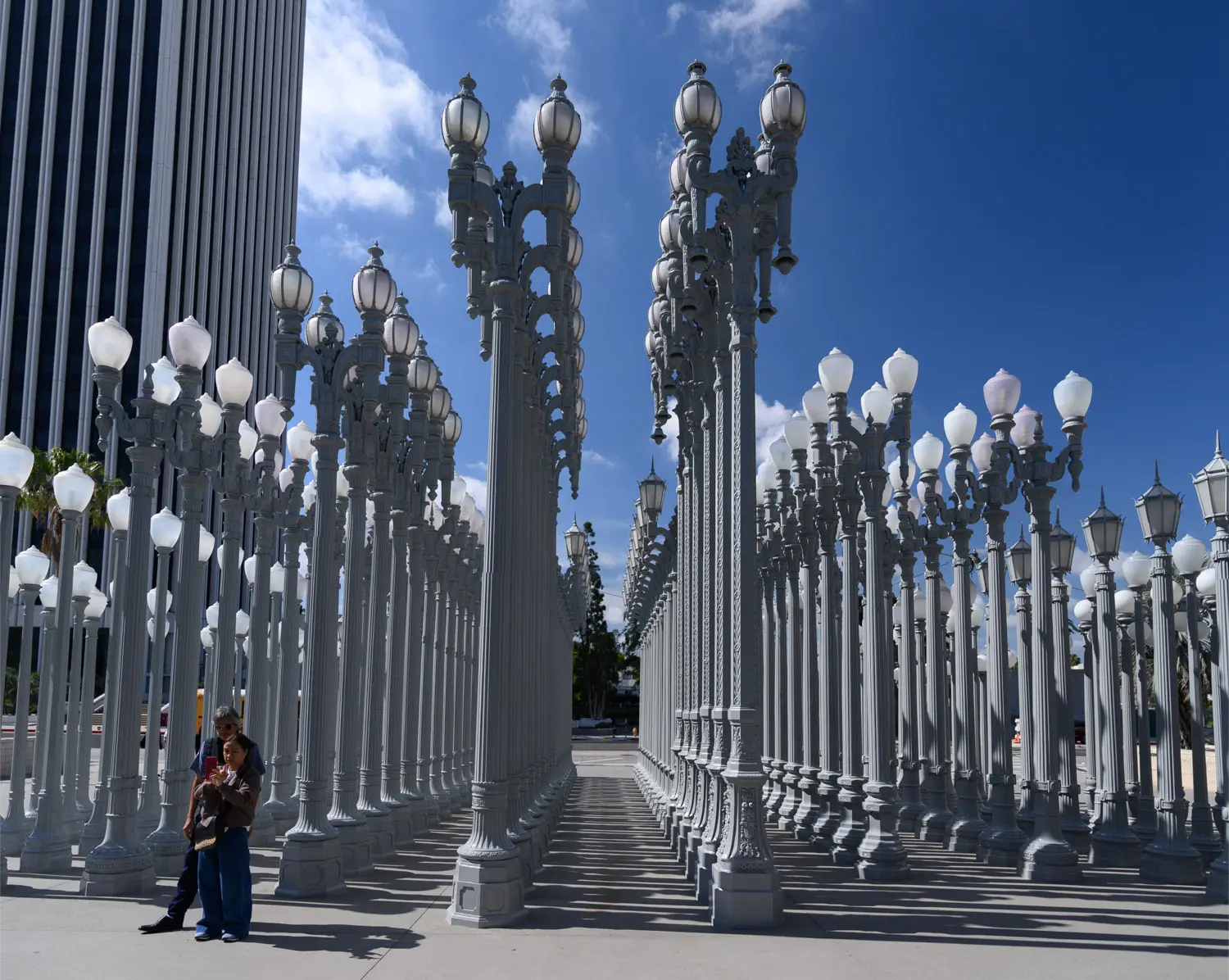 “Urban Lights”
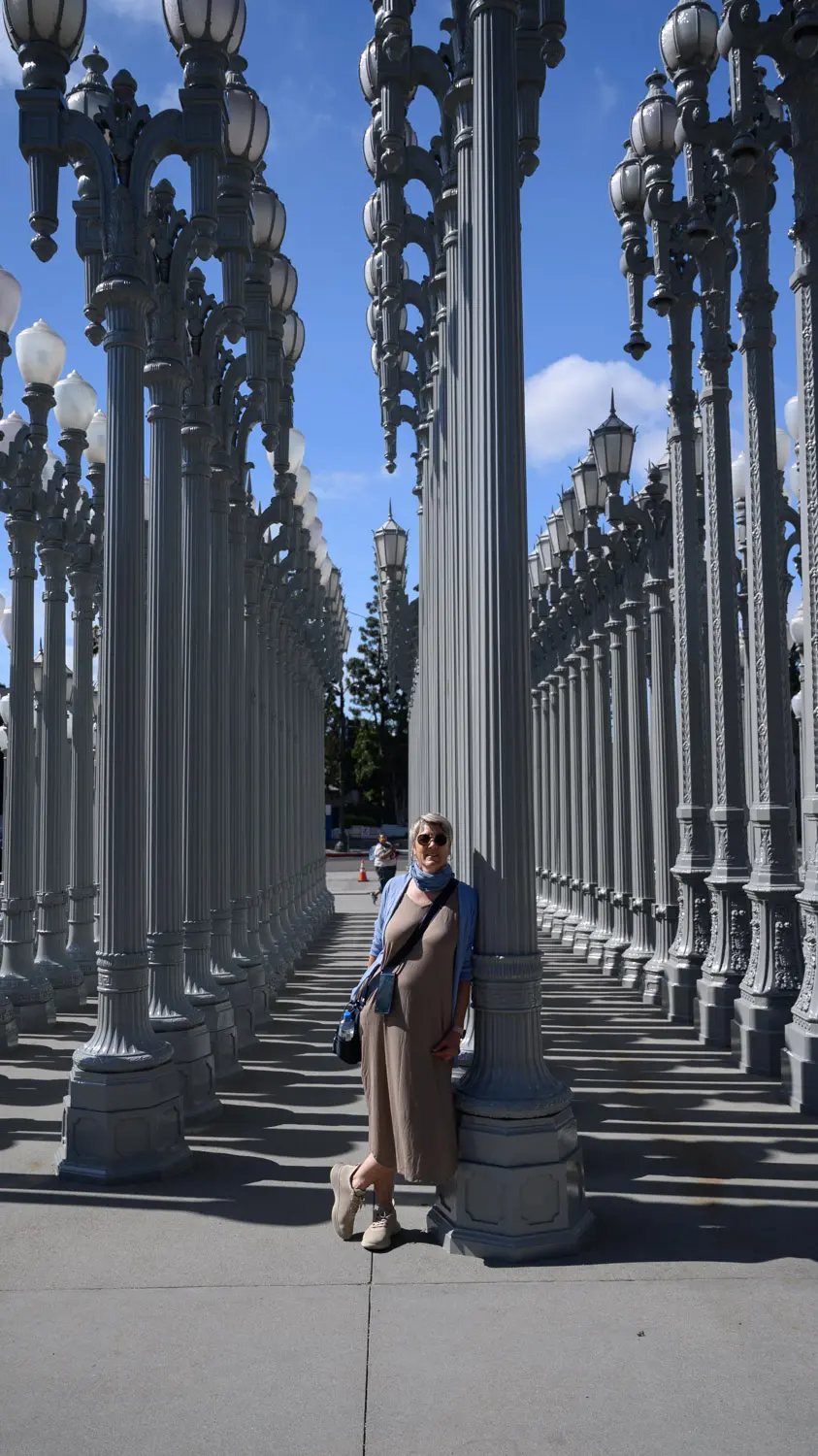
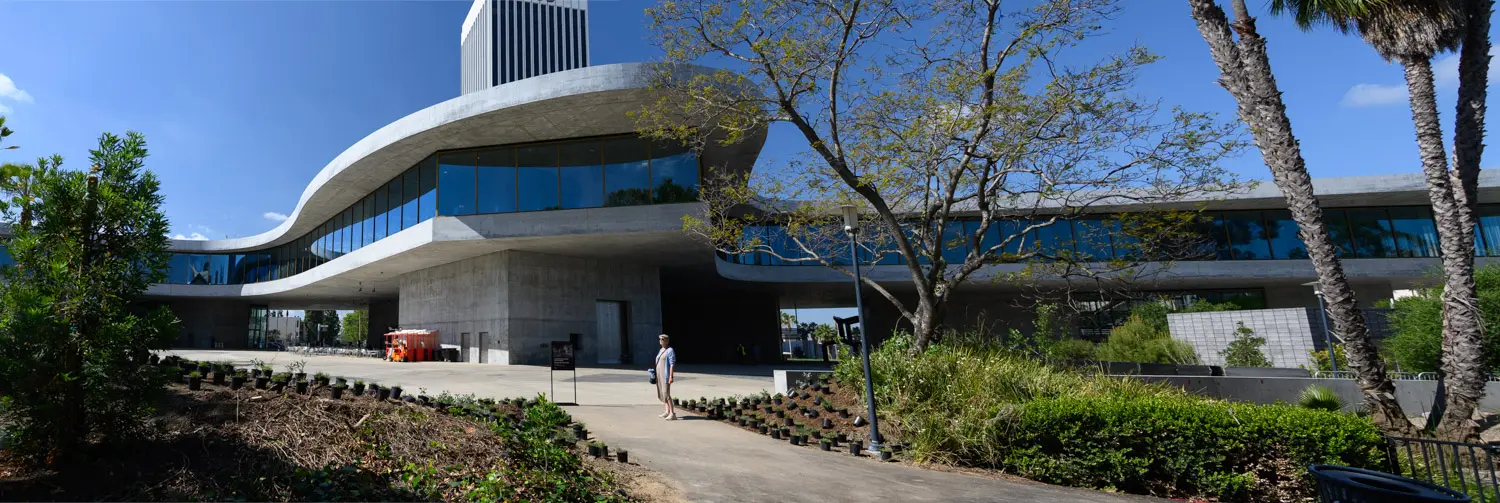
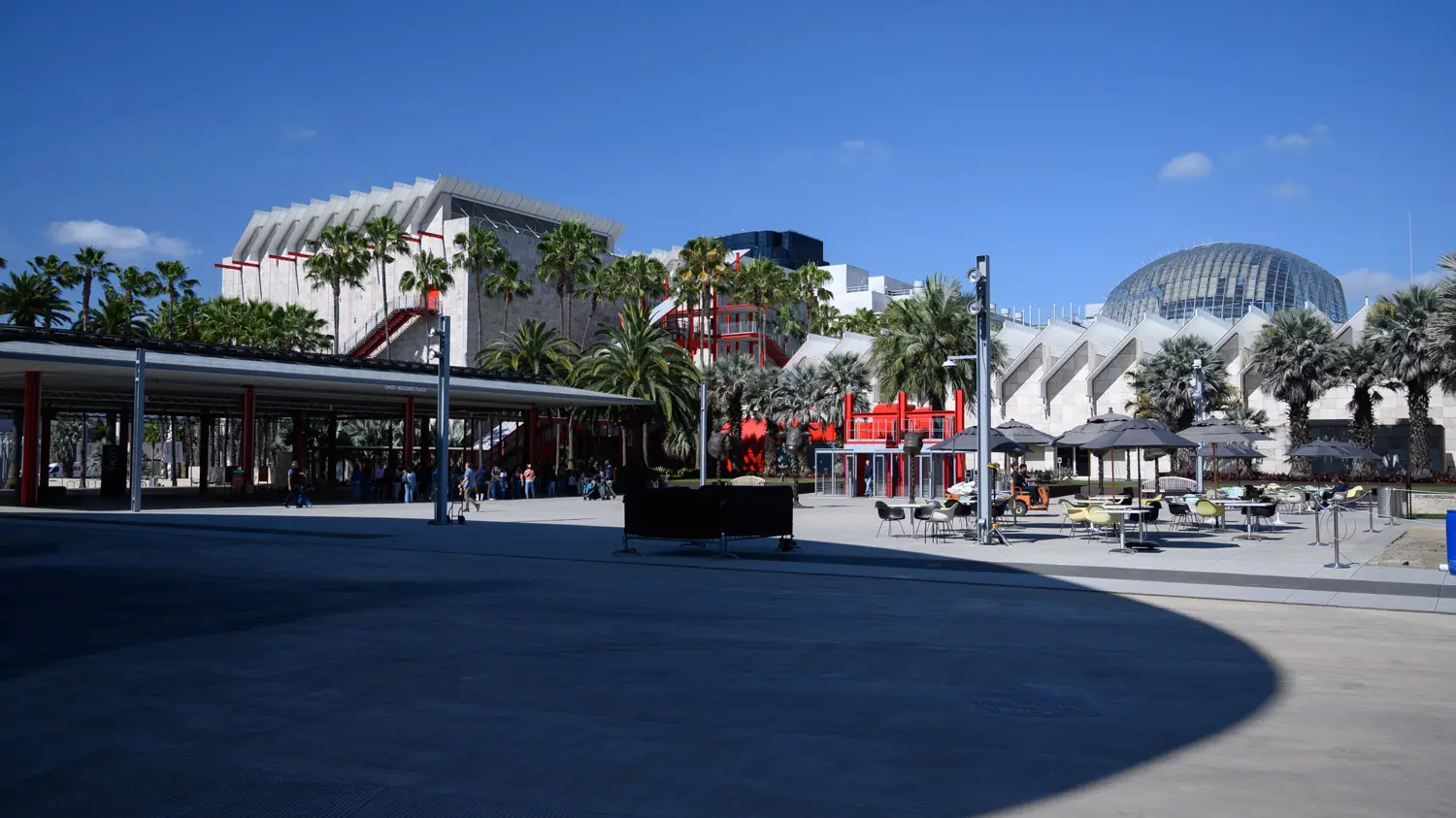
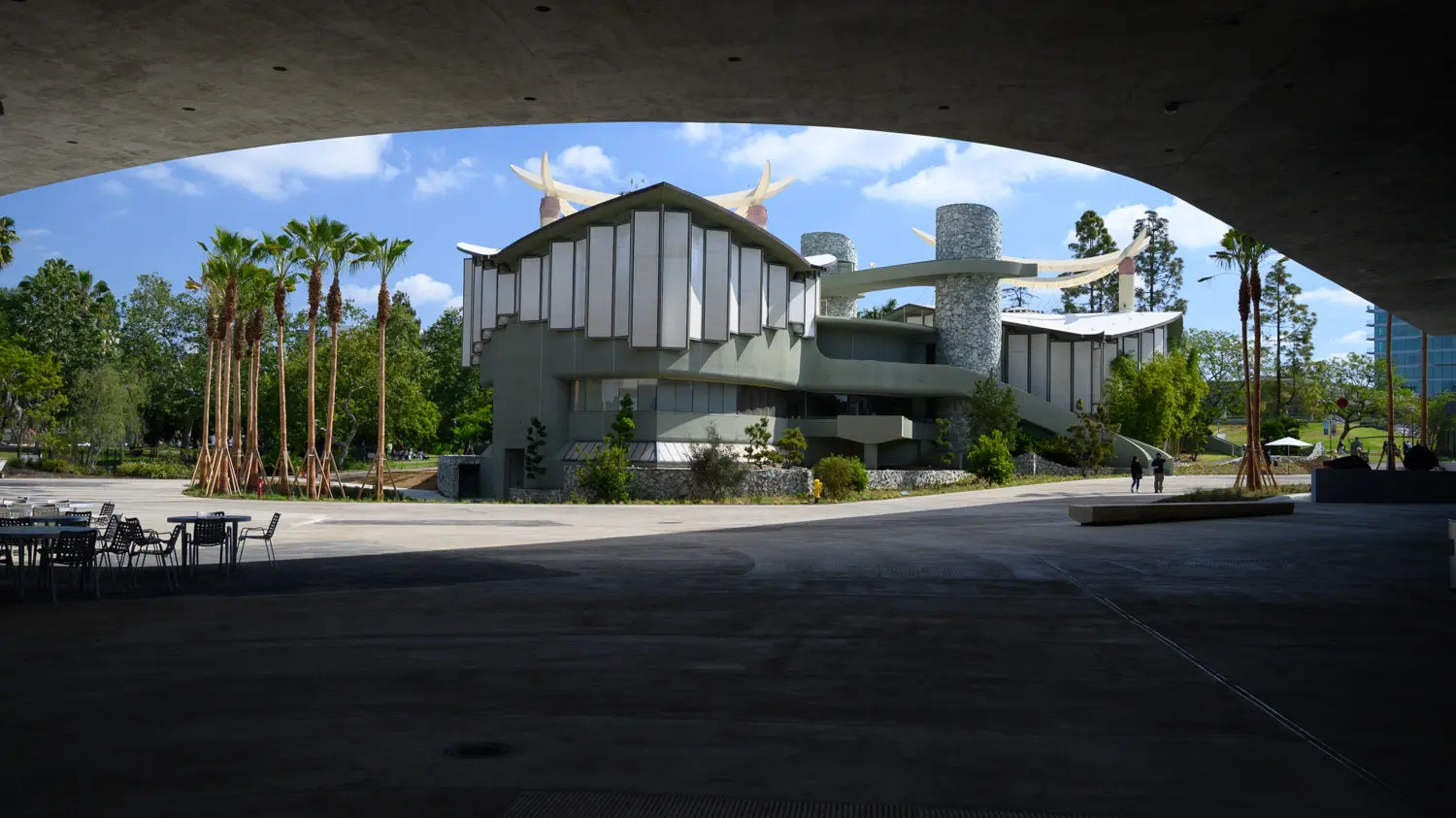
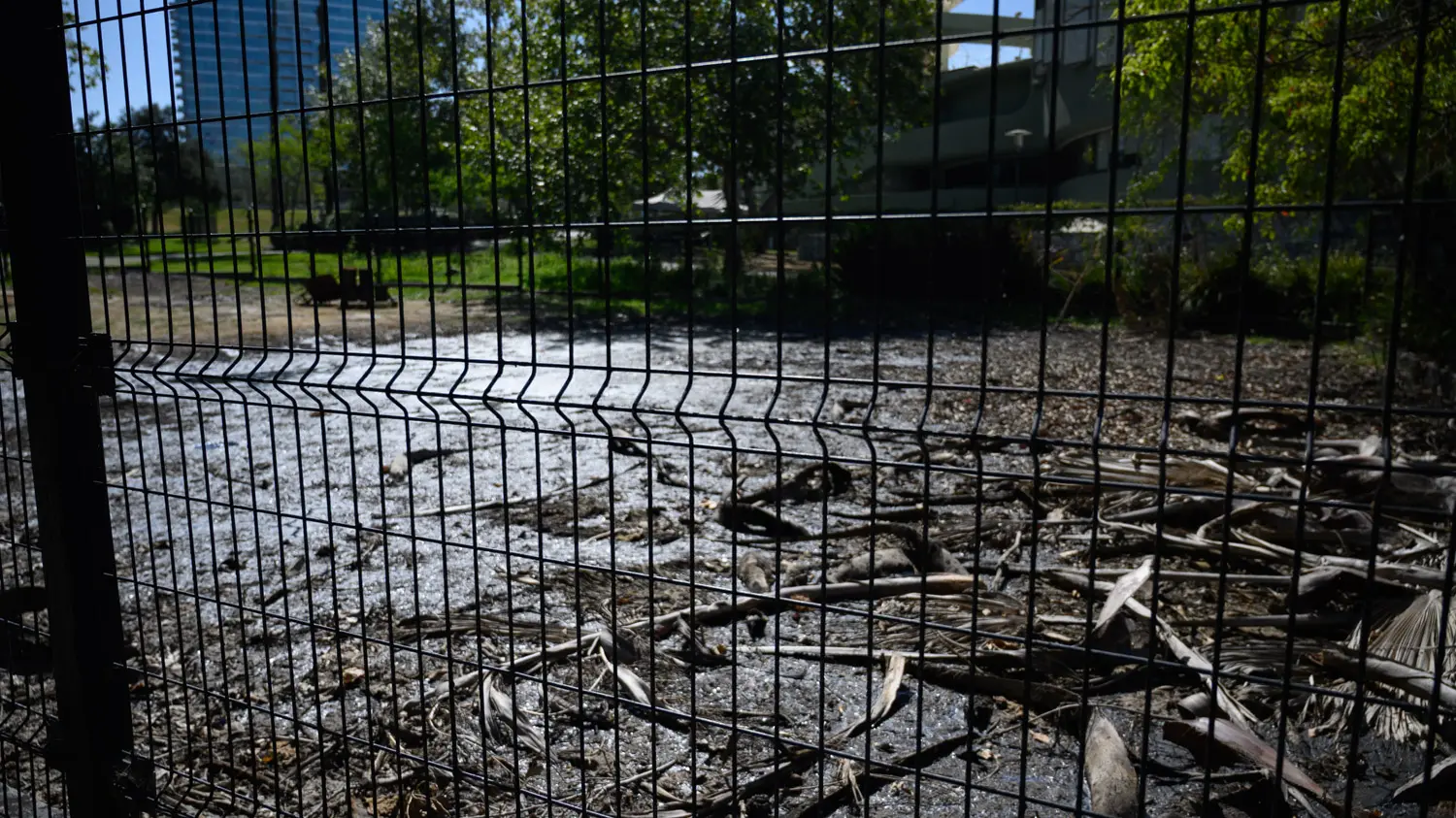
On the way, we stopped at the Los Angeles County Museum of Art, or LACMA. It occupies a brand-new building in a curvy, modern style, with a display of 202 antique cast-iron street lamps called Urban Light standing in front. The place was enormous.
Right next door is the La Brea Tar Pits and Museum, a paleontological research site in the middle of urban Los Angeles. Hancock Park was formed around a group of tar pits where natural asphalt has seeped up from the ground for tens of thousands of years. Over the millennia, animals became trapped there, preserving their bones in the tar. It is not every day you find prehistoric fossils in the middle of a major city.
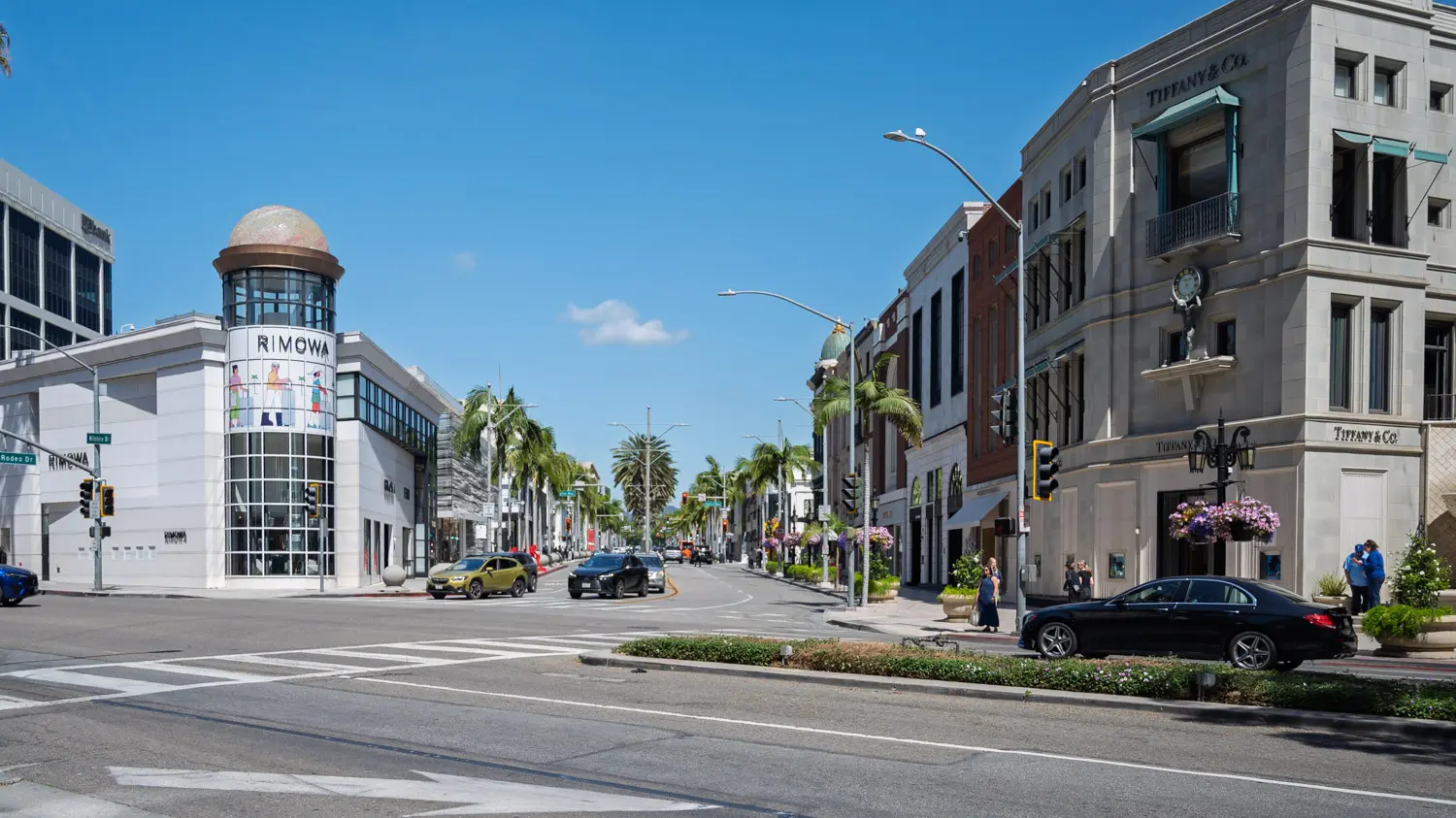
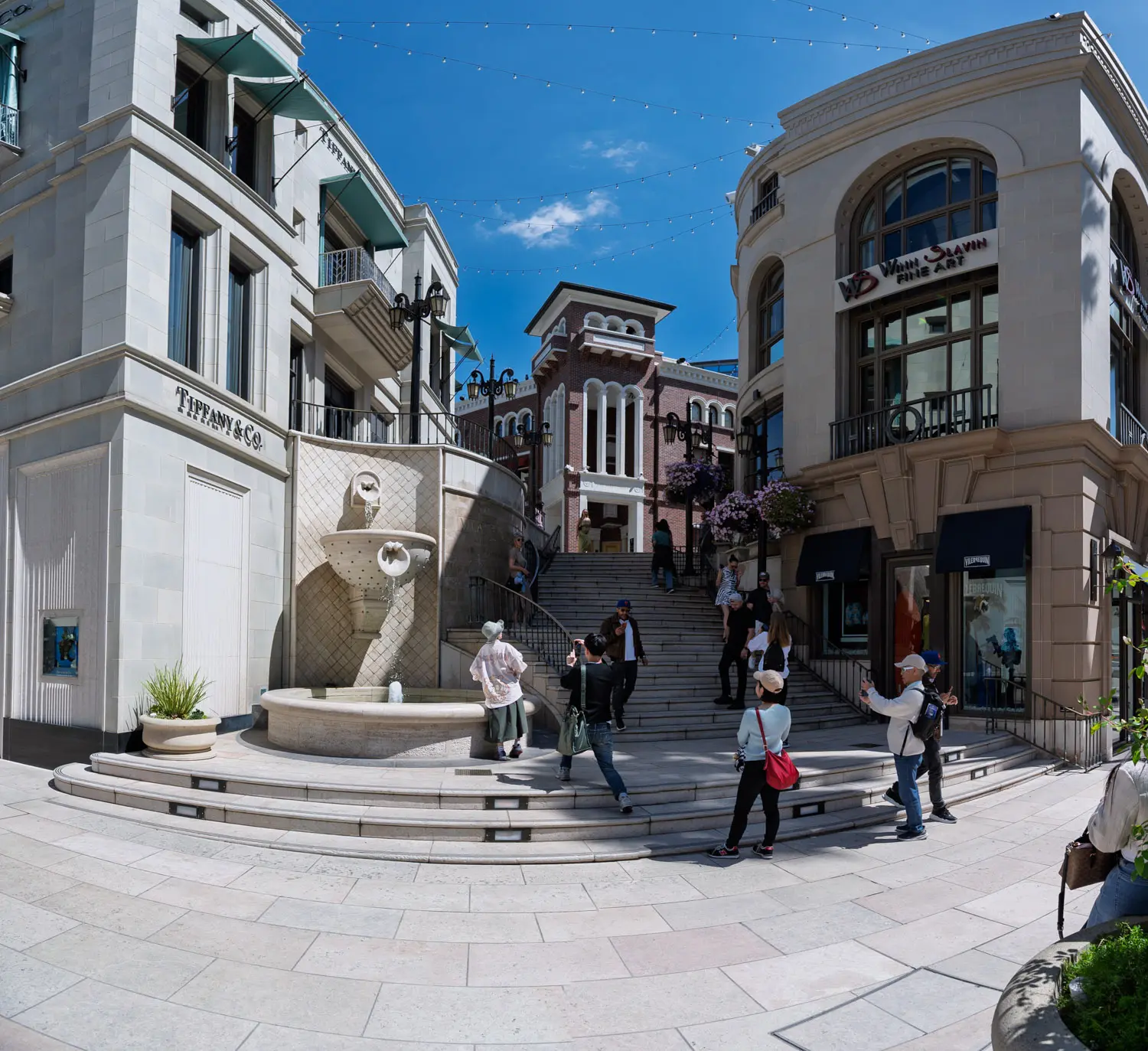
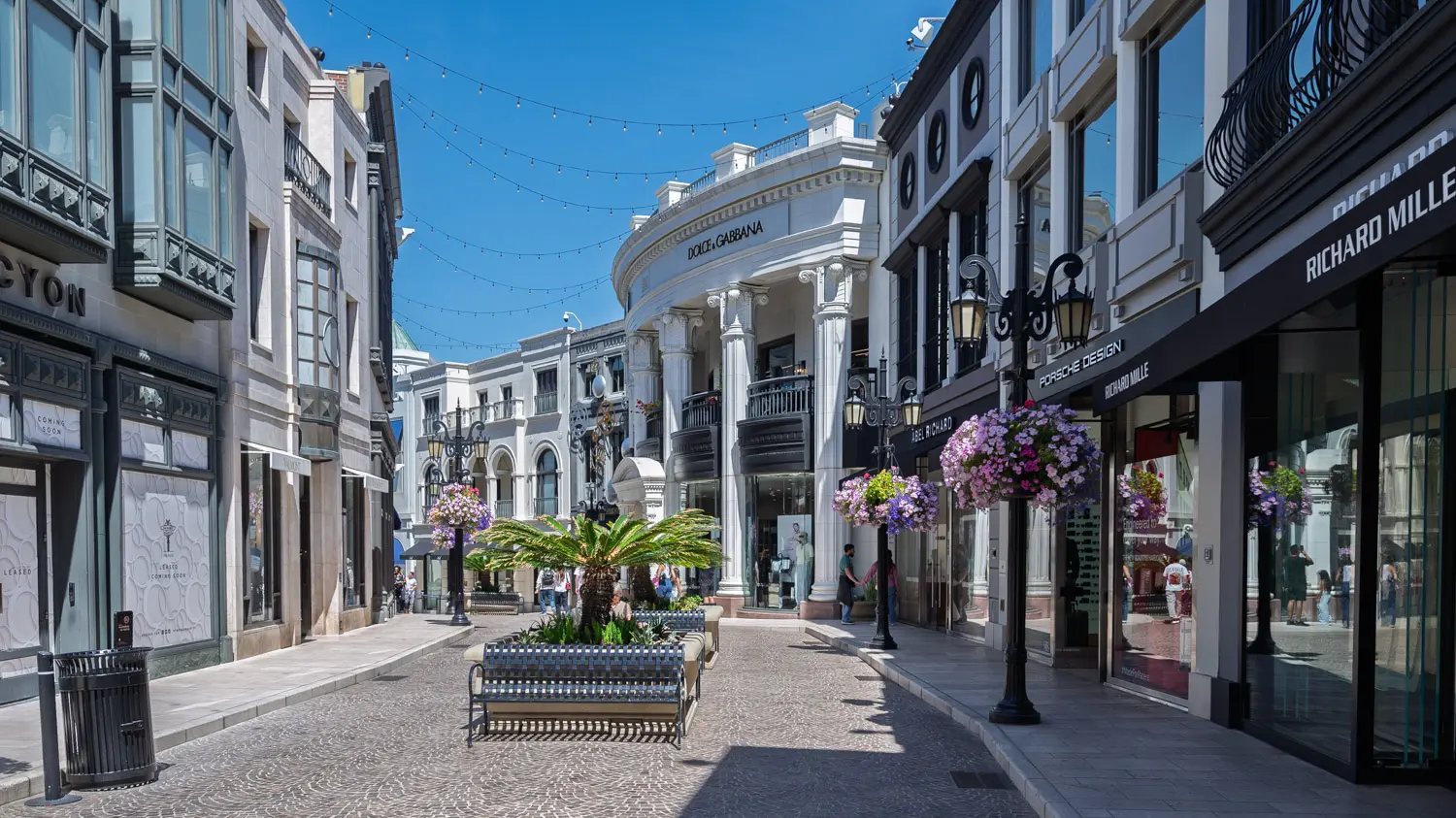
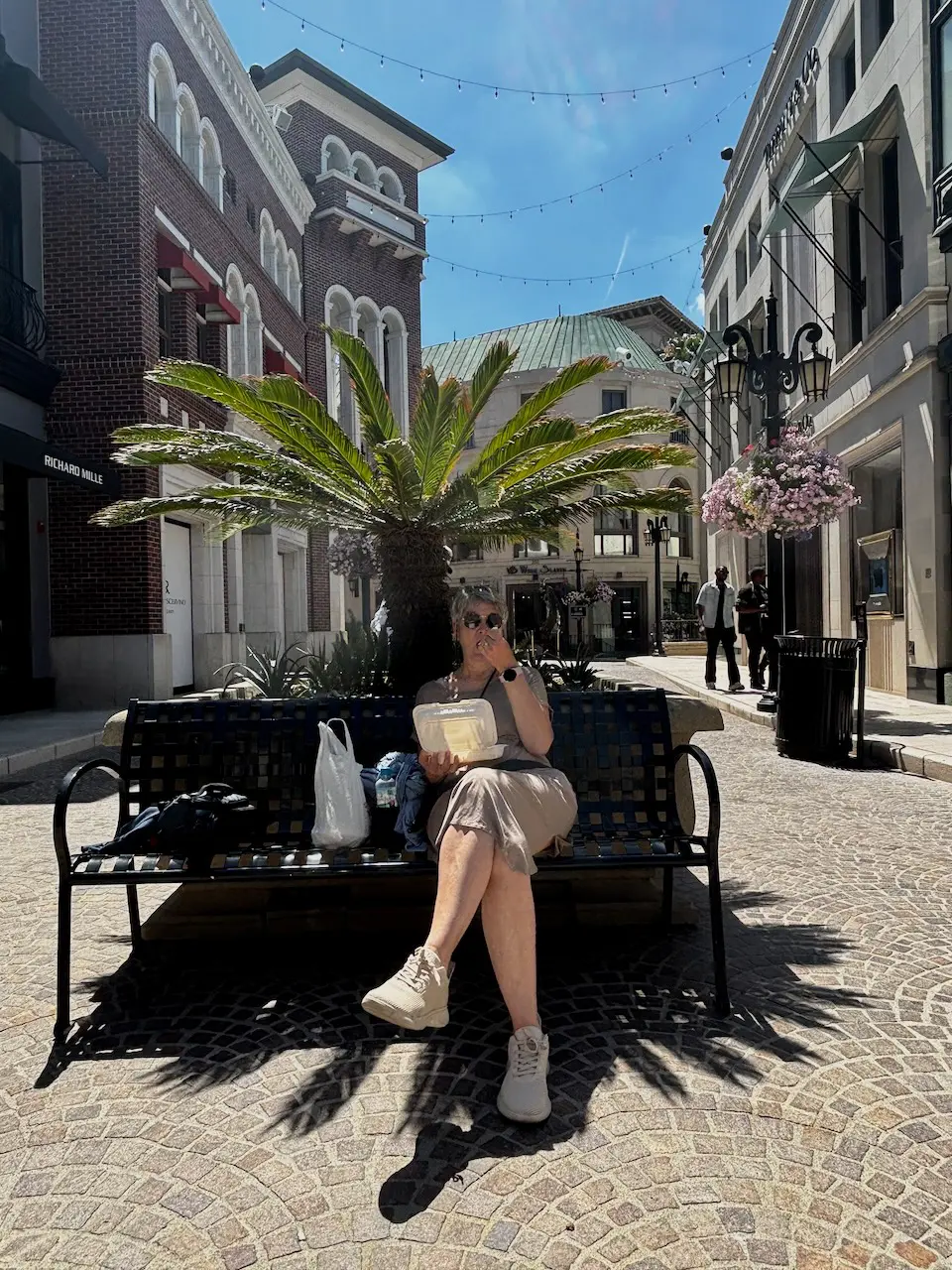
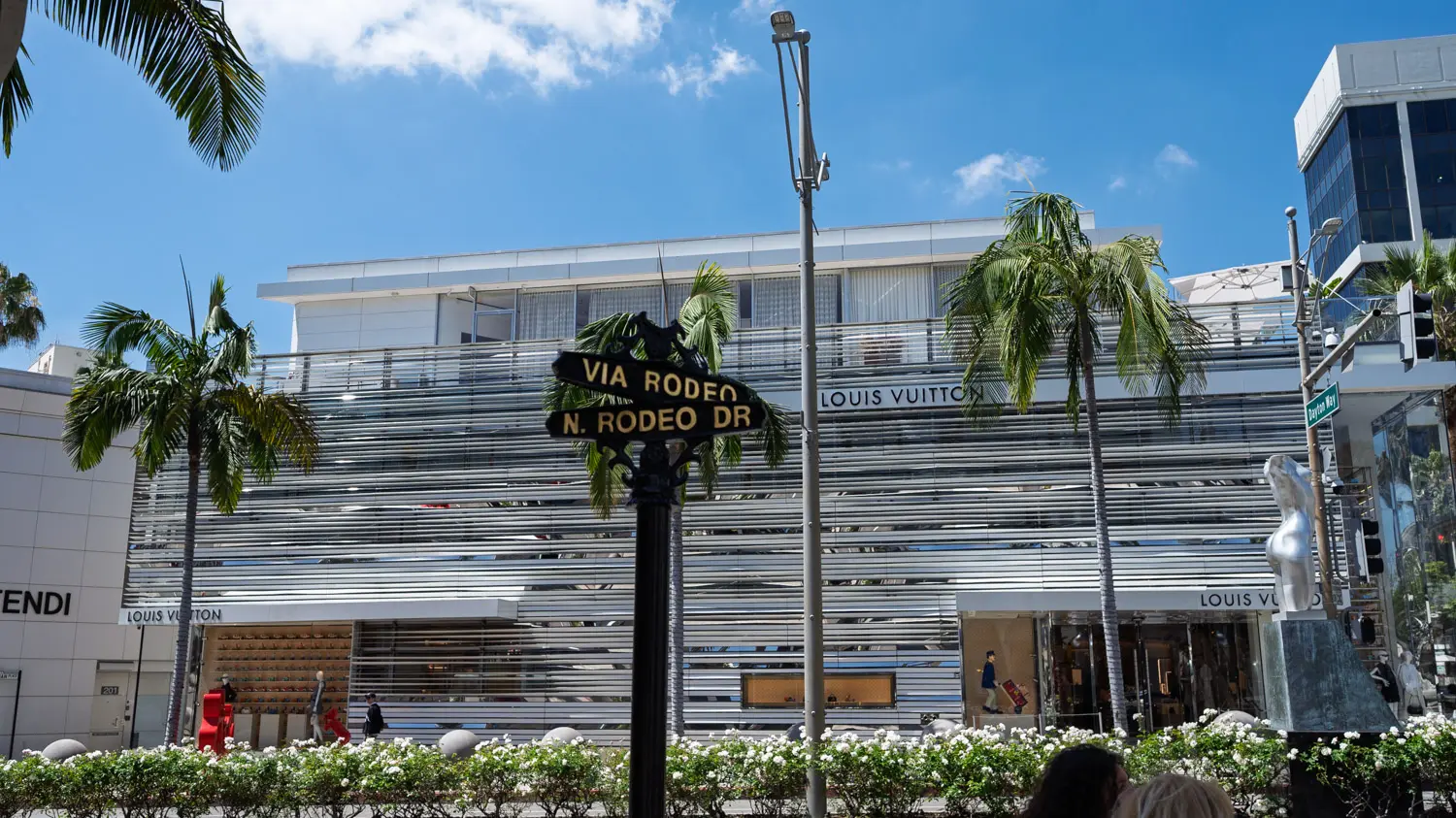
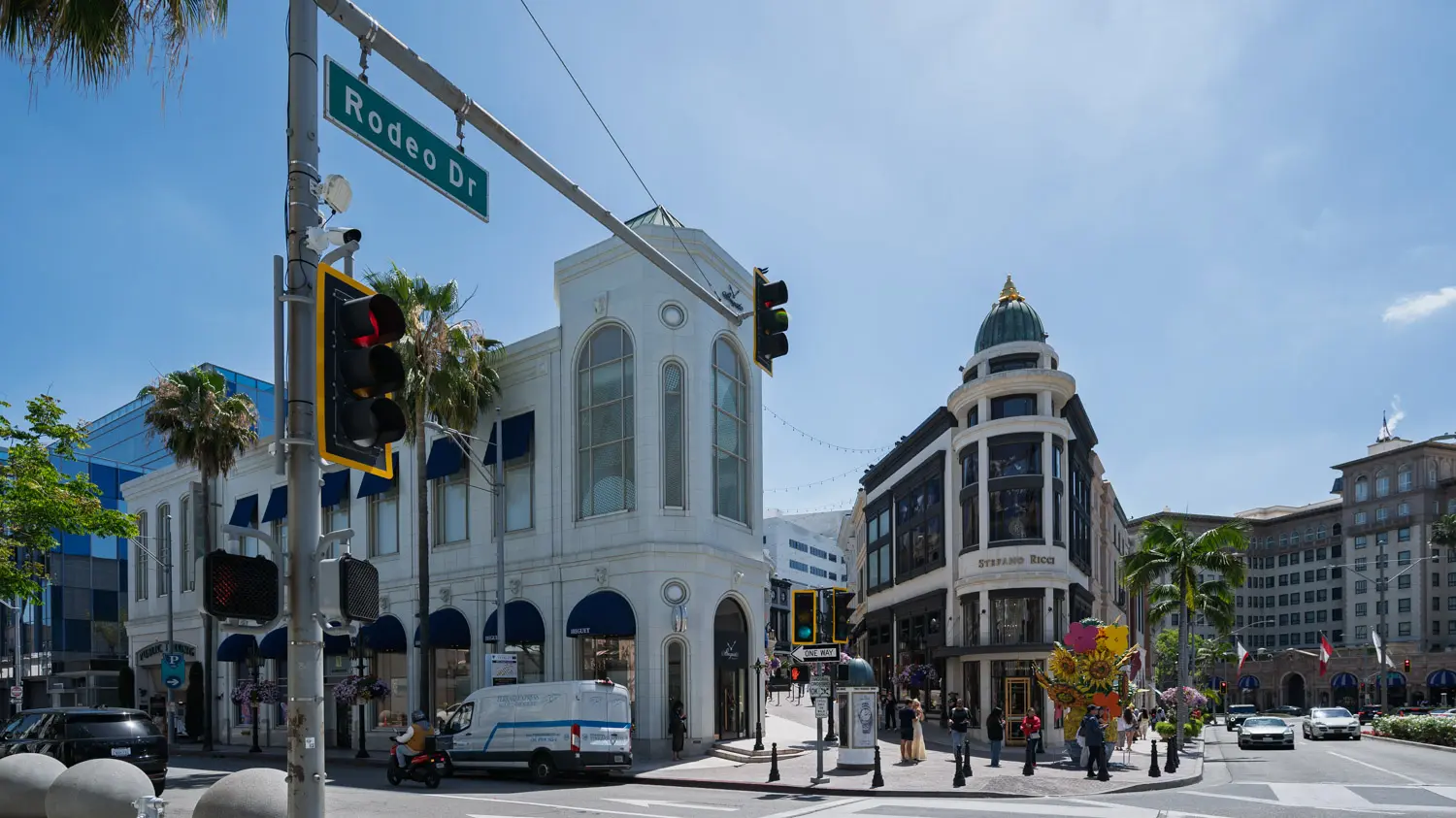
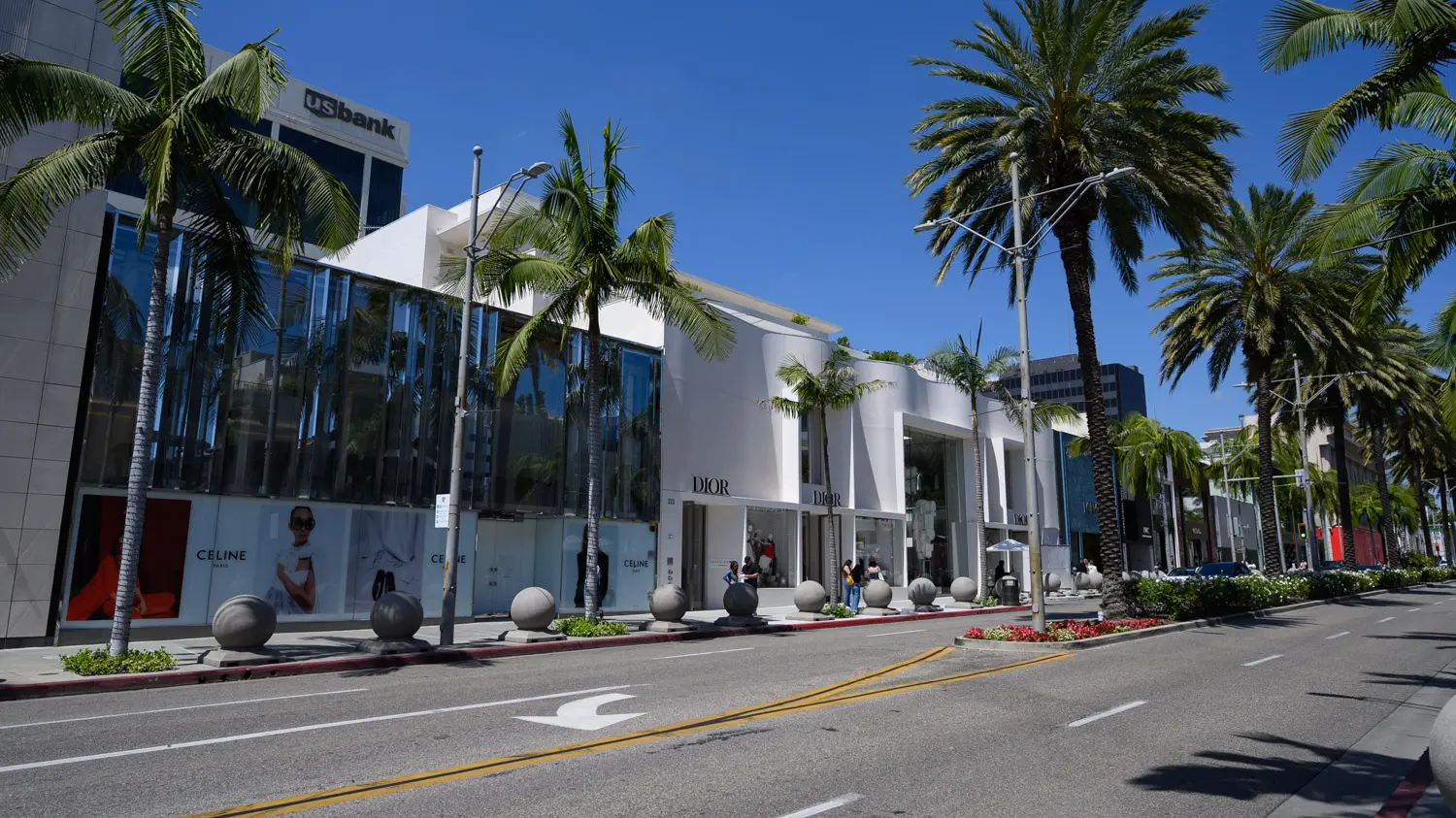
Another short bus ride brought us to Beverly Hills. At the intersection of Rodeo Drive and Wilshire Boulevard is the Golden Triangle, a small pedestrian shopping area lined with some of the biggest names in luxury fashion. Here we were, right in the heart of the rich-and-famous neighborhood, sitting on a bench and eating our Peruvian restaurant leftovers from a takeaway container. I felt we were contributing our own unique touch to the neighborhood.
Afterwards we continued down Rodeo Drive, taking in the designer storefronts, expensive cars, and everything else you would expect to see here, except celebrities. Not a single one in sight. Eventually we reached Santa Monica Boulevard, where we caught a bus that would take us to, appropriately enough, Santa Monica.
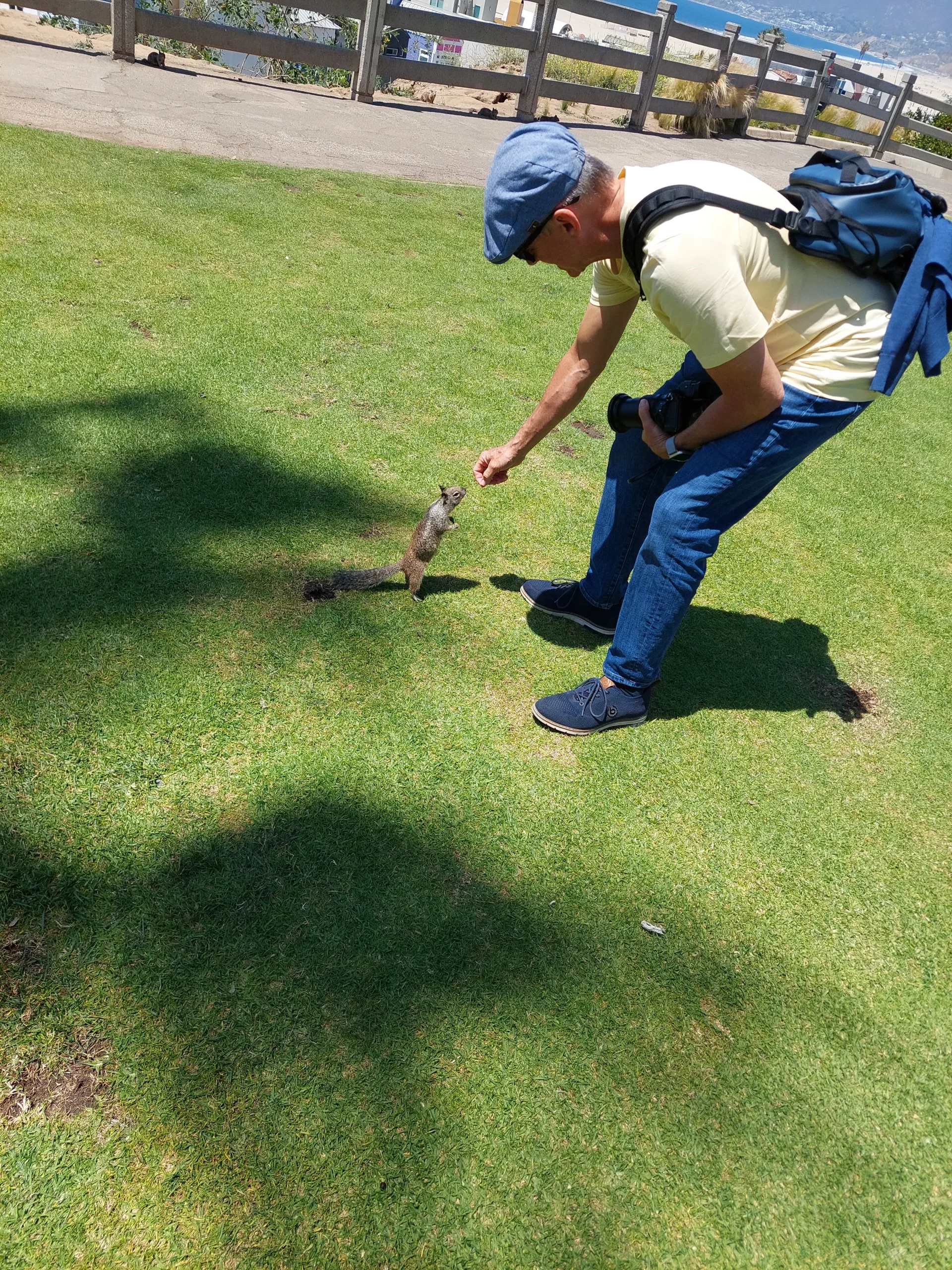
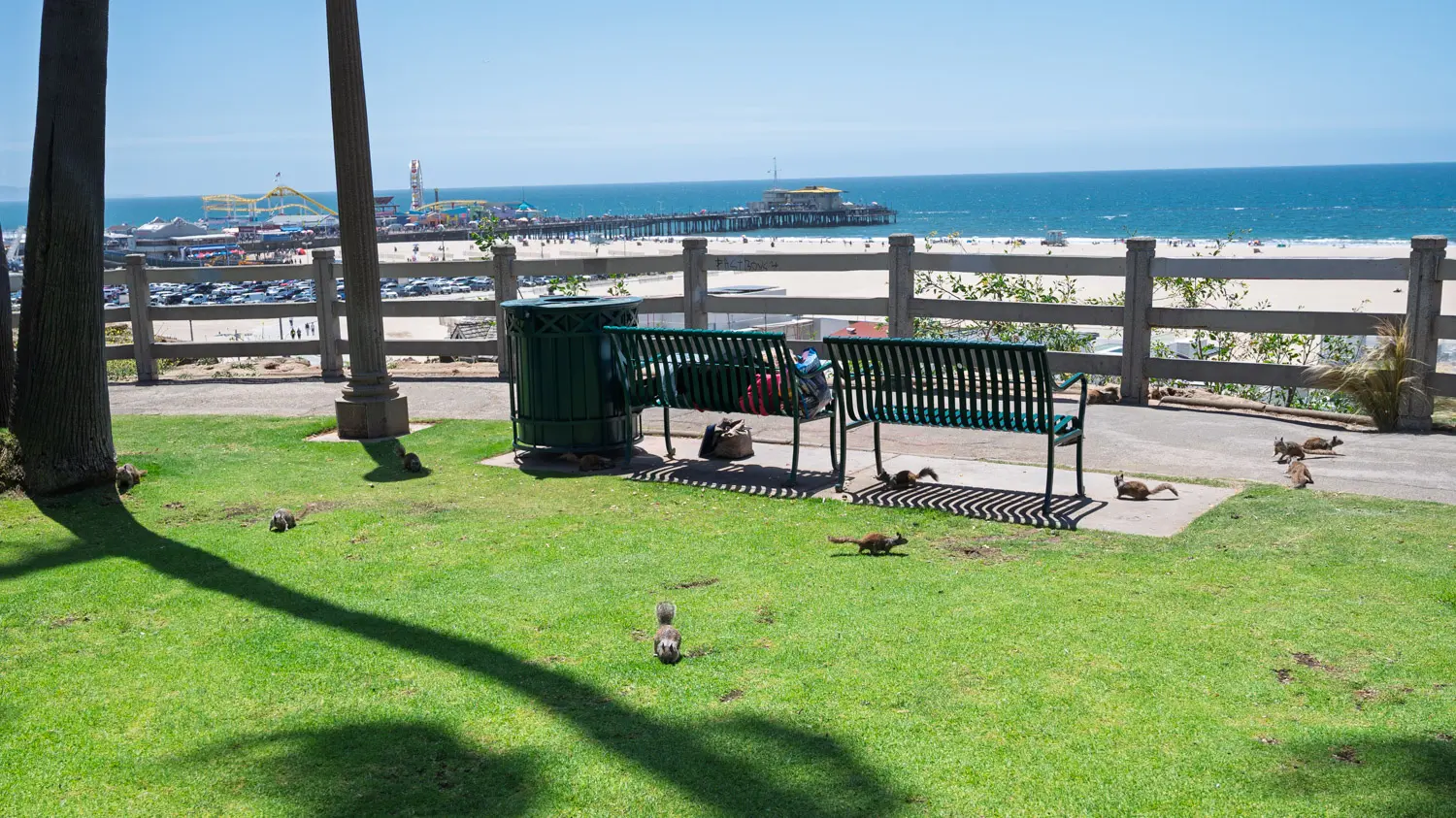 The squirrels like this park
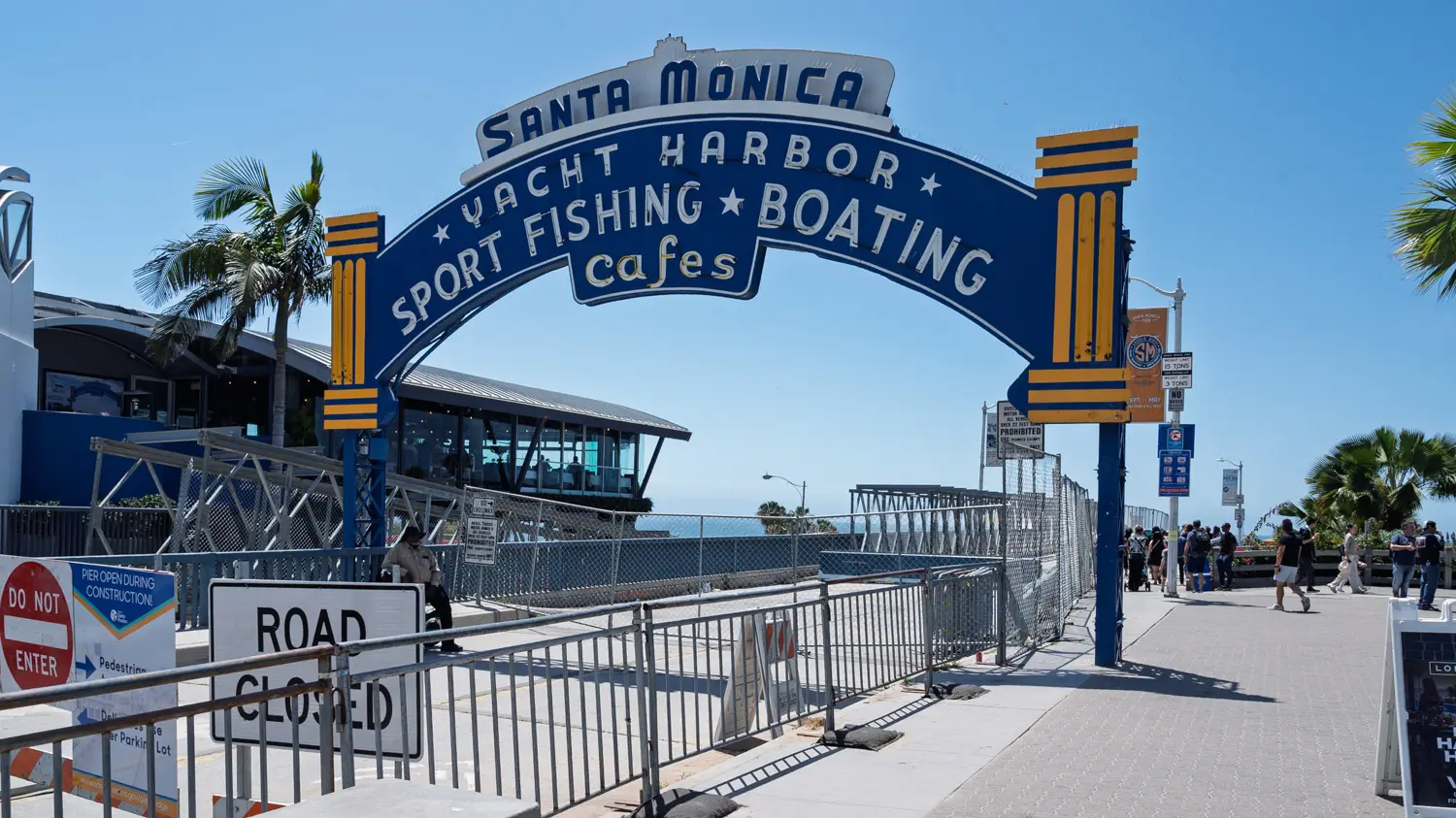
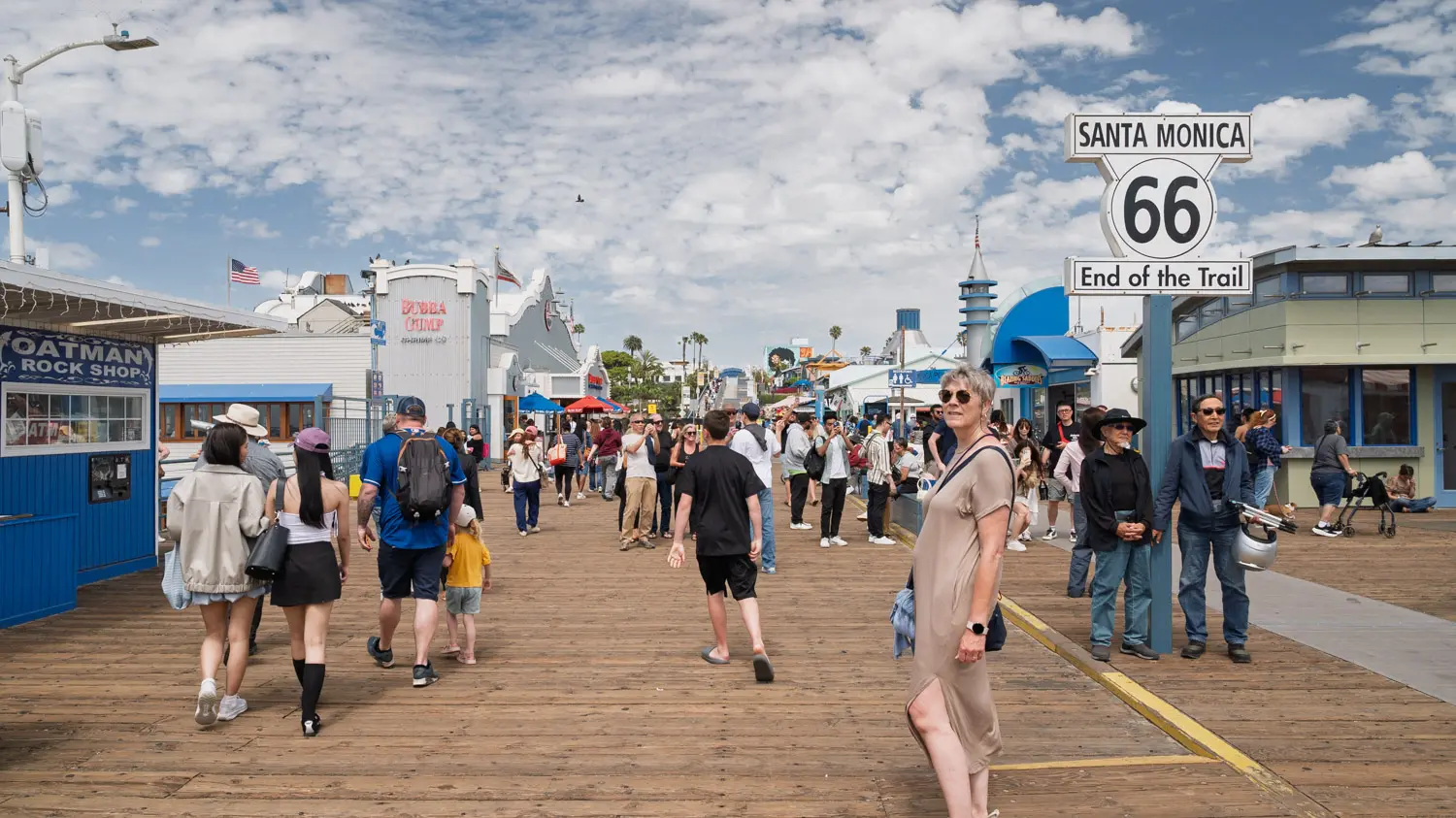
Santa Monica turned out to be a very pleasant surprise. It feels like a place where people might actually enjoy living.
Palisades Park stretches along the bluffs overlooking the beach and offers beautiful views of the Pacific. It is also home to an impressive number of squirrels, none of them particularly shy. Whenever I lowered my hand to the ground, a squirrel would come right up to investigate, clearly hoping for a snack. They seem to have been very well trained by the two-legged visitors.
The 3rd Street Promenade is another pleasant part of town — a pedestrian-only area with a little bit of everything, from a farmers’ market to designer stores, along with countless restaurants and cafés
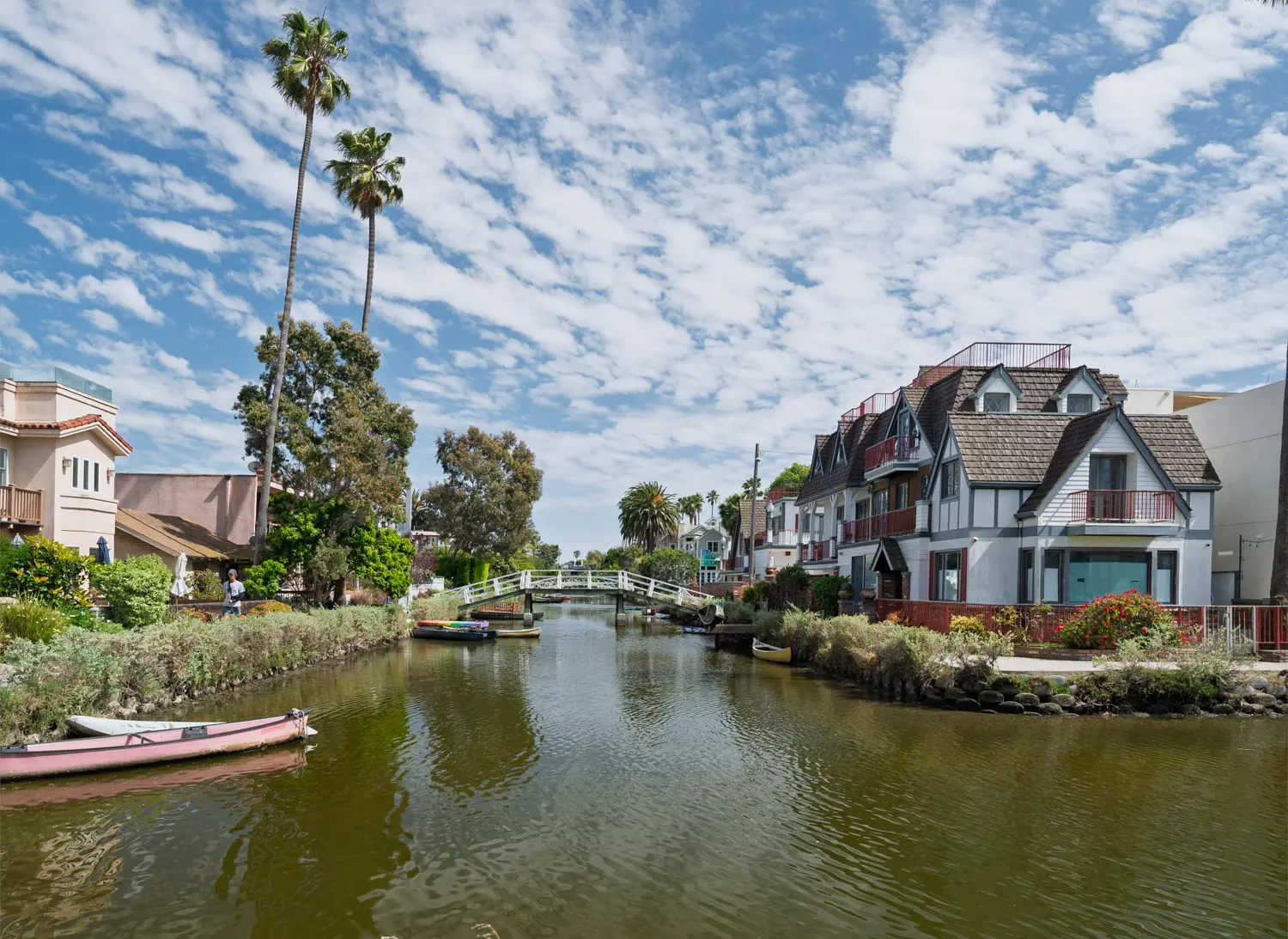
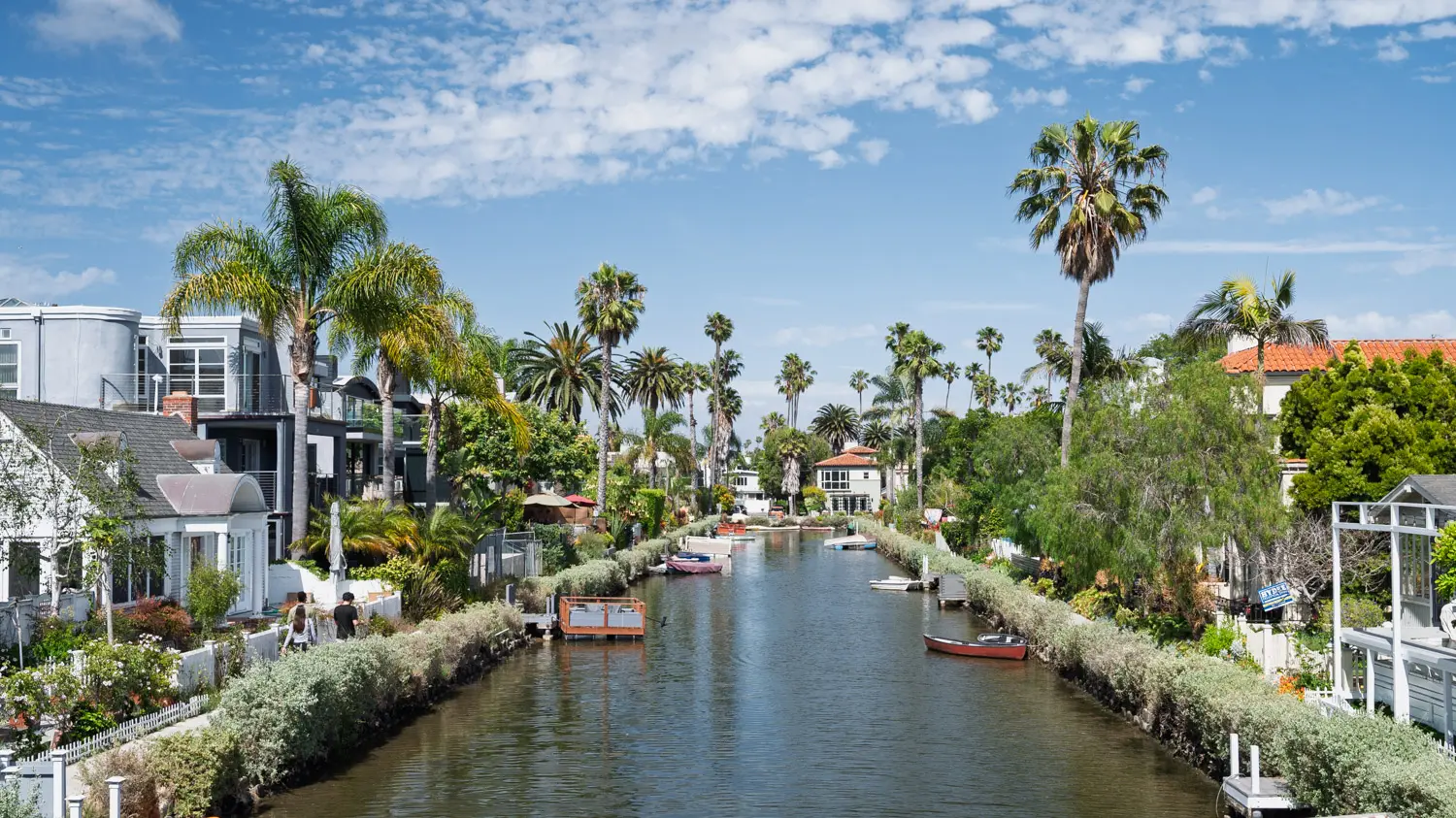
Just south of Santa Monica lies Venice Beach, Before heading to the beach, however, we visited the neighborhood that gave the area its name: the Venice Canal Historic District.
These Italian-inspired artificial canals were built in 1905, and strolling along the sidewalks beside the canals and the charming — and no doubt very expensive — houses was peaceful and surprisingly quiet.
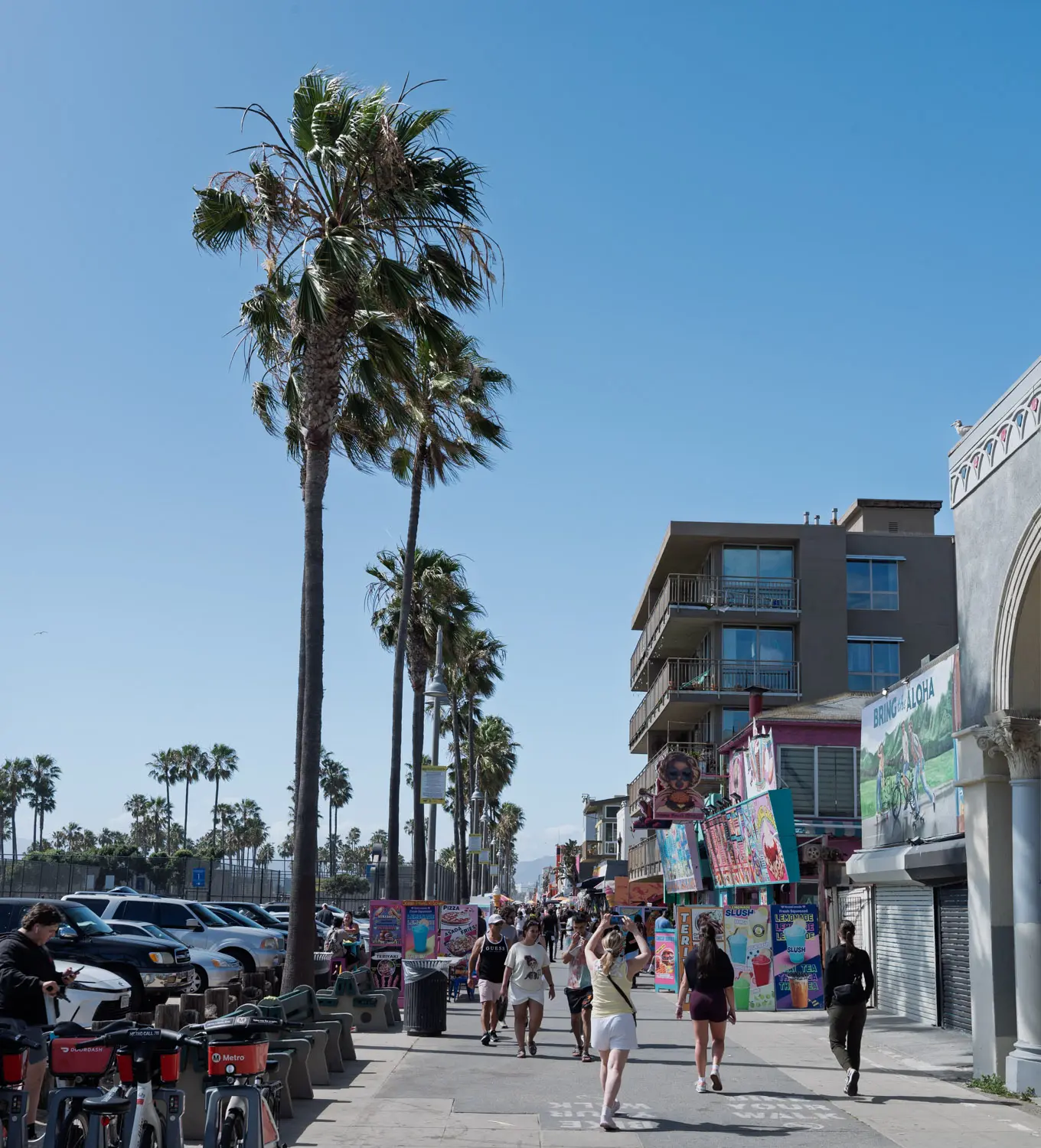
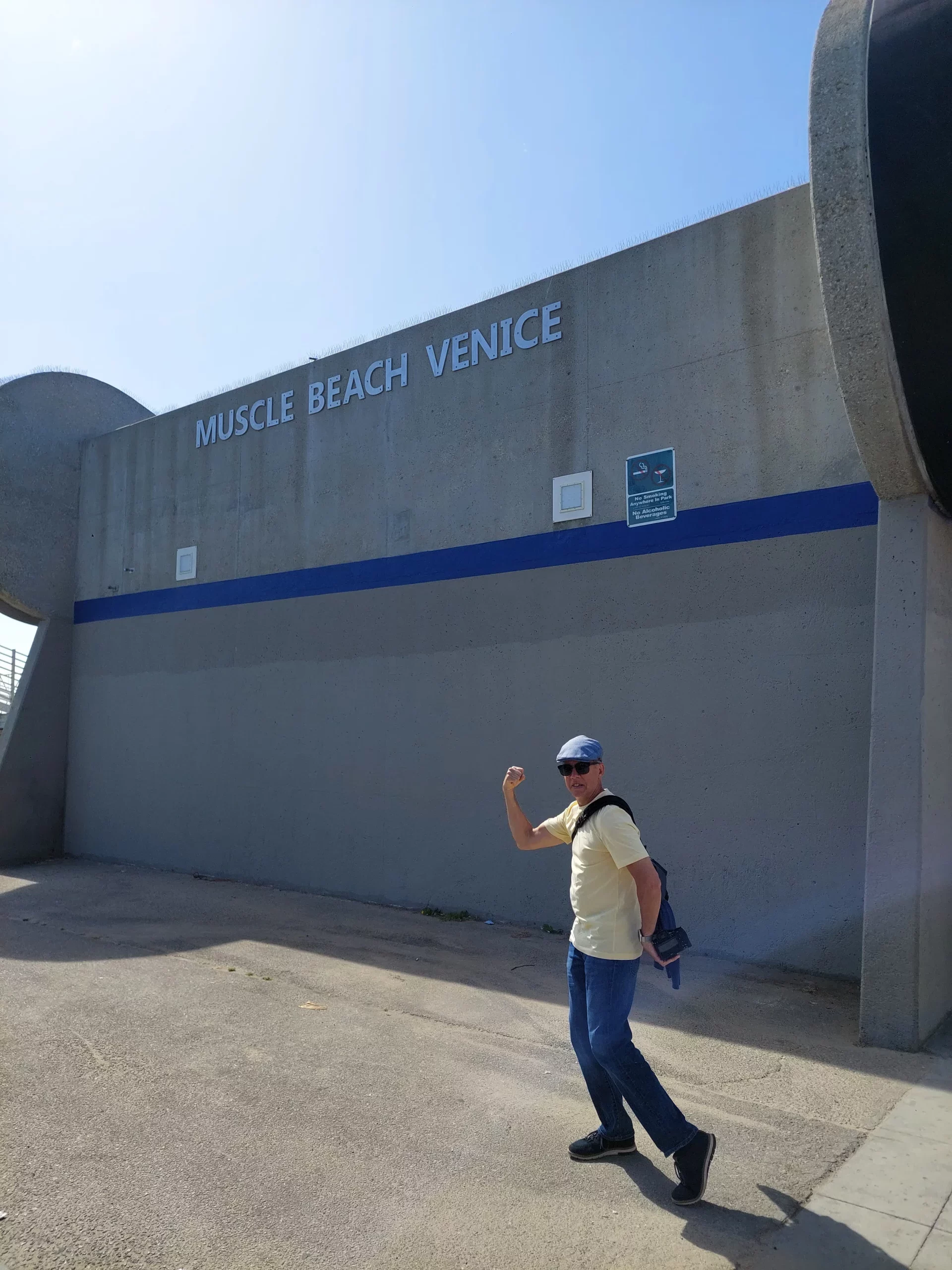
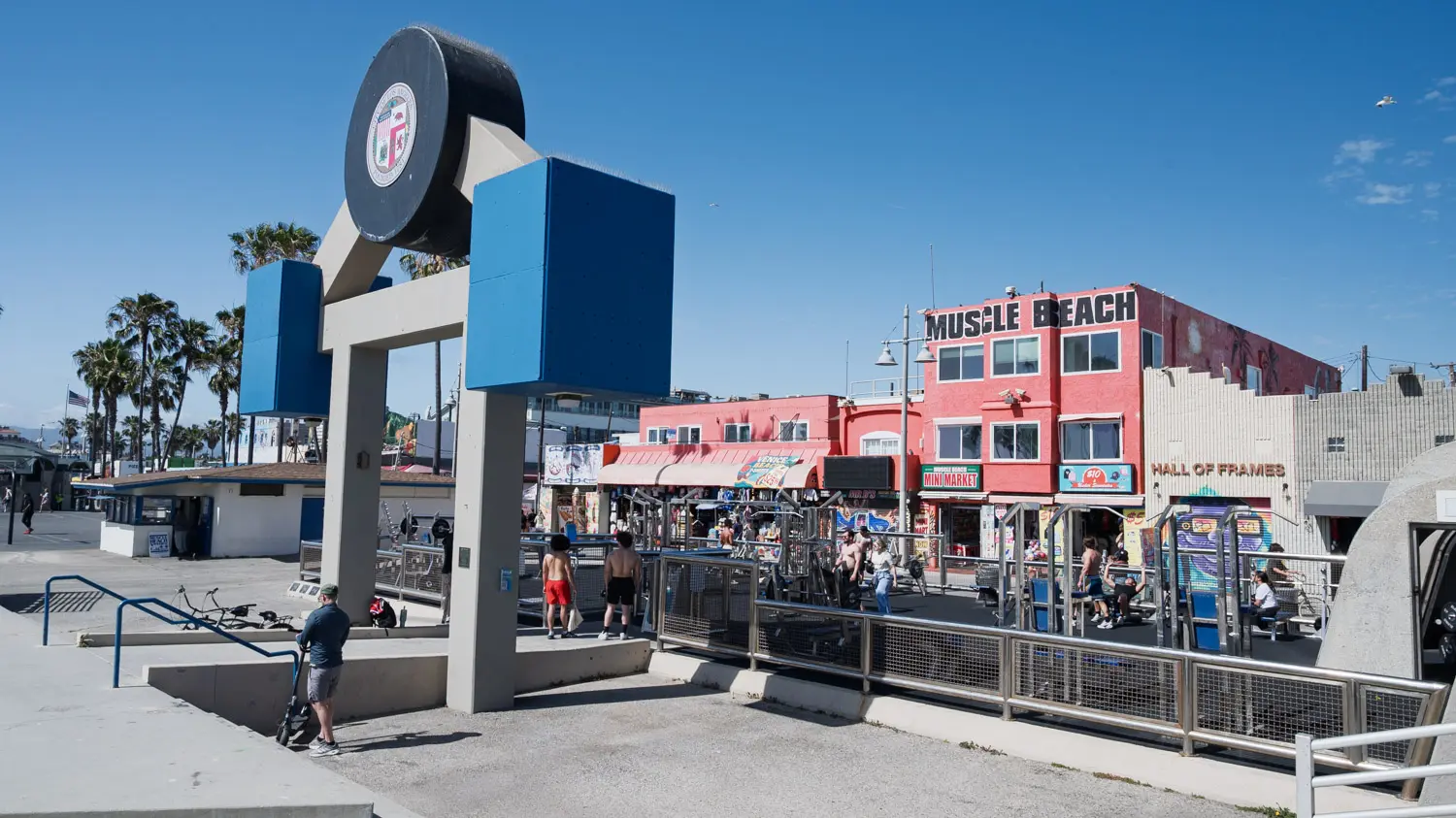
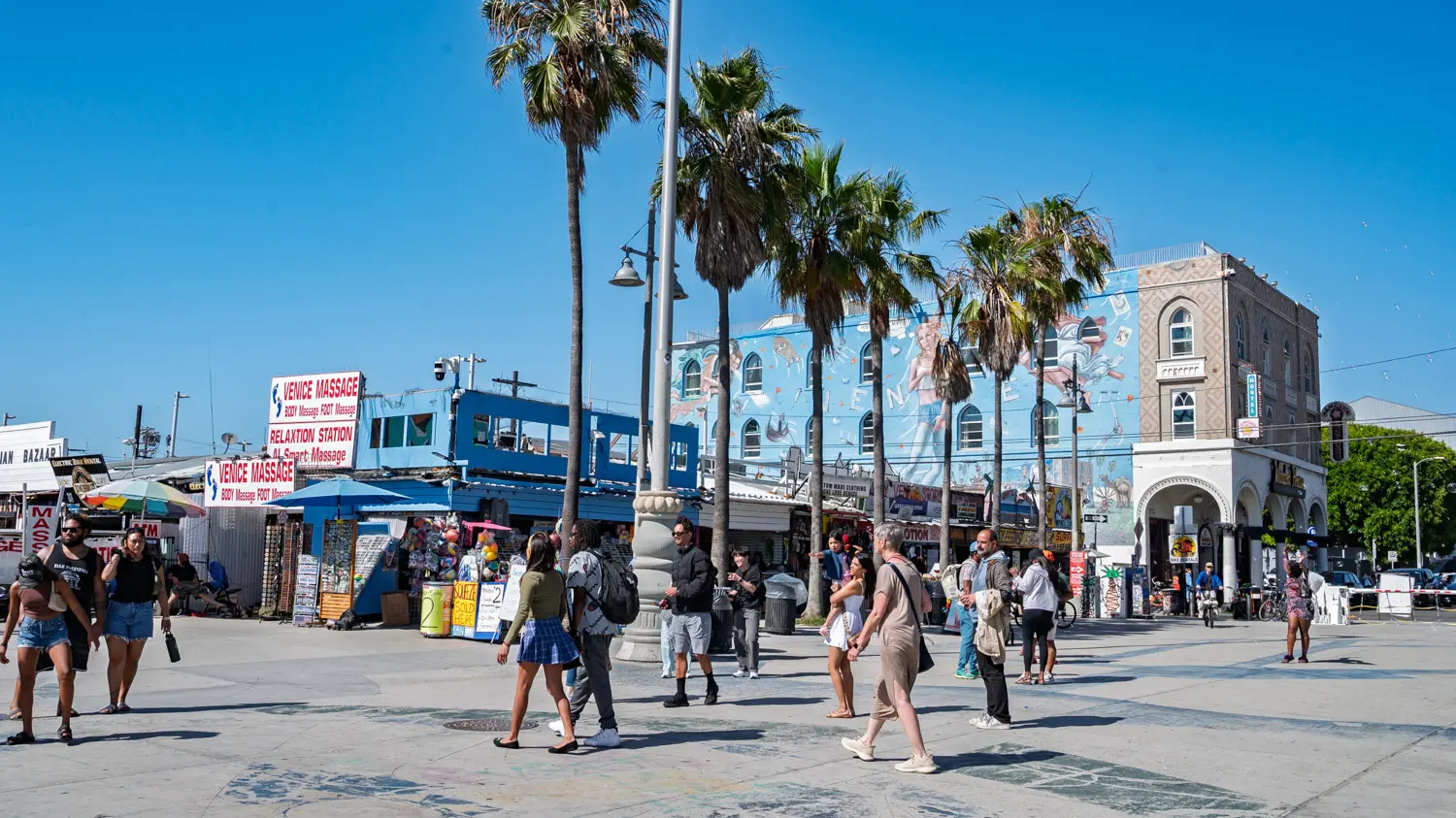
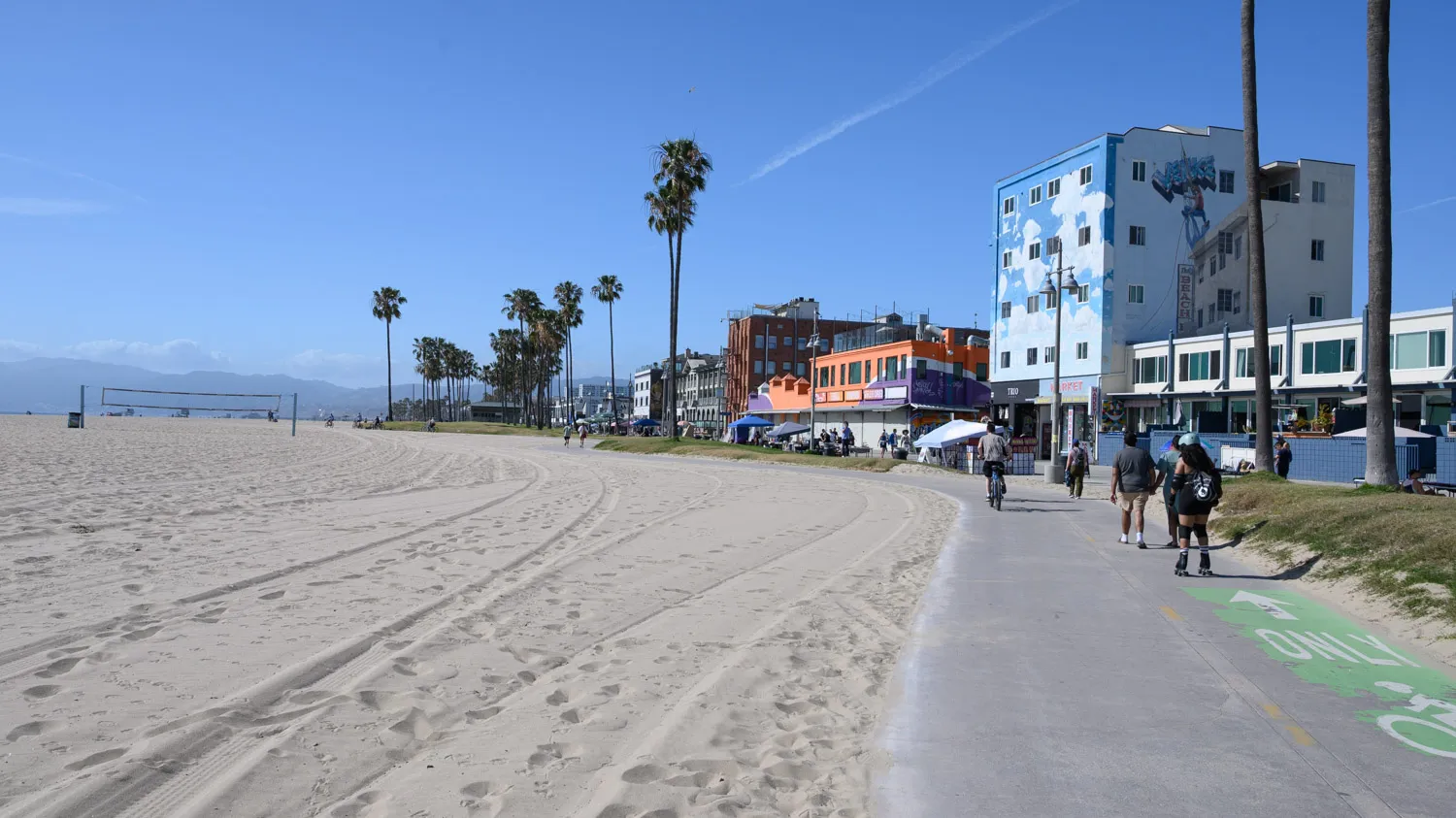
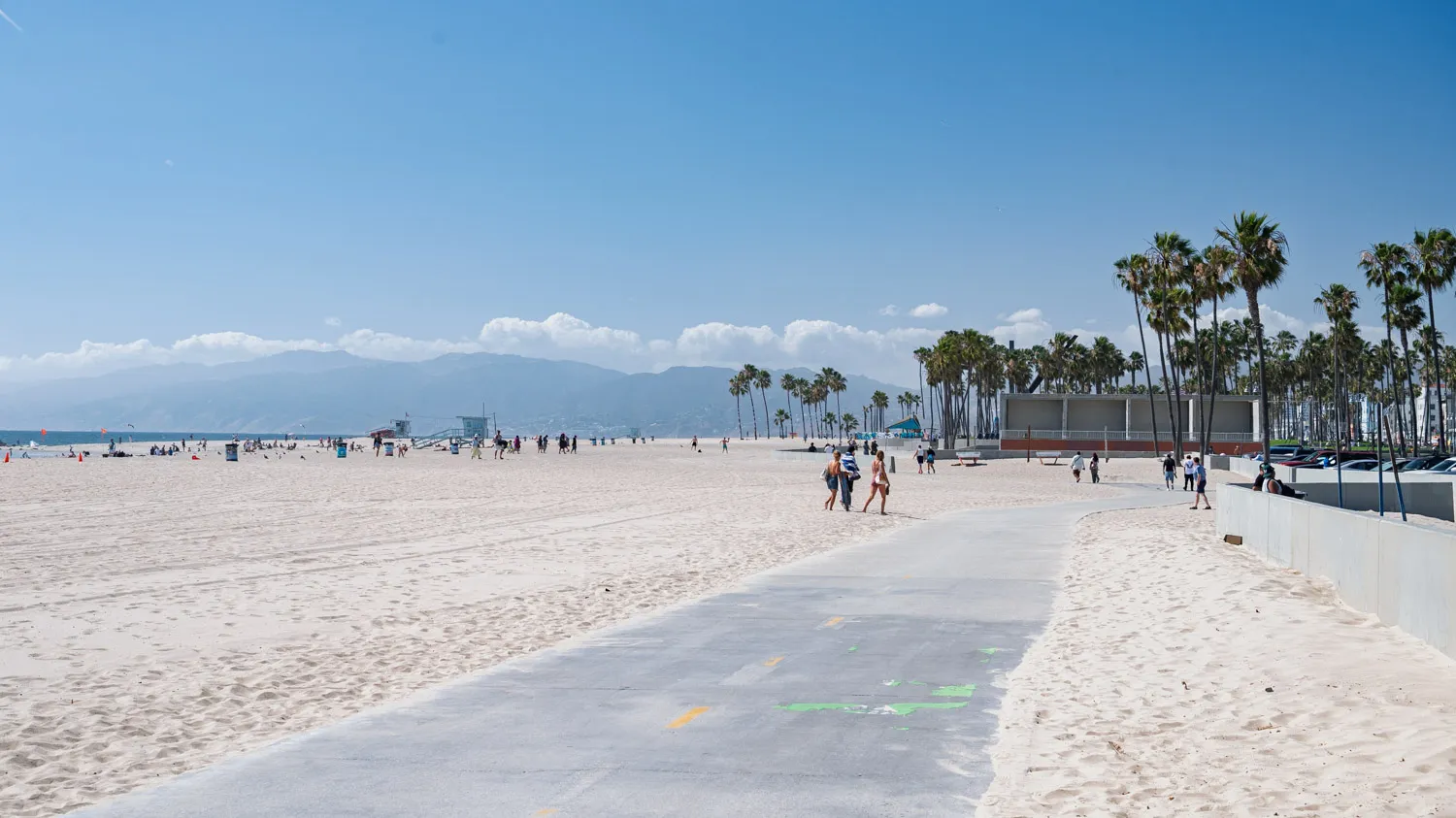
Venice Beach itself, including Muscle Beach made famous by Arnold Schwarzenegger and the rest of the bodybuilding crowd of the 1970s, is Santa Monica’s grittier sibling. Tattoo parlors, burger joints, souvenir stands, street performers, the occasional homeless person — it was all there. And of course, the famous beachfront gym, well populated by impressively muscular young men apparently determined to make sure nobody forgot where they were.
Having read about the devastating wildfires that had swept through parts of the area, especially Pacific Palisades, we were curious to see how things looked now, so we jumped on a bus for a first-hand look.
What we saw was surreal. There were empty lots where homes had burned down, right next to buildings left untouched. Entire gaps in the neighborhood looked as if pieces had simply been cut out. It was hard to imagine what the people living there must have gone through.
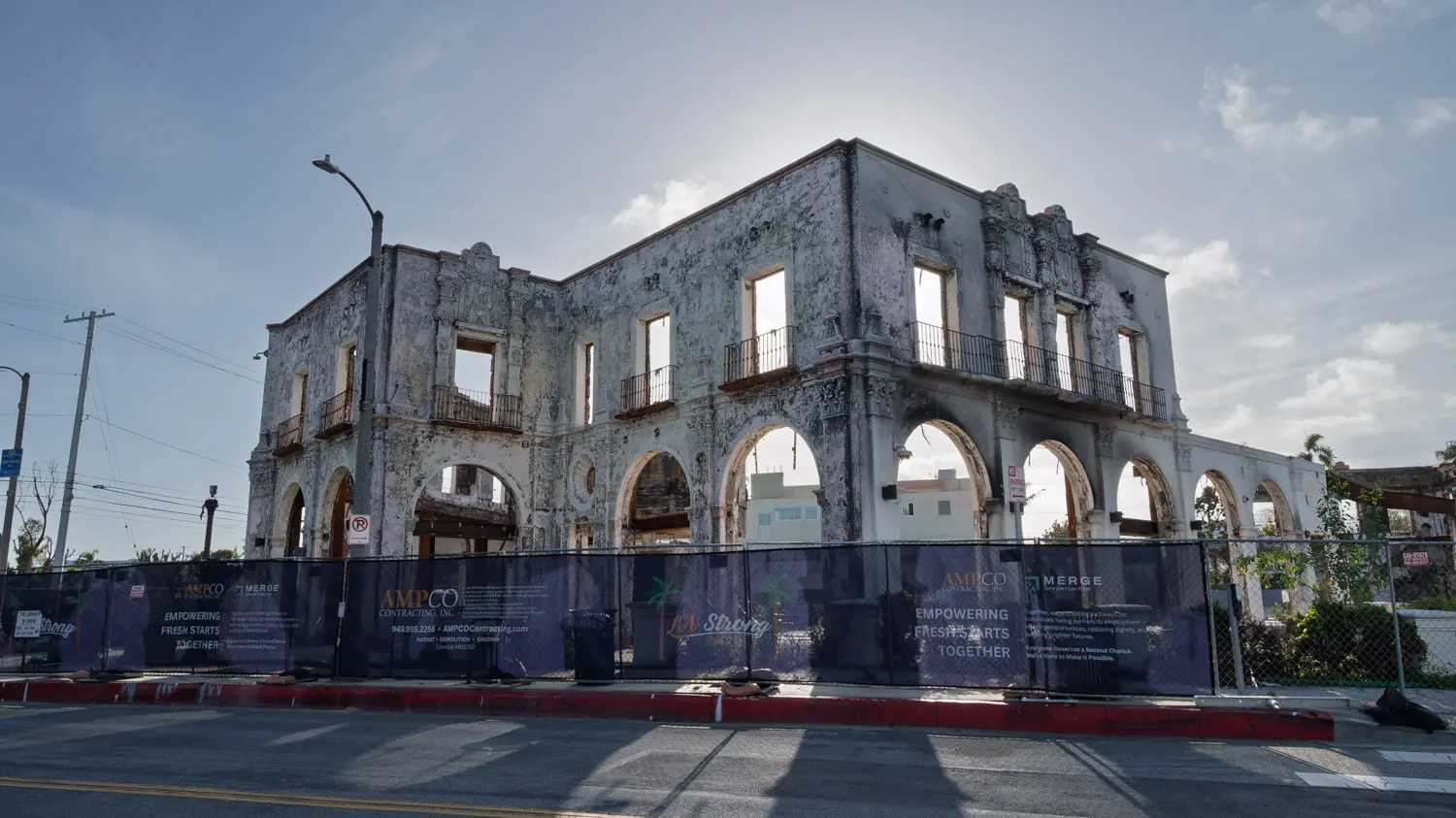
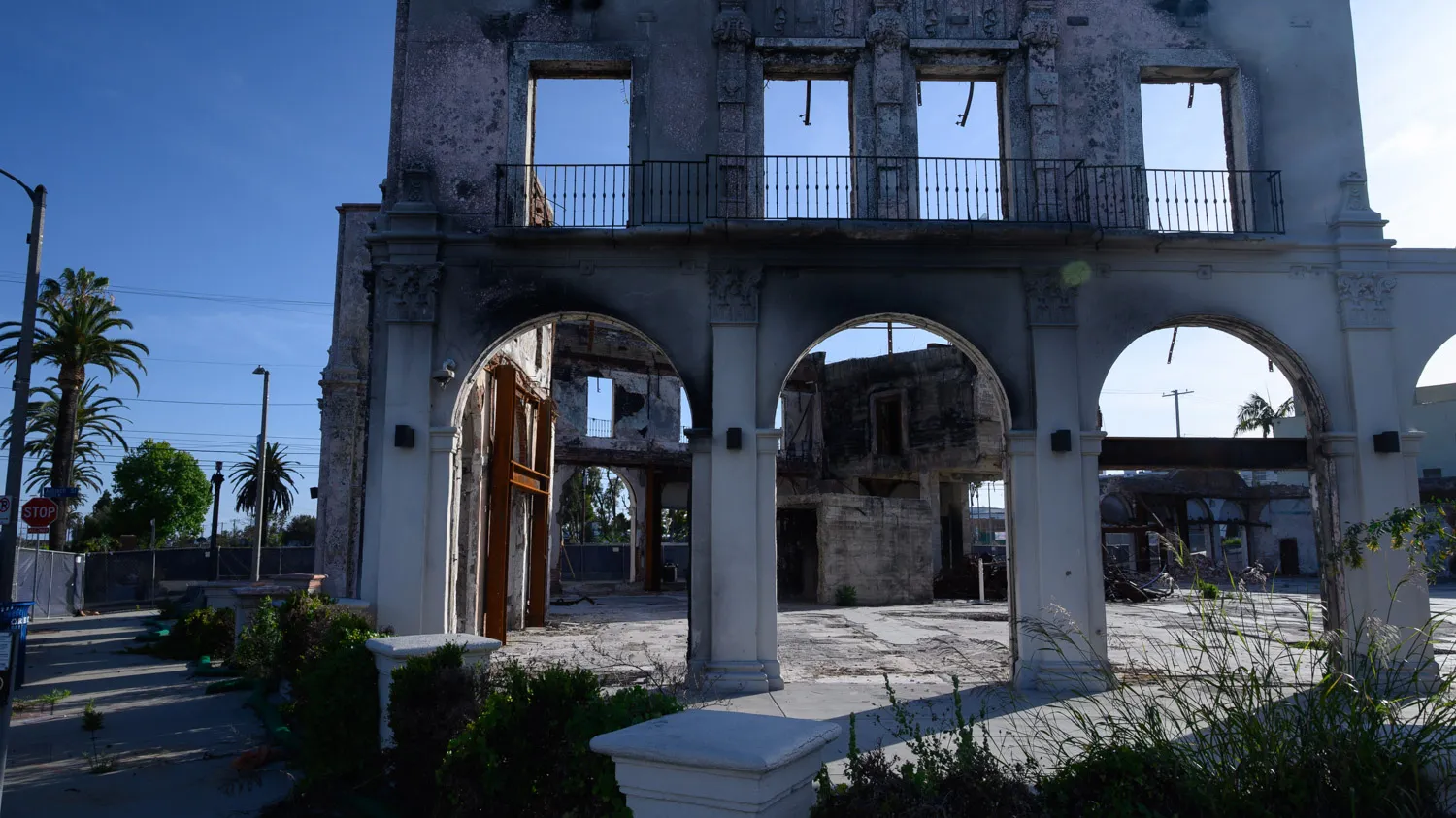
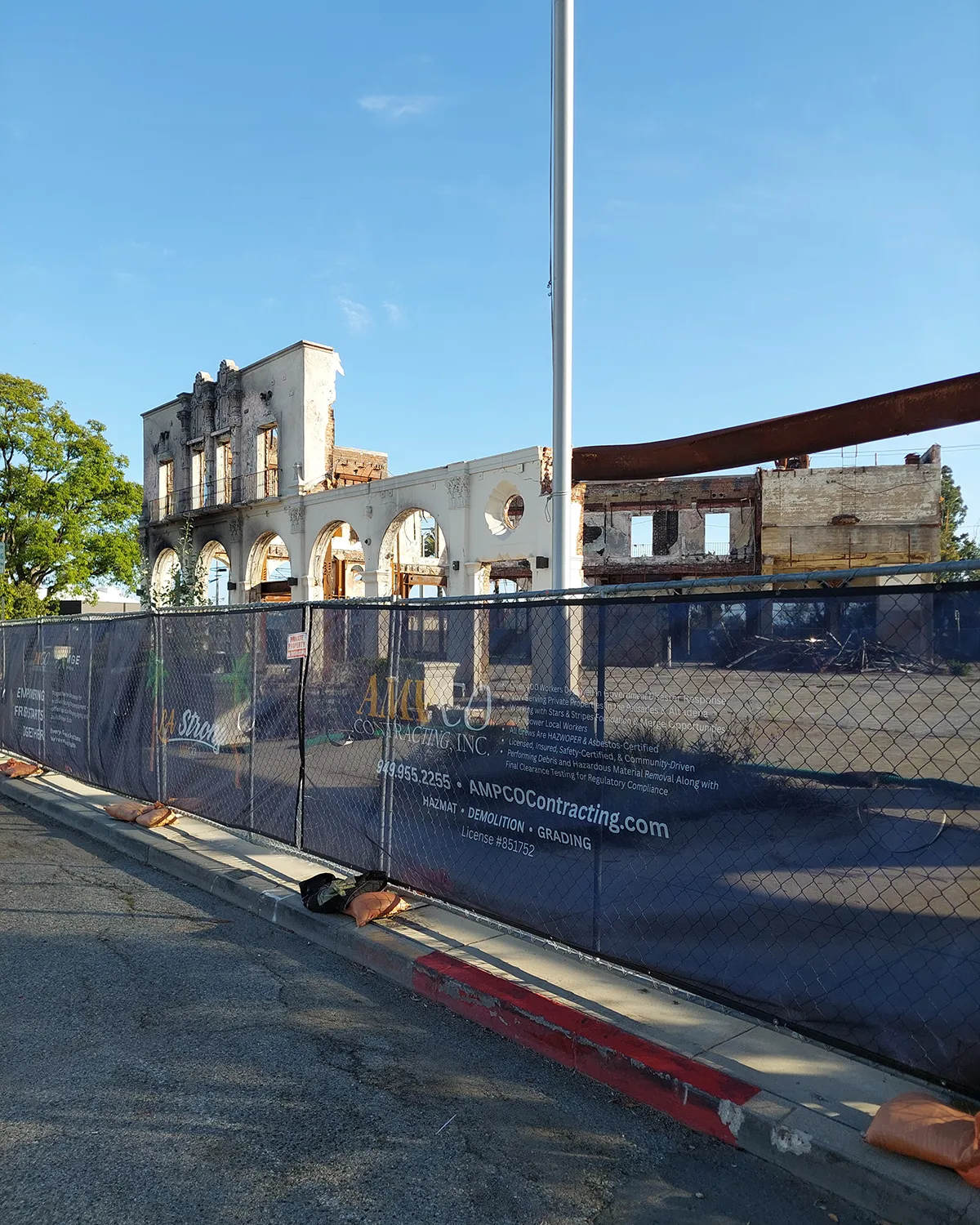
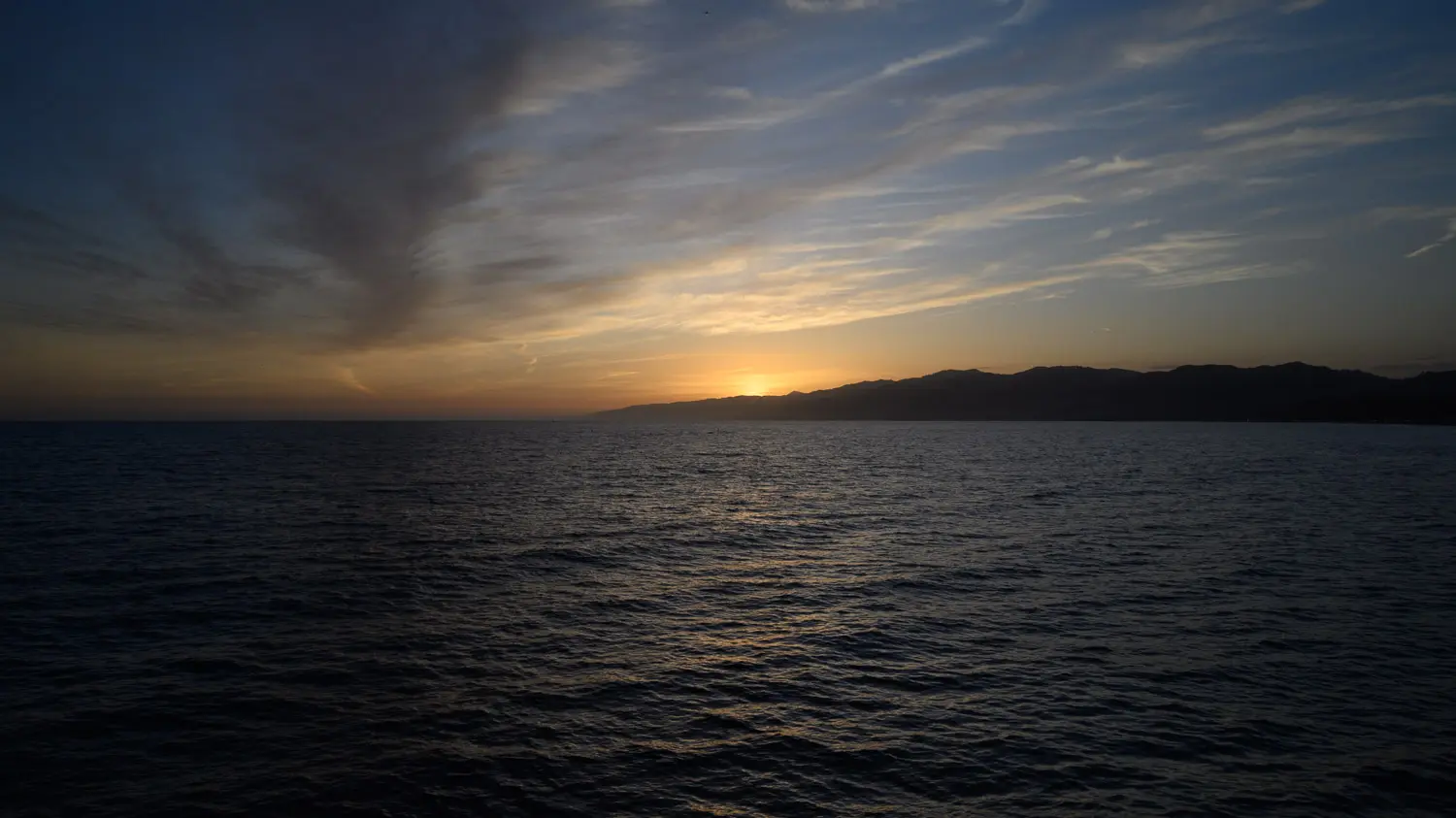
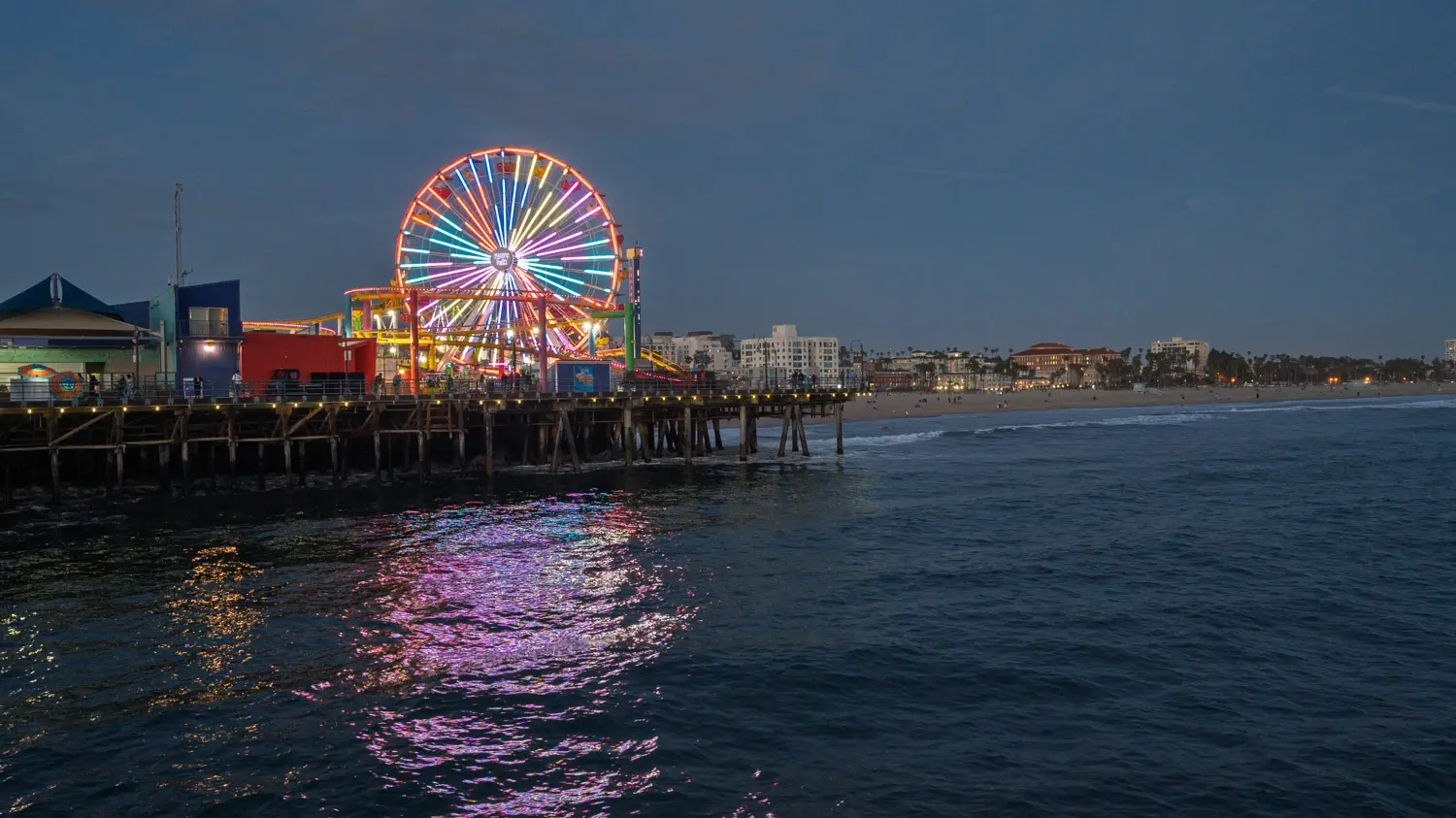
We ended the day back at Santa Monica Pier, where we had Mexican food for dinner and waited for the sun to set over the Pacific.
And with that, our last day in Los Angeles came to an end — another full and memorable day in a city that never seemed to run out of contrasts.
Flying Home
For our farewell breakfast, we went to IHOP, which in Kathrin’s eyes represents the very pinnacle of the big American breakfast experience. It did not disappoint. Afterwards, we took the Metro to the airport and then a short connector bus to our terminal. This leg of the journey was the exact opposite of our arrival in Los Angeles: easy, quick, and entirely free of drama, which felt almost suspicious. Upon arrival we had waited nearly 45 minutes for a shuttle bus to downtown, which turned out to be nearly full when it finally arrived and we had to fight our way in to get two of the remaining seats. Just to end up in the disastrous L.A. afternoon traffic.
Our Condor flight was, as expected, full in business class, but we managed to get seats in premium economy. Some colleagues of Kathrin happened to be in town to oversee the smooth start of the summer flight season and had quietly arranged everything for us. It is always useful to have people on the inside; civilization runs on such things.
Economy class, meanwhile, was empty enough that after dinner we each claimed a row of four seats and stretched out for some sleep. It was not exactly luxury travel, but horizontal beats upright every time.
Arriving Frankfurt quite relaxed we granted ourselves the luxury of a taxi ride back to the house.
A nice end to another wonderful trip.
Epilogue: A City of Contrasts
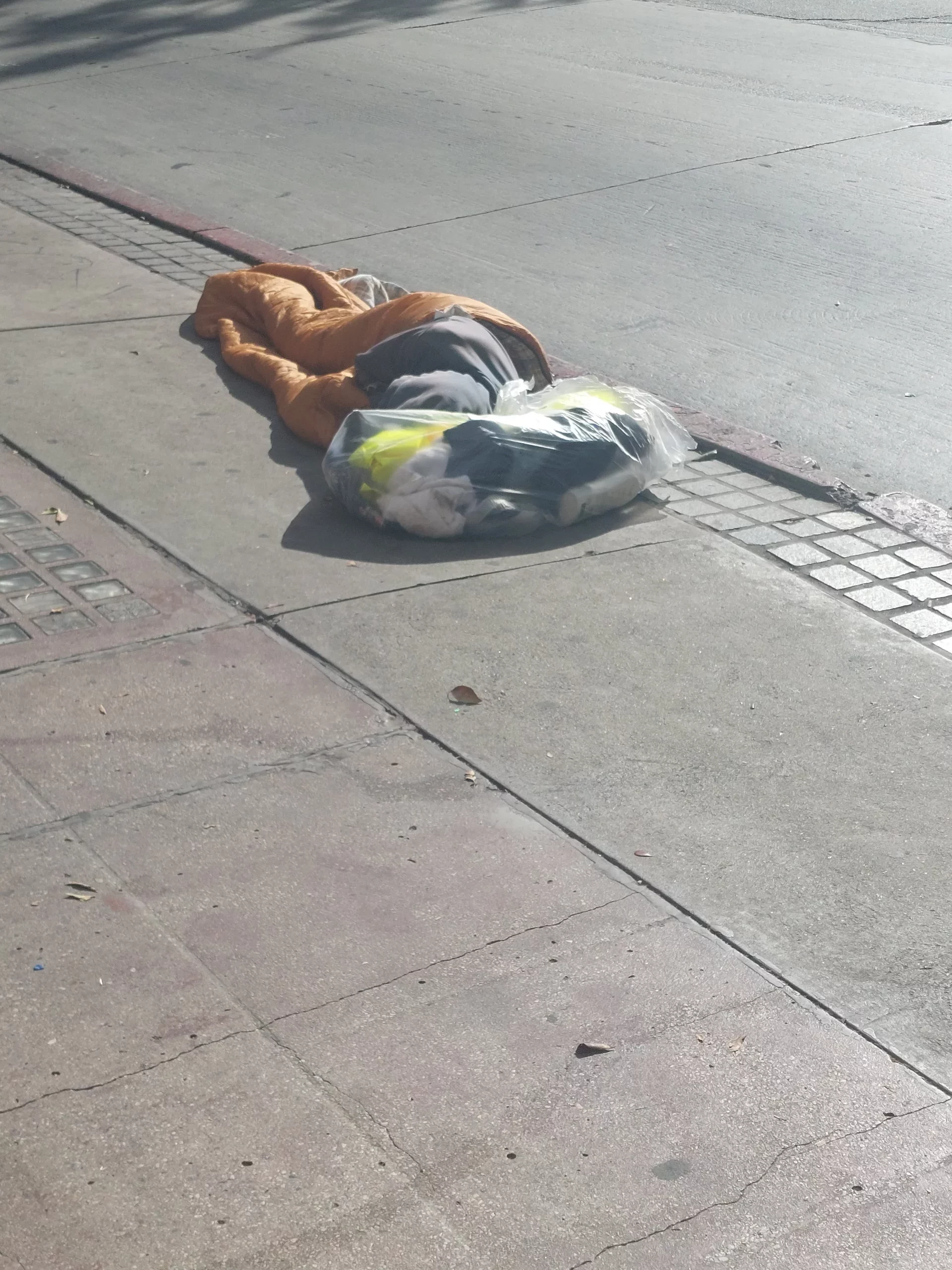 Homelessness is a problem
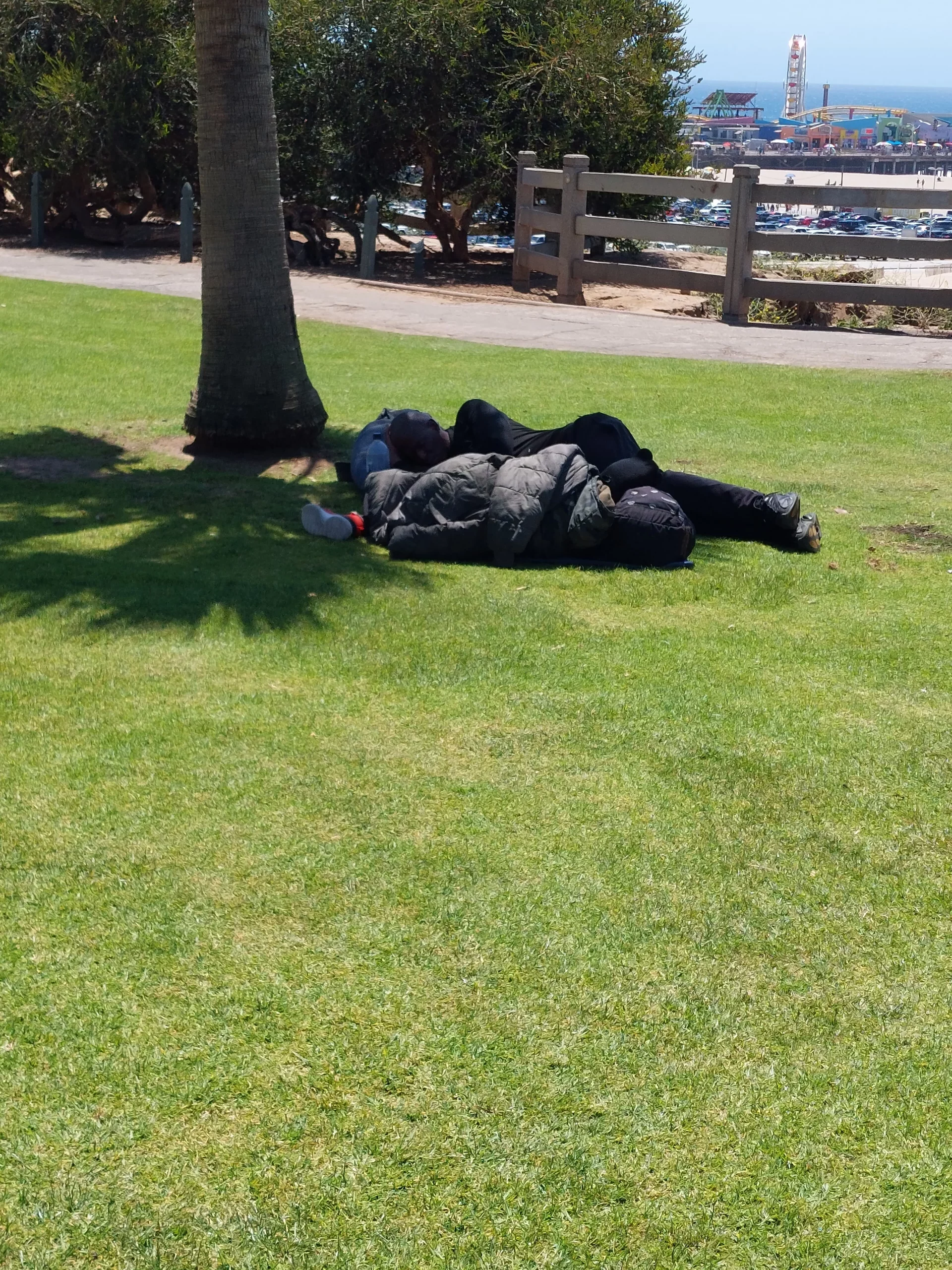
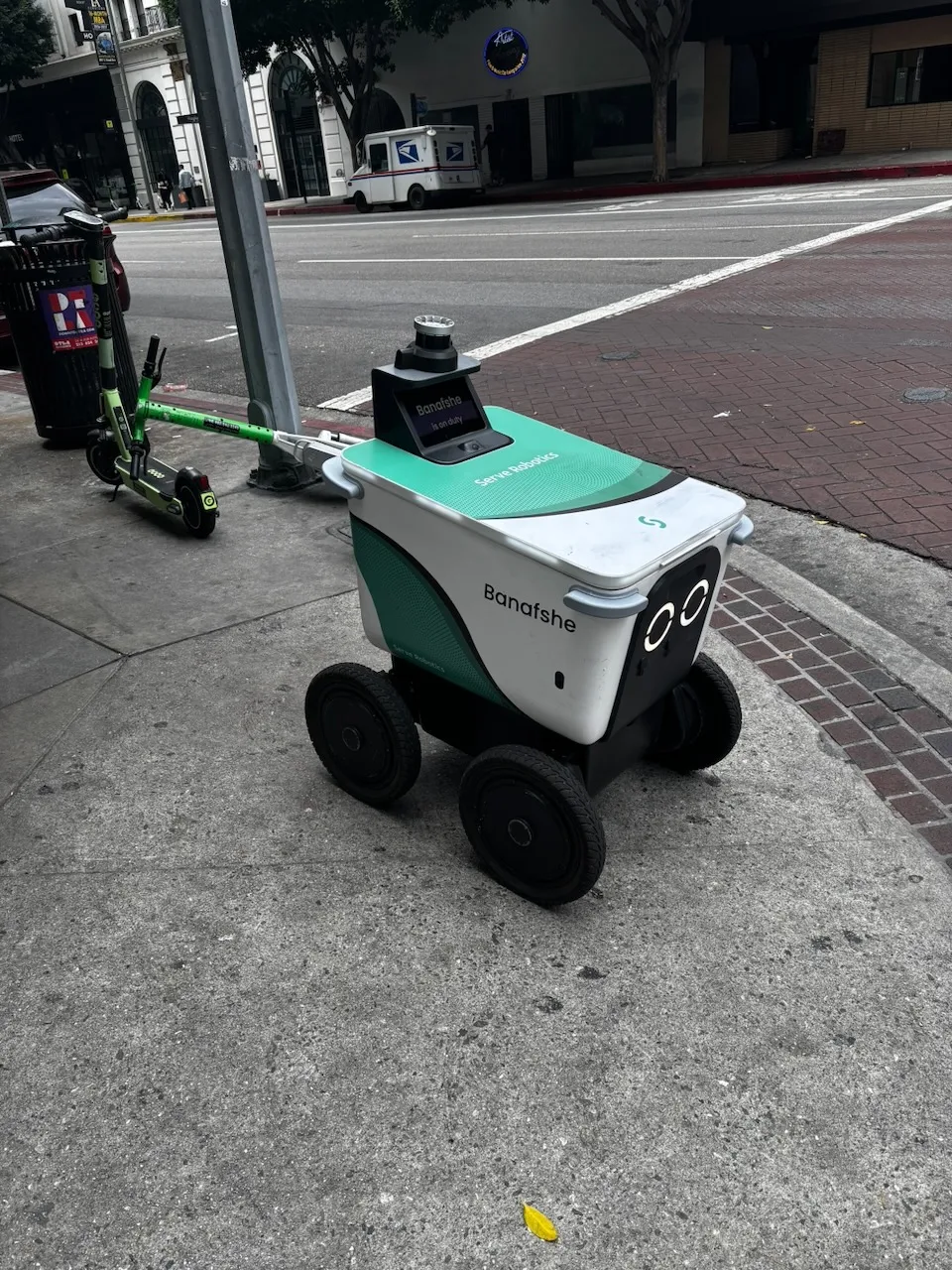
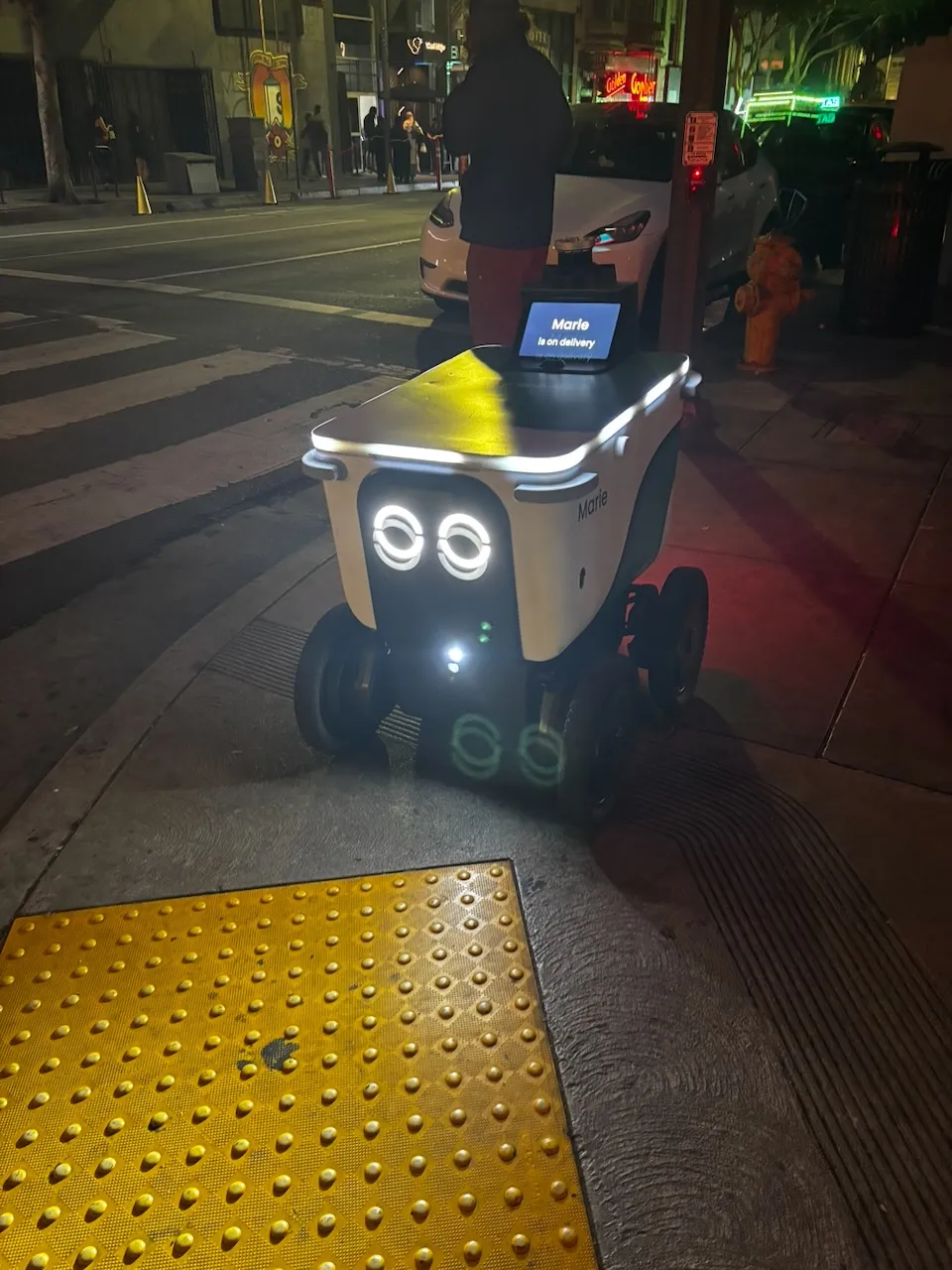
Our planning turned out to be remarkably successful, and we managed to see all the major sights we had hoped for. What struck us most, though, was the extreme contrast between poverty and extravagant wealth, often just a few stops apart. In the same afternoon you might see a driverless taxi glide silently through traffic while a small delivery robot trundles along the sidewalk like something from a science fiction film.
On the Metro, we encountered an astonishing collection of characters — people singing, praying, arguing, and in some cases holding animated conversations with individuals visible only to themselves. Then I looked out the train window and saw a Ferrari cruising alongside us in traffic. That probably sums up Los Angeles better than anything else I could write. The middle classes, it seemed, had decided public transport was beneath them, which is a pity, because it was actually a remarkably easy way to get around.
Los Angeles also manages to be several different places at once. Parts of it feel like a dense urban metropolis, full of traffic, high-rises, and noise. Other parts feel relaxed and coastal, with palm trees, beach promenades, and people moving at half the speed. One moment you are standing among movie studios and luxury boutiques, the next you are watching surfers and street performers at the beach.
The city surprised us in many ways. Before coming, we expected endless freeways, traffic jams, and Hollywood glamour. Those things certainly exist, but there was much more variety than we expected. We found excellent museums, pleasant neighborhoods, good public transportation, interesting architecture, and a surprising amount of green space.
At times Los Angeles felt futuristic, at other times strangely run down. It can feel glamorous and chaotic at the same time. Perhaps that is what makes it so interesting. It may not be the most beautiful city we have visited, nor the easiest to understand, but it was never boring.
And despite all the replanning, cancelled flights, changed routes, and general travel chaos that led us there, we were very glad we came.
Leave a Reply