
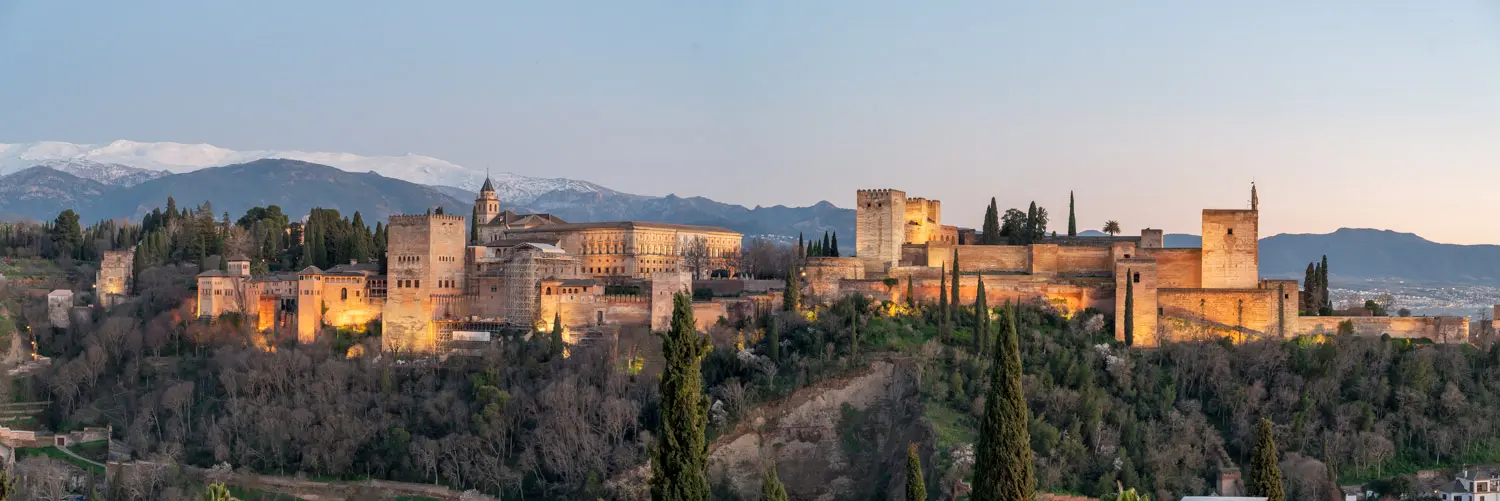
Why We Left Town
Late January, Kathrin came up with the idea to escape the Frankfurt winter.
She was longing to get on the bike, wanted sun, warmth, and a break from grey skies. Mallorca being known as a place where cyclists train during winter was her first suggestion. I pushed back, “We’ve been there before. Let’s try somewhere new.” After some discussion, we landed on Andalusia with quite the opposite program, roundtrip by car instead of cycling. Plus, four cities, Malaga, Ronda, Cordoba and Granada and a full sightseeing plan instead of a relaxed stay in a flat on a deserted beach.
Getting There: Luck and Jump Seats
We assumed getting there would be easy, low season, empty aircraft, a relaxed start.
We were very wrong.
The warning signs came late. A few days before departure, things looked fine. Then, the day before the flight: overbooked.
Not ideal, but not unfamiliar territory either.
At the gate Kathrin informed the staff that we were willing to take jump seats (cabin crew seats) which has to be approved by the pilot and depends on the situation and his/her goodwill. Well, the universe was with us, Kathrin even got a regular seat next to a guy whose wife had cancelled last minute, and I was accepted on a jump seat. Not glamorous, but it got me there. That was all that mattered.
When I reached it, one of the cabin crew asked what aircraft I was certified on.
“I’m not,” I told him. “Just the spouse.”
No problem. A quick explanation of how to operate the door in an emergency, a nod, and we were good to go.
Malaga First Impressions
Of course, the first thing that impressed us was the glorious sunshine and warmth. A complete contrast to Frankfurt. So right of the bat, this trip was a success.
Getting to our hotel was easy, airport express bus into the city, short walk-through unfamiliar streets, it was late afternoon when we arrived. Just enough time to drop our bags and head back out in search of food.
That’s when we ran into our first cultural adjustment: dinner doesn’t start early here. Not really. Most places wouldn’t even open until 8 or 9. But one Italian restaurant had its doors open at 6, clearly catering to people like us. We didn’t question it, it turned out to be a great choice. Afterwards, we walked along the beach in the fading light and took a selfie in front of the Málaga sign, our informal “we made it” moment.
Going Deeper in Malaga
The next morning began quietly. We didn’t have to force ourselves out of bed, this time of year, the sun rises at a civilized hour. Shortly after 7, we were already on the beach, watching the day begin. At one point, a lone windsurfer cut across the water, silhouetted against the rising sun. It was a peaceful way to start the day. By the time we were back in the hotel breakfast was ready.
We planned a big tour of the city today, which started with a hike up to Castillo Gibralfaro.
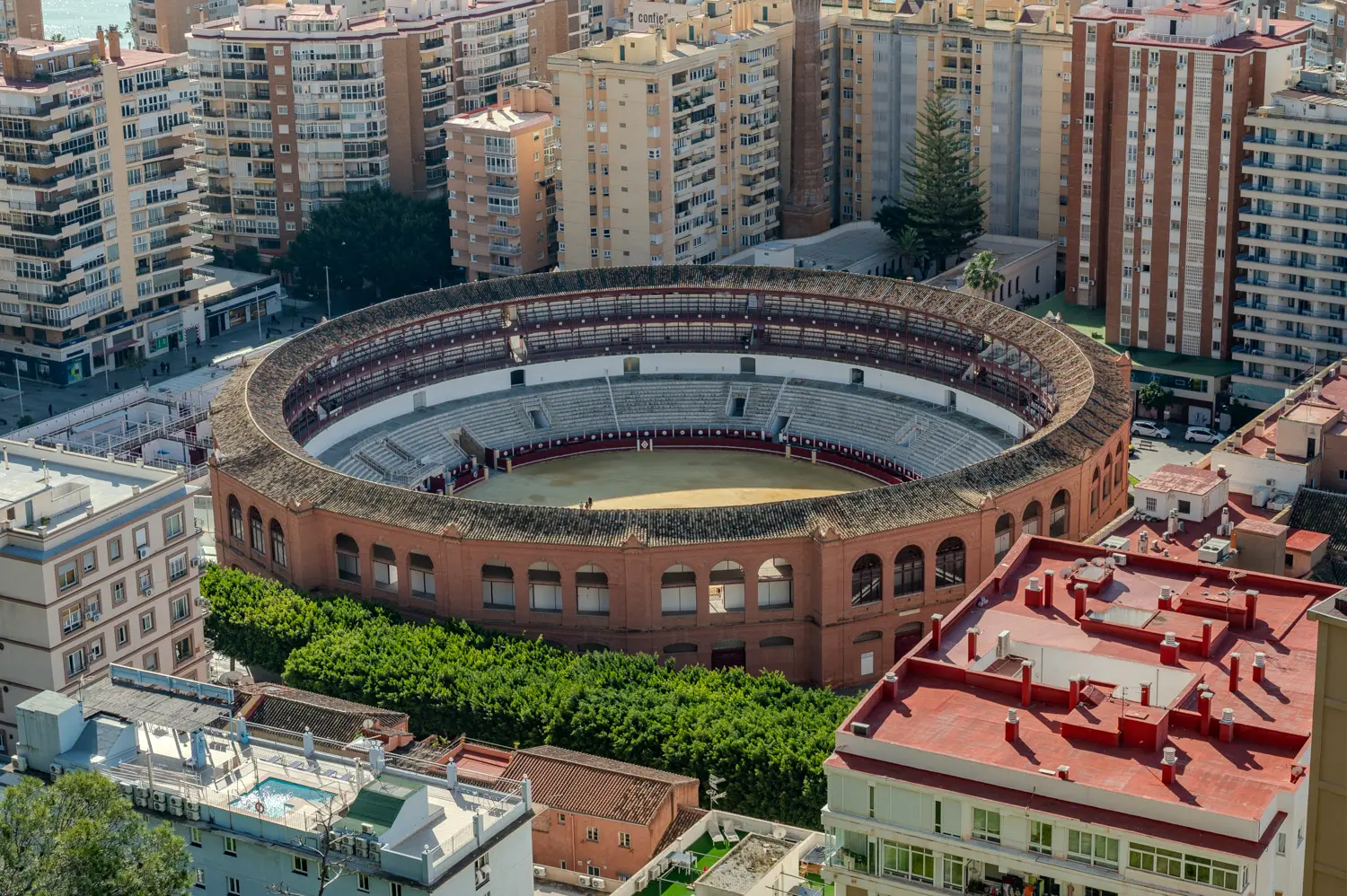
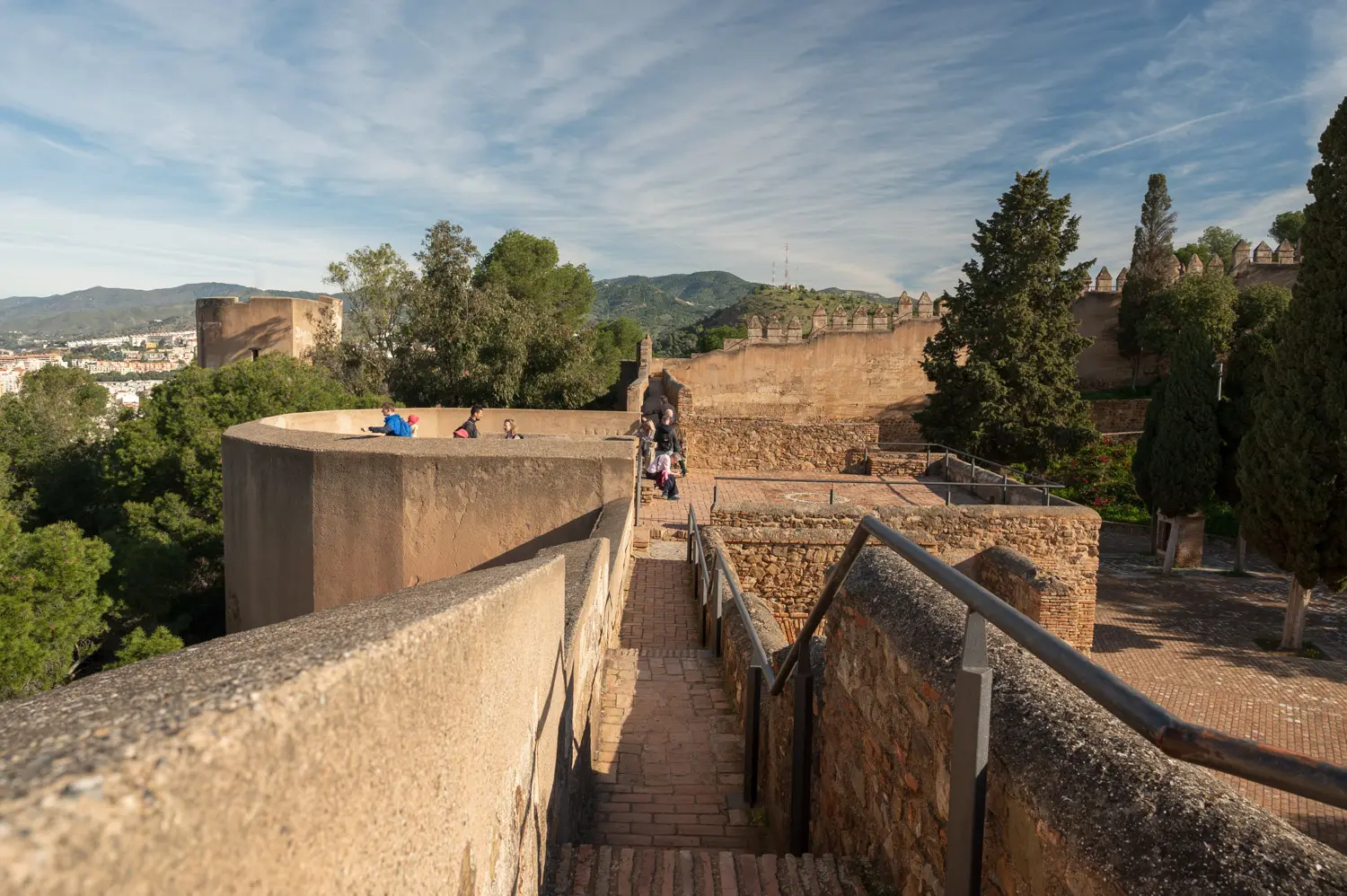
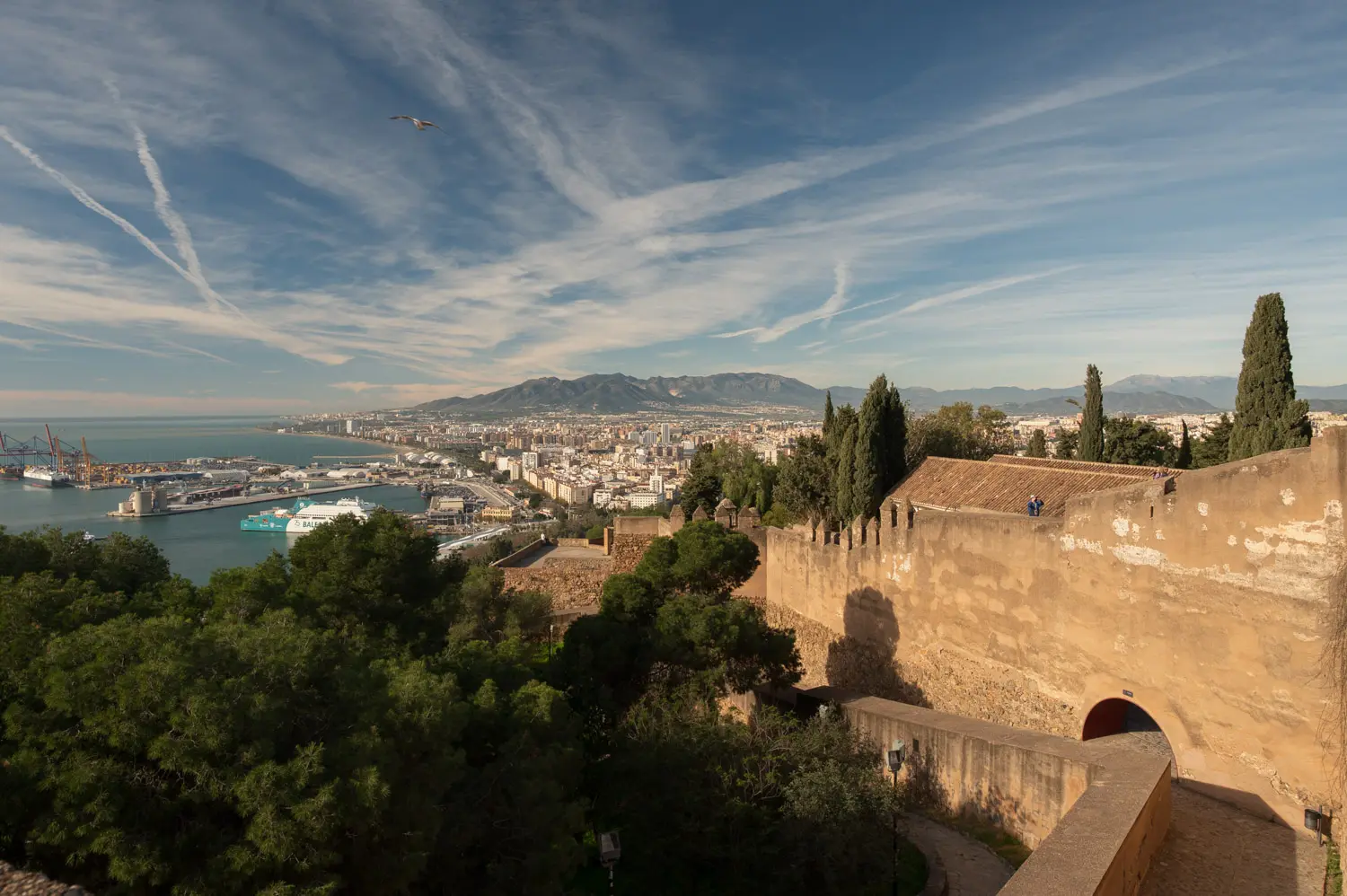
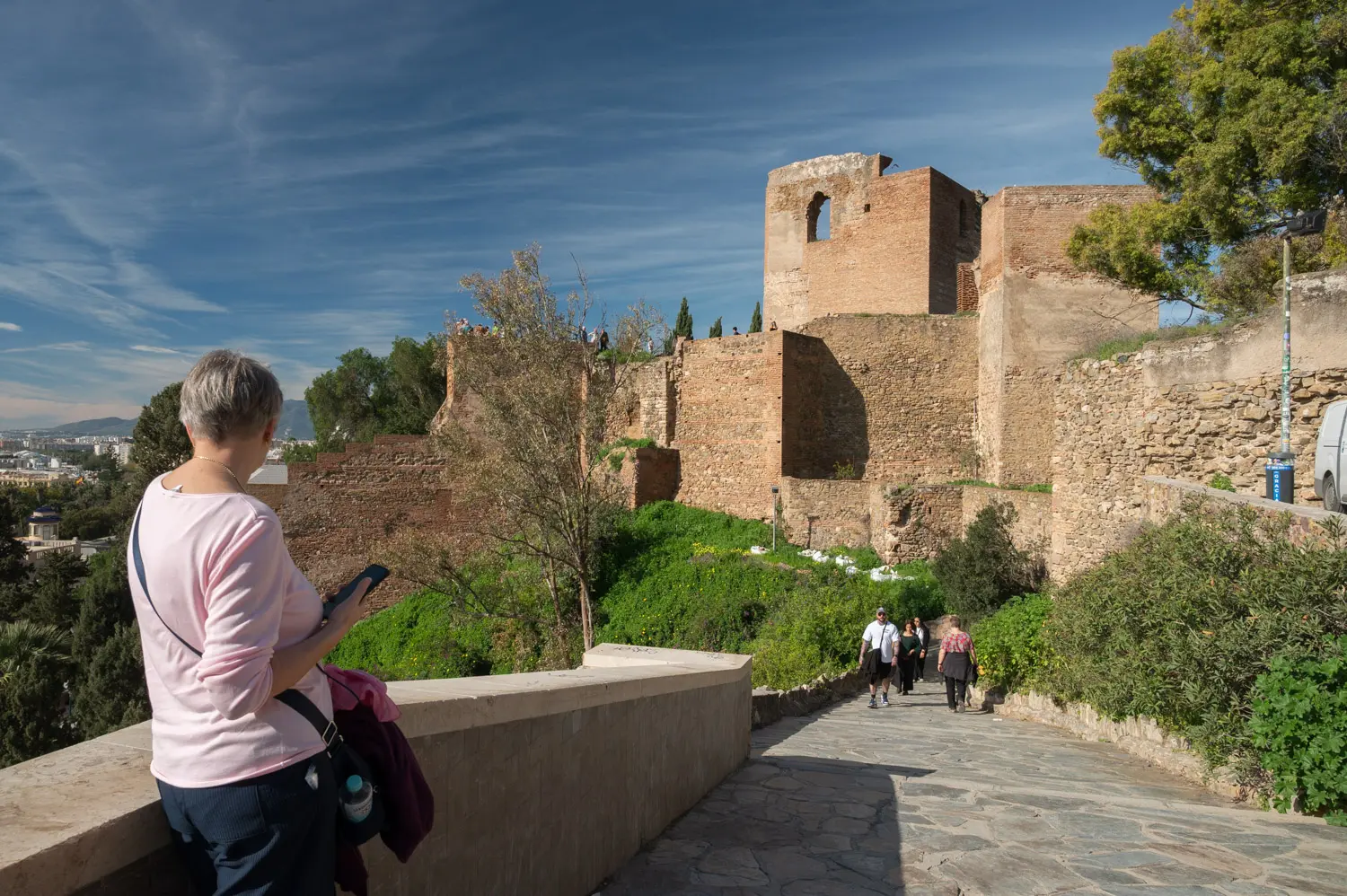
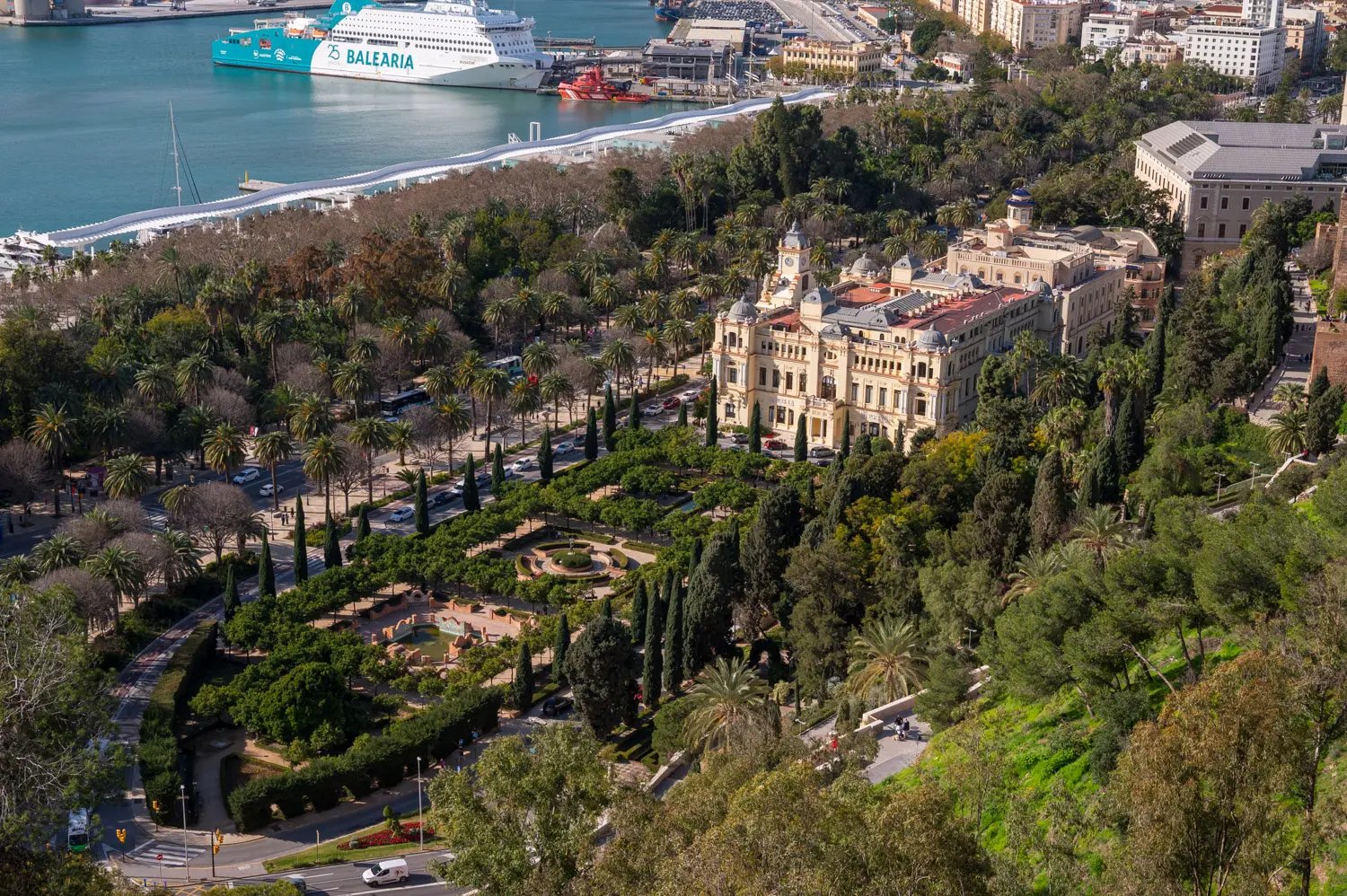
The climb rewarded us with sweeping views, over the bullring, the harbor, and the city itself. Once at the castle, we walked along the walls and enjoyed the overview of the grounds as well as the city. The structure dominates the city, towering over it from the ridge line upon which it sits. From there we descended toward the Alcazaba, a palace-fortress and the seat of city government back in the day.
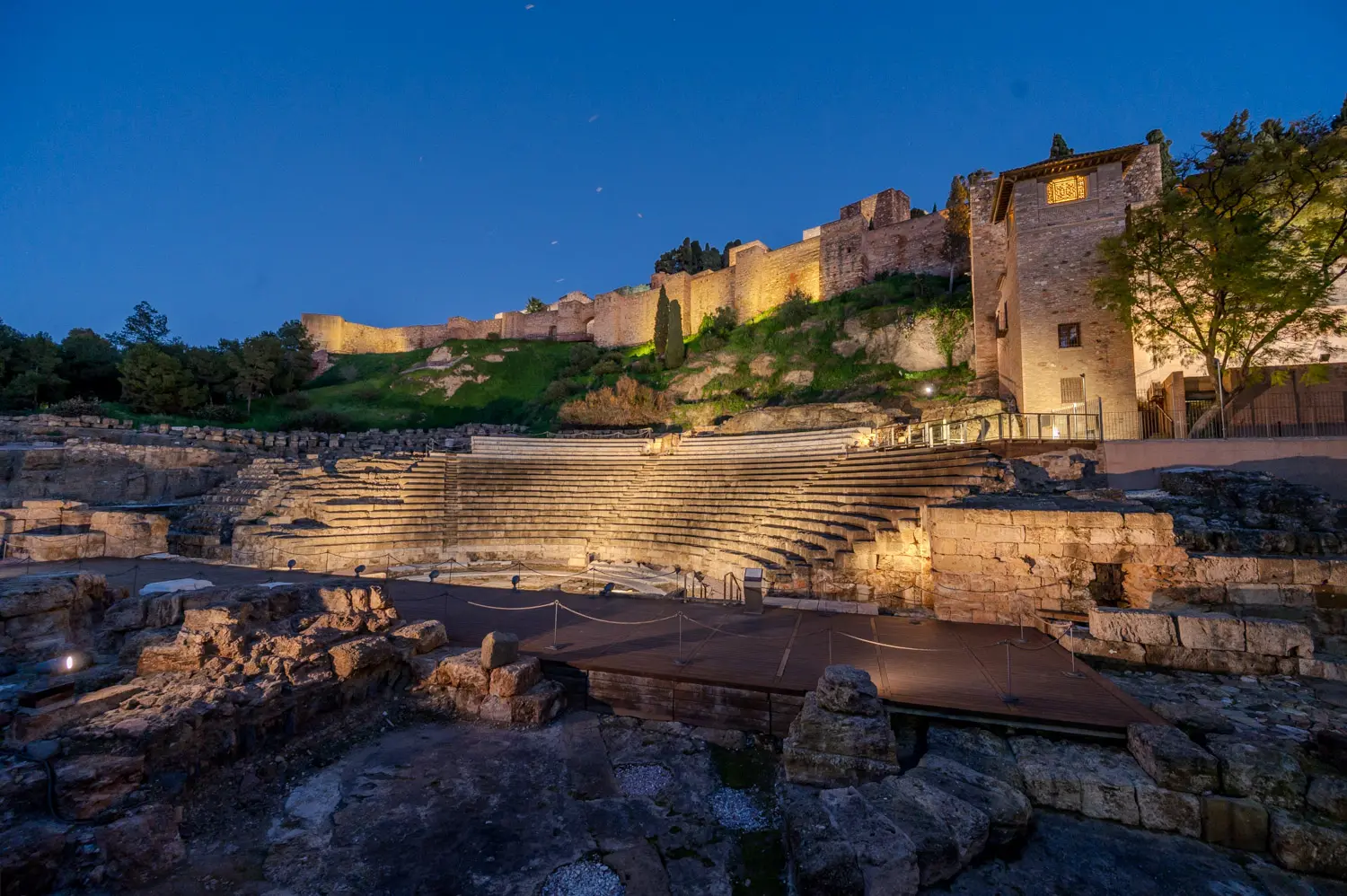
Alcazaba began life as a small fortress, then, when the Arabs came to town, they built it up as a palace. Fortunately, we bought a combi-ticket at Castillo Gibralfaro at a time where there were no lines due to the early hours, so we were able to bypass the long line at the Alcazaba. We had done one castle already, and weren’t entirely in the mood for another, so we naively rushed it, skipped parts, and moved quickly. At the time, we didn’t realize what we missed. I later found a virtual tour with which I could properly appreciate it.
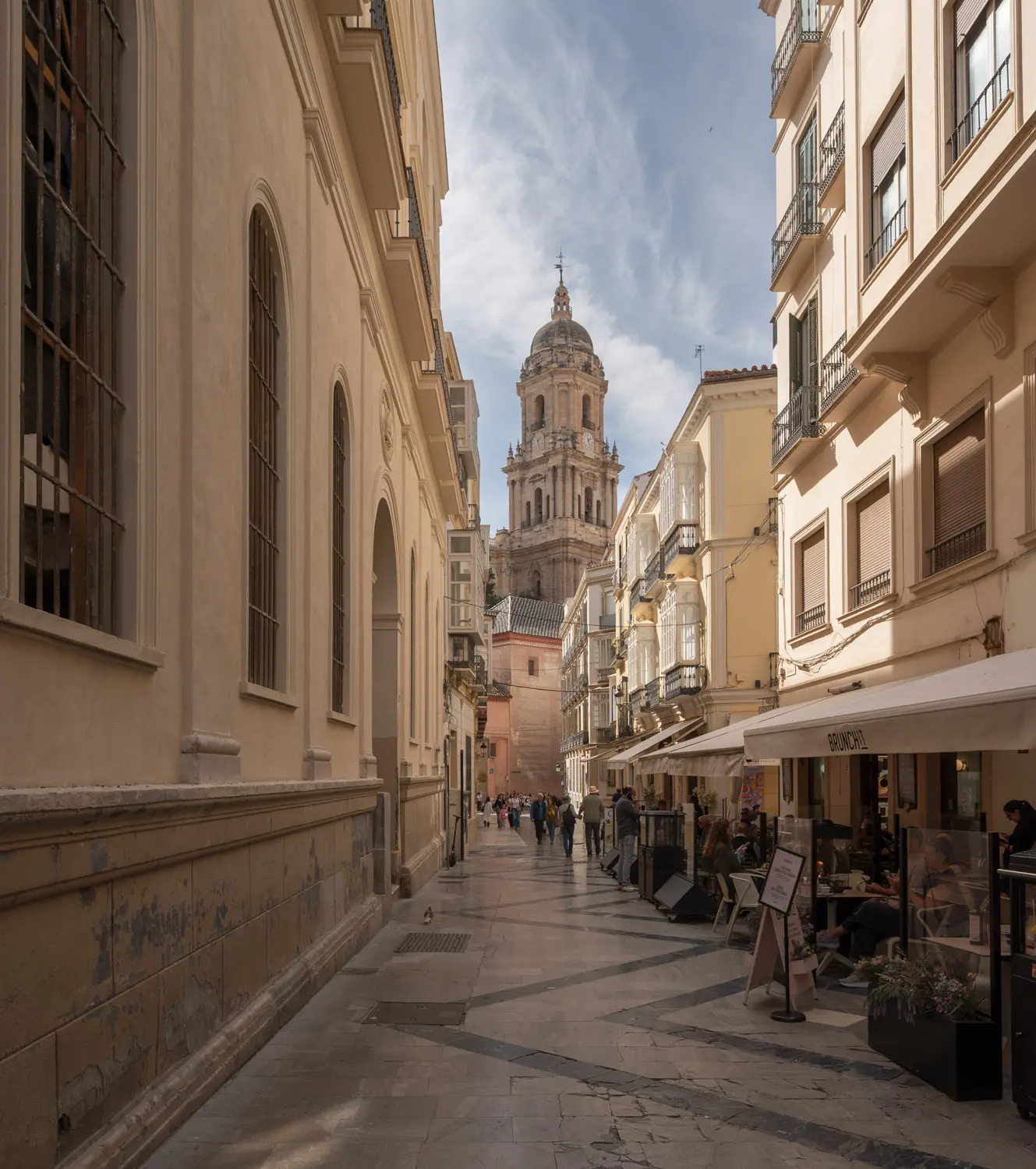
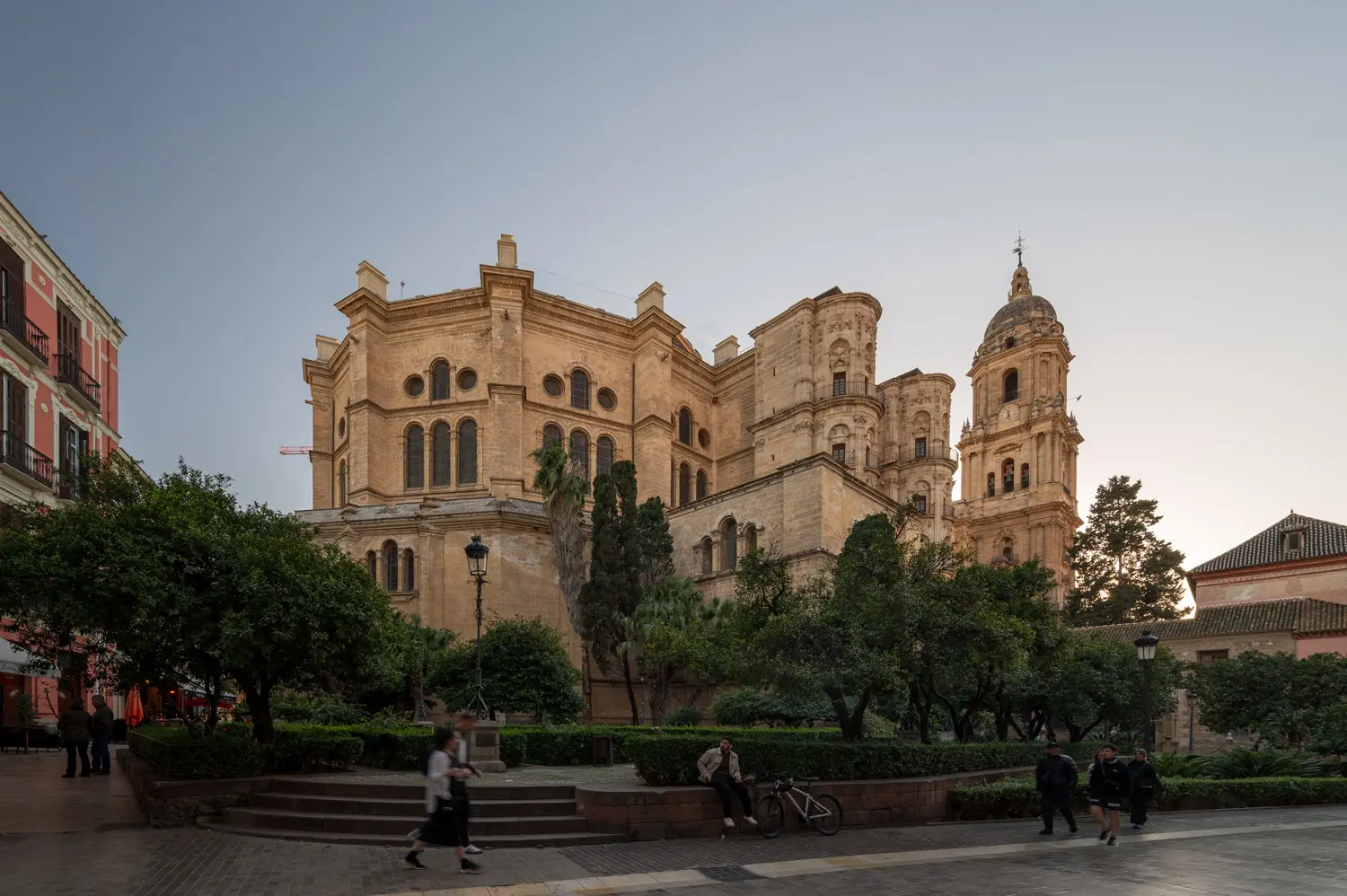
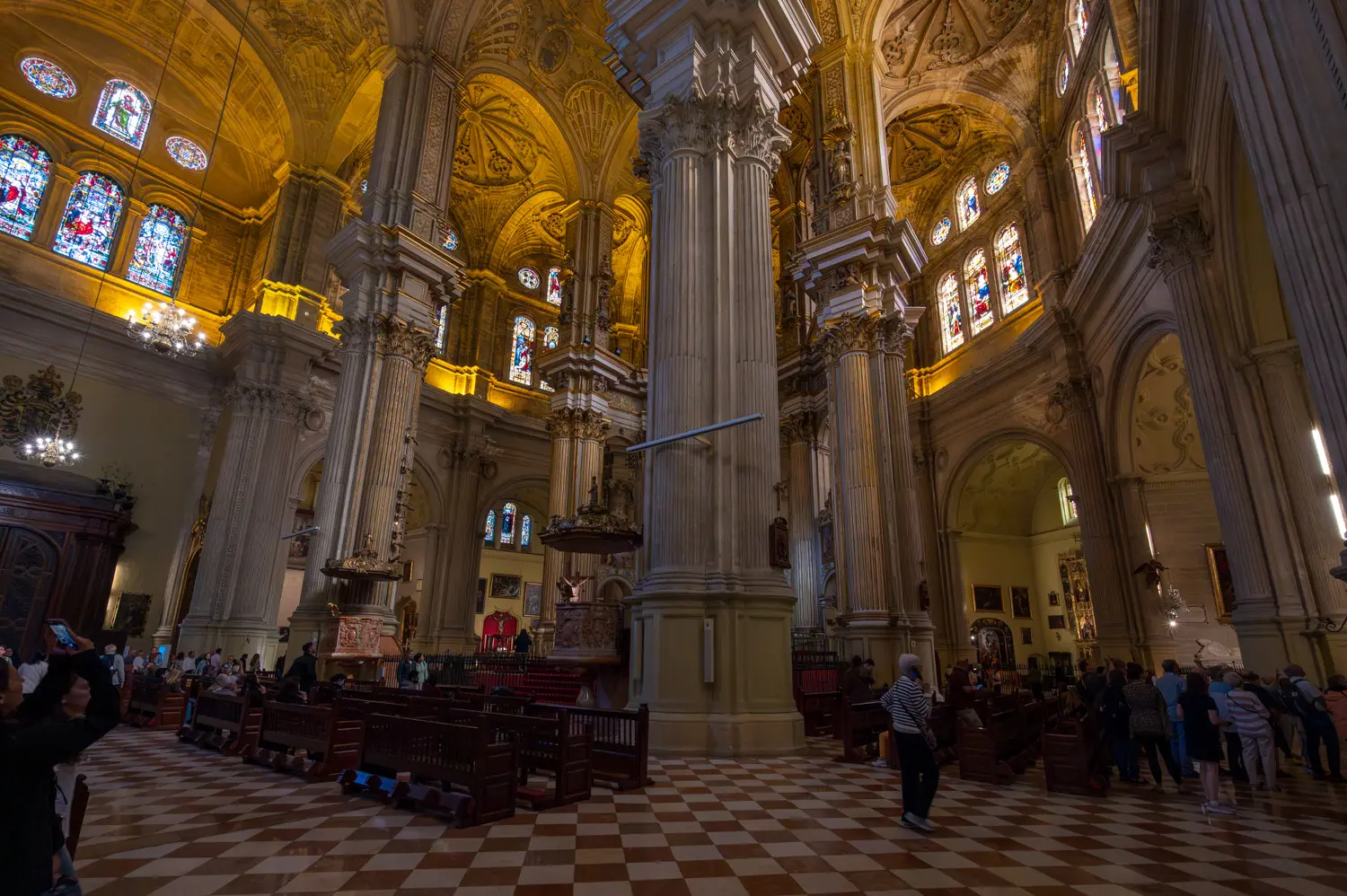
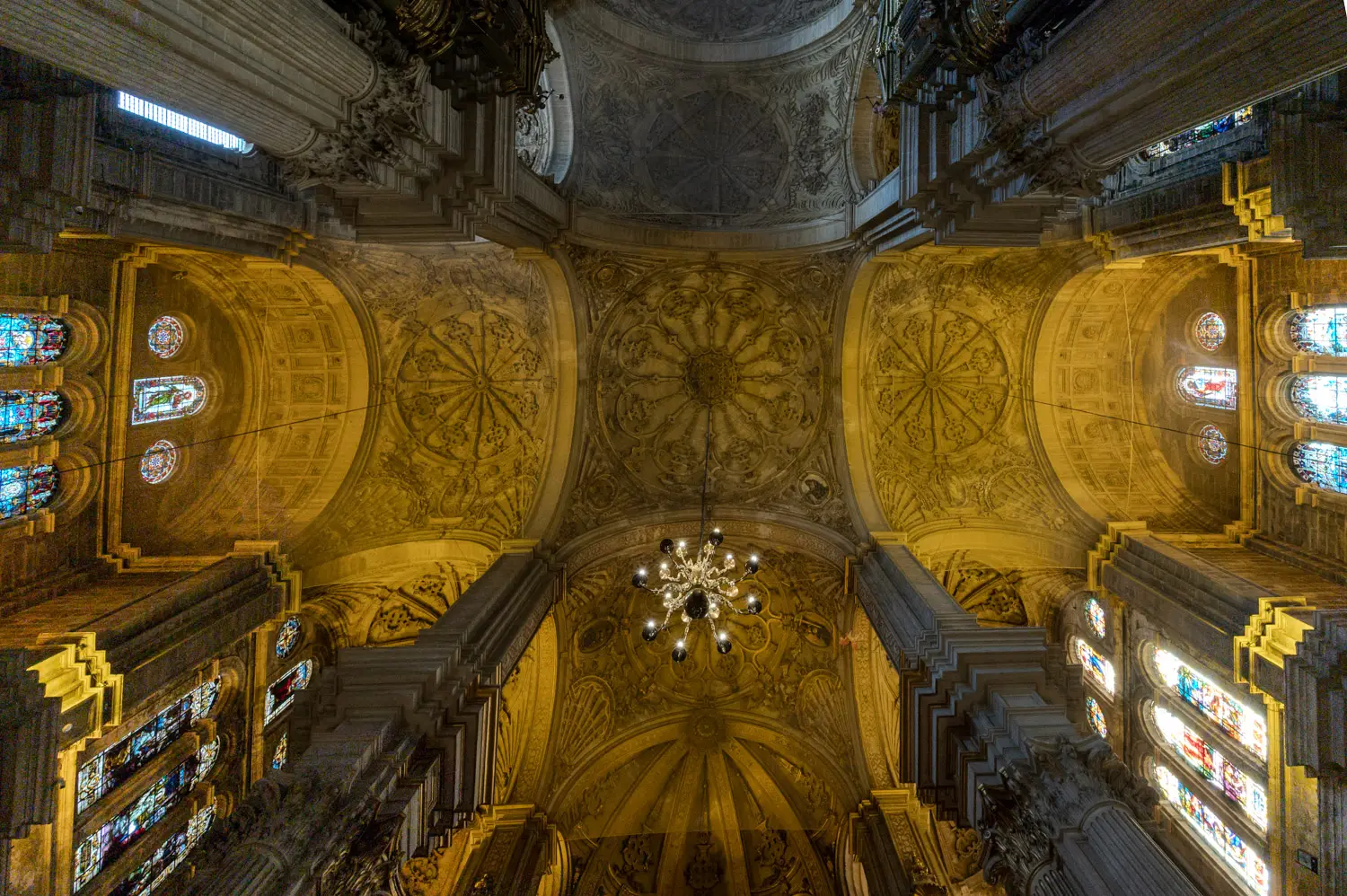
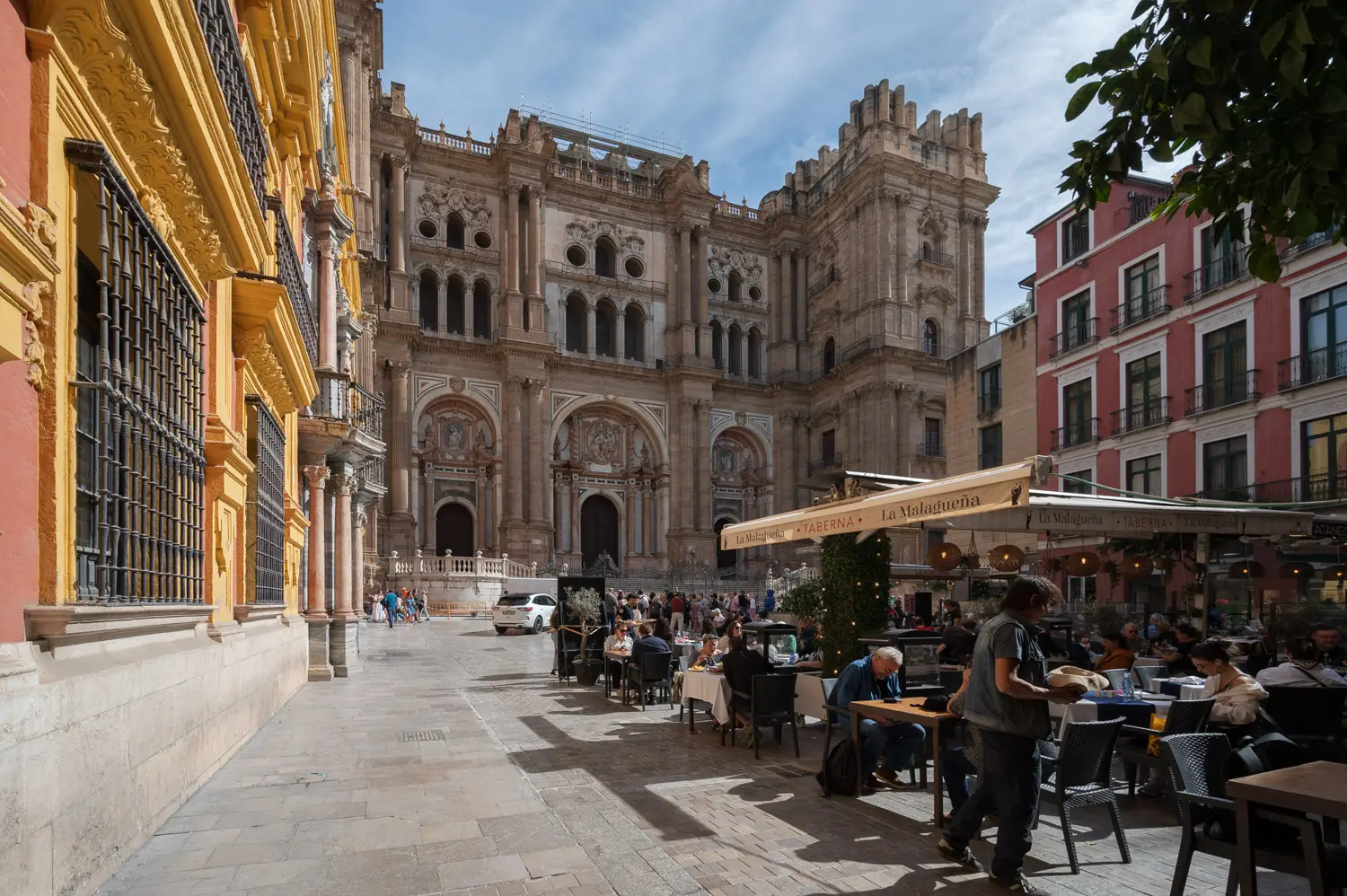
Just around the corner, the Roman amphitheater offered a quick but worthwhile stop, before we continued to the cathedral. From the first sighting of this church, to the walk around the interior, it was impressive. It always makes me wonder how much the catholic church paid for these huge buildings.
 Malaga’s bull ring during our hike to the castle
A Table for Four
It was now time for lunch, and we were interested in tapas. After having Italian last night, we finally wanted to dive into Spanish cuisine. One particular restaurant looked very enticing, but all the tables were occupied. We asked two young men sitting at a table for four if they minded us taking the other two seats, to which they gladly agreed. Turns out these two guys were from Bodø, a small town above the arctic circle in Norway, and, like us, were in Spain to escape the cold. We chit chatted about travel, the weather, and about football. Their local team was playing Inter Milan that evening and were hoping against hope that they win, and they find a pub where they could watch the game. (Their team did, in fact, win a surprising upset.).
The chance encounter with these two young men, and the conversation, made our lunch that much more special.
We tried to visit the Picasso Museum, after all, this is his hometown, but tickets were sold out. A guy in line offered us one of his tickets, his wife couldn’t make it, but one was not enough, so we declined. This was the second time we were in a town with a Picasso Museum and couldn’t get in. (The first time may have been Barcelona, neither of us are sure but we remember that it was closed because it was a Monday.). Maybe this is a sign from the universe??
The city’s main shopping street is Calle Larios, we came across it just in time to see a demonstration of doctors and medical staff, protesting against low pay and long hours, as best we could guess. Seems to be the same problem everywhere. We were unimpressed with the street itself. It wasn’t anything different than what we have in Frankfurt. Also like in Frankfurt, they have a market hall, Mercado Central, which felt half-asleep at one end, but lively at the other.
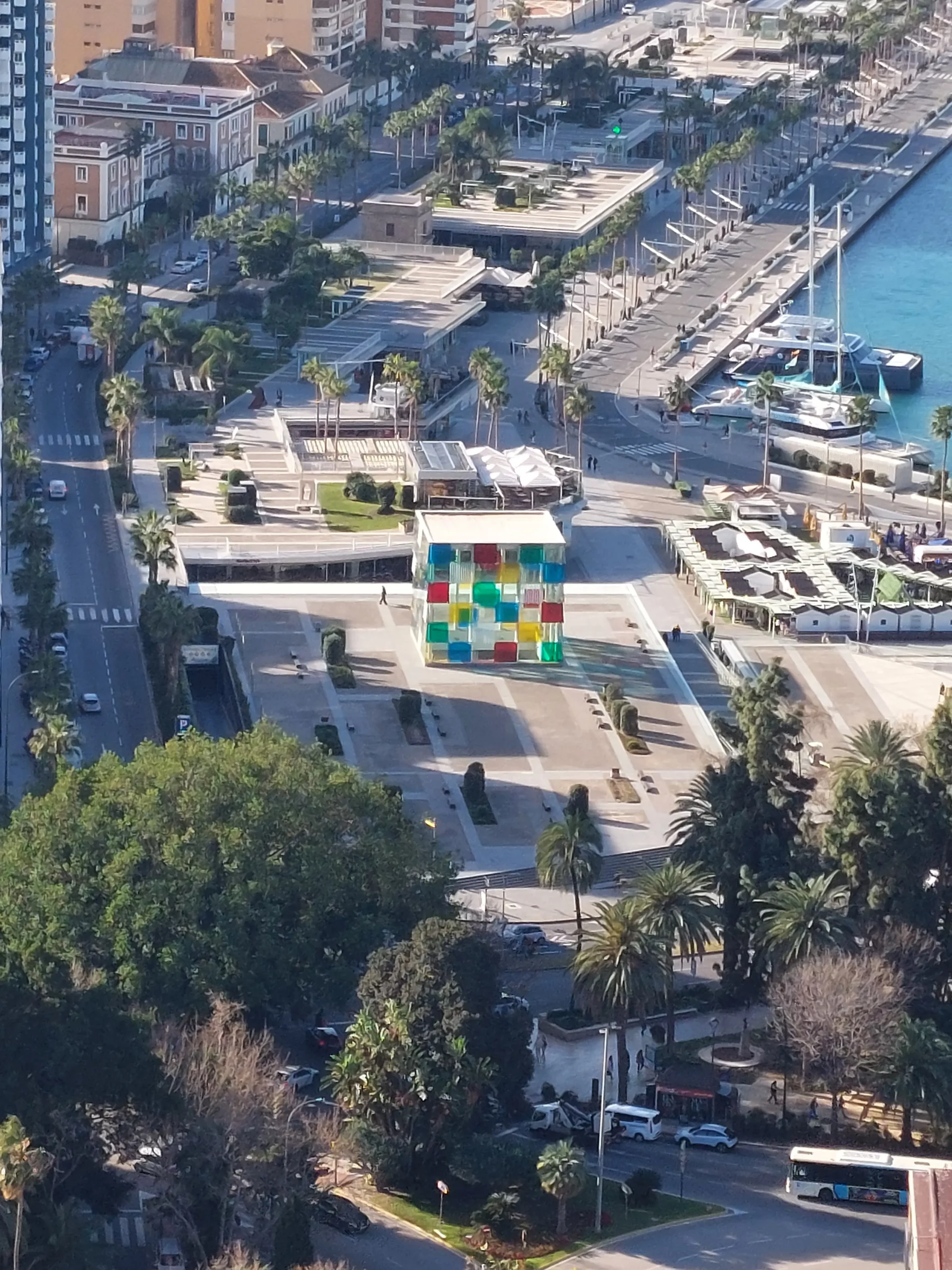
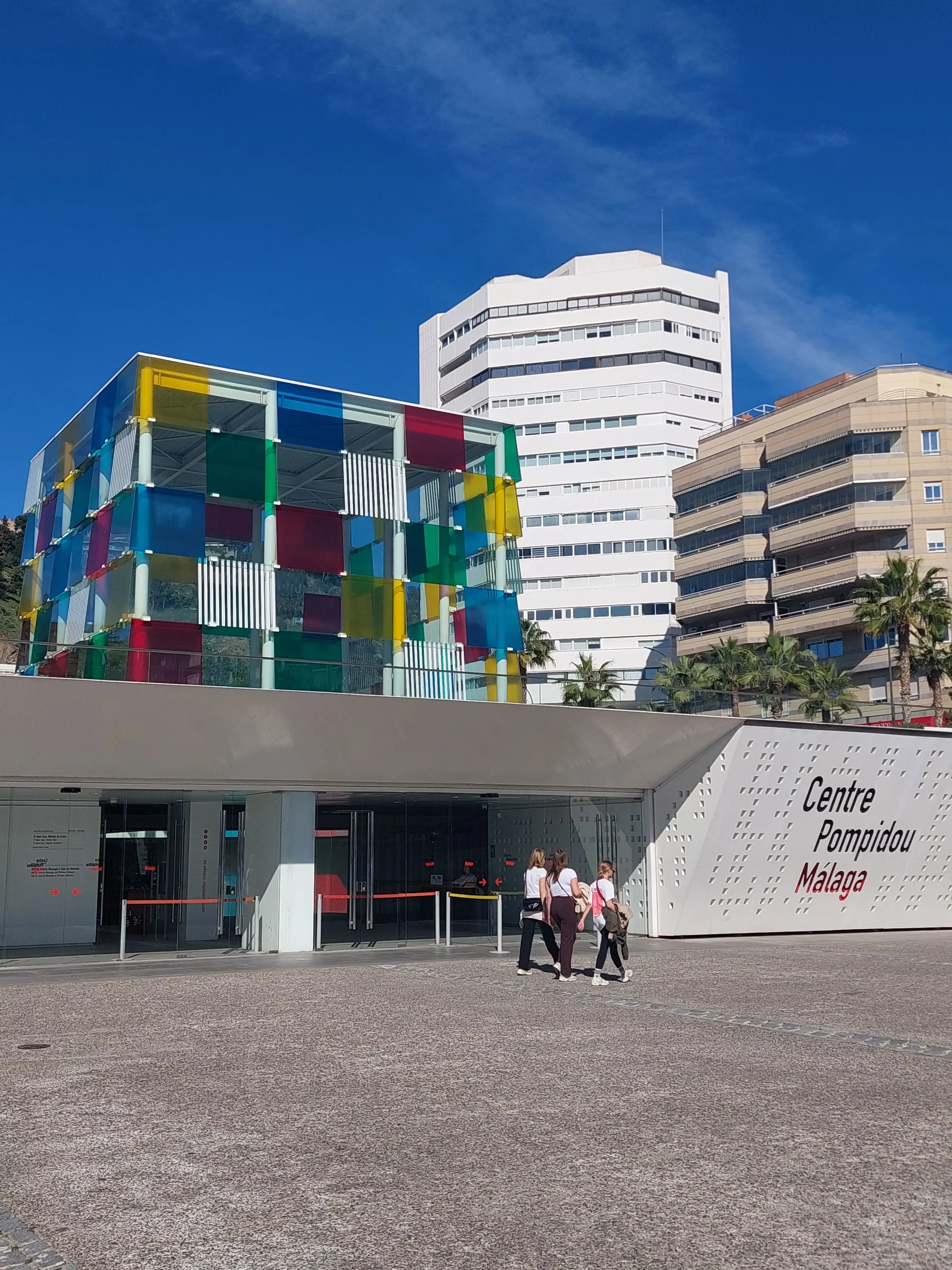
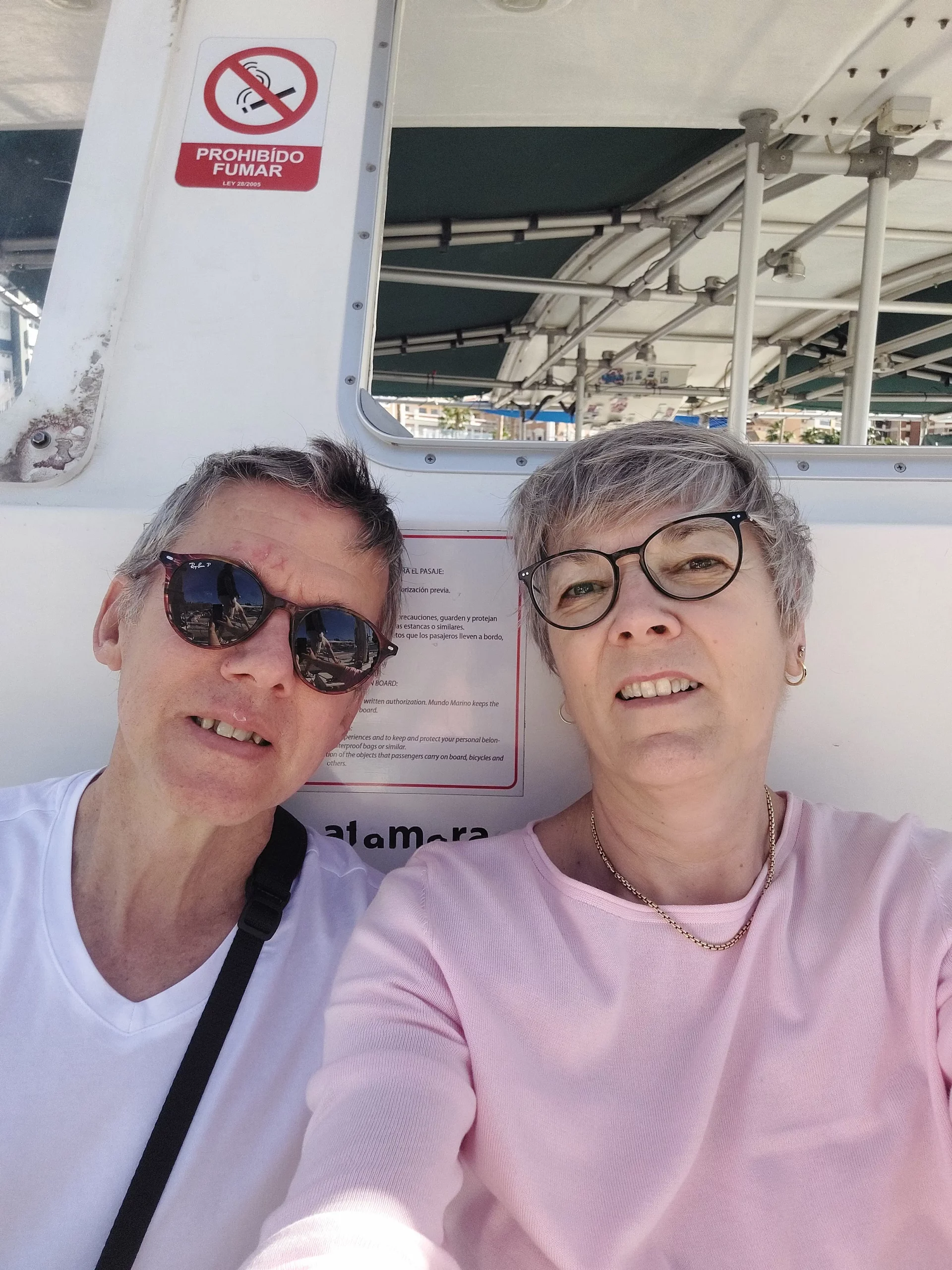
Down by the harbor, the colorful cube of the Centre Pompidou, an art museum, stood out immediately. We skipped that and opted instead for a catamaran tour as Kathrin could not walk any longer. Sitting at the front of the boat, feeling the sea air, it turned into a very enjoyable experience..
 The cube dominates Malaga’s harbor from the land.
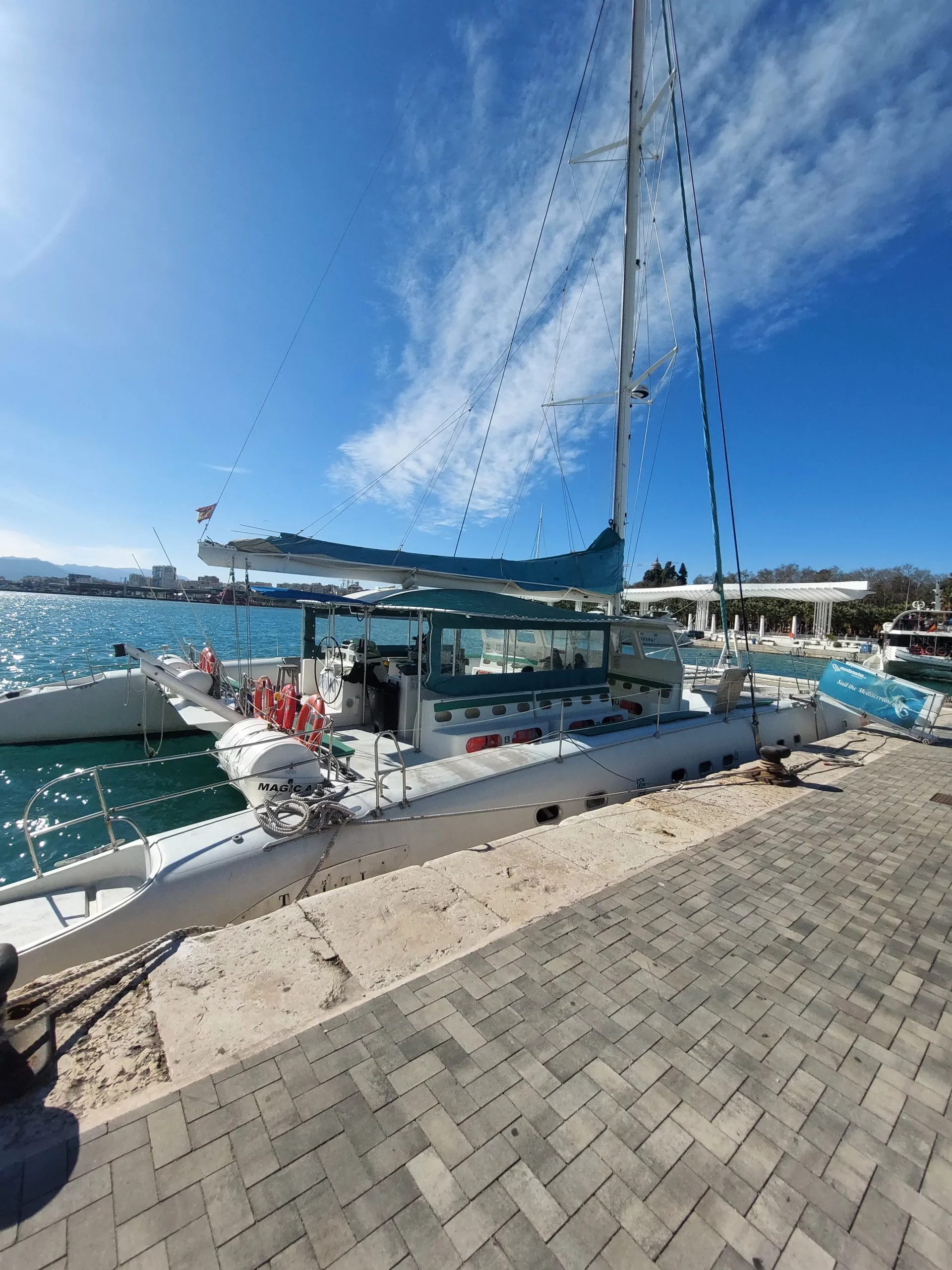
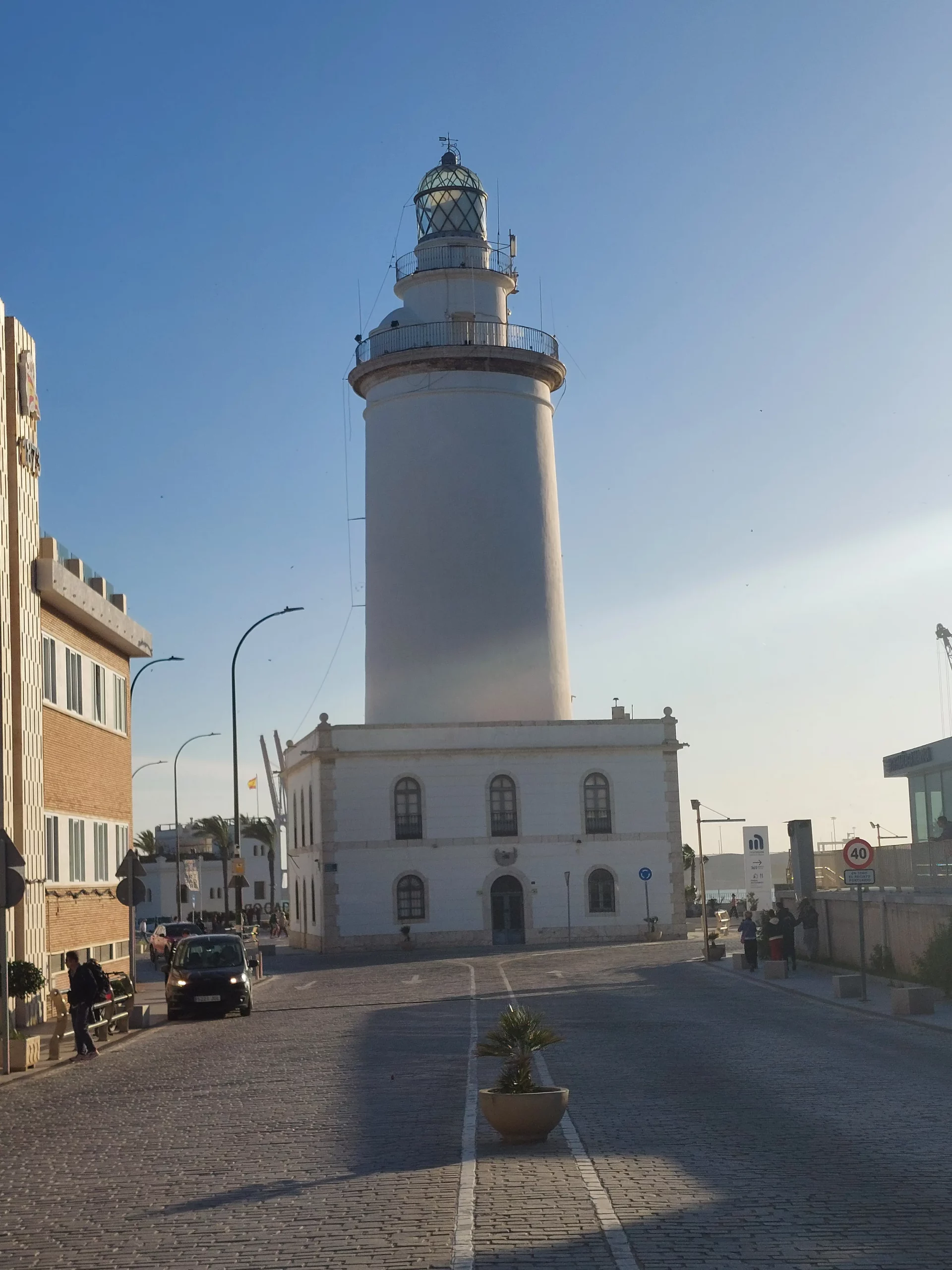
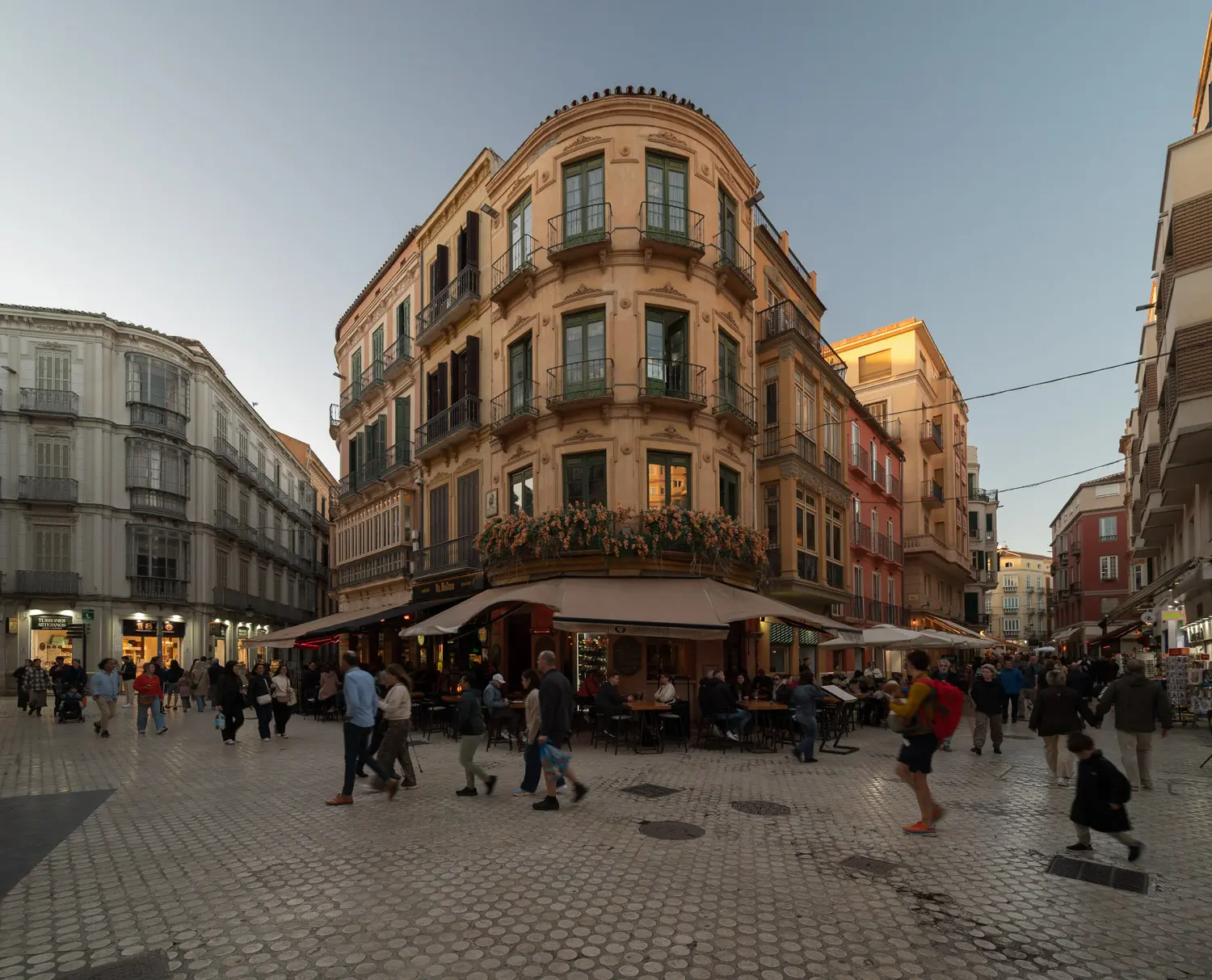
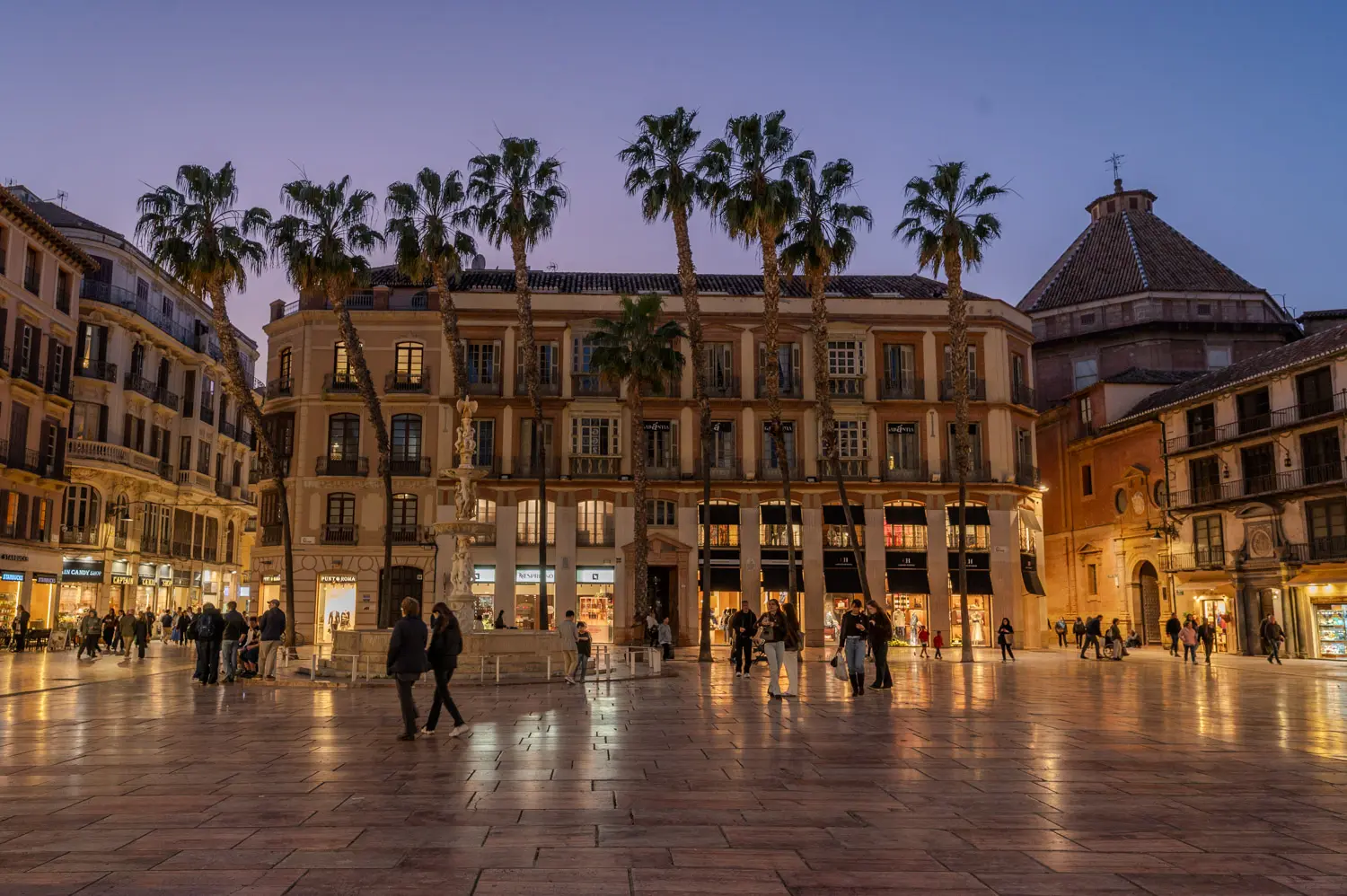
If there was one thing that defined Málaga for me, it was the architecture. Not as grand as Paris, but still impressive in an understated way.
Ronda’s Famous Bridge
Setting off for Ronda, we decided to drive along the Costa del Sol, Spain’s Mediterranean beach destination. Lunch stop was in Marbella, the place to be for the international jet set. It has called Europe’s rich, famous, and nobility as guests. We simply stopped on the beach and had a couple of hamburgesas (hamburgers), surrounded by well-dressed visitors who may or may not have been part of the upper class.
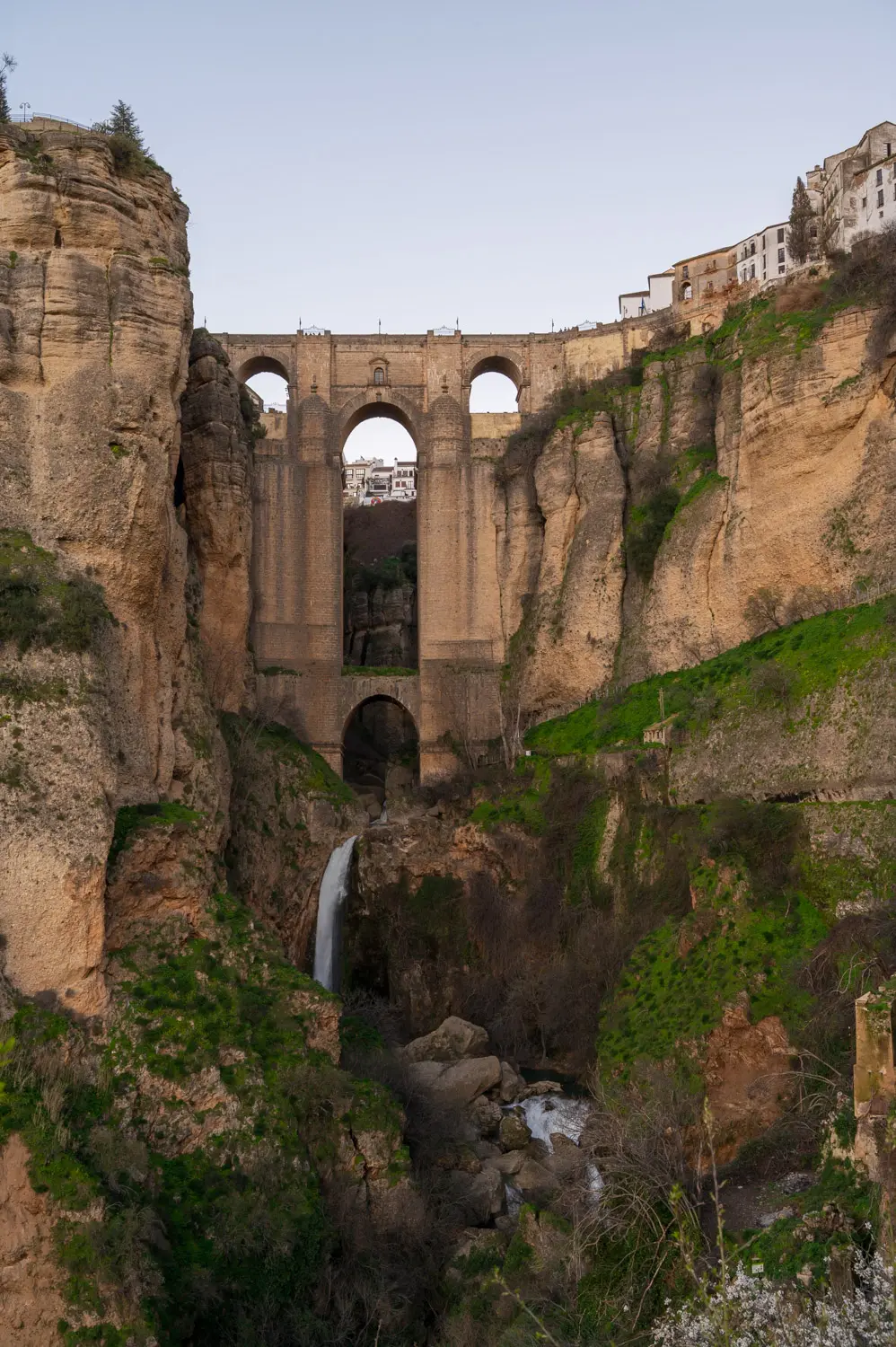
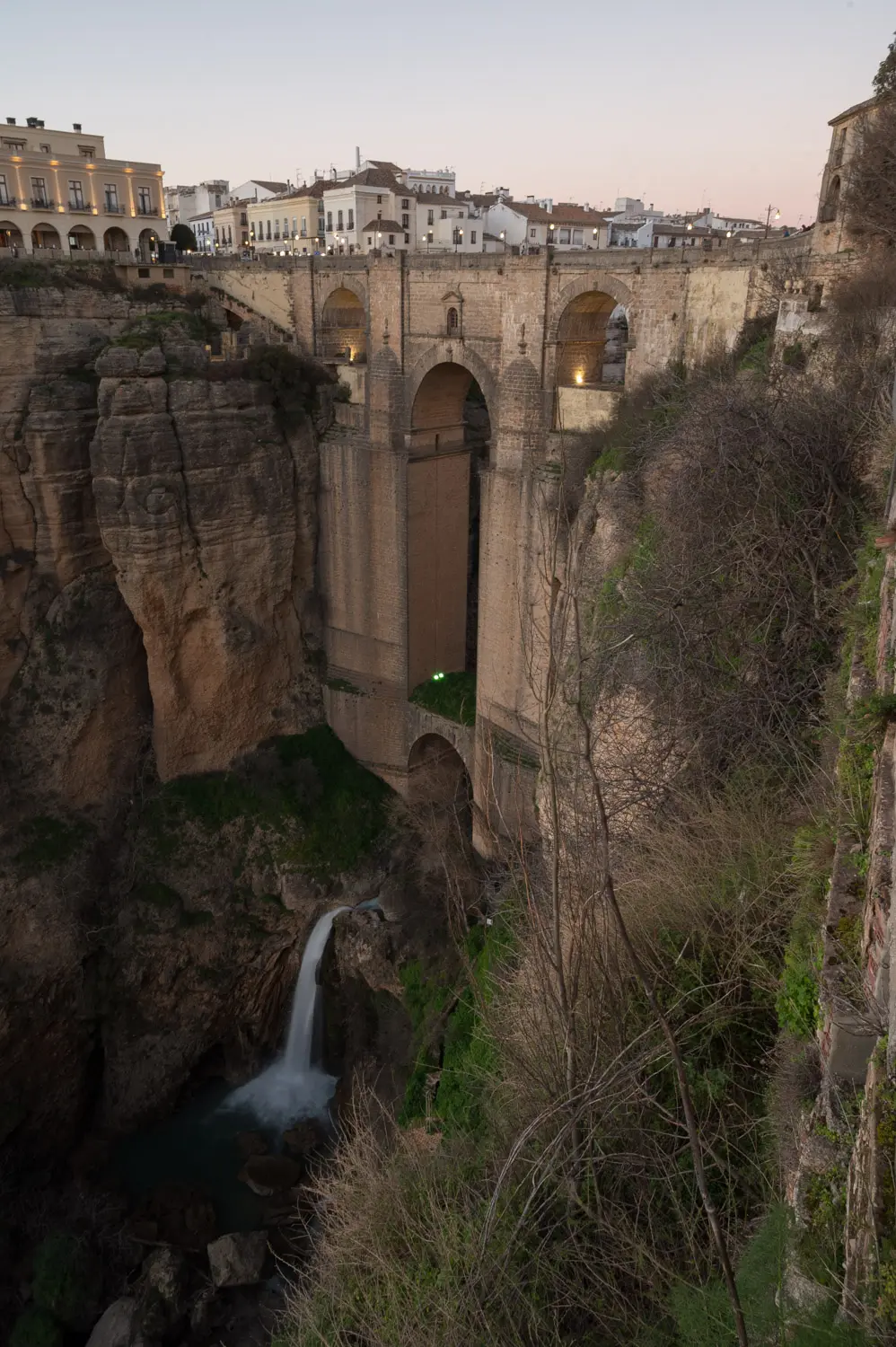
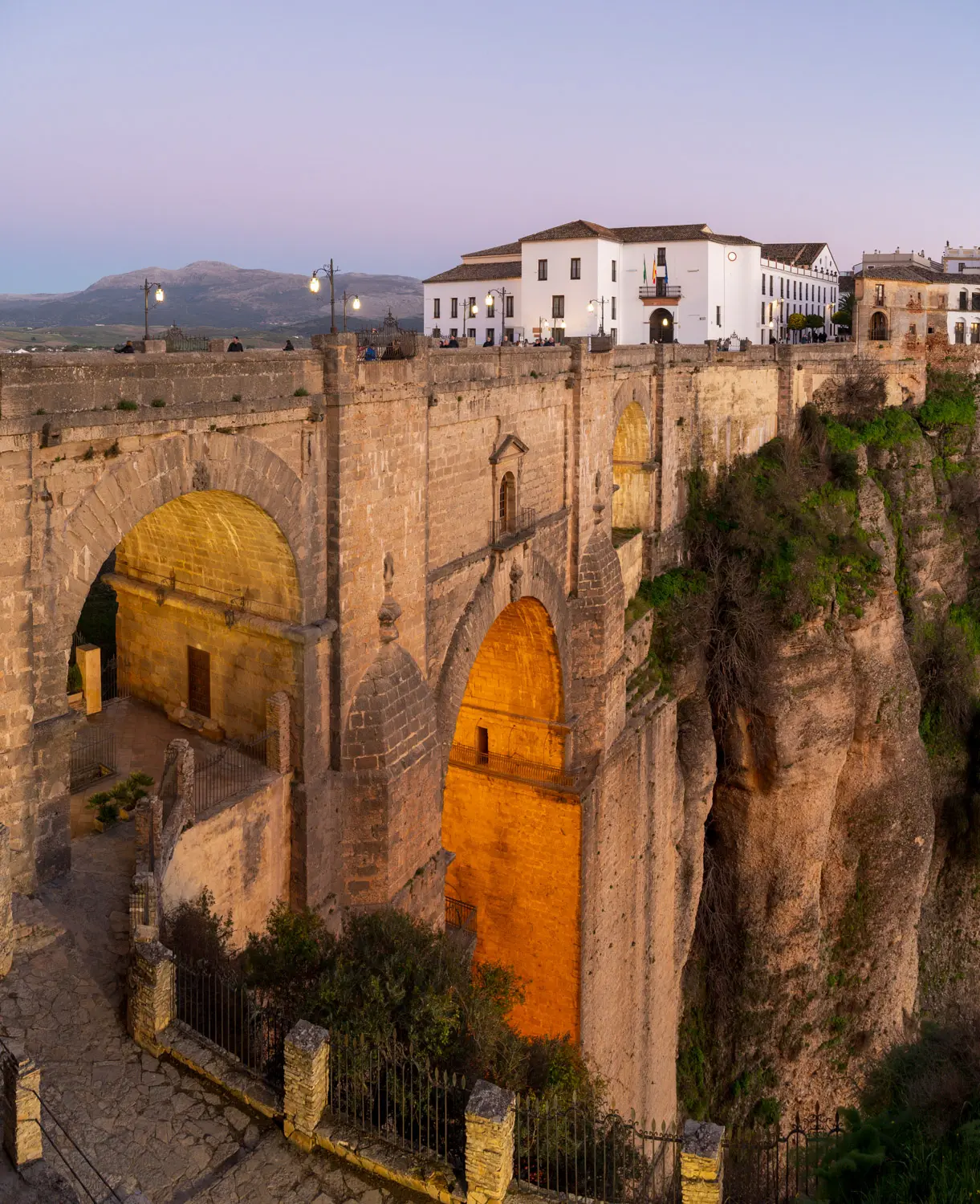
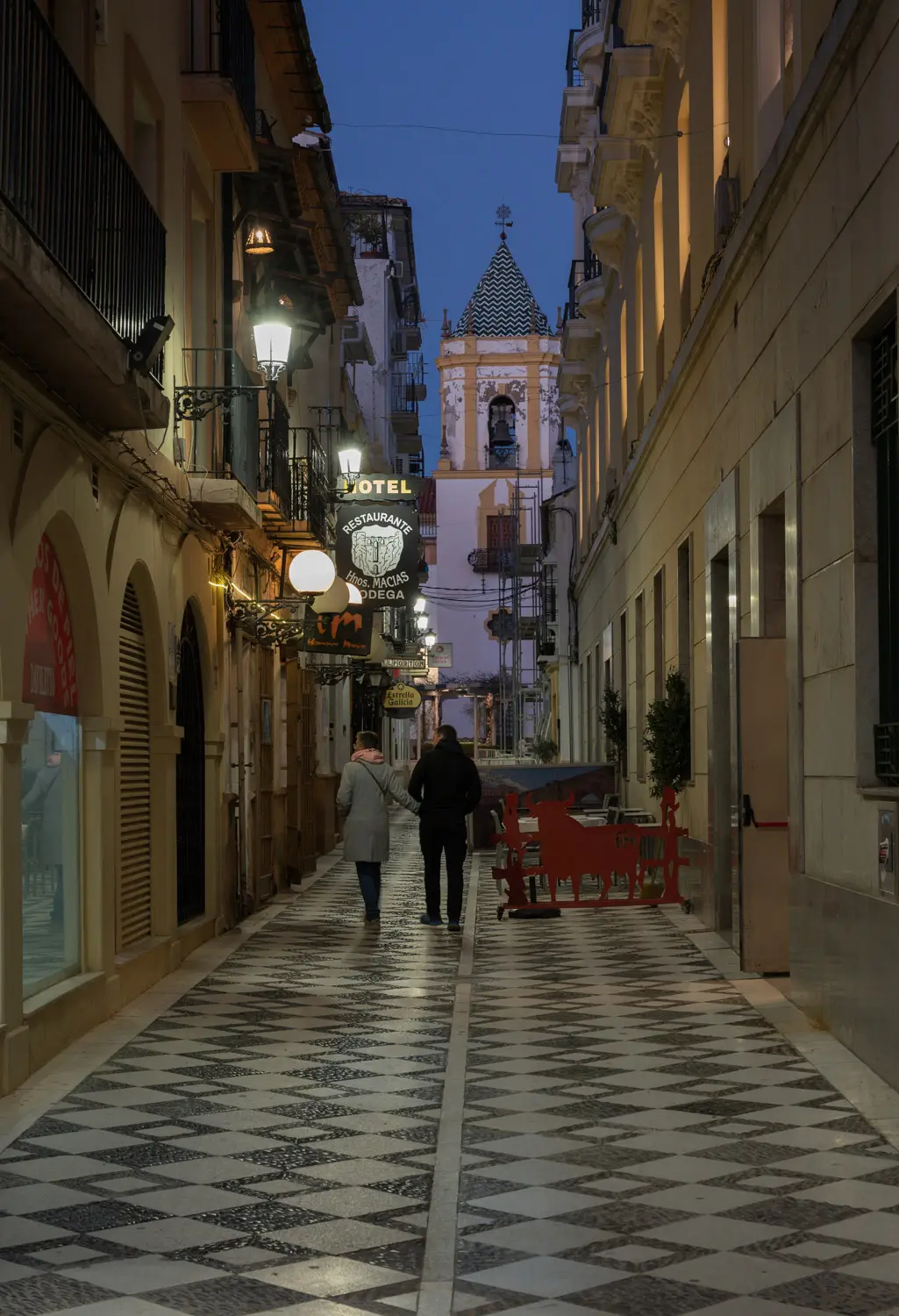
The route now turned inland and took a slightly windy road up to the mountain top town of Ronda, best known for the stone bridge that spans the El Tajo gorge. Our hotel, Hotel Monitlerio, sits on one side of the gorge and offered great views of the bridge from the terrace. The building itself reflected something we would notice again and again on this trip: Arab influence. An open courtyard with rooms arranged around it, offering a quiet interior world.
There are plenty of places to view the bridge from various points in the city, however the best view is from a platform that is halfway down the gorge. It’s an easy 10-minute walk down, perhaps longer going up, and offers a panoramic view of the bridge, the waterfall below, and the buildings along the cliff. We were there together in the afternoon, and I went back during my evening photo walk.
But wait, there’s more to Ronda than the bridge!
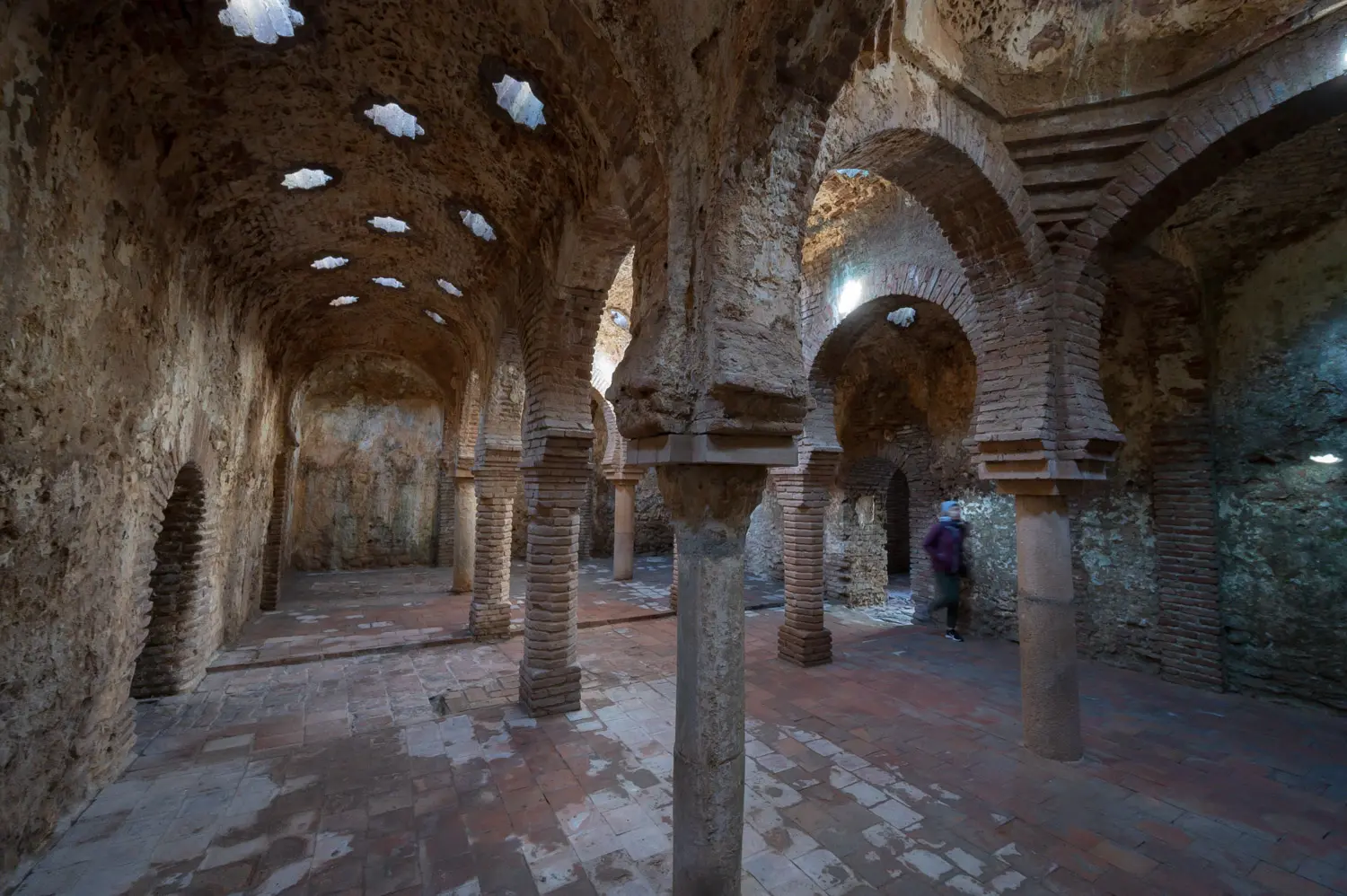
We were surprised to find the ruins of an Arabic Bath house, open to the public, for a price. Having visited Roman baths before, we noticed that the Arabs built theirs the same way, with a hot room, warm room, and cold room. I’m not sure who learned from who, but it was interesting to see the similarities in the two civilizations.
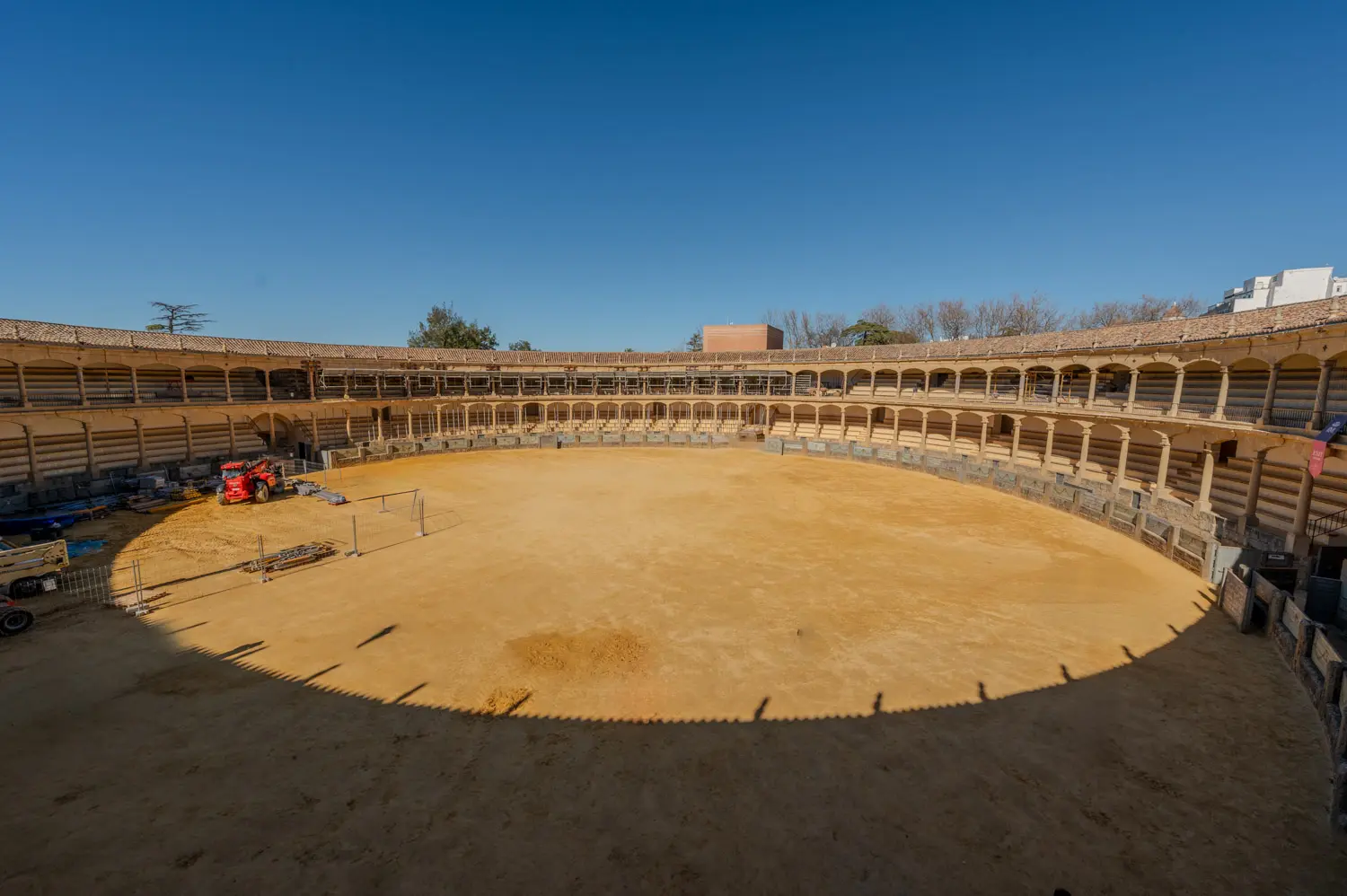
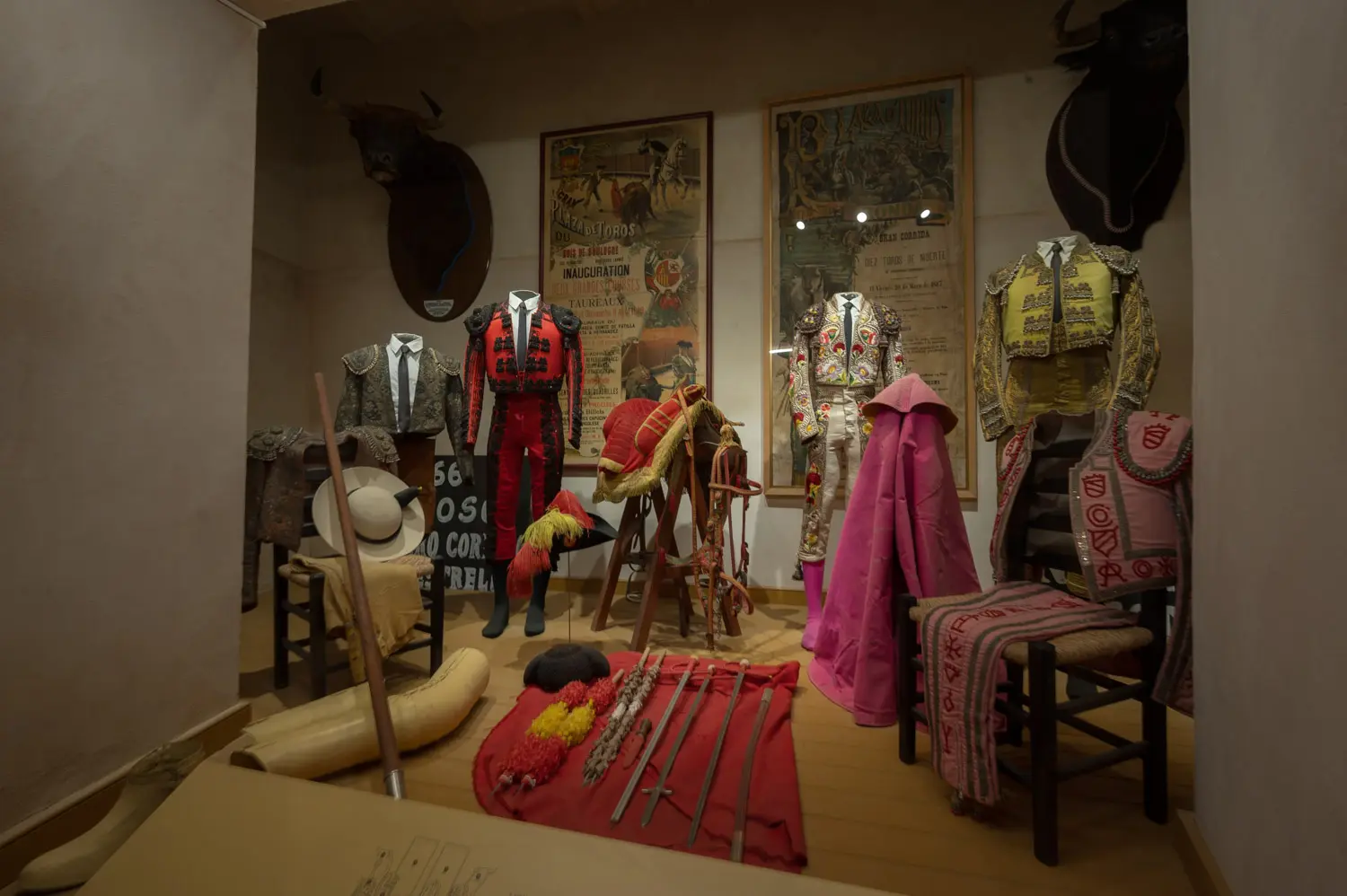
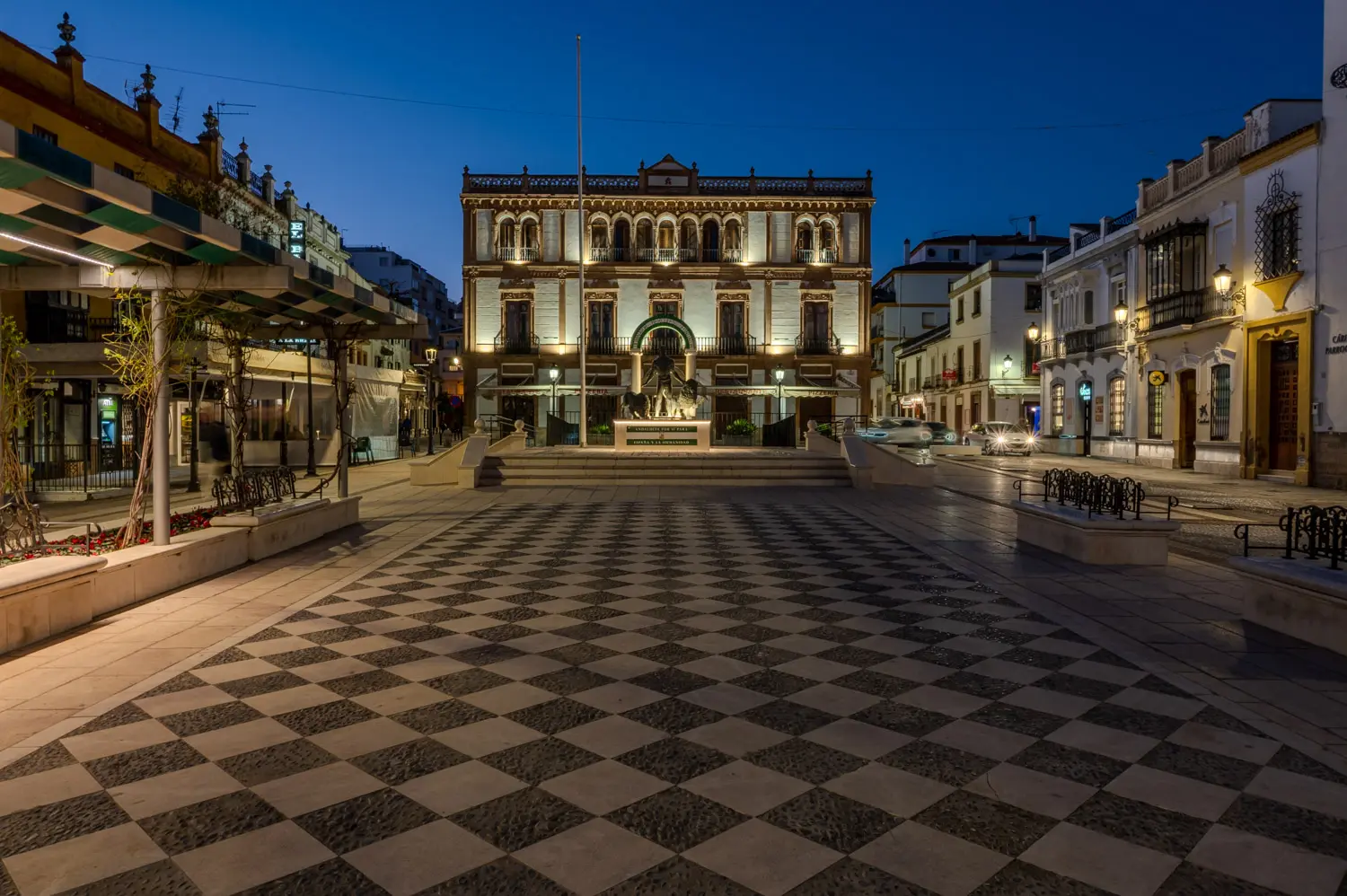
The oldest bullring in Spain is right here in Ronda, the Plaza del Toros. It is now a museum. Kathrin and I are not fans of bullfighting, but this was an interesting part of Ronda’s history. We learned that bullfighting was debated since its beginning. Animal rights was not a concern back then. It was the church who fought against it. They viewed the men fighting the bulls as recklessly risking their lives, almost a suicidal undertaking and would refuse those who died to be buried in a church graveyard or receive the last rites.
We had an unpleasant surprise on day 2 in Ronda. When I tried to pay for lunch, our first paella of the trip, the credit card machine didn’t work. The same had already happened at the Arab bath, and another shop, which emptied my wallet, so I went to an ATM, but they also didn’t work. A city-wide internet outage was the culprit. Unfortunately, Kathrin had left before I paid because she felt cold in the shade and wanted to wait in the sun. Stressed out as I was, I must have passed her. After waiting for so long she got worried, but since the internet did not work, the WhatsApp message she had sent did not reach me. But I finally found her and she happened to have an emergency 50 Euro note on hand which saved us. Alls’ well that ends well. Later that evening everything was back up and I immediately went to an ATM and refilled my wallet.
After my evening photo walk, when I returned to the hotel I I felt like having a glass of wine. Earlier, I had noticed a small room on the ground floor that felt less like a lobby and more like a cozy living room, complete with a wine cooler tucked into the corner. It seemed like the perfect place to relax.
That evening, I did just that. I tried one of the local wines, it was very good, and ended up lingering longer than expected, chatting with the receptionist. She was more than happy to share a few thoughts about her city and its wines, and it turned into one of those easy, spontaneous conversations that make a place feel a little more personal.
 Ronda is host to Spain’s oldest bull ring…
Cordoba and its many World Heritage sites
The drive to Córdoba was fairly uneventful, at least at first glance. But after a while, one thing became impossible to ignore: olive trees. Endless rows of them, stretching mile after mile in every direction. Later, we learned that Spain is the world’s largest producer of olives and olive oil, with Andalusia responsible for about 80% of that output. Based on what we saw from the road, that figure seemed entirely believable.
We arrived in Córdoba just before lunchtime. Our hotel sat directly across from the Mosque-Cathedral, La Mezquita, in the heart of the old town, which, unsurprisingly, meant plenty of tourists. Still, the location was hard to beat. We dropped our bags at reception and wandered into the courtyard while waiting for the hotel’s terrace restaurant to open. There were a few shaded spots, but no benches to speak of, if you wanted to sit, you had to make do with a stone wall. Not exactly comfortable, but good enough for a short pause.
The terrace restaurant reminded us of a place we visited in Austin’s Town Lake. The views were better than the food. It wasn’t terrible, merely underwhelming.
We spent the afternoon exploring the area around the hotel and stopped by a tourist information office, where we picked up a few useful tips. Along the way, we bought some filled pastries and carried them back to the hotel terrace, planning to eat once the restaurant closed at 5:30 and the place would be empty. That was the idea, at least. In reality, they just kept serving, people were still being seated at 5:45, so we just ignored the crowd and started eating. To ease our conscience, we ordered a couple of drinks and called it even.
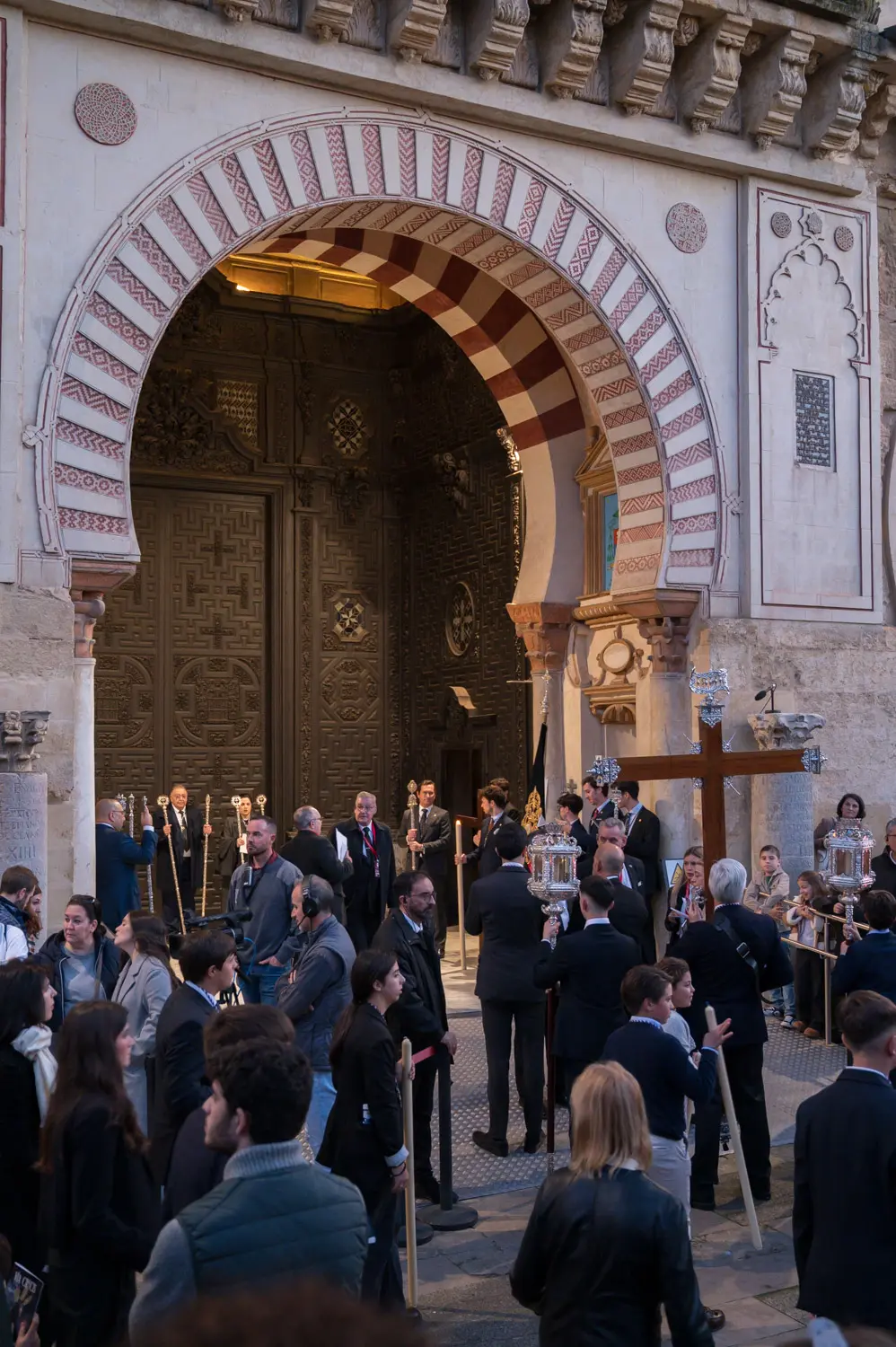
Later, as usual, I headed out for my photo walk. I wandered through the streets and eventually found myself back at the cathedral courtyard, where a large crowd had gathered. Something was clearly about to happen, though I had no idea what. I waited for a while, then nearly gave up. Just as I was heading toward the exit, a procession appeared on the street outside. That was reason enough to stay. Moments later, a statue of Jesus, mounted on a wooden float, was carried into the courtyard and into the cathedral. One of those lucky moments—you almost leave, and then something happens.
 The hosts waiting for the arrival
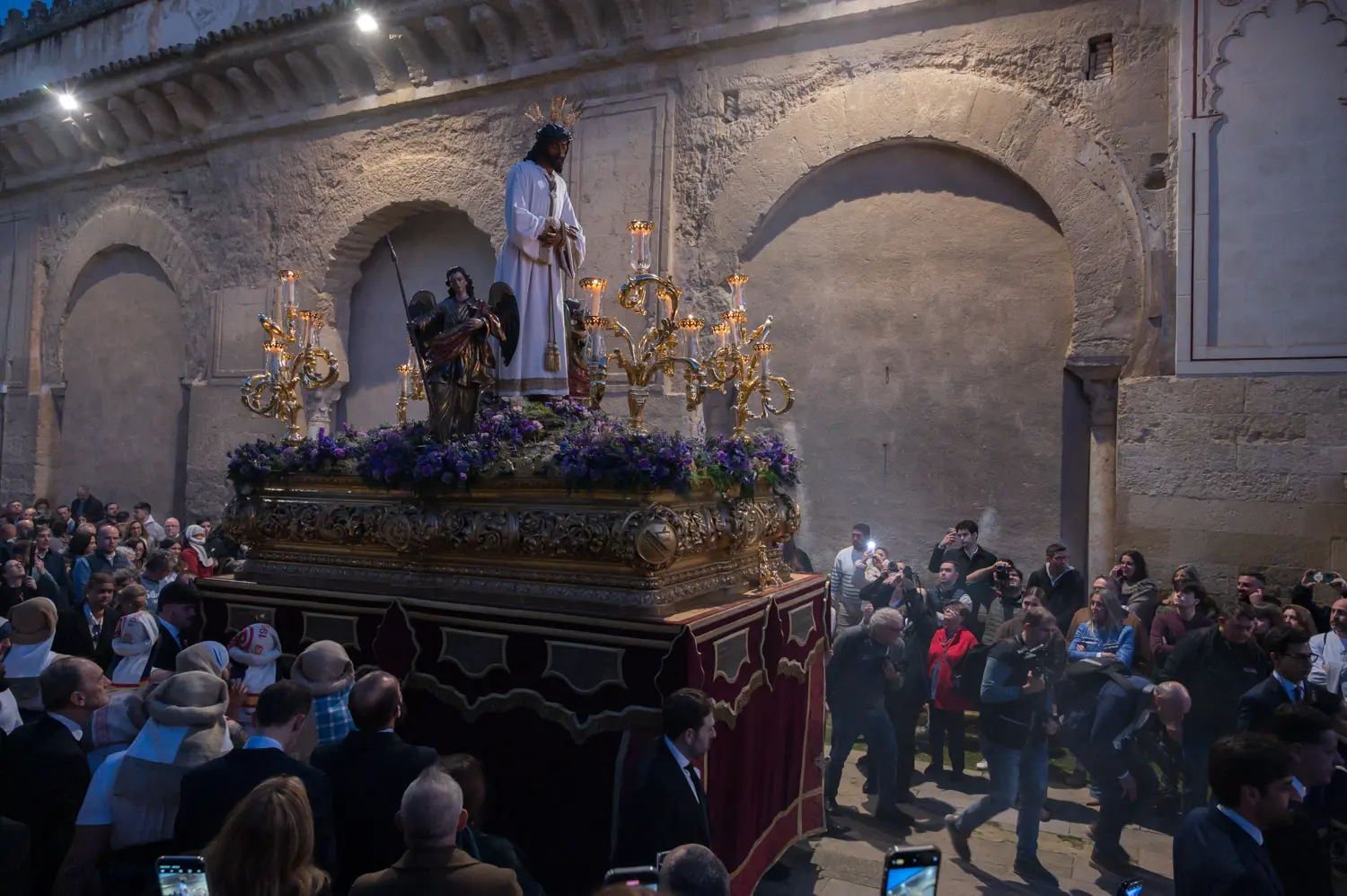
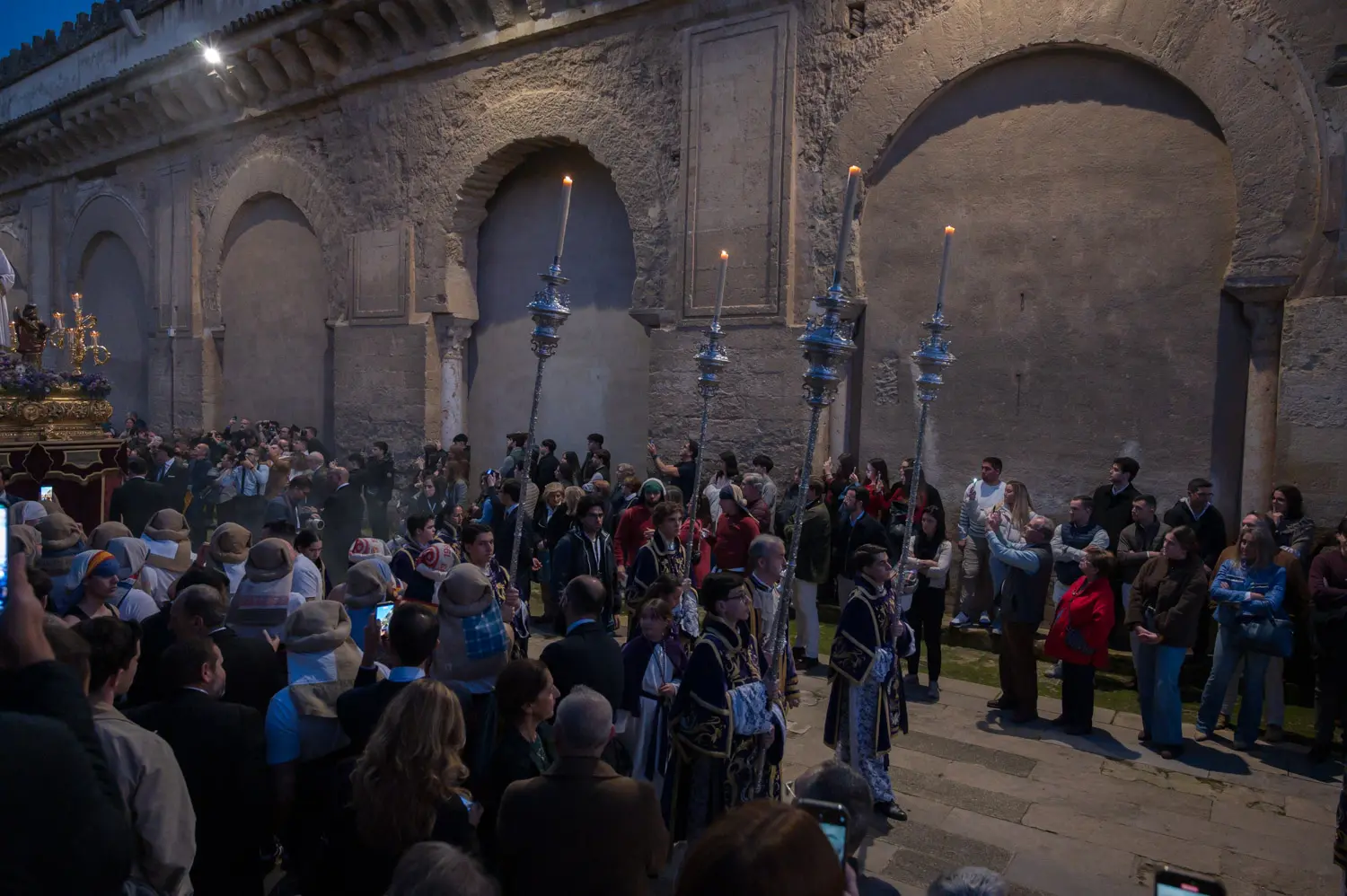
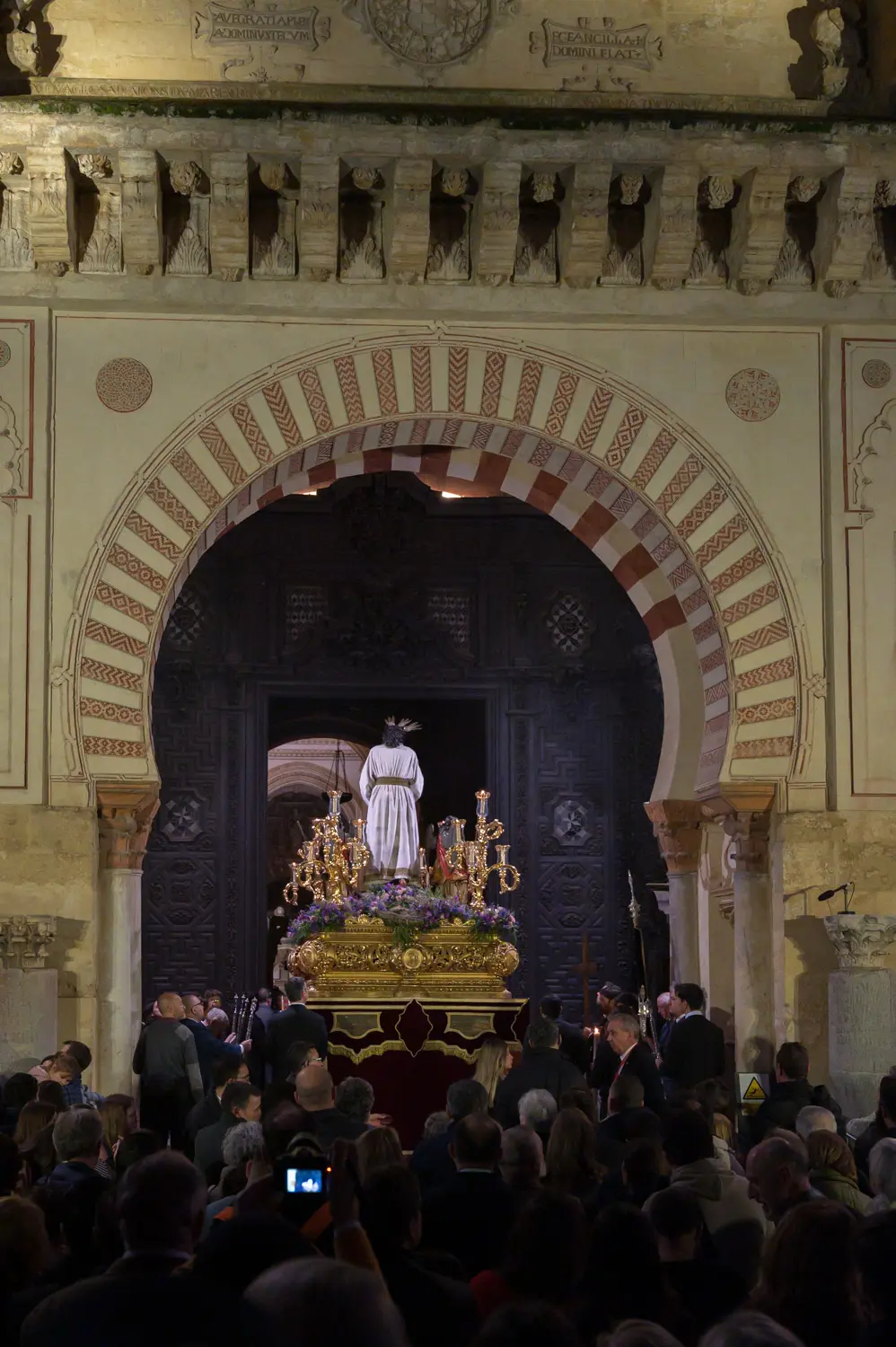
Cathedral, Carnival, Confetti
 One of the ancient gates to the Mosque courtyard
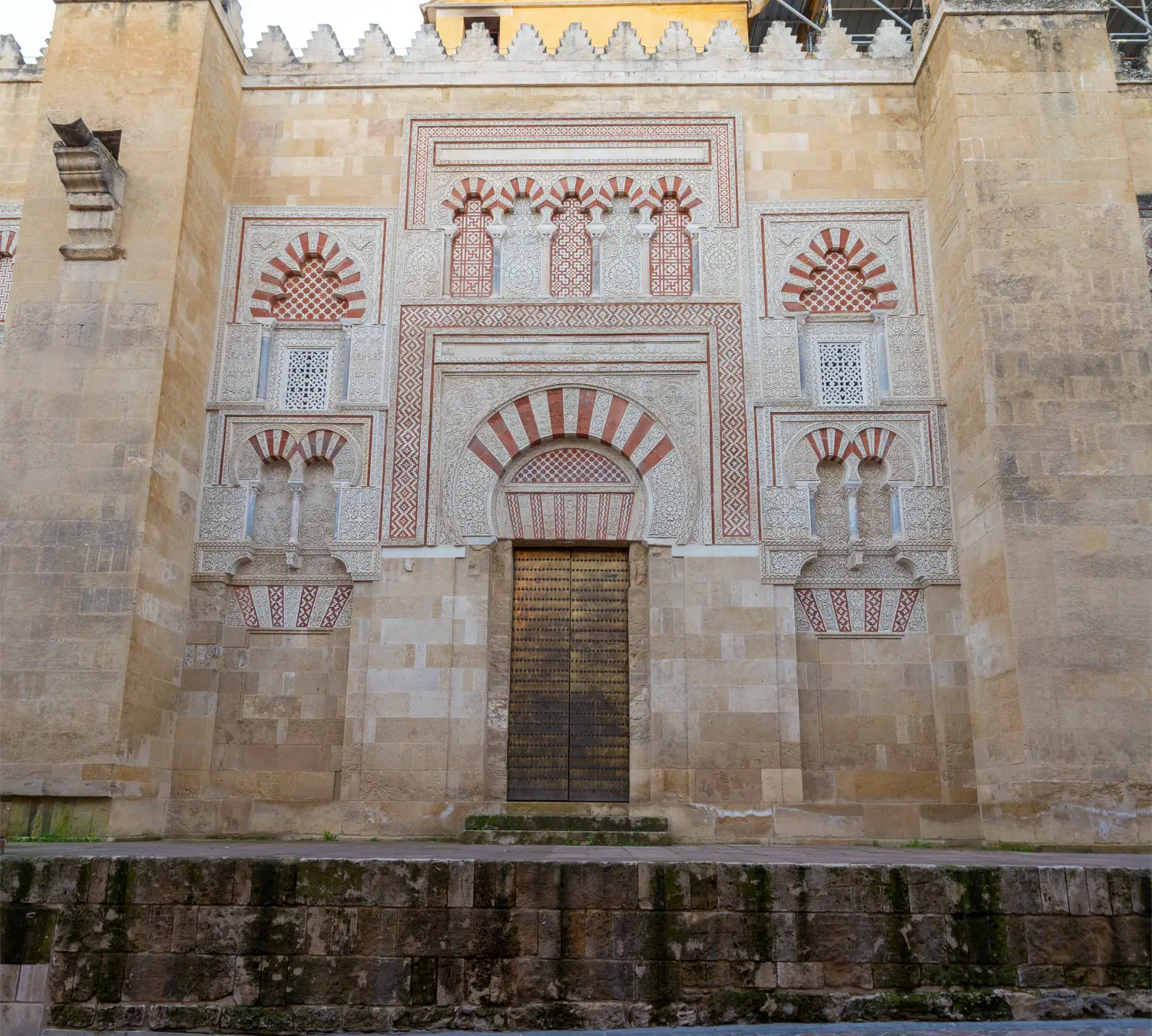
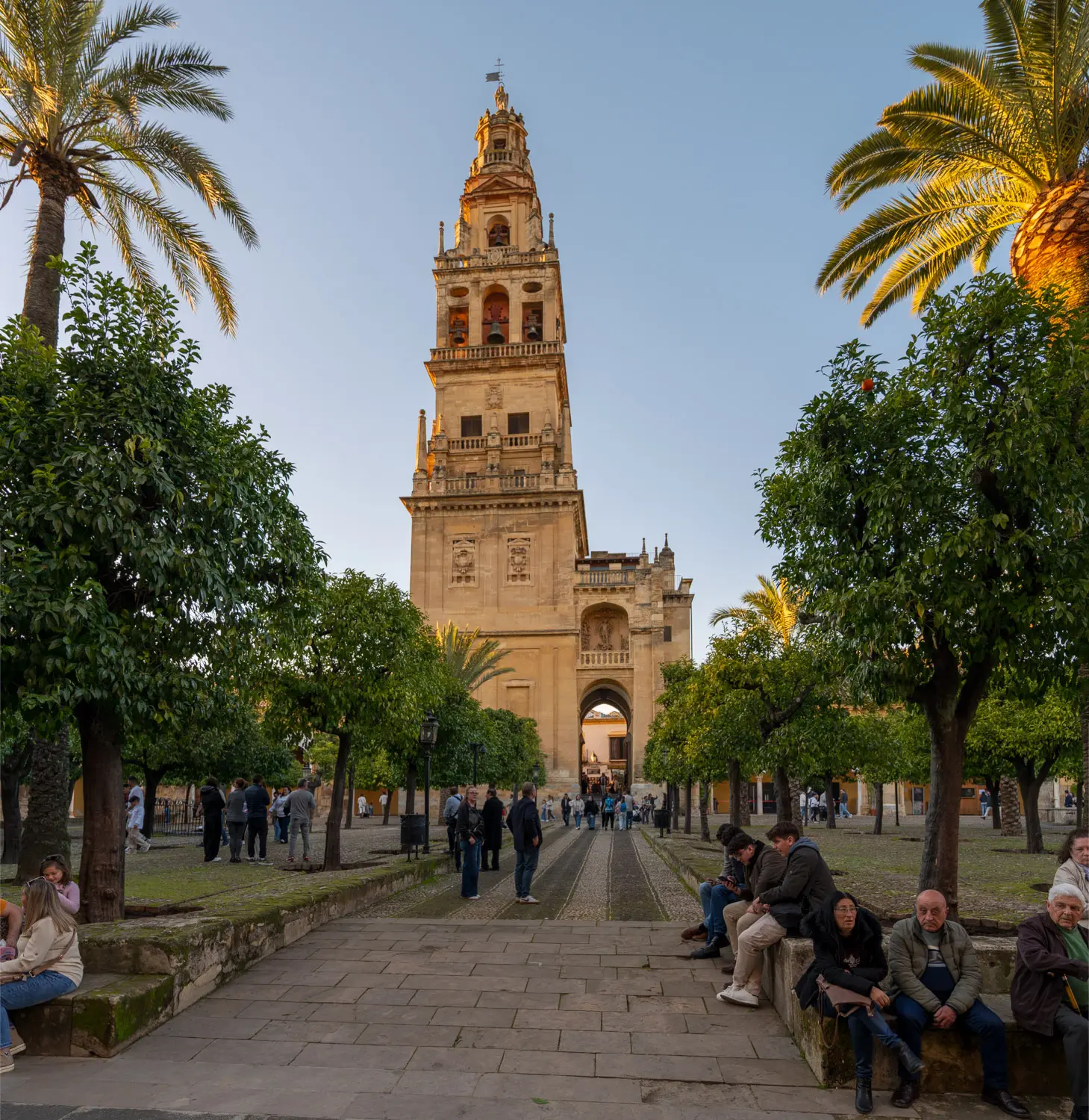
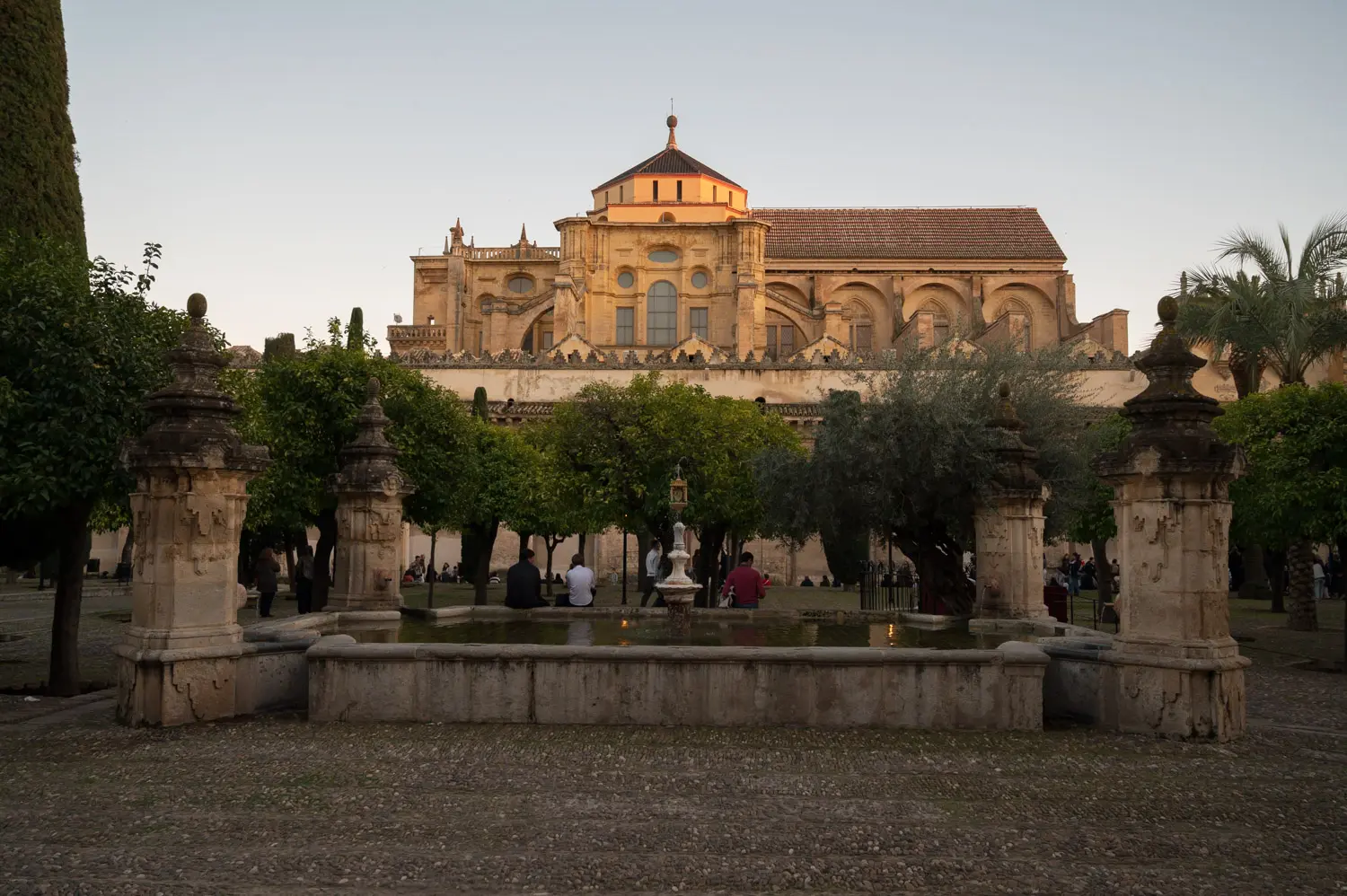
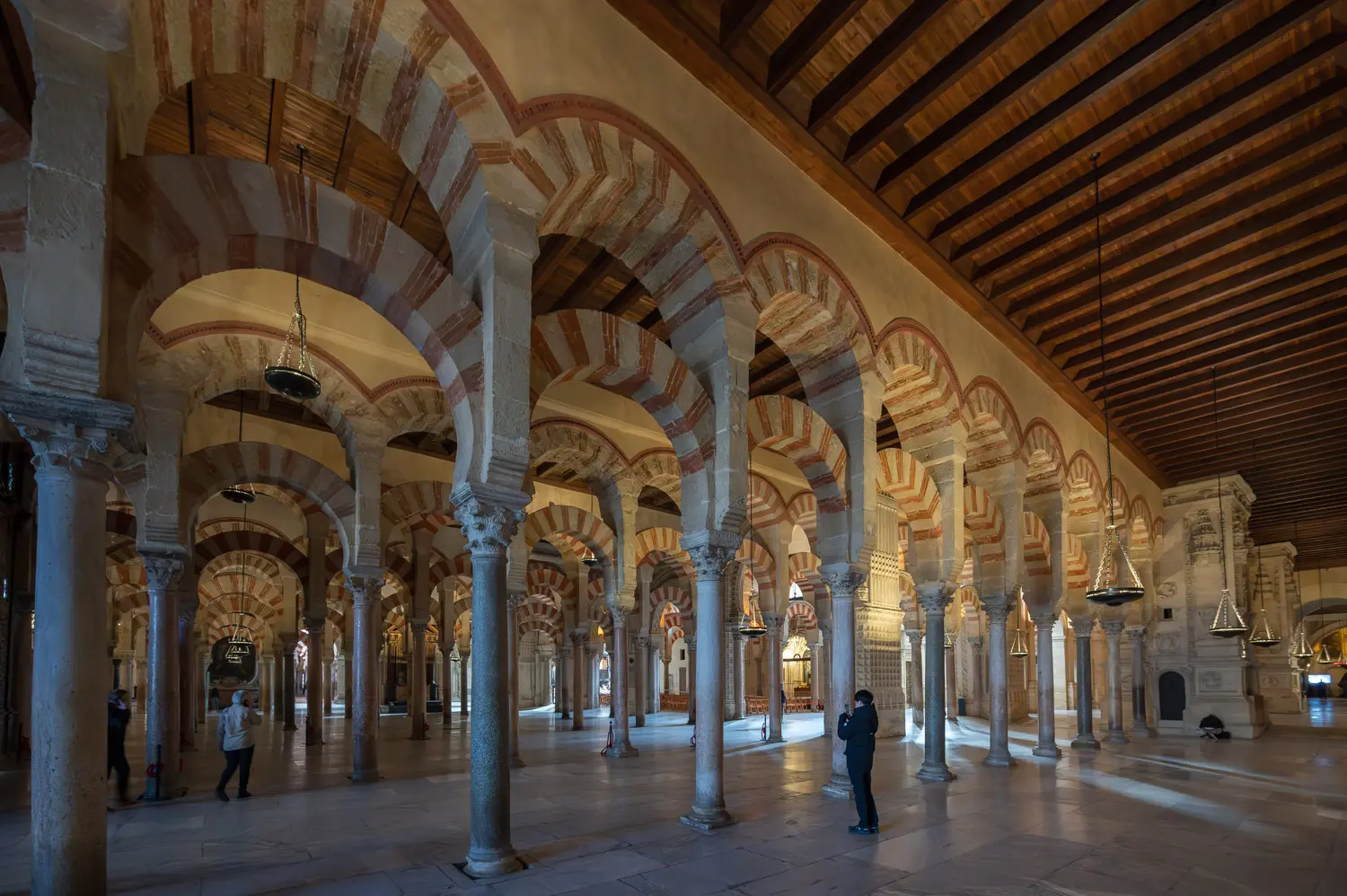
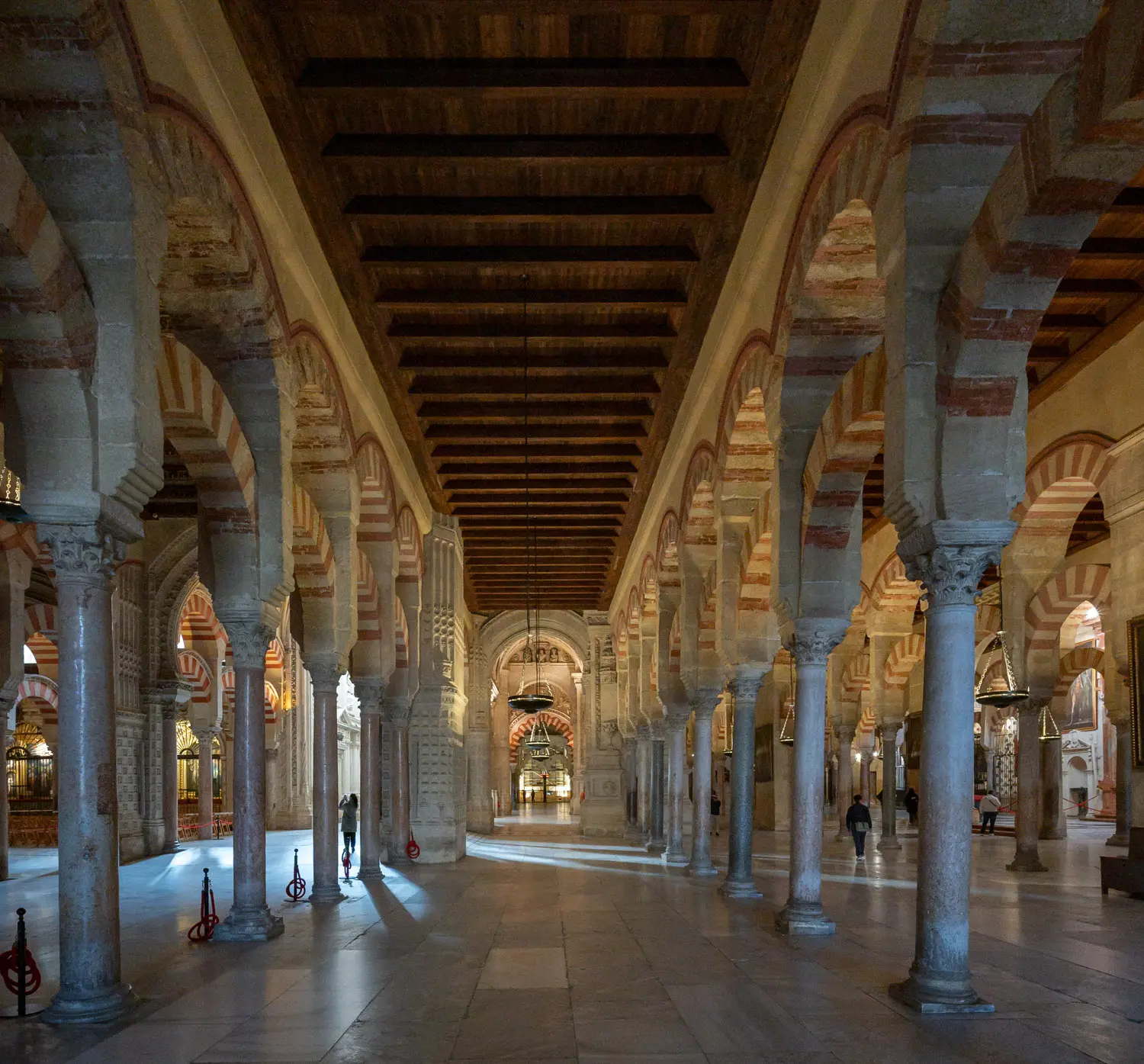
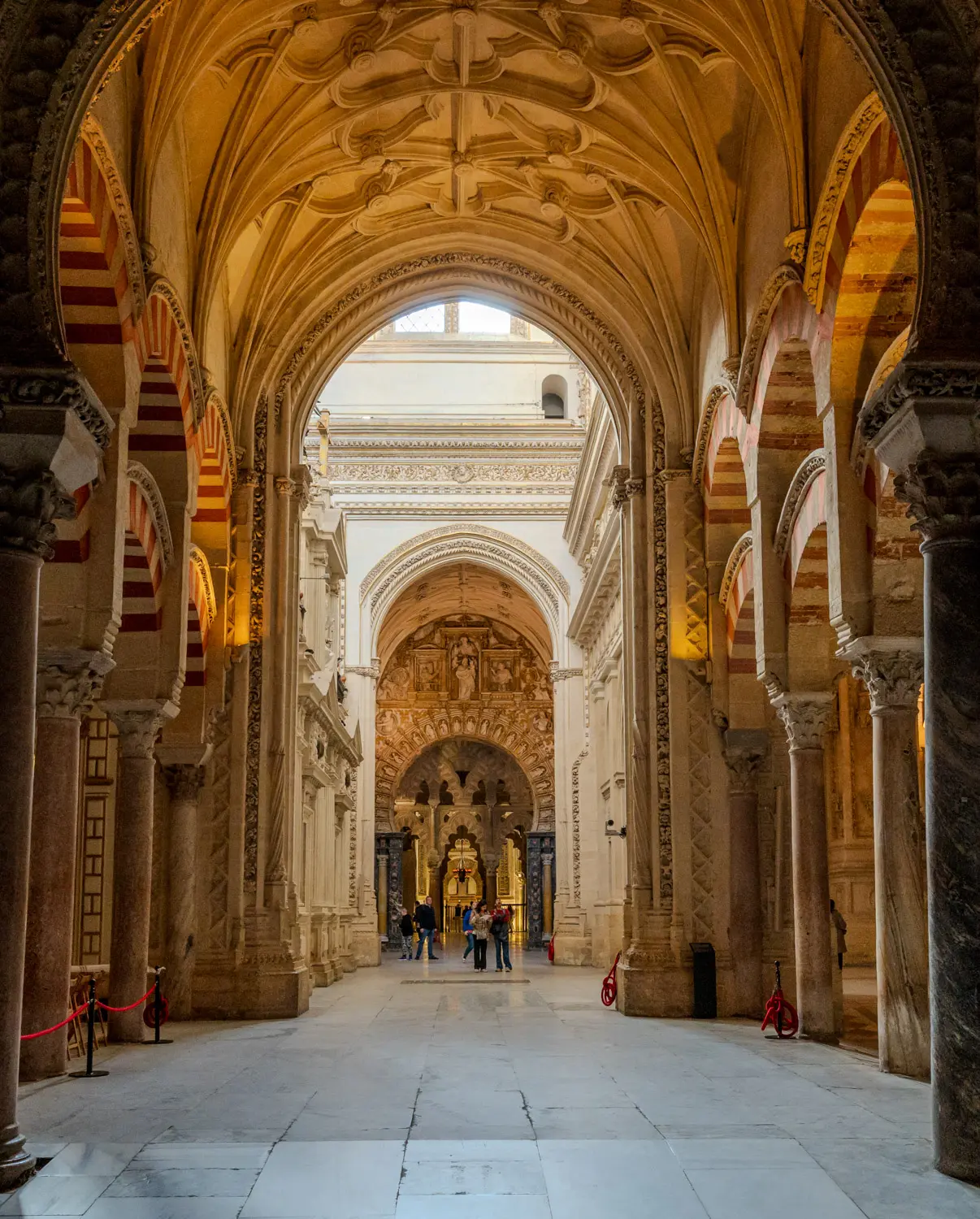
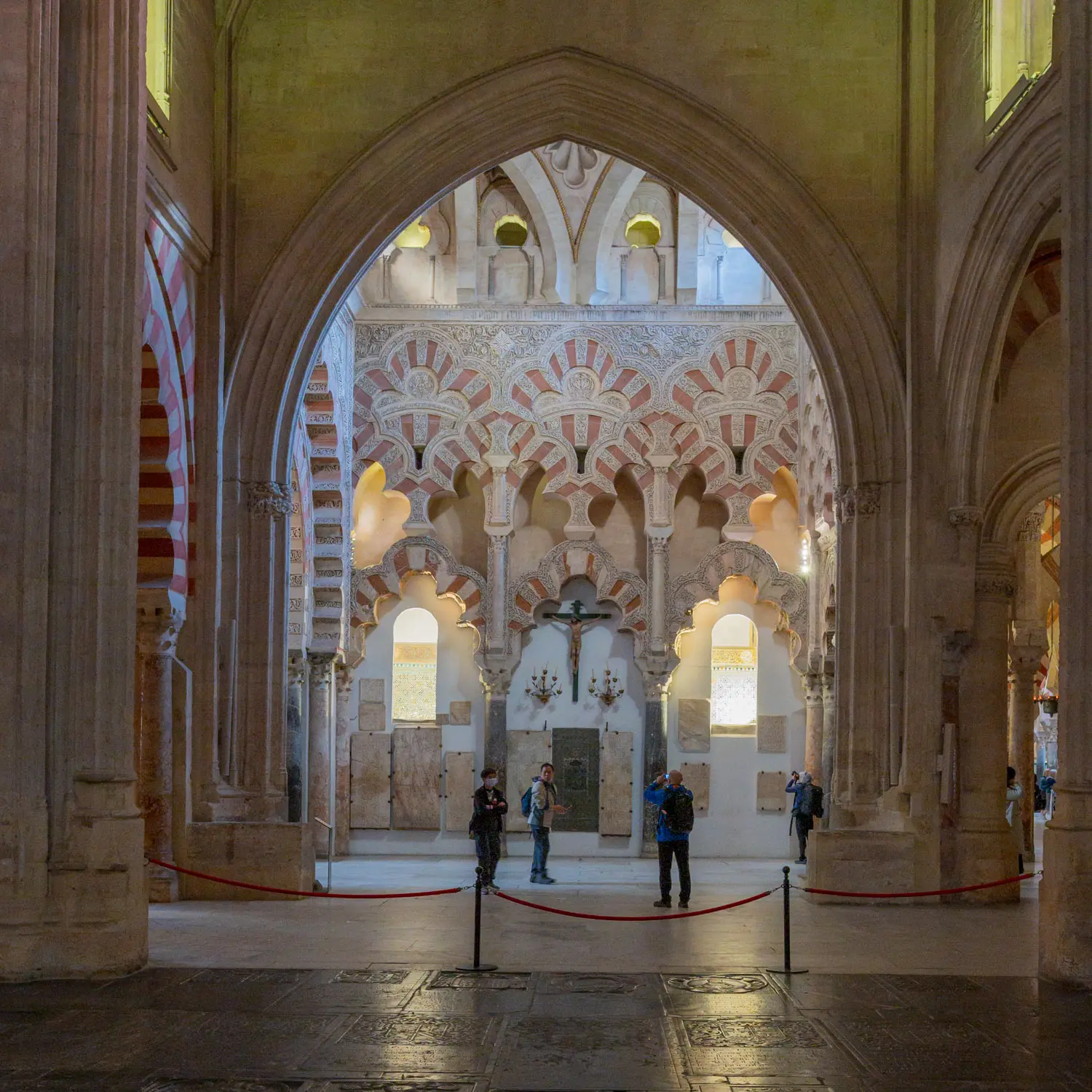
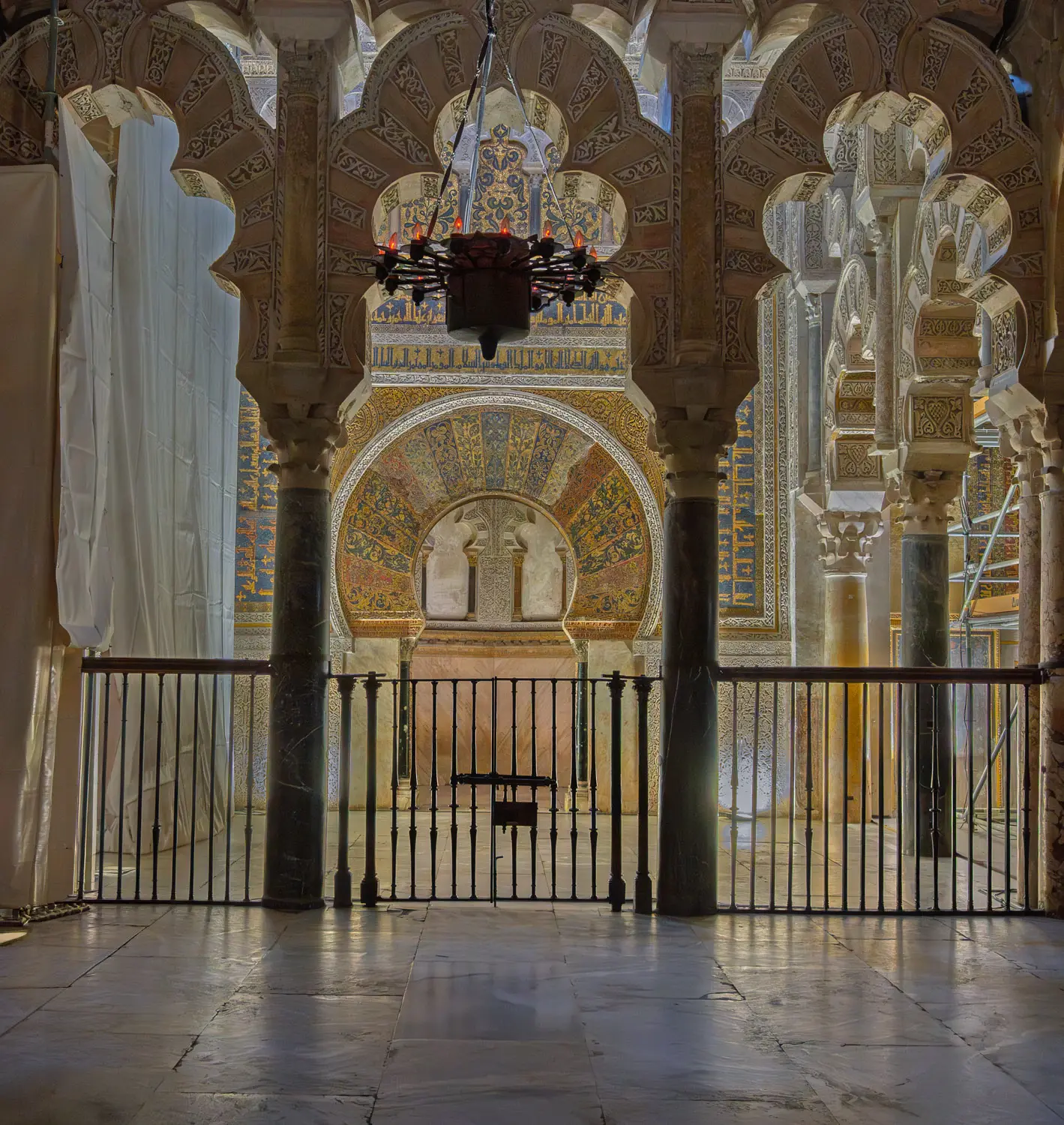
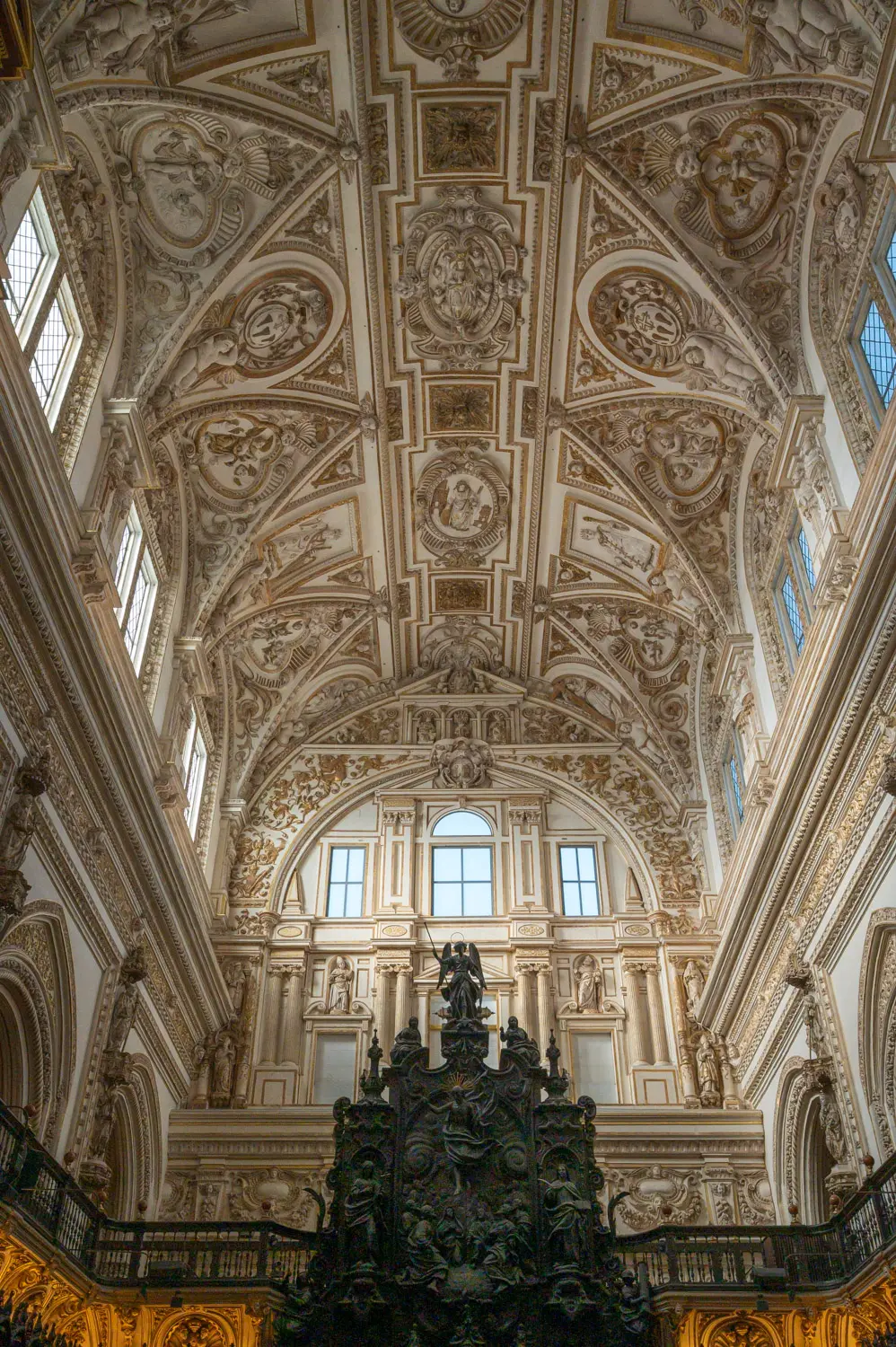
The next day we toured La Mezquita, and it truly lives up to its reputation. Originally built in 785, it was expanded over centuries into a vast prayer hall filled with double-tiered arches, covering more than 23,000 square meters, or 250,750 square feet. Then, in the 16th century, a Christian cathedral was inserted right into the center, occupying roughly a third of the space. The result is striking. The endless rows of arches create a sense of depth that feels almost infinite. It’s easy to see why this place once stood at the heart of one of Europe’s most important cities.
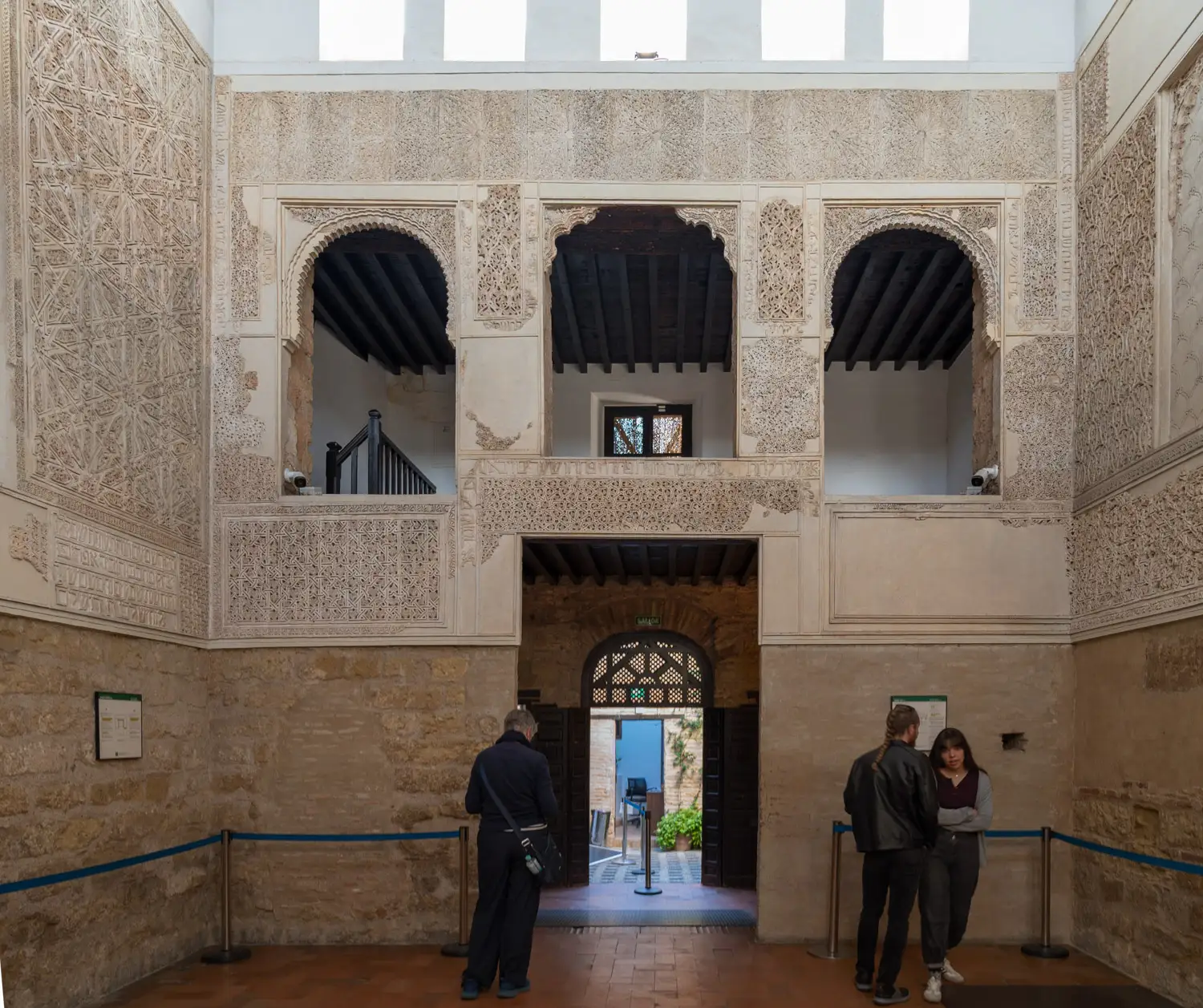
From there, we went to the synagogue, quite the contrast. After the scale of La Mezquita, this was a single, small room. The wall carvings were intricate and worth a look, but the visit lasted all of three minutes. In, around, out.
Continuing through the city, we came across Victoria Gardens, where police had blocked off part of the road and vehicles were lined up. A carnival parade was about to start, something we hadn’t expected at all, considering Ash Wednesday was the week before in Germany. Spain, it seems, runs on its own schedule. We found a spot and waited. Once it began, the pace was slow and deliberate: each group would move forward a few steps, perform, then continue. It wasn’t fast, but it was colorful and lively, with dancers and musicians in elaborate costumes, more reminiscent of Rio de Janiero than Frankfurt, Mainz or Cologne. A nice glimpse of local culture beyond the usual sights.
- The Flintstones are an international hit!
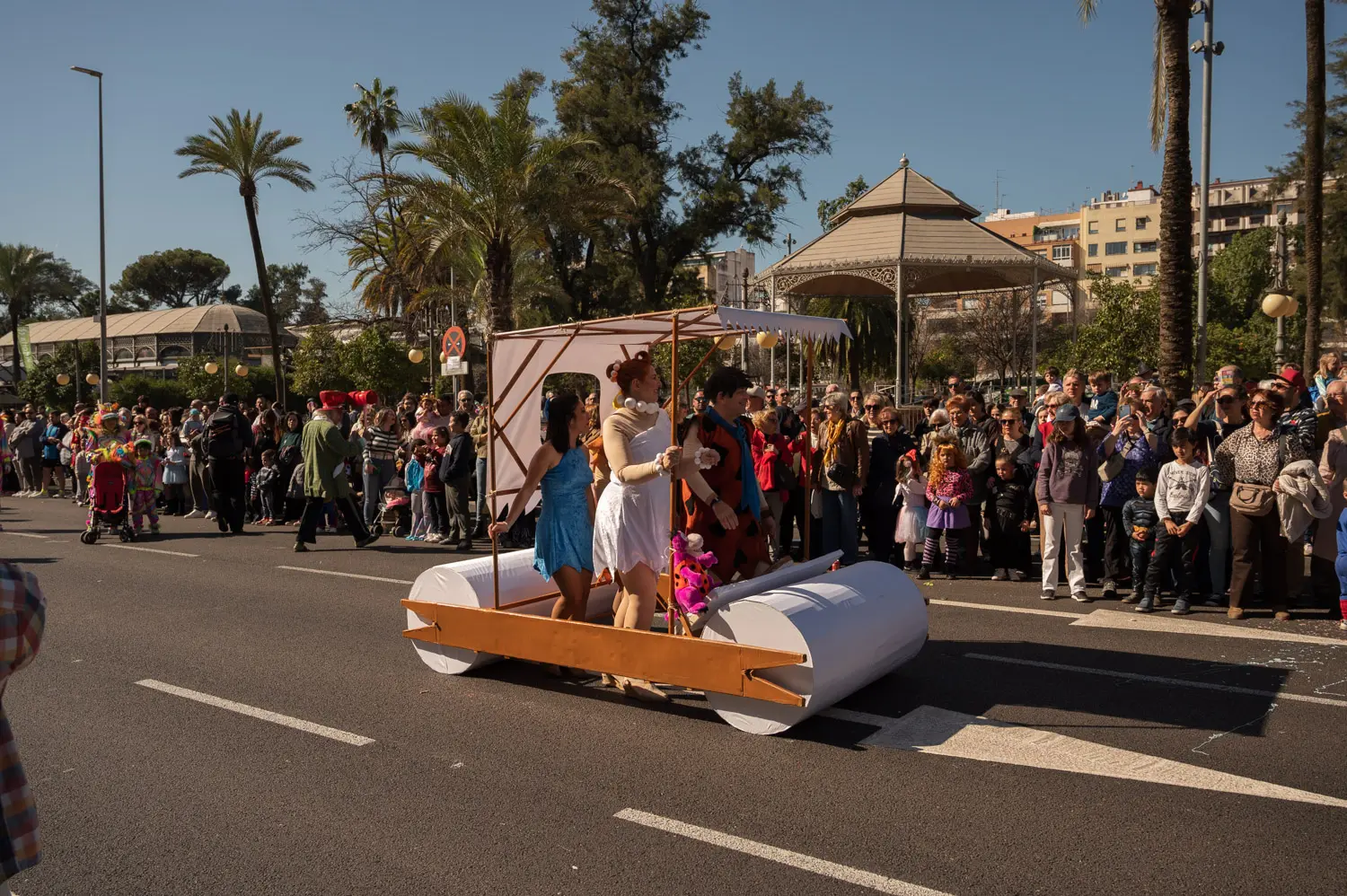
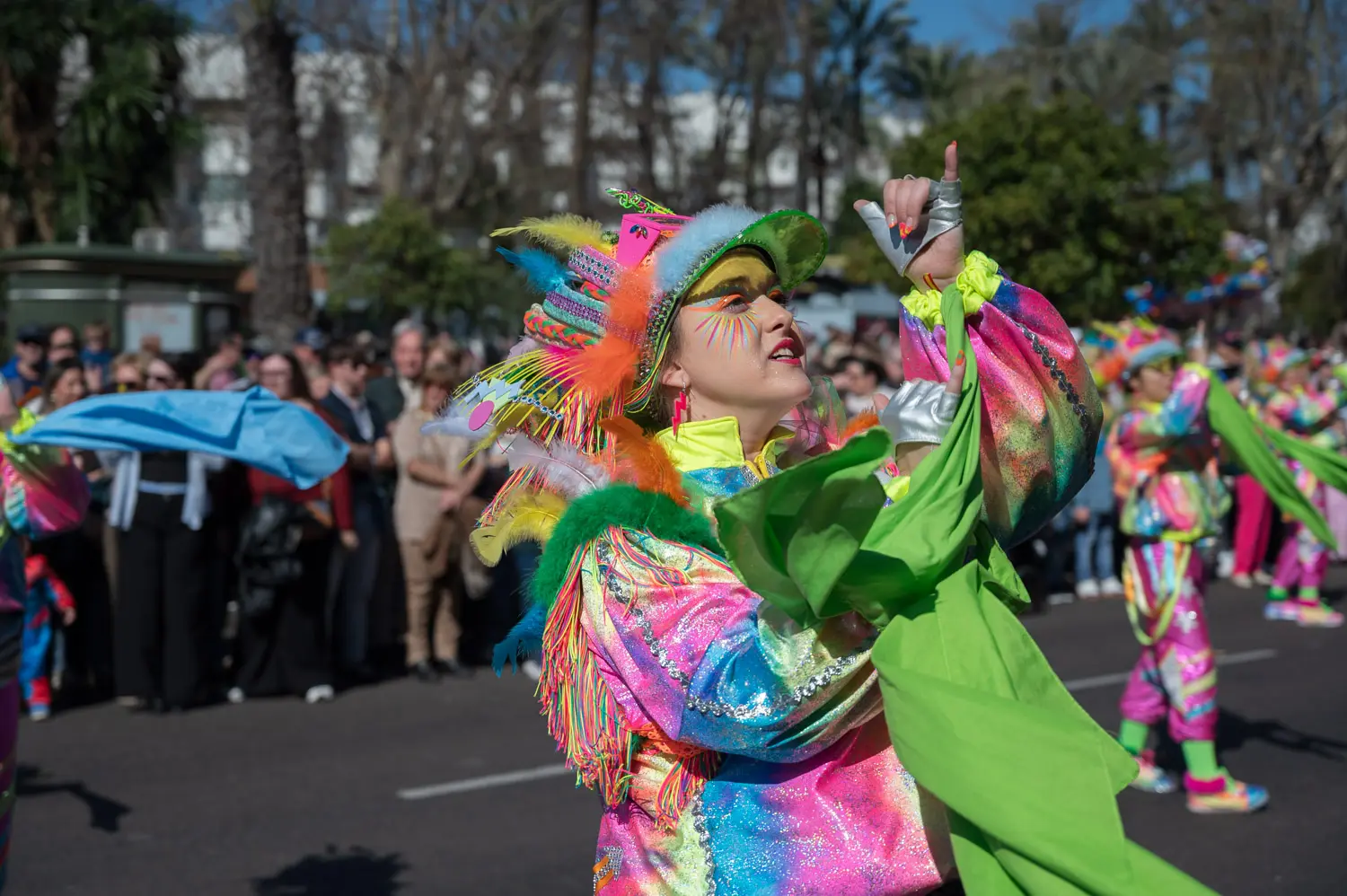
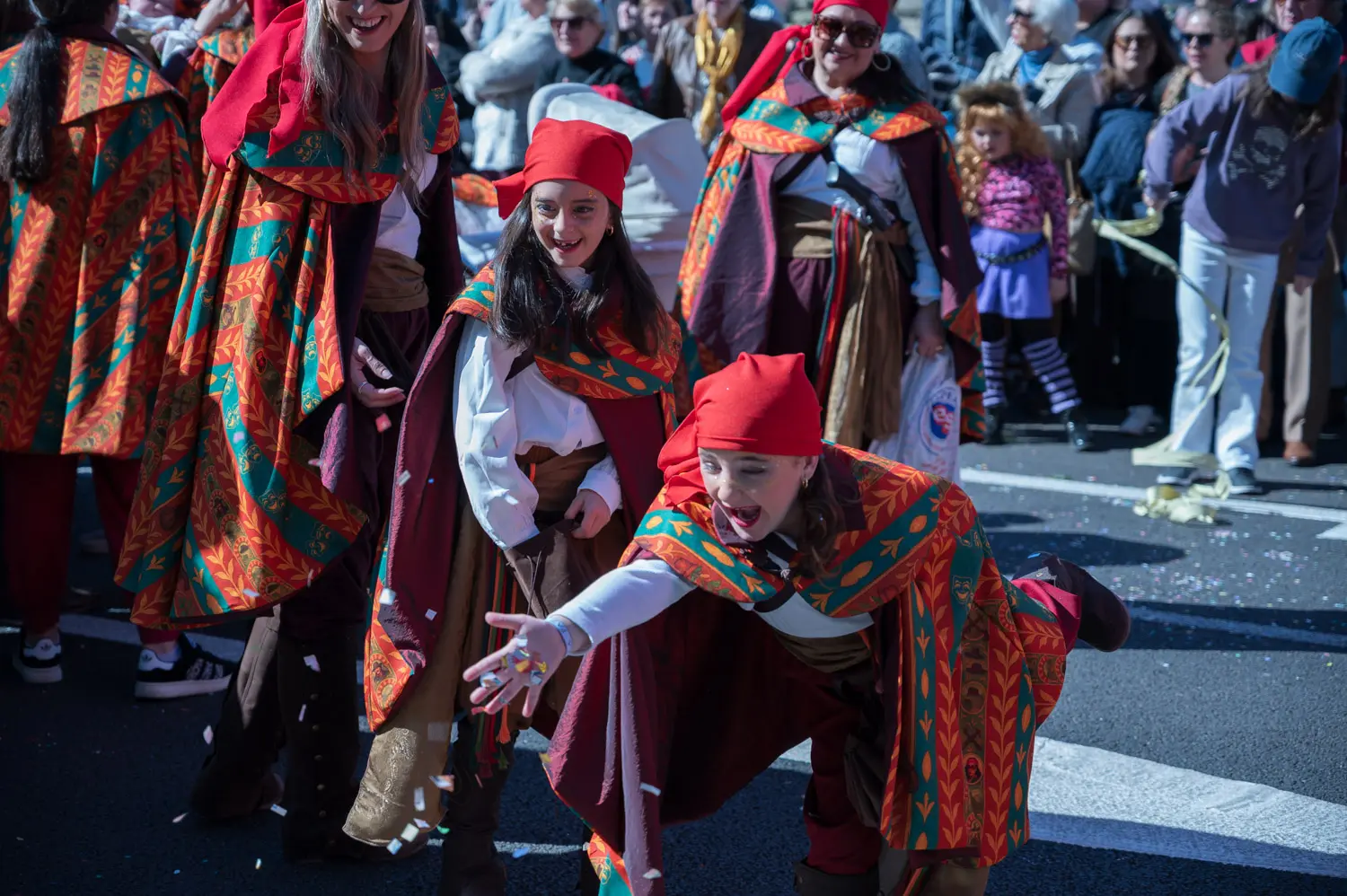
After watching a handful of groups, we decided to move on to the ruins of a Roman palace. As it turned out, the parade had the same idea. The streets were packed, and we eventually made our way to Plaza de la Corredera, Córdoba’s main square, hoping to find lunch. That plan didn’t work out either, the parade was ending there, and the restaurants were preparing for the grand finale. We retreated and found a Turkish restaurant just outside the square with a good view of the route. We thought we had outsmarted the crowds—until the parade came through and we watched the exact same groups pass by again. So much for that.
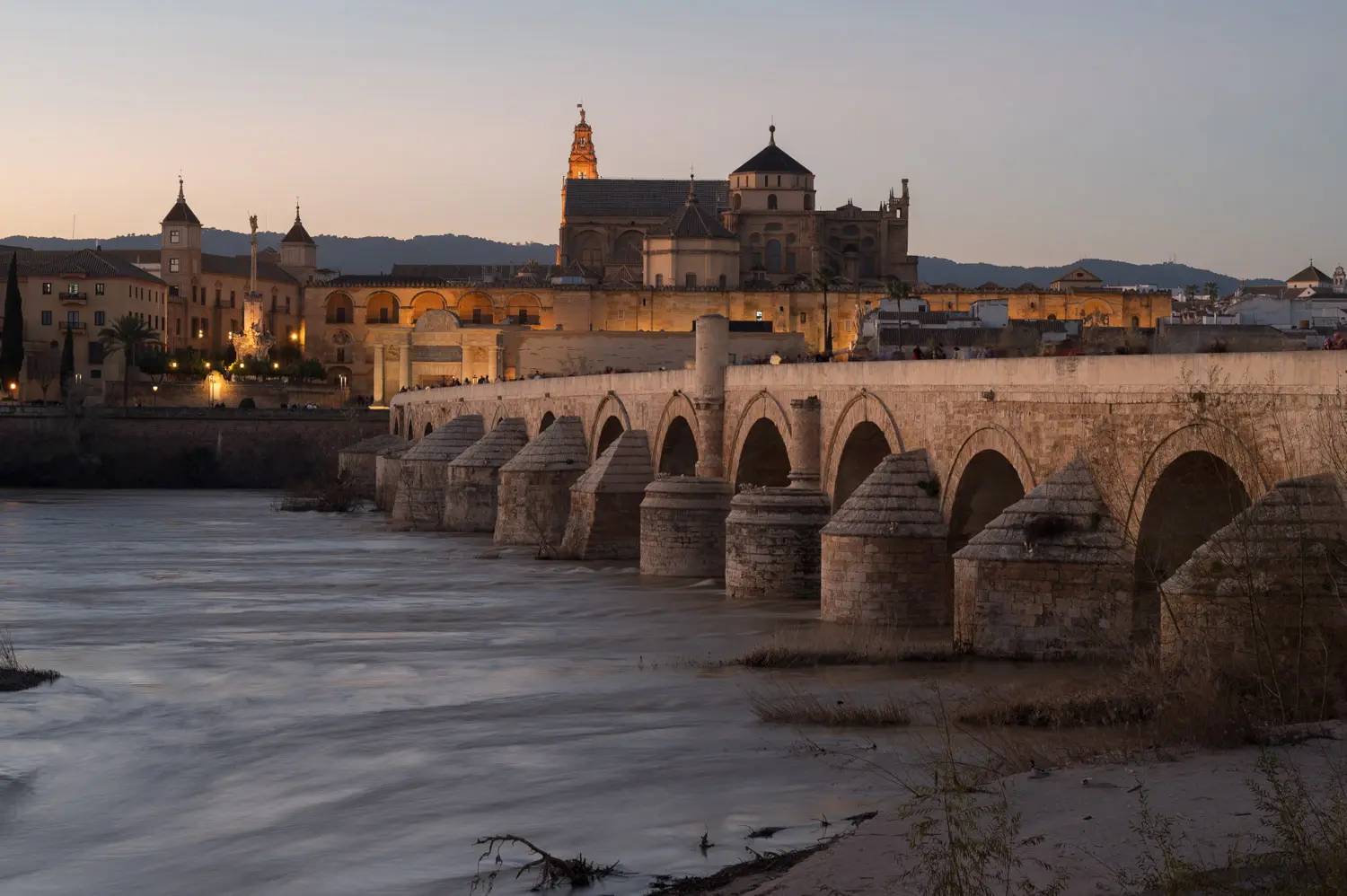
Now we wandered down to the Roman Bridge, one of Córdoba’s most photographed landmarks. It didn’t disappoint. The view across the river toward the Mosque Cathedral was striking, and on that side of the river, things were noticeably quieter. We found a bench and took a moment to enjoy the calm before heading back.
On the way to the hotel, we took a more scenic route and came across a small tapas restaurant that looked promising. It turned out to be a great find. Grilled peppers, sheep cheese cubes, a cold tomato cream, simple dishes, all done well. With a cold beer on the side, it made for a very satisfying end to the day.
Last Stop, Granada
On our way to Granada, we made a stop at the fortress of Fortaleza de la Mota. Built during the Moorish period, it once marked the frontier between the kingdoms of Granada and Castile. Inside the walls, there’s a bit of everything, defensive towers, a citadel, a church, and the remains of everyday life: houses, storage rooms, cisterns. It wasn’t a long visit, but it was a worthwhile break in the drive.
- The church dominates this fort
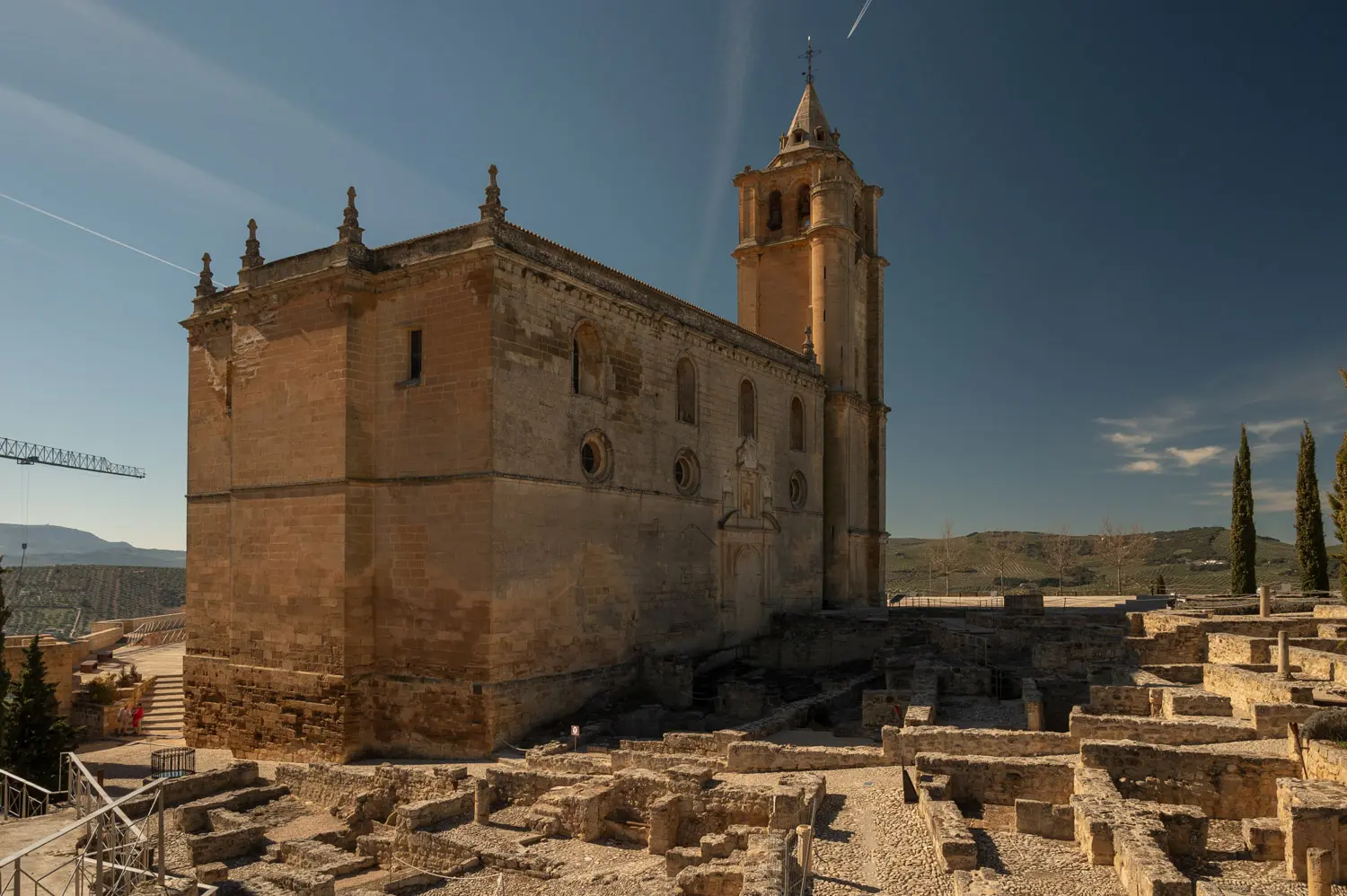
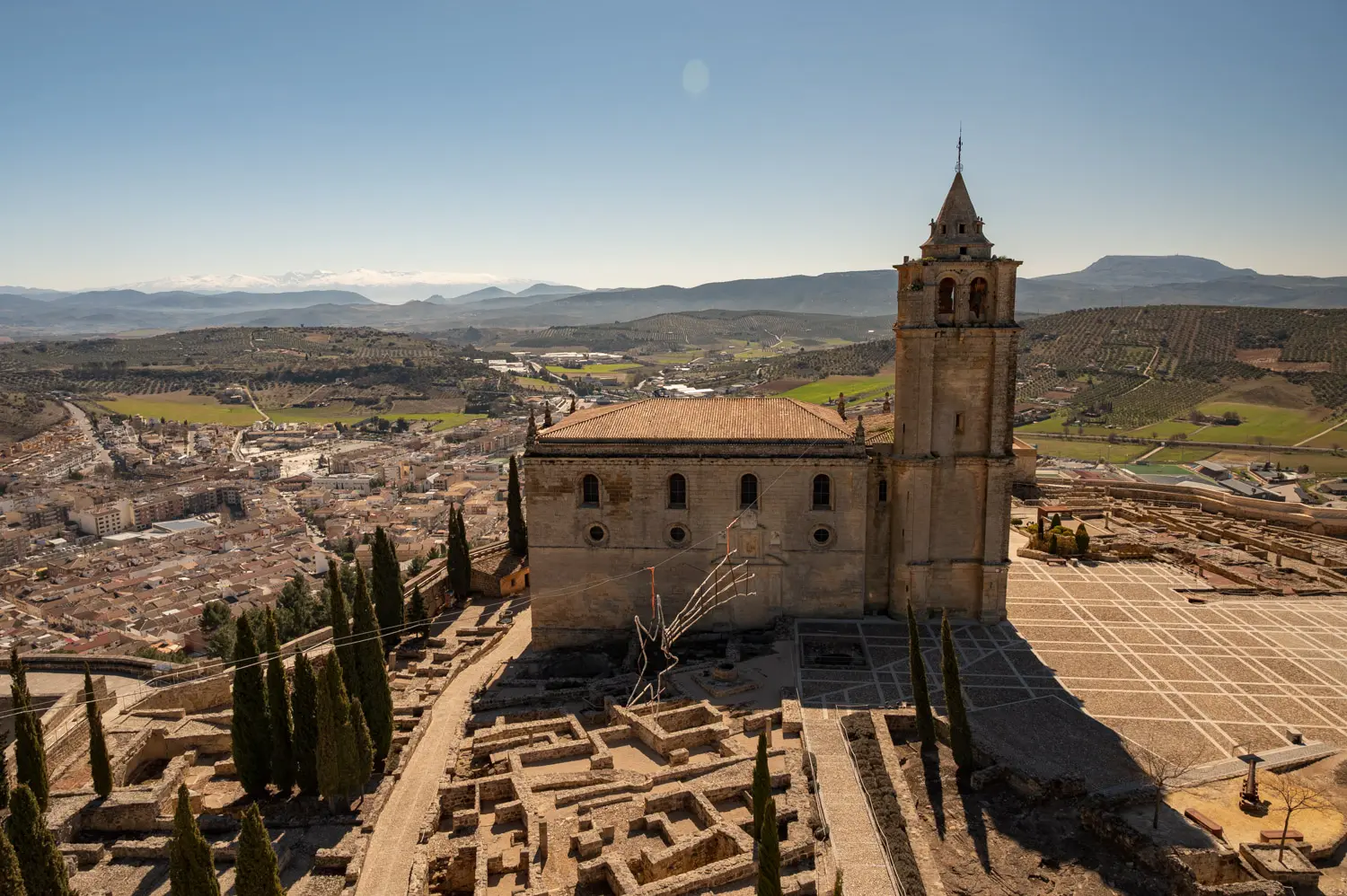
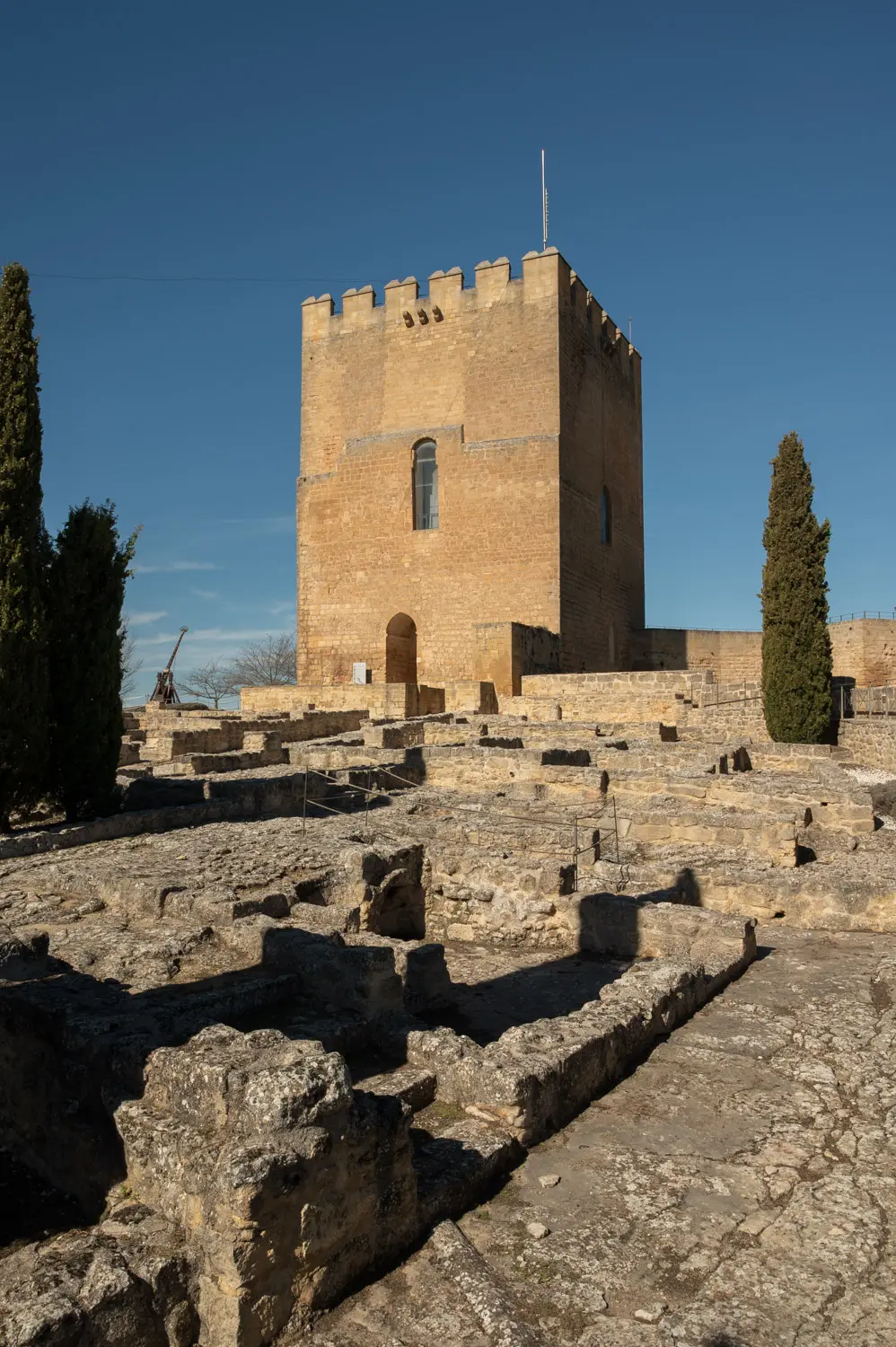
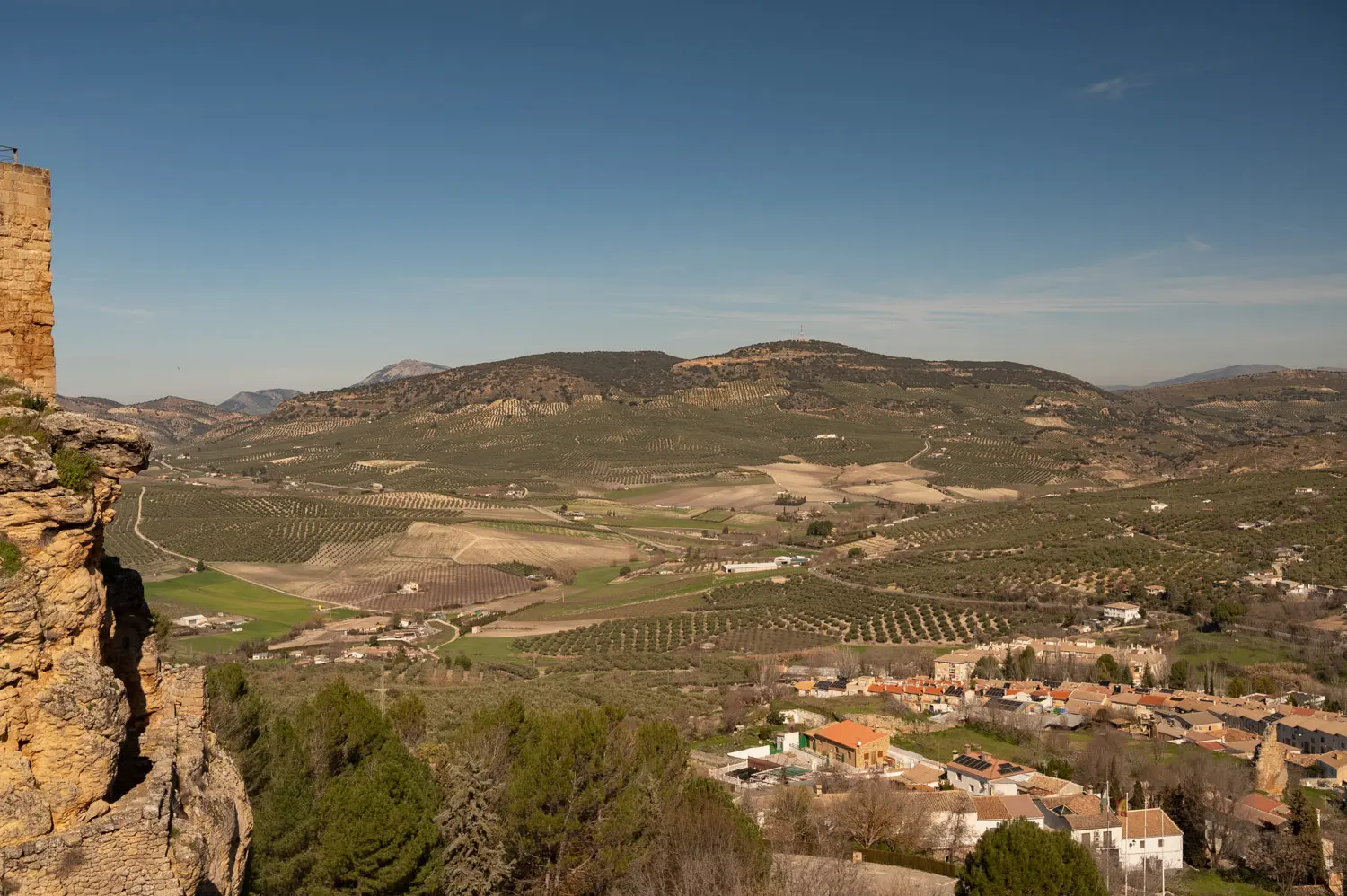
By then we were getting hungry and turned to Google for help. One nearby place had solid reviews, so we followed the directions, only to find ourselves at a gas station. Not exactly what we had in mind. Still, we gave it a chance. The food turned out to be surprisingly good, and generous enough that we packed up the leftovers for later.
Arriving in Granada, we parked in the garage recommended by the hotel. They offered to reimburse a taxi ride, but since it was less than a kilometer away, we decided to walk instead.
At reception, we were greeted by a very friendly host who immediately made a good impression. He handed us the key and told us to come back later when we were ready, he’d be happy to give us an overview of the city along with some recommendations. A promising start.
Our first outing was low-key, just exploring the area around the hotel and locating the bus stop we’d need for the Alhambra the next day.
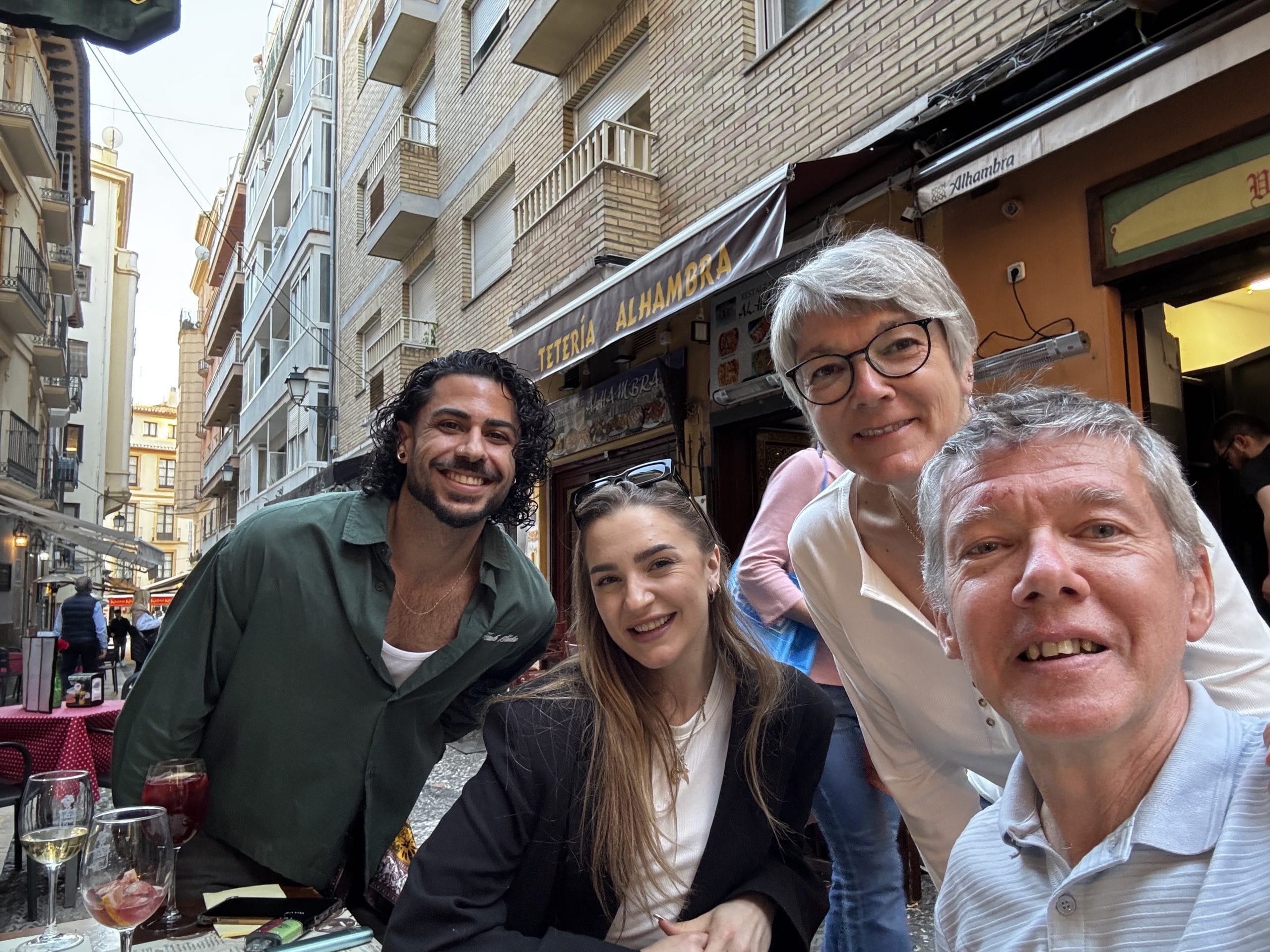
Before long, it was time for dinner, and we followed one of the receptionist’s suggestions. We found a table outside, ordered a couple of sangrias and a spinach pie tapa, and settled in. At the next table, a young couple had something that looked far more interesting. We asked what it was.
“Chicken wings,” they said.
A few minutes later, a plate of chicken wings appeared in front of us. I didn’t hesitate. Kathrin, more cautious, suspected a mistake. When the waiter came by, we asked, and he pointed toward the couple, said something in Spanish, and the only word I caught was “gratis.”
We took that to mean the young woman had ordered them for us. Delighted, we thanked them, which led to a short, friendly conversation. They were Spanish tourists enjoying Granada. We even took a selfie together to mark the moment.Later, we reconsidered the situation and came up with an alternative explanation, that this might simply be how things work here, and the chicken wings were a complimentary tapa with a drink, like peanuts with a beer back home. In the end, we chose to stick with our original version. It was a much better and more touching story.
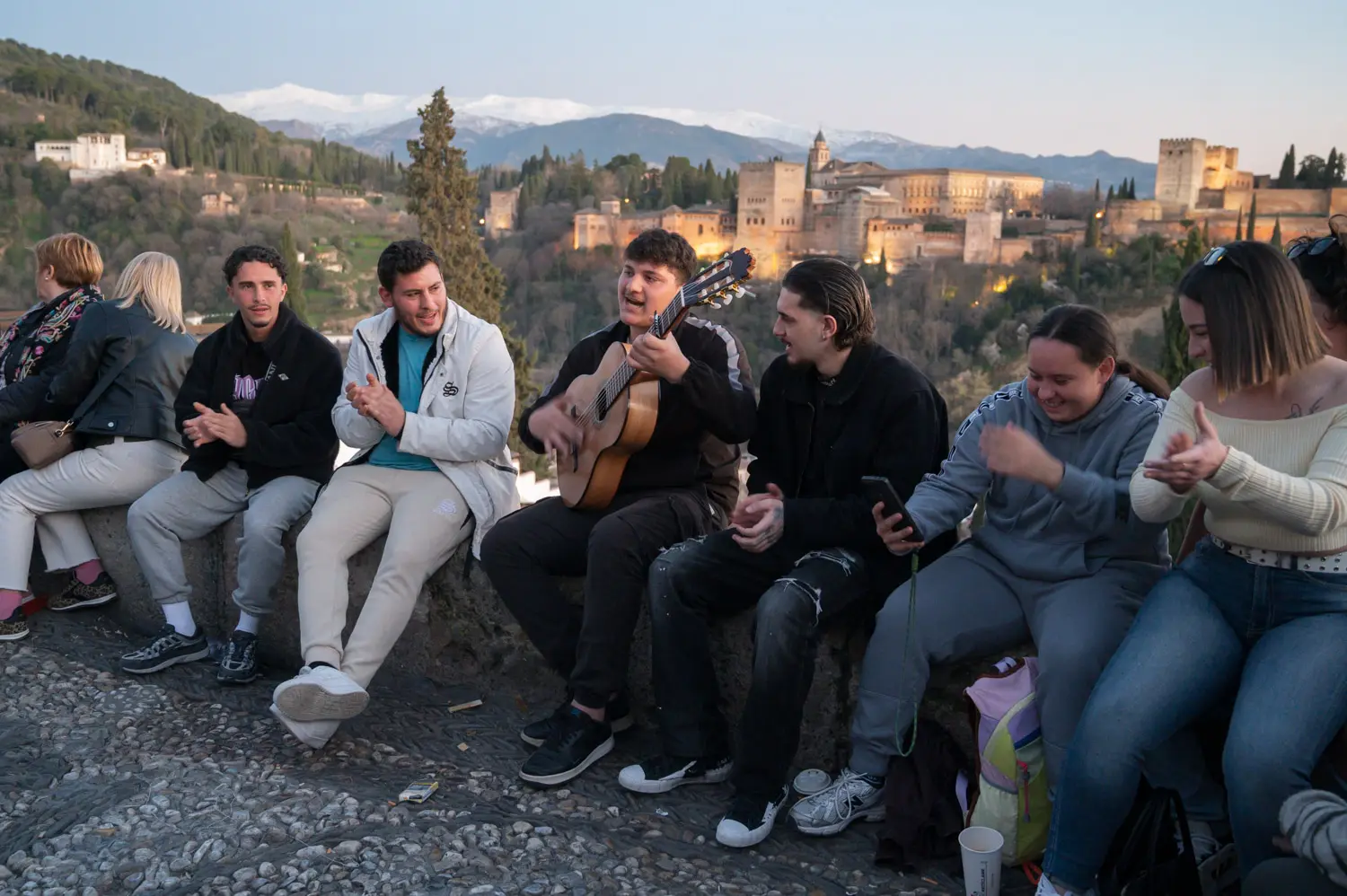
That evening, I headed out for my usual photo walk and made my way up to the San Nicolás lookout point, a small square perched on a hill with a clear view of the Alhambra. “Clear,” of course, depends on your ability to find a gap in the crowd. Plenty of people had the same idea, so it took a bit of maneuvering to claim a spot, but the view was worth the effort.
- A group of youngsters gathered for an evening of fun and music
The Alhambra
The entire next day was set aside for the main event, the Alhambra. The tickets which you have to get weeks in advance included a timed entry to the Nasrid Palaces at noon. The rest of the complex we could explore at our own pace.
We took a bus, as we wanted to avoid climbing up the steep hill and save our energy for the visit. Arriving at the entrance as instructed, we had tickets and passports in hand, only to find that the paper tickets, which we had forgotten at home and had printed again in the hotel, weren’t needed at all. Instead, they scanned our passports, and the system pulled everything up instantly. Efficient and surprisingly high-tech.
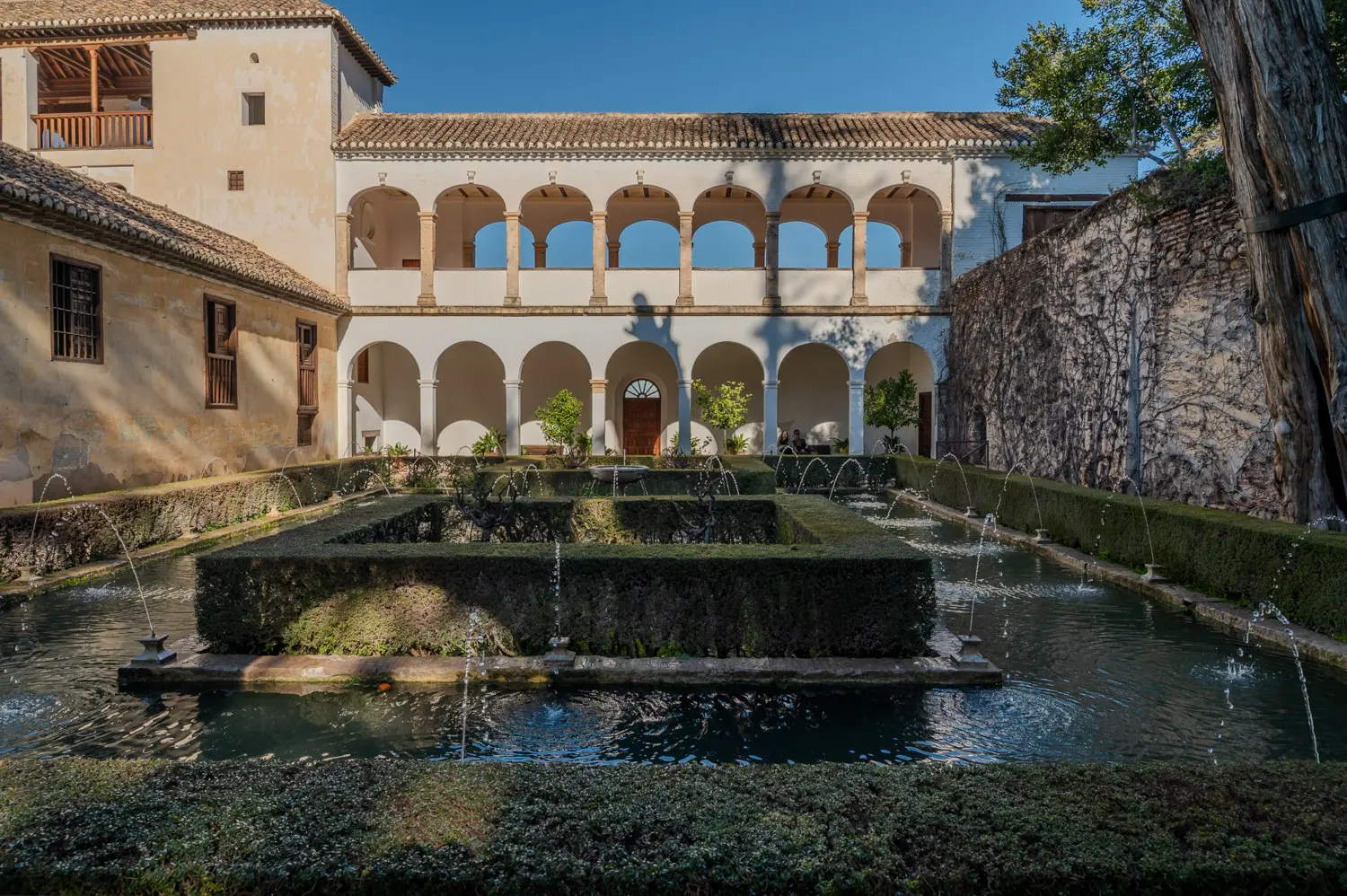
We downloaded a map and started with the Generalife, a separate, smaller, palace surrounded by orchards and gardens, that offered the sultans a peaceful place to relax. Kathrin and I, like most probably most of the foreigners, had been calling it the General life, but after a conversation with a shop attendant, we learned that it is the genera life, [xe.ne.ɾa.ˈli.fe] (say it with a Spanish accent, the g is a guttural H sound). It derives from Jannat al-arif which may variously mean Garden of the Architect, Garden of the Artist”,[ “Garden of the Gnostic”, or even “Garden of the Flautist”.
By the time we finished there, it was nearly time for our slot at the Nasrid Palaces. Entry is allowed up to 15 minutes early, and seeing the growing line, we decided not to push our luck and joined at 11:30. We reached the front at 11:43 and were told to wait two minutes. Fair enough. A few minutes passed, nothing happened, so we slipped back into the line—and this time, the system showed “green” and we were waved through without comment.
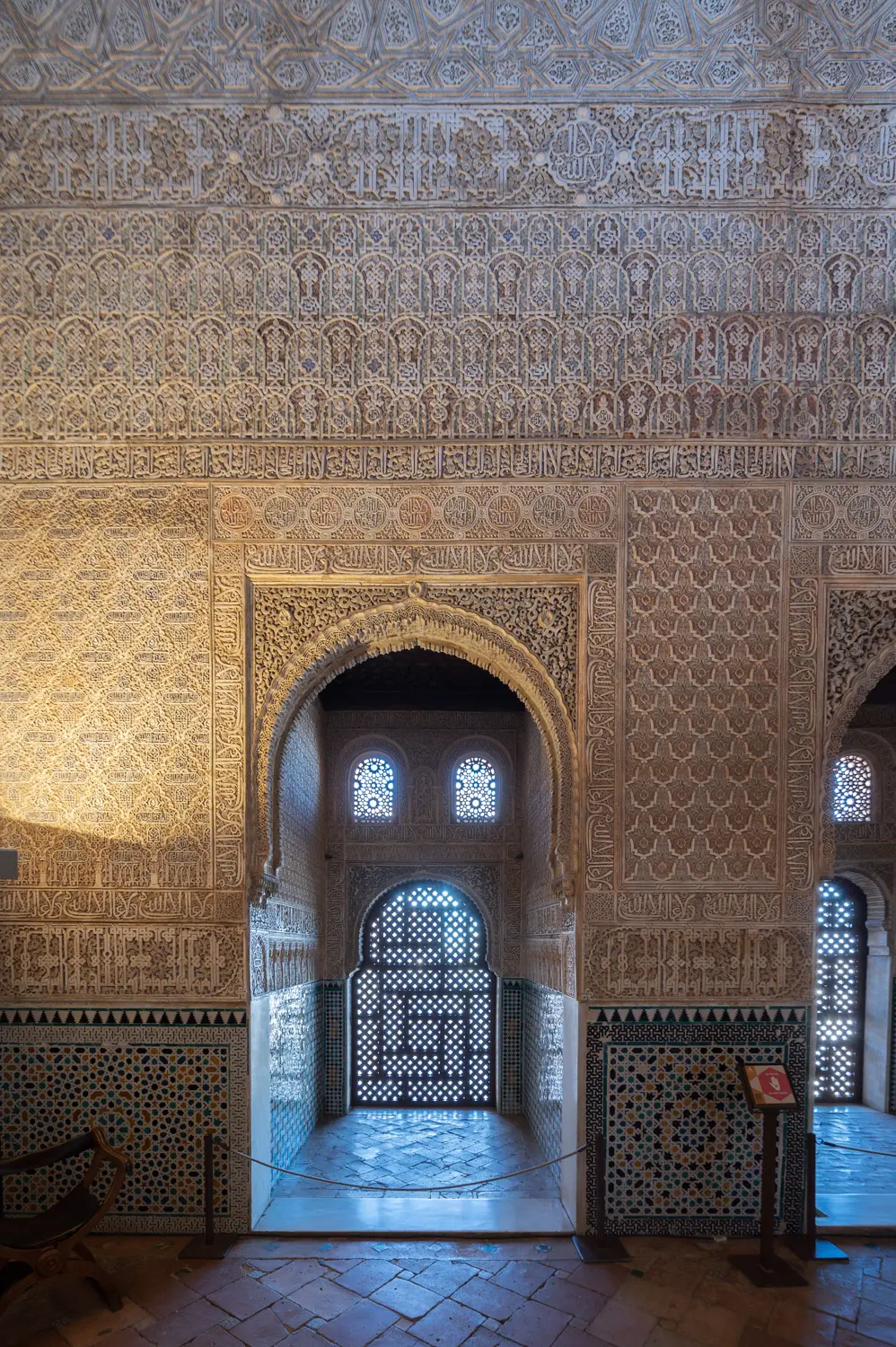
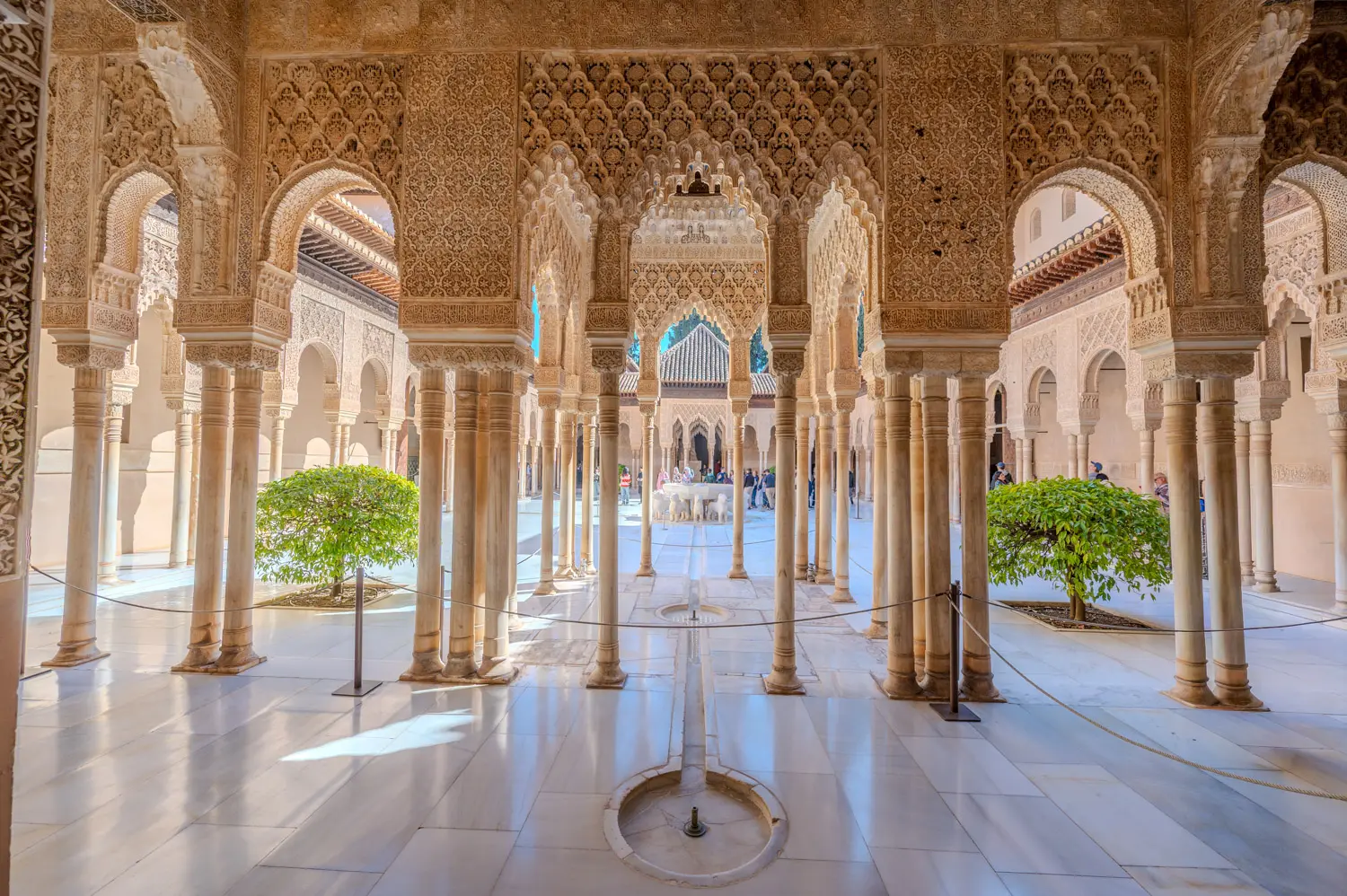
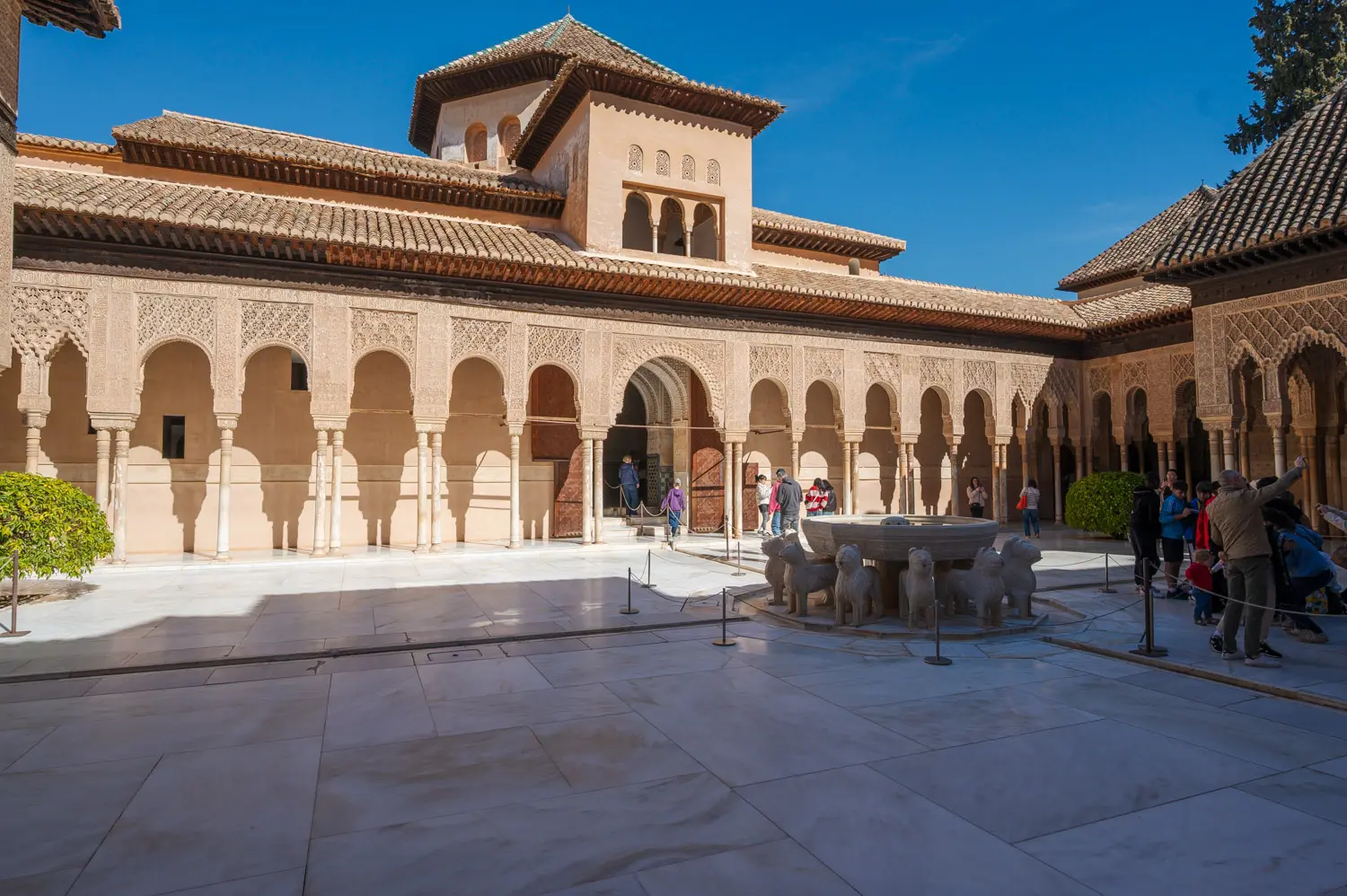
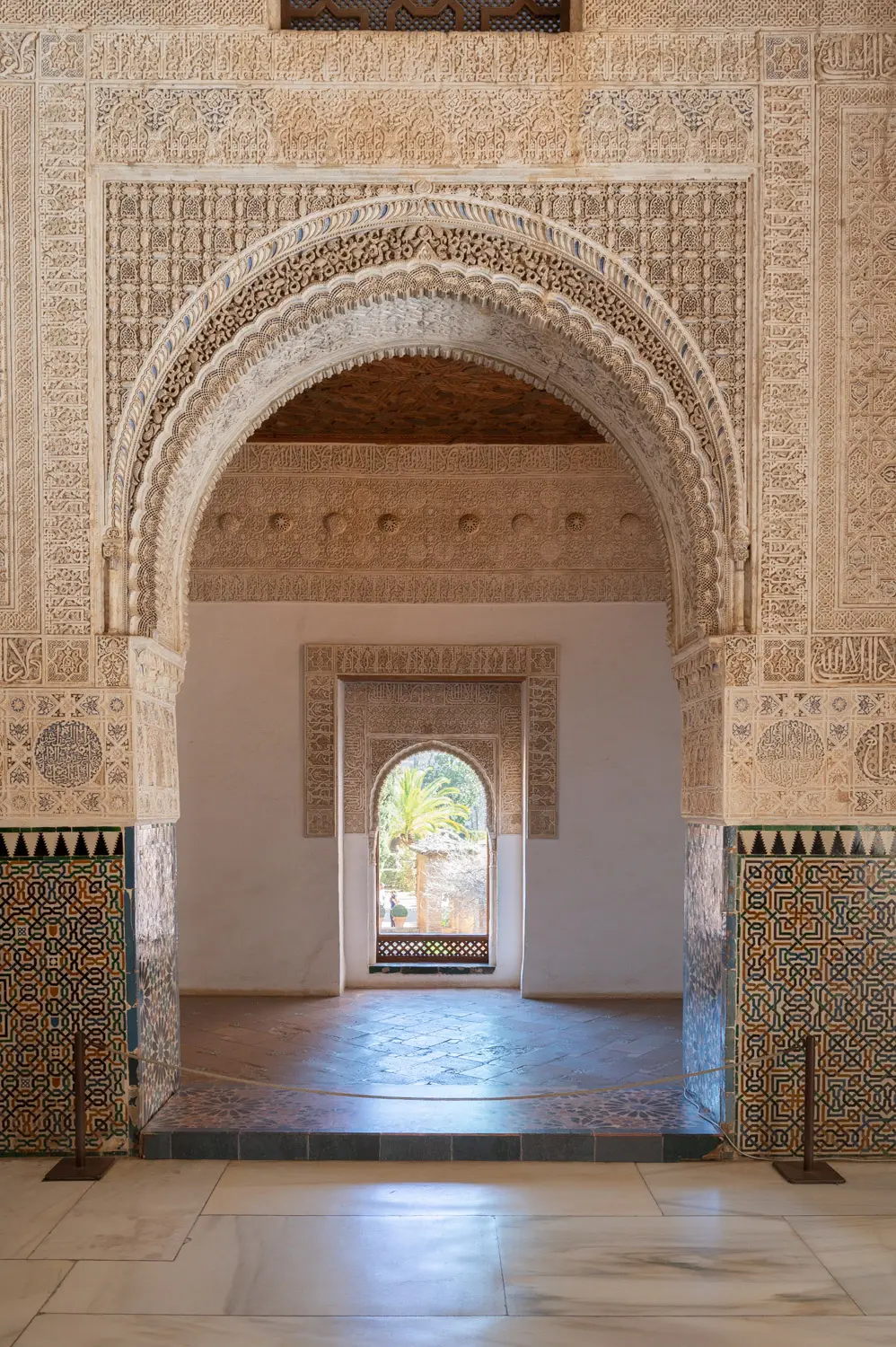
The Nasrid Palaces are, without exaggeration, extraordinary. Every element feels deliberate. Pools reflect the façades with mirror precision, light dances off the water onto carved walls, and the ceilings, layered in intricate, honeycomb-like designs, create an almost otherworldly effect. Even the walls speak, with poetry carved into the surfaces. It’s the kind of place where you can sense the level of thought and craftsmanship behind every detail.
The only drawback was the sheer number of visitors moving through the space. We were part of that flow, of course, so it felt a bit unfair to complain, but it did make it harder to pause, take it in, or frame a clean photo. Eventually, I accepted that the crowd was part of the scene.
Overloaded with impressions we ended the tour and walked back down into town. Along the way, I spotted a T-shirt I liked, which somehow triggered a small shopping frenzy. We set out to find a coffee cup for Kathrin and also ended up with a porcelain olive oil bottle and a decorative coaster, both featuring the geometric tile patterns typical of the region.
- A garden in the Generalife
Our Last day
The next day we set out to explore Granada. Our first stop was Sacromonte, the city’s flamenco heart, known as much for its music as for its views of the Alhambra. As we followed a path uphill toward the remains of the old city wall, the morning took an unexpected turn. On the other side of a chain-link fence, a naked man suddenly jumped up and started shouting at us in Spanish. We didn’t wait to translate. That seemed like a good moment to turn around and head elsewhere.
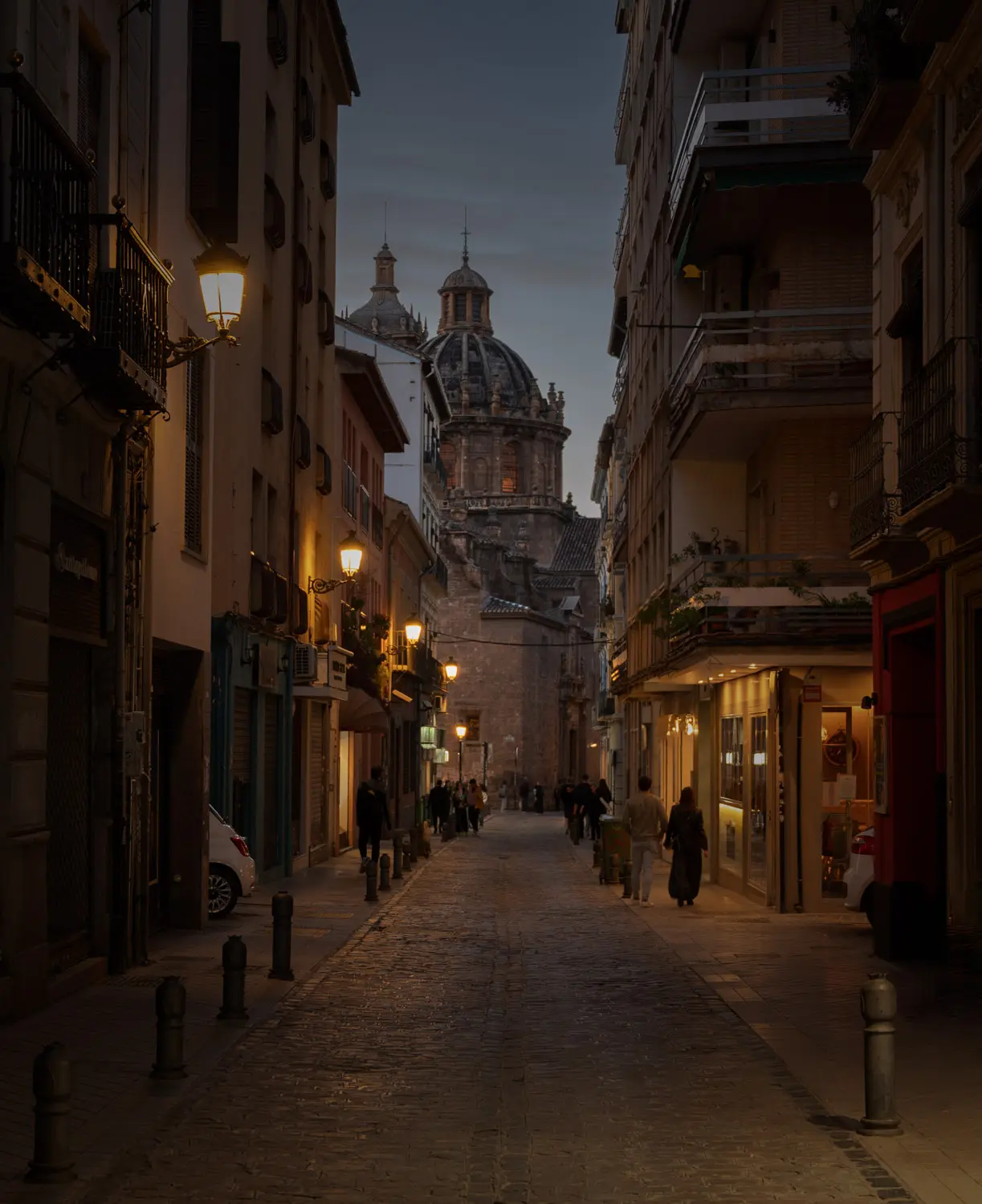
From there, we made our way into the Albaicín, Granada’s oldest district and a UNESCO World Heritage site. The narrow, winding streets and whitewashed houses give it a distinctly different feel, more intimate, more layered with history. Every so often, the streets open up to a viewpoint overlooking the Alhambra. The Mirador de San Nicolás is the most popular of these, drawing both tourists and locals, especially toward sunset. Even during the day, you can see why people gather there.
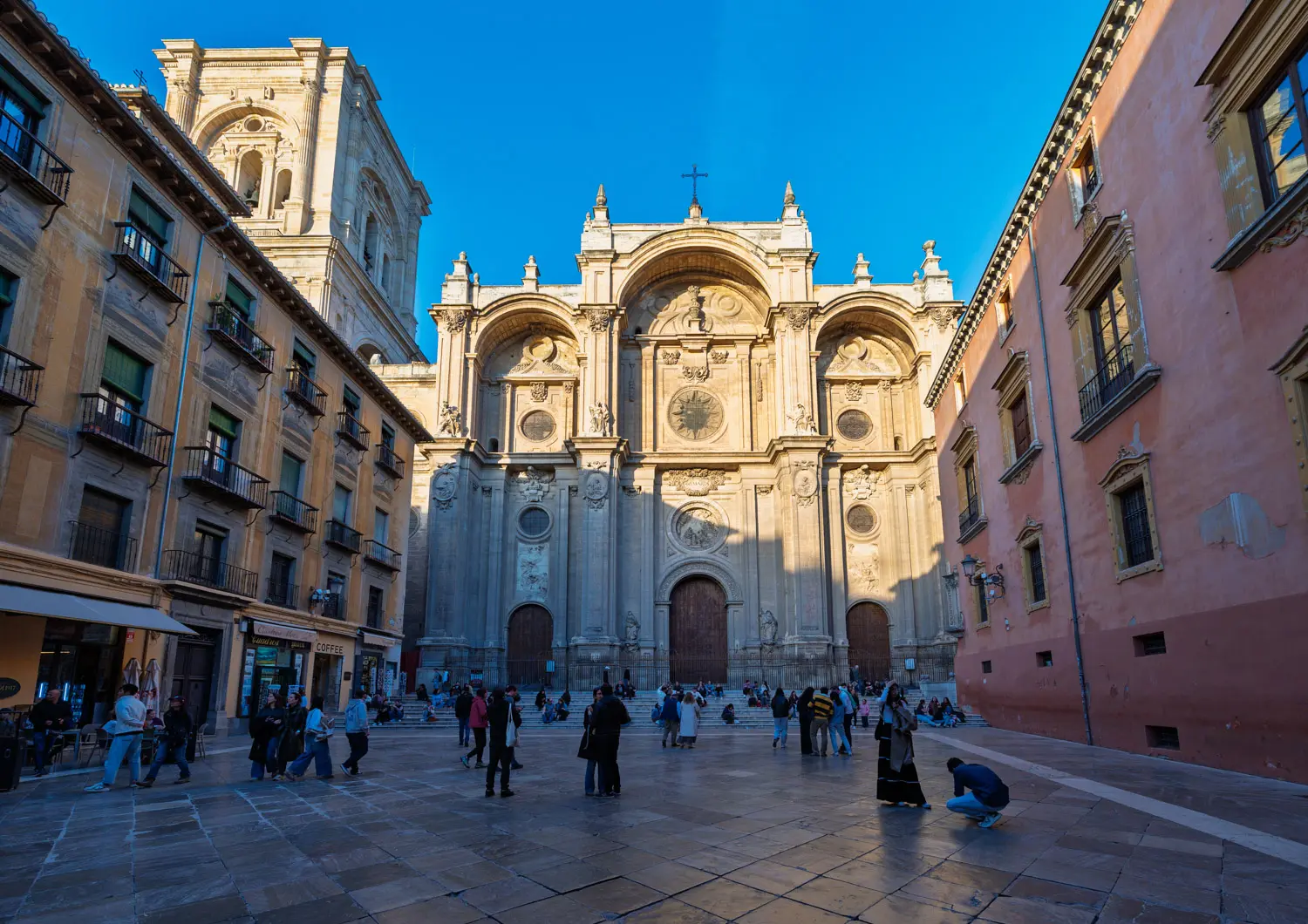
Wandering through the city, stumbled upon the Alcaicería, a narrow market street with a distinctly North African feel. It brought back memories of our trip to Morocco, which made sense once we learned it stands on the site of the old bazaar. The resemblance wasn’t accidental. We continued on to the cathedral, though finding a good angle for a photo proved nearly impossible—buildings crowd it on all sides, leaving little room to step back. Not long after, we came across a small botanical garden, which offered a welcome break from the busy streets and gave us a moment to slow down.
By then, it was time for lunch. In the course of our search, we found Los Manueles, a place our receptionist had recommended. Their three-course lunch menu was hard to resist, so we took a seat. Communication, however, proved to be a bit of a challenge. Our waiter didn’t speak English and couldn’t answer our questions about the menu. Eventually, someone else stepped in to help, though only briefly before returning to her own tables. We managed to piece it together, and in the end, it worked out, the food was excellent. If you speak Spanish, this place becomes an easy recommendation.
We ended our vacation with an evening of Sangrias and tapas. It was a pleasant, tasty way to say goodbye to Andalucia.
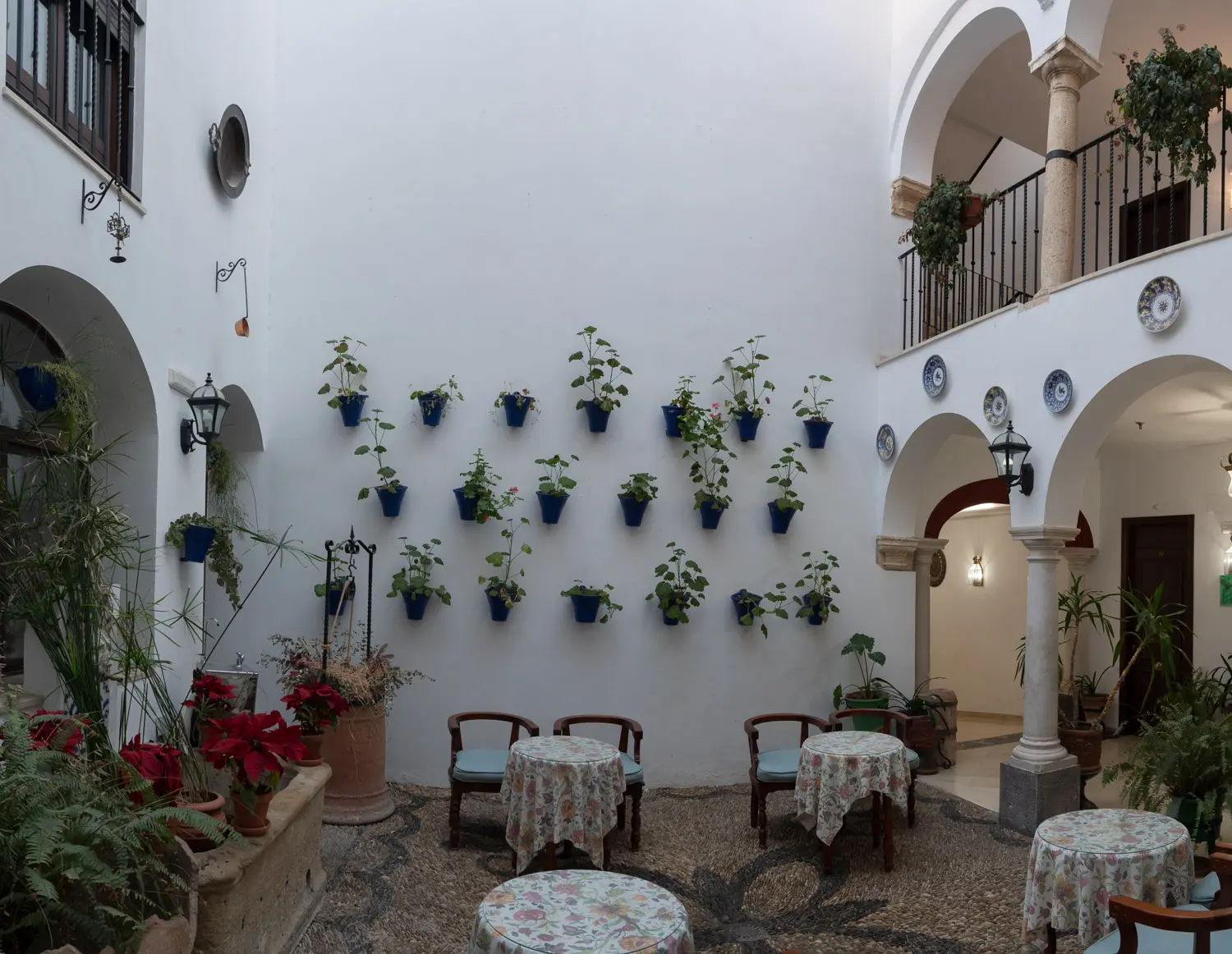
 The riad (inner courtyard) in our hotel. It’s part of the breakfast area
Food Highlights
I was most impressed with the breakfast in Cordoba. It was nothing huge, just unique. We had a tostada. Unlike the Mexican tostada I was used to, this was a thick slice of toasted bread, accompanied by some olive oil, pureed tomatoes, and chopped ham slices. One pours the olive oil over the bread, spreads the pureed tomatoes, then sprinkles the chopped ham. Enjoy! It’s a simple, delicious, regional dish. The waitress and I are of the same opinion that chopped Spanish ham is by far the way to go, no worries about dragging a ham slice off the bread with each bite.
Of course, the tapas were something we enjoyed, and the discovery of a free tapa with a glass of sangria was just the icing on the cake.
Our last lunch in Granada was one of our better meals. The restaurant had a 3-course lunch menu. The food was really good. It made up for the less memorable places we ate at.
The Journey Home
As we had confirmed tickets for our return flight, we had no worries about going home. But life is what happens while you are making plans…. The day before we received a message that we were put on the waiting list because the flight was overbooked.
But first we had to drive back to Malaga Airport and return the car which all went smoothly.
Again we asked for jump seats, but this time we were not the only ones. Two young guys were waiting and hoping as well. Long story short, we both got regular seats at the end and once again, our faith in the universe was not disappointed.
You can see more of my photos from this trip at my Flickr page.
Leave a Reply